Aminoácidos (AA)
Los aminoácidos (AAs) son los componentes fundamentales de las proteínas y desempeñan un papel crucial en diversos procesos biológicos. Estos compuestos orgánicos son esenciales para la síntesis de proteínas, las rutas metabólicas y la señalización celular. En esta categoría, encontrará una gama completa de aminoácidos, incluyendo formas esenciales, no esenciales y modificadas, que son vitales para la investigación en bioquímica, biología molecular y ciencias de la nutrición. En CymitQuimica, ofrecemos aminoácidos de alta calidad para apoyar sus necesidades de investigación y desarrollo, asegurando precisión y fiabilidad en sus resultados experimentales.
Subcategorías de "Aminoácidos (AA)"
- Derivados de aminoácidos(3.957 productos)
- Aminoácidos y compuestos relacionados con aminoácidos(3.472 productos)
- Aminoácidos con oxígeno o azufre(168 productos)
- Aminoácidos protegidos con Boc(351 productos)
- Aminoácidos protegidos con Fmoc(1.710 productos)
Se han encontrado 38265 productos de "Aminoácidos (AA)"
Ordenar por
Pureza (%)
0
100
|
0
|
50
|
90
|
95
|
100
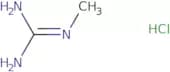
1-Methylguanidine HCl
CAS:<p>1-Methylguanidine HCl is a denaturing agent that has been used in the determination of nitrogen atoms in organic compounds. It has also been shown to have biological properties, such as anti-inflammatory activity and modulation of nitric oxide synthase. 1-Methylguanidine HCl is used in medicine as an anti-inflammatory drug, but it is not currently approved for medical use. 1-Methylguanidine HCl may be used therapeutically to reduce serum levels of creatine, which is synthesized in the liver and excreted by the kidney.</p>Pureza:Min. 95%1-Methylindole-3-acetonitrile
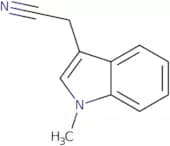
CAS:Producto controlado<p>Please enquire for more information about 1-Methylindole-3-acetonitrile including the price, delivery time and more detailed product information at the technical inquiry form on this page</p>Fórmula:C11H10N2Pureza:Min. 95%Peso molecular:170.21 g/mol1-Methyl-1H-benzimidazole-2-carboxylic acid
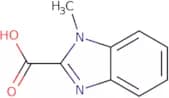
CAS:Producto controlado<p>1-Methyl-1H-benzimidazole-2-carboxylic acid is a synthetic compound that can be used as an antiprotozoal. It has been shown to have good activity against intestinalis, vaginalis, and intestinalis species. 1-Methyl-1H-benzimidazole-2-carboxylic acid binds to the acetyl groups of the parasite's cell membrane and inhibits the formation of the cytoplasmic membrane. This prevents the parasite from synthesizing ATP, which causes them to die. 1-Methyl-1H-benzimidazole-2-carboxylic acid also has strong activity against Giardia lamblia, which is caused by its ability to inhibit protein synthesis in this organism.</p>Fórmula:C9H8N2O2Pureza:Min. 95%Forma y color:PowderPeso molecular:176.17 g/mol5-Bromo-6-methylpyrimidine-2,4(1H,3H)-dione
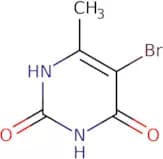
CAS:<p>5-Bromo-6-methylpyrimidine-2,4(1H,3H)-dione is an immunosuppressive drug that belongs to the class of hydantoins. It can be used to treat a variety of diseases associated with immunodeficiency including AIDS. 5-Bromo-6-methylpyrimidine-2,4(1H,3H)-dione inhibits viral replication by alkylating nucleotides and DNA synthesis at the GTPase level. The amide group in the molecule is responsible for this property. Kinetics studies have shown that the rate of hydrolysis of 5-bromo-6-methylpyrimidine-2,4(1H,3H)-dione depends on the pH and temperature of solution.</p>Fórmula:C5H5BrN2O2Pureza:Min. 95%Peso molecular:205.01 g/mol4-Bromo-2-phenylthiazole
CAS:<p>4-Bromo-2-phenylthiazole is a reactive arylating agent that has been used in the Suzuki reaction to form biaryl compounds. It is also used in the synthesis of heterocycles and alkene cross-coupling reactions. The 4-bromo group can be replaced by other halides, such as chlorides, bromides, or iodides. The substituents on the phenyl ring can be varied to yield different products. Reactive groups are an important factor in optimizing yields and preventing side reactions. This molecule is a useful starting point for the synthesis of complex molecules with functional groups.</p>Fórmula:C9H6BrNSPureza:Min. 95%Peso molecular:240.12 g/molO-Phospho-D-serine
CAS:<p>O-Phospho-D-serine (OS) is a phospholipid that is synthesized by the enzyme phosphatase from D-serine. It has been shown to have tumor cell line inhibitory effects and may be useful as a pharmacologic agent for the treatment of cancer. OS has also been shown to have retinal neuron protective effects and can induce the maturation of cells in culture. OS is an essential component of the cell membrane, where it plays an important role in maintaining intracellular chloride levels. This compound also has been shown to be a potent inhibitor of t-cell proliferation. In addition, OS has been implicated in glutamate signaling and neurotransmission as well as fatty acid biosynthesis. OS is produced by bacteria belonging to the genus Bacillus, which are found in soil and water samples throughout the world.</p>Fórmula:C3H8NO6PPureza:Min. 95%Peso molecular:185.07 g/mol2-Amino-5-bromo-N-cyclohexyl-N-methylbenzylamine dihydrochloride
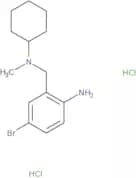
CAS:<p>Please enquire for more information about 2-Amino-5-bromo-N-cyclohexyl-N-methylbenzylamine dihydrochloride including the price, delivery time and more detailed product information at the technical inquiry form on this page</p>Fórmula:C14H23BrCl2N2Pureza:Min. 95%Forma y color:PowderPeso molecular:370.16 g/molMethyl 5-bromo-3-methylpicolinate
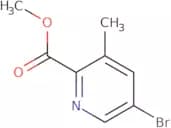
CAS:<p>Please enquire for more information about Methyl 5-bromo-3-methylpicolinate including the price, delivery time and more detailed product information at the technical inquiry form on this page</p>Fórmula:C8H8BrNO2Pureza:Min. 95%Peso molecular:230.06 g/molFmoc-N-Me-Trp(Trt)-OH
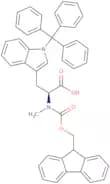
CAS:Producto controlado<p>Please enquire for more information about Fmoc-N-Me-Trp(Trt)-OH including the price, delivery time and more detailed product information at the technical inquiry form on this page</p>Fórmula:C46H38N2O4Pureza:Min. 95%Peso molecular:682.81 g/mol3-Bromo-5-phenyl-1,2,4-oxadiazole
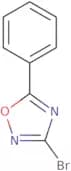
CAS:<p>3-Bromo-5-phenyl-1,2,4-oxadiazole (3BrO) is an organic compound that can be synthesized by coupling a benzoyl chloride with a cyanide salt. 3BrO is also produced in the pyrolysis of benzophenone and 1,2,4-triazole. The fragmentation of 3BrO produces catechol and phenylhydrazine. The deoxygenative coupling reaction of 3BrO with sodium azide produces the explosive compound 2,4,6-trinitrobenzamide. This chemical has been used as the starting material for the synthesis of many other explosives such as RDX and TNT.</p>Fórmula:C8H5BrN2OPureza:Min. 95%Peso molecular:225.04 g/mol2,3,3-Trimethyl 5-methoxy indolenine
CAS:<p>2,3,3-Trimethyl 5-methoxy indolenine (TMMI) is a fluorescent probe that has been used in photodynamic therapy. TMMI is chemically stable and has an unsymmetrical heterocycle with optical properties that allow it to be excited by green light at wavelengths of 540 nm. TMMI can be used to image hypoxic regions of the brain. This molecule has also been used as an enhancement agent for neovascularization and angiography. TMMI can be synthesized using mesoporous silica nanoparticles and halogens such as chlorine or bromine.</p>Fórmula:C12H15NOPureza:Min. 95%Peso molecular:189.25 g/mol3-Amino-6-hydroxy-2-methylquinazolin-4(3H)-one
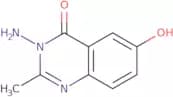
CAS:Producto controlado<p>Please enquire for more information about 3-Amino-6-hydroxy-2-methylquinazolin-4(3H)-one including the price, delivery time and more detailed product information at the technical inquiry form on this page</p>Fórmula:C9H9N3O2Pureza:Min. 95%Peso molecular:191.19 g/mol2-Amino-3-(4-bromobenzoyl)benzoic acid
CAS:<p>Please enquire for more information about 2-Amino-3-(4-bromobenzoyl)benzoic acid including the price, delivery time and more detailed product information at the technical inquiry form on this page</p>Fórmula:C14H10BrNO3Pureza:Min. 95%Peso molecular:320.14 g/mol(Tyr5·12,Lys7)-Polyphemusin II
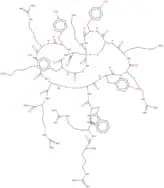
CAS:<p>T22 peptide, also known as [Tyr5,12,Lys7]-polyphemusin II peptide, is a short, positively charged peptide, analog of polyphemusin peptide which exerts a strong anti- HIV activity. Polyphemusins are known to inhibit the growth of gram-negative bacteria and some fungi such as Candida Albicans. T22 is a potent antagonist of CXCR4 (IC50 = 5.05 nM), a co-receptor used by HIV to penetrate cells.<br>It has been suggested that T22 exerts its effect against HIV-1 especially by blocking virus-cell fusion and that T22 might interact with HIV envelope protein (such as gp120 ) and T-cell surface protein. T22 antiviral activity has been shown on HIV-infected MT-4 cells with an IC50 of 0.008 µg/mL (2.6 nM). The cytotoxic concentration on HIV virus (CC50) of T22 is 54 µg/mL (17 mM).</p>Fórmula:C109H164N38O22S4Pureza:Min. 95%Peso molecular:2,486.98 g/molTetradecafluoro-2-methylpentane
CAS:Producto controlado<p>Tetradecafluoro-2-methylpentane is a fluorinated hydrocarbon that is used in synthetic chemistry. It has been shown to inhibit the growth of cancer cells and leaves. Tetradecafluoro-2-methylpentane has also been shown to be an anthropogenic emission and may contribute to global warming. The chemical is classified as a cyclic hydrocarbon, which means it contains two or more rings of carbon atoms. Cyclic hydrocarbons are generally toxic because they disrupt normal cellular function through interference with cell membranes, protein synthesis, and DNA replication.</p>Fórmula:C6F14Pureza:Min. 95%Peso molecular:338.04 g/molBis[(S)-1-phenylethyl]amine
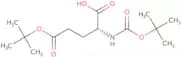
CAS:<p>Bis[(S)-1-phenylethyl]amine (BPEA) is an amide that is used as a synthetic intermediate in the process of alkylating and halogenating amines. BPEA is prepared by reacting phenethylamine with chloroacetic acid and phosphorous trichloride. It has been shown to have high efficiency in this reaction, with little impurities and a high yield. The product of this reaction can be purified using recrystallization or preparative thin-layer chromatography. BPEA is a ligand that contains a stereogenic center, which allows for the preparation of chiral compounds with great stereoselectivity. This synthetic intermediate can be used to prepare organometallic compounds in the presence of a phosphite ligand.</p>Fórmula:C16H19NPureza:Min. 95%Peso molecular:225.33 g/molBoc-D-glutamic acid-γ-tert-butyl ester
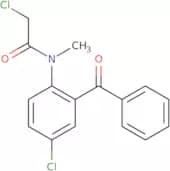
CAS:<p>Please enquire for more information about Boc-D-glutamic acid-gamma-tert-butyl ester including the price, delivery time and more detailed product information at the technical inquiry form on this page</p>Fórmula:C14H25NO6Pureza:Min. 95%Peso molecular:303.35 g/molN-(2-Benzoyl-4-chlorophenyl)-2-chloro-N-methylacetamide
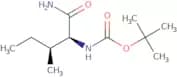
CAS:<p>Please enquire for more information about N-(2-Benzoyl-4-chlorophenyl)-2-chloro-N-methylacetamide including the price, delivery time and more detailed product information at the technical inquiry form on this page</p>Fórmula:C16H13Cl2NO2Pureza:Min. 95%Peso molecular:322.19 g/molN-tert-Butoxycarbonyl-L-isoleucineamide
CAS:<p>Please enquire for more information about N-tert-Butoxycarbonyl-L-isoleucineamide including the price, delivery time and more detailed product information at the technical inquiry form on this page</p>Fórmula:C11H22N2O3Pureza:Min. 95%Forma y color:SolidPeso molecular:230.3 g/molZ-NH-PEG2-CH2COOH
CAS:<p>Z-NH-PEG2-CH2COOH is a PEG compound with two different functional groups (also known as heterobifunctional). Unlike homobifunctional PEG compounds (same functional group on both ends), this type of compounds are more versatile as have two different anchor points. Z-NH-PEG2-CH2COOH is used as a linker and spacer to add a PEG moiety, via pegylation (a bioconjugation technique) to proteins, peptides, oligonucleotides, small molecules and nanoparticles.</p>Fórmula:C14H19NO6Pureza:Min. 95%Peso molecular:297.3 g/mol






![Bis[(S)-1-phenylethyl]amine](/_next/image/?url=https%3A%2Fstatic.cymitquimica.com%2Fproducts%2F3D%2Fthumb-webp%2FFB168367.webp&w=3840&q=75)