Aminoácidos (AA)
Los aminoácidos (AAs) son los componentes fundamentales de las proteínas y desempeñan un papel crucial en diversos procesos biológicos. Estos compuestos orgánicos son esenciales para la síntesis de proteínas, las rutas metabólicas y la señalización celular. En esta categoría, encontrará una gama completa de aminoácidos, incluyendo formas esenciales, no esenciales y modificadas, que son vitales para la investigación en bioquímica, biología molecular y ciencias de la nutrición. En CymitQuimica, ofrecemos aminoácidos de alta calidad para apoyar sus necesidades de investigación y desarrollo, asegurando precisión y fiabilidad en sus resultados experimentales.
Subcategorías de "Aminoácidos (AA)"
- Derivados de aminoácidos(3.955 productos)
- Aminoácidos y compuestos relacionados con aminoácidos(3.472 productos)
- Aminoácidos con oxígeno o azufre(168 productos)
- Aminoácidos protegidos con Boc(351 productos)
- Aminoácidos protegidos con Fmoc(1.710 productos)
Se han encontrado 38263 productos de "Aminoácidos (AA)"
Ordenar por
Pureza (%)
0
100
|
0
|
50
|
90
|
95
|
100
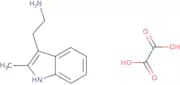
2-(2-Methyl-1H-indol-3-yl)ethanamine oxalate
CAS:Producto controlado<p>Please enquire for more information about 2-(2-Methyl-1H-indol-3-yl)ethanamine oxalate including the price, delivery time and more detailed product information at the technical inquiry form on this page</p>Fórmula:C13H16N2O4Pureza:Min. 95%Peso molecular:264.28 g/molZ-NH-PEG12-CH2CH2COOH
<p>Z-NH-PEG12-CH2CH2COOH is a PEG compound with two different functional groups (also known as heterobifunctional). Unlike homobifunctional PEG compounds (same functional group on both ends), this type of compounds are more versatile as have two different anchor points. Z-NH-PEG12-CH2CH2COOH is used as a linker and spacer to add a PEG moiety, via pegylation (a bioconjugation technique) to proteins, peptides, oligonucleotides, small molecules and nanoparticles.</p>Fórmula:C35H61NO16Pureza:Min. 95%Peso molecular:751.86 g/mol(9Z)-N-[(3-Methoxyphenyl)methyl]-9-octadecenamide
CAS:<p>Please enquire for more information about (9Z)-N-[(3-Methoxyphenyl)methyl]-9-octadecenamide including the price, delivery time and more detailed product information at the technical inquiry form on this page</p>Fórmula:C26H43NO2Pureza:Min. 95%Peso molecular:401.63 g/molH-Arg-Gln-OH hydrochloride salt
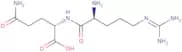
CAS:<p>H-Arg-Gln-OH is a growth factor that has been shown to be effective in the genetic ablation of mice. This growth factor is taken up by cells via receptor activity and stimulates DNA synthesis and cell division. H-Arg-Gln-OH has been shown to be successful in the treatment of congenital heart disease. The onset latency is site specific and low energy, which means that it can be used for noninvasive treatments.</p>Fórmula:C11H22N6O4Pureza:Min. 95%Peso molecular:302.33 g/mol2-Methyl-6,7-dihydro-2H-indazol-4(5H)-one
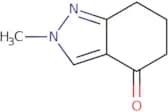
CAS:<p>Please enquire for more information about 2-Methyl-6,7-dihydro-2H-indazol-4(5H)-one including the price, delivery time and more detailed product information at the technical inquiry form on this page</p>Fórmula:C8H10N2OPureza:Min. 95%Peso molecular:150.18 g/mol4-Methyl-1-piperazinecarbonyl chloride hydrochloride
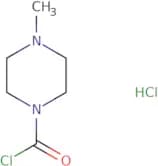
CAS:<p>4-Methyl-1-piperazinecarbonyl chloride hydrochloride is a pyridine derivative that can be used to synthesize various alkyl esters. It is also used as a reagent in organic synthesis. 4-Methyl-1-piperazinecarbonyl chloride hydrochloride is soluble in organic solvents and has a low melting point. This compound can be used for the recrystallization of dibenzoyl, which is an important parameter for this reaction. 4-Methyl-1-piperazinecarbonyl chloride hydrochloride is an anhydrous compound, so it must be stored in a dry place to prevent water from forming crystals. Nonbenzodiazepine drugs are also made with 4-methyl-1-piperazinecarbonyl chloride hydrochloride. The enantiomers (mirror images) of this molecule may have different effects on the body, and this difference can be</p>Fórmula:C6H11ClN2O•HClPureza:Min. 95%Forma y color:PowderPeso molecular:199.08 g/mol1-Triphenylmethyl-4-methylimidazole
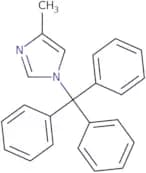
CAS:Producto controlado<p>1-Triphenylmethyl-4-methylimidazole (1MPIm) is a biaryl compound that can be used in the synthesis of organic compounds. 1MPIm reacts with aryl chlorides and catalysts to form biaryl compounds. This reaction is known as the Suzuki coupling, which is catalyzed by palladium or nickel. The use of 1MPIm is advantageous because it leads to high yields with good steric properties and few side reactions. It has been shown to be effective for the synthesis of many different types of compounds, including those containing an arylboronic acid group.</p>Fórmula:C23H20N2Pureza:Min. 95%Peso molecular:324.42 g/mol2-Methyl-5-(tributylstannyl)pyridine
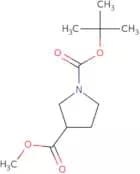
CAS:Producto controlado<p>Please enquire for more information about 2-Methyl-5-(tributylstannyl)pyridine including the price, delivery time and more detailed product information at the technical inquiry form on this page</p>Fórmula:C18H33NSnPureza:Min. 95%Peso molecular:382.17 g/mol1-tert-Butyl 3-methyl pyrrolidine-1,3-dicarboxylate
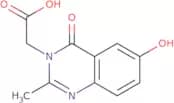
CAS:<p>Please enquire for more information about 1-tert-Butyl 3-methyl pyrrolidine-1,3-dicarboxylate including the price, delivery time and more detailed product information at the technical inquiry form on this page</p>Fórmula:C11H19NO4Pureza:Min. 95%Peso molecular:229.27 g/mol(6-Hydroxy-2-methyl-4-oxoquinazolin-3(4H)-yl)acetic acid
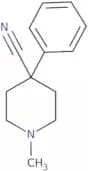
CAS:Producto controlado<p>Please enquire for more information about (6-Hydroxy-2-methyl-4-oxoquinazolin-3(4H)-yl)acetic acid including the price, delivery time and more detailed product information at the technical inquiry form on this page</p>Fórmula:C11H10N2O4Pureza:Min. 95%Peso molecular:234.21 g/mol1-Methyl-4-phenylpiperidine-4-carbonitrile
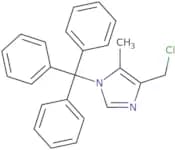
CAS:Producto controlado<p>Please enquire for more information about 1-Methyl-4-phenylpiperidine-4-carbonitrile including the price, delivery time and more detailed product information at the technical inquiry form on this page</p>Fórmula:C13H16N2Pureza:Min. 95%Peso molecular:200.28 g/mol4-(Chloromethyl)-5-methyl-1-(triphenylmethyl)-1H-imidazole
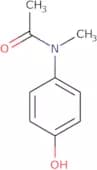
CAS:Producto controlado<p>Please enquire for more information about 4-(Chloromethyl)-5-methyl-1-(triphenylmethyl)-1H-imidazole including the price, delivery time and more detailed product information at the technical inquiry form on this page</p>Fórmula:C24H21ClN2Pureza:Min. 95%Peso molecular:372.89 g/molN-(4-Hydroxyphenyl)-N-methylacetamide
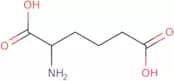
CAS:<p>Please enquire for more information about N-(4-Hydroxyphenyl)-N-methylacetamide including the price, delivery time and more detailed product information at the technical inquiry form on this page</p>Fórmula:C9H11NO2Pureza:Min. 95%Peso molecular:165.19 g/molDL-2-Aminoadipic acid
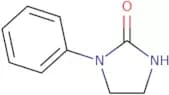
CAS:<p>DL-2-Aminoadipic acid is a metabolite of the amino acid lysine, which is found in many protein-containing foods. It is also synthesized from glutamate, which is an excitatory neurotransmitter and a major regulator of neuronal function. This compound has been shown to have potential as a biomarker for metabolic disorders. DL-2-Aminoadipic acid has been shown to bind to penicillin-binding proteins (PBPs) in the bacterial cell wall and disrupt its formation, leading to the inhibition of peptidoglycan synthesis. DL-2-Aminoadipic acid may also be involved in regulating gamma-aminobutyric acid (GABA), an inhibitory neurotransmitter that inhibits the release of excitatory neurotransmitters. DL-2-Aminoadipic acid has also been shown to inhibit HIV infection by binding to lysine residues on the virus envelope protein gp120.</p>Fórmula:C6H11NO4Pureza:Min. 95%Forma y color:White PowderPeso molecular:161.16 g/mol1-Phenylimidazolidin-2-one
CAS:<p>1-Phenylimidazolidin-2-one is a tyrosine kinase inhibitor that belongs to the class of receptor tyrosine kinase inhibitors. It is used in the treatment of hypertension and has been shown to reduce levels of dopamine in the brain. 1-Phenylimidazolidin-2-one binds to tyrosine kinases and blocks their activity, which prevents phosphorylation of proteins involved in neurotransmitter synthesis. This agent also has neuroleptic effects, which may be due to its ability to inhibit dopaminergic receptors.</p>Fórmula:C9H10N2OPureza:Min. 95%Peso molecular:162.19 g/mol3,4-Dehydro-DL-proline
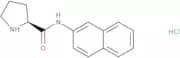
CAS:<p>3,4-Dehydro-DL-proline is a monoclonal antibody that is known for its ability to bind to the amino acid proline. It has been shown to be effective in the treatment of resistant mutants in plant science, tissue culture, and biological studies. 3,4-Dehydro-DL-proline binds to collagen, amide and proline analogs and hydrogen bonds with them. 3,4-Dehydro-DL-proline also has conformational properties that are important for its function as an anti-inflammatory agent.</p>Fórmula:C5H7NO2Pureza:Min. 95%Peso molecular:113.11 g/molL-Proline-β-naphthylamide hydrochloride
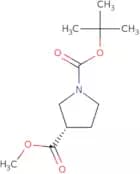
CAS:<p>L-proline analogue</p>Fórmula:C15H16N2O·HClPureza:Min. 95%Peso molecular:276.76 g/mol1-N-Boc-pyrrolidine-3-(S)-methylcarboxylate
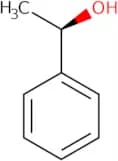
CAS:<p>Please enquire for more information about 1-N-Boc-pyrrolidine-3-(S)-methylcarboxylate including the price, delivery time and more detailed product information at the technical inquiry form on this page</p>Fórmula:C11H19NO4Pureza:Min. 95%Peso molecular:229.27 g/mol(R)-1-Phenylethanol
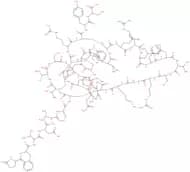
CAS:<p>(R)-1-Phenylethanol is an organic compound that belongs to the class of aldehydes. It has an optimal redox potential and is used as a reactive intermediate in surface methodology. The kinetic data for this compound have been reported, including its reaction solution, kinetic, and stereoselective properties. (R)-1-Phenylethanol can be used to synthesize aromatic hydrocarbons with acyl chains or amines, using enzymatic reactions. It can also be used as an asymmetric synthesis reagent for the preparation of chiral alcohols and amines.</p>Fórmula:C8H10OPureza:Min. 95%Forma y color:Colourless To Yellow LiquidPeso molecular:122.16 g/molCharybdotoxin
CAS:<p>Charybdotoxin is a peptide toxin that is found in scorpion venom. It acts as a potent inhibitor of the adenylyl cyclase, which is an enzyme that catalyzes the formation of cAMP from ATP. Charybdotoxin binds to the cavity of the enzyme and blocks access to ATP, preventing the accumulation of cAMP. This inhibition leads to a decrease in calcium ions in cells, and thus causes relaxation of smooth muscle tissue. Charybdotoxin has been shown to cause relaxation of bowel disease in mice by inhibiting contraction of intestinal muscle tissue. Charybdotoxin also has been shown to have therapeutic effects on pluripotent cells such as miapaca-2 cells by increasing their ability to form new blood vessels.</p>Fórmula:C176H277N57O55S7Pureza:Min. 95%Peso molecular:4,295.9 g/mol


![(9Z)-N-[(3-Methoxyphenyl)methyl]-9-octadecenamide](/_next/image/?url=https%3A%2Fstatic.cymitquimica.com%2Fproducts%2F3D%2Fthumb-webp%2FFN165022.webp&w=3840&q=75)