Aminoácidos (AA)
Los aminoácidos (AAs) son los componentes fundamentales de las proteínas y desempeñan un papel crucial en diversos procesos biológicos. Estos compuestos orgánicos son esenciales para la síntesis de proteínas, las rutas metabólicas y la señalización celular. En esta categoría, encontrará una gama completa de aminoácidos, incluyendo formas esenciales, no esenciales y modificadas, que son vitales para la investigación en bioquímica, biología molecular y ciencias de la nutrición. En CymitQuimica, ofrecemos aminoácidos de alta calidad para apoyar sus necesidades de investigación y desarrollo, asegurando precisión y fiabilidad en sus resultados experimentales.
Subcategorías de "Aminoácidos (AA)"
- Derivados de aminoácidos(3.955 productos)
- Aminoácidos y compuestos relacionados con aminoácidos(3.465 productos)
- Aminoácidos con oxígeno o azufre(168 productos)
- Aminoácidos protegidos con Boc(351 productos)
- Aminoácidos protegidos con Fmoc(1.710 productos)
Se han encontrado 38248 productos de "Aminoácidos (AA)"
Ordenar por
Pureza (%)
0
100
|
0
|
50
|
90
|
95
|
100
Fmoc-trans-4-(aminomethyl)cyclohexane-1-carboxylic acid
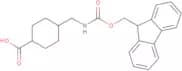
CAS:<p>Fmoc-trans-4-(aminomethyl)cyclohexane-1-carboxylic acid is a synthetic amino acid that has been shown in vitro to inhibit the growth of prostate cancer cells. It is an analog of butyric acid, a naturally occurring fatty acid. Fmoc-trans-4-(aminomethyl)cyclohexane-1-carboxylic acid has been synthesized by solid phase methods and labeled with radiotracers such as indium 111 or technetium 99m. The use of Fmoc-trans-4-(aminomethyl)cyclohexane-1-carboxylic acid in vivo is limited by its short circulating half life, rapid metabolism, and high toxicity.</p>Fórmula:C23H25NO4Pureza:Min. 95%Forma y color:White SolidPeso molecular:379.45 g/mol3,4-Dihydro-3-methyl-2(1H)-quinazolinone
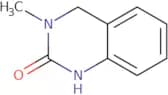
CAS:<p>3,4-Dihydro-3-methyl-2(1H)-quinazolinone is an inhibitor of the enzyme carbonic anhydrase. It has been shown to have inhibitory properties against dopamine, which is a neurotransmitter in the brain that plays a role in motor control and cognition. 3,4-Dihydro-3-methyl-2(1H)-quinazolinone has also been shown to be effective in inhibiting chloride yields. This drug has been shown to have pharmacokinetic properties that make it suitable for oral administration. The molecule itself is stable and can be stored at room temperature without decomposition. It can be synthesized in a polymeric matrix or as a free molecule and its stability allows for convenient production at low cost.</p>Fórmula:C9H10N2OPureza:Min. 95%Forma y color:PowderPeso molecular:162.19 g/molZ-NH-PEG3-CH2CH2COOH
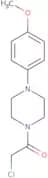
<p>Z-NH-PEG3-CH2CH2COOH is a PEG compound with two different functional groups (also known as heterobifunctional). Unlike homobifunctional PEG compounds (same functional group on both ends), this type of compounds are more versatile as have two different anchor points. Z-NH-PEG3-CH2CH2COOH is used as a linker and spacer to add a PEG moiety, via pegylation (a bioconjugation technique) to proteins, peptides, oligonucleotides, small molecules and nanoparticles.</p>Fórmula:C17H25NO7Pureza:Min. 95%Peso molecular:355.38 g/mol1-(Chloroacetyl)-4-(4-methoxyphenyl)piperazine
CAS:Producto controlado<p>Please enquire for more information about 1-(Chloroacetyl)-4-(4-methoxyphenyl)piperazine including the price, delivery time and more detailed product information at the technical inquiry form on this page</p>Fórmula:C13H17ClN2O2Pureza:Min. 95%Peso molecular:268.74 g/mol4-(3-Methyl-5-oxo-2-pyrazolin-1-yl)benzoic acid
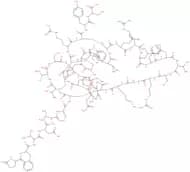
CAS:<p>4-(3-Methyl-5-oxo-2-pyrazolin-1-yl)benzoic acid (PMBA) is a chromatographic and spectroscopic reagent that is used in the analysis of glycosidic bonds. PMBA has been shown to be effective in preventing the formation of advanced glycation end products, which are substances that can cause diabetes. PMBA has also been found to have a protective effect on the kidneys and liver and may prevent damage to cells in these organs. This drug has been tested for pharmacological effects and toxicity in healthy subjects, type 2 diabetic patients, and diabetic patients.</p>Fórmula:C11H10N2O3Pureza:Min. 95%Peso molecular:218.21 g/molCharybdotoxin
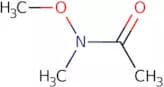
CAS:<p>Charybdotoxin is a peptide toxin that is found in scorpion venom. It acts as a potent inhibitor of the adenylyl cyclase, which is an enzyme that catalyzes the formation of cAMP from ATP. Charybdotoxin binds to the cavity of the enzyme and blocks access to ATP, preventing the accumulation of cAMP. This inhibition leads to a decrease in calcium ions in cells, and thus causes relaxation of smooth muscle tissue. Charybdotoxin has been shown to cause relaxation of bowel disease in mice by inhibiting contraction of intestinal muscle tissue. Charybdotoxin also has been shown to have therapeutic effects on pluripotent cells such as miapaca-2 cells by increasing their ability to form new blood vessels.</p>Fórmula:C176H277N57O55S7Pureza:Min. 95%Peso molecular:4,295.9 g/molN-Methoxy-N-methylacetamide
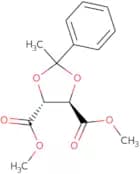
CAS:<p>N-Methoxy-N-methylacetamide is a nucleophilic amide that can be synthesized by the reaction of acetamide with methylmagnesium chloride. It has been used to synthesize an enantiopure derivative of 2-aminopropanol, which is used in the synthesis of potent antitumor agents. N-Methoxy-N-methylacetamide has shown potent anticancer activity in mice and rats. This molecule exhibits a carbonyl group that can act as an enolate, which is a reactive intermediate within chemical reactions. The nucleophilic attack on this carbonyl group leads to intramolecular hydrogen transfer, producing a more stable product.</p>Fórmula:C4H9NO2Pureza:Min. 95%Peso molecular:103.12 g/molDimethyl (2R,3R)-2,3-O-(1-Phenylethylidene)-L-tartrate
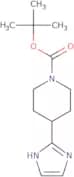
CAS:<p>Please enquire for more information about Dimethyl (2R,3R)-2,3-O-(1-Phenylethylidene)-L-tartrate including the price, delivery time and more detailed product information at the technical inquiry form on this page</p>Fórmula:C14H16O6Pureza:Min. 95%Peso molecular:280.27 g/mol1-Boc-4-imidazol-2-yl-piperidine
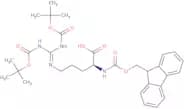
CAS:<p>Please enquire for more information about 1-Boc-4-imidazol-2-yl-piperidine including the price, delivery time and more detailed product information at the technical inquiry form on this page</p>Fórmula:C13H21N3O2Pureza:Min. 95%Peso molecular:251.32 g/molFmoc-Arg(Boc)2-OH
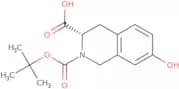
CAS:<p>Fmoc-Arg(Boc)2-OH is a synthetic amino acid. It can be used as a building block for peptide synthesis and in the formation of amides, lactams, and ketones. This reagent competes with other nucleophiles such as ammonia and hydrazine. Fmoc-Arg(Boc)2-OH is also used to form esters by reacting with carboxylic acids. As an intramolecular reaction, it reacts with itself to yield a benzyl group on the side chain that is not attached to the nitrogen atom.</p>Fórmula:C31H40N4O8Pureza:Min. 95%Forma y color:PowderPeso molecular:596.67 g/molBoc-(3S)-1,2,3,4-tetrahydroisoquinoline-7-hydroxy-3-carboxylic acid
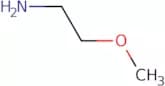
CAS:<p>Boc-(3S)-1,2,3,4-tetrahydroisoquinoline-7-hydroxy-3-carboxylic acid is a synthetic opioid that is chemically related to morphine. It binds to the δ opioid receptor and has a clinical development in the treatment of pain. The drug has been shown to inhibit the binding of gtpγs, which leads to the suppression of neuronal activity. Boc-(3S)-1,2,3,4-tetrahydroisoquinoline-7-hydroxy-3-carboxylic acid also has low molecular weight and low toxicity.</p>Fórmula:C15H19NO5Pureza:Min. 95%Forma y color:PowderPeso molecular:293.32 g/mol2-Methoxyethanamine
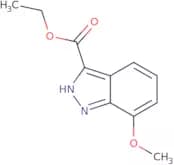
CAS:<p>2-Methoxyethanamine is a metabolite of the drug 2-methoxyethanol. It is an amine that can be found in urine samples. Its structure consists of a hydroxyl group, sodium carbonate, and an intramolecular hydrogen. 2-Methoxyethanamine inhibits the production of angiotensin II, which reduces blood pressure. This molecule has antihypertensive activity because it prevents the conversion of angiotensin I to angiotensin II in the kidneys. 2-Methoxyethanamine also has a stepwise mechanism for its synthesis from ethylene diamine and nitrogen atoms. It can be oxidized by hydrochloric acid or reduced by hydrogen bond or amines. The redox potential of this molecule is -0.06 V, which makes it a nucleophilic compound with an amide bond as its conjugate base.</p>Fórmula:C3H9NOPureza:Min. 95%Forma y color:Colourless To Yellow Clear LiquidPeso molecular:75.11 g/molEthyl 7-Methoxy-1H-Indazole-3-Carboxylate
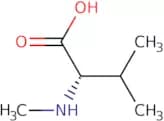
CAS:Producto controlado<p>Please enquire for more information about Ethyl 7-Methoxy-1H-Indazole-3-Carboxylate including the price, delivery time and more detailed product information at the technical inquiry form on this page</p>Fórmula:C11H12N2O3Pureza:Min. 95%Peso molecular:220.22 g/molN-Methyl-L-valine hydrochloride
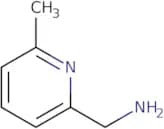
CAS:<p>N-Methyl-L-valine hydrochloride is a synthetic molecule that binds to the CB2 receptor. It has been shown to have anti-inflammatory effects in mice by reducing the production of inflammatory mediators such as prostaglandins and cytokines. N-Methyl-L-valine hydrochloride has also been shown to reduce inflammation in several mouse models of autoimmune diseases, such as type 1 diabetes, multiple sclerosis, and rheumatoid arthritis. This drug was found to be effective in animal models for these diseases by inhibiting inflammatory mediator release from immune cells.</p>Fórmula:C6H13NO2·HClPureza:Min. 95%Forma y color:PowderPeso molecular:167.63 g/mol6-Methyl-2-pyridinemethanamine
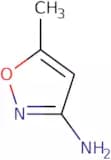
CAS:<p>6-Methyl-2-pyridinemethanamine is an imine that is used in cancer therapy. It has been shown to have antitumor activity at nanomolar concentrations, which is a very low dose. 6-Methyl-2-pyridinemethanamine is not sensitive to the body's enzymes and does not show any signs of toxicity. This drug also has a pharmacokinetic profile that enhances the uptake of other drugs and can be used for the treatment of cancers that are resistant to chemotherapy. The mechanism of action of 6-methyl-2-pyridinemethanamine is constitutive activation, which means it binds to the constitutively active site on the protein target and inhibits its function.</p>Fórmula:C7H10N2Pureza:Min. 95%Peso molecular:122.17 g/mol3-Amino-5-methylisoxazole
CAS:<p>3-Amino-5-methylisoxazole is a chemical compound that is used in the treatment of wastewater. It belongs to the group of p2, which includes sulfamethoxazole and sulfa drugs. 3-Amino-5-methylisoxazole is activated by multi-walled carbon or fatty acid and has a neutral pH. It has been shown to have significant cytotoxicity against cancer cells and also has antibiotic combinations with other drugs. 3-Amino-5-methylisoxazole is a drug that can be used in chemotherapy, but it may cause drug reactions.</p>Fórmula:C4H6N2OPureza:Min. 95%Peso molecular:98.1 g/mol2-Methoxy-4-methylbenzenethiol
CAS:<p>Please enquire for more information about 2-Methoxy-4-methylbenzenethiol including the price, delivery time and more detailed product information at the technical inquiry form on this page</p>Fórmula:C8H10OSPureza:Min. 95%Peso molecular:154.23 g/molmPEG6-OH
CAS:<p>mPEG6-OH is a PEG polymer categorised as monofunctional (OH-PEG-X). Used as a linker, mPEG6-OH is used to attached PEG to proteins, peptides, oligonucleotides, nanoparticles and small molecules via pegylation, a bioconjugation technique.</p>Fórmula:C13H28O7Pureza:Min. 95%Peso molecular:296.36 g/mol[(5-Methyl-1,3-thiazol-2-yl)methyl]amine dihydrochloride
CAS:<p>Please enquire for more information about [(5-Methyl-1,3-thiazol-2-yl)methyl]amine dihydrochloride including the price, delivery time and more detailed product information at the technical inquiry form on this page</p>Fórmula:C5H8N2SPureza:Min. 95%Peso molecular:128.2 g/molBoc-Arg(Boc)2-OH
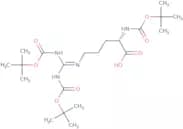
CAS:<p>Boc-Arg(Boc)2-OH is a protected derivative of the amino acid arginine. The Boc (tert-butyloxycarbonyl) groups shield both the amino group and the side chain's guanidine functionality. This protection scheme allows for its selective incorporation during peptide synthesis while offering stability under various reaction conditions. Boc-Arg(Boc)2-OH has been also used in the synthesis of amino acid prodrugs of cytotoxic anthraquinones, demonstrating its potential utility in developing targeted cancer therapies.</p>Fórmula:C21H38N4O8Pureza:Min. 95%Forma y color:PowderPeso molecular:474.55 g/mol



![[(5-Methyl-1,3-thiazol-2-yl)methyl]amine dihydrochloride](/_next/image/?url=https%3A%2Fstatic.cymitquimica.com%2Fproducts%2F3D%2Fthumb-webp%2FFM124184.webp&w=3840&q=75)