Aminoácidos (AA)
Los aminoácidos (AAs) son los componentes fundamentales de las proteínas y desempeñan un papel crucial en diversos procesos biológicos. Estos compuestos orgánicos son esenciales para la síntesis de proteínas, las rutas metabólicas y la señalización celular. En esta categoría, encontrará una gama completa de aminoácidos, incluyendo formas esenciales, no esenciales y modificadas, que son vitales para la investigación en bioquímica, biología molecular y ciencias de la nutrición. En CymitQuimica, ofrecemos aminoácidos de alta calidad para apoyar sus necesidades de investigación y desarrollo, asegurando precisión y fiabilidad en sus resultados experimentales.
Subcategorías de "Aminoácidos (AA)"
- Derivados de aminoácidos(3.955 productos)
- Aminoácidos y compuestos relacionados con aminoácidos(3.465 productos)
- Aminoácidos con oxígeno o azufre(168 productos)
- Aminoácidos protegidos con Boc(351 productos)
- Aminoácidos protegidos con Fmoc(1.710 productos)
Se han encontrado 38248 productos de "Aminoácidos (AA)"
Ordenar por
Pureza (%)
0
100
|
0
|
50
|
90
|
95
|
100
L-threo-methylphenidate hydrochloride
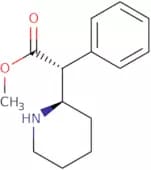
CAS:Producto controlado<p>L-threo-methylphenidate hydrochloride is a drug with a long duration of action. It has been shown to be effective in the treatment of ADHD symptoms and is used as an alternative to dexmethylphenidate. L-threo-methylphenidate hydrochloride is metabolized by cytochrome P450s, which results in slower pharmacokinetics, but also increases its bioavailability. L-threo-methylphenidate hydrochloride inhibits the activity of dopamine transporters, which leads to increased extracellular dopamine levels and reduced locomotor activity in mice. This drug has been shown to have an anti-inflammatory effect on alopecia areata and may be useful as a treatment for this condition. L-threo-methylphenidate hydrochloride has also been shown to have a protective effect against neurotoxicity induced by methamphetamine in CD1 mice.</p>Fórmula:C14H20ClNO2Pureza:Min. 95%Peso molecular:269.77 g/molH-Leu-D-Leu-OH
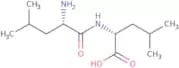
CAS:<p>H-Leu-D-Leu-OH is a nonproteinogenic amino acid that is used in the biosynthesis of proteins. It is formed from glutamic acid and leucine through an amide bond, and has a protonated amino group. The specificities of H-Leu-D-Leu are not yet known, but it has been shown to have antibacterial activity against Staphylococcus aureus and Streptococcus pyogenes. H-Leu-D-Leu may be transported across the cytoplasm membrane by means of a transport rate that is significantly higher than other amino acids. This amino acid also exhibits significant homology with nanosized molecules.</p>Fórmula:C12H24N2O3Pureza:Min. 95%Peso molecular:244.33 g/mol1-Benzyl-4-phenylpiperazine
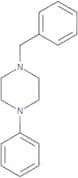
CAS:Producto controlado<p>1-Benzyl-4-phenylpiperazine is a type of phenylpiperazine that has hydroxy, phenyl ring, alkylthio, naphthyl and dopamine. It is an agonist for the D2 receptor and a specific ligand for the serotonin 5HT1A receptor. 1-Benzyl-4-phenylpiperazine has been shown to be effective in treating depression and psychotic depression. This drug can also be used as a substance in research on the neuropsychology of depression.</p>Fórmula:C17H20N2Pureza:Min. 95%Forma y color:Clear LiquidPeso molecular:252.35 g/mol8-Bromo-2-methylquinoline
CAS:<p>8-Bromo-2-methylquinoline is a naphthalene derivative that has an oxidant function. It can be used as a solvent for chlorobenzene and as a catalyst for the production of bipyridines and piperazine. 8-Bromo-2-methylquinoline is also used as a ligand in the preparation of metal complexes. This compound reacts with methyl groups, chlorine, and halides to form methyl quinolines and dichloromethanes. 8-Bromo-2-methylquinoline may react with fatty acids to form polyunsaturated acid esters or with polyunsaturated fatty acids to form polyethers.</p>Fórmula:C10H8BrNPureza:Min. 95%Peso molecular:222.08 g/mol2-Methylbenzenesulfonamide
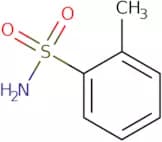
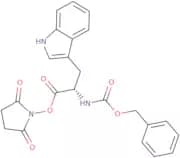
CAS:<p>2-Methylbenzenesulfonamide is a chemical compound that has been shown to induce apoptosis in bladder cancer cells. It is an acid conjugate of the drug 2-methylbenzene-1,4-sulfonamide and it can be used for the treatment of bladder cancer. The compound binds to the apoptosis protein and inhibits its function, leading to cell death. The cytotoxic effects of 2-methylbenzenesulfonamide have been shown in short term toxicity studies in rats. In long term animal studies, this compound showed no adverse effects on the liver or kidneys, but did show some indication of reproductive toxicity. 2-Methylbenzenesulfonamide is not mutagenic and does not affect male fertility when given orally at doses up to 2000 mg/kg body weight for 90 days. 2-Methylbenzenesulfonamide binds to receptors on the surface of cancerous cells and induces apoptosis by inhib</p>Fórmula:C7H9NO2SPureza:Min. 95%Peso molecular:171.0354N-α-Z-L-tryptophan N-hydroxysuccinimide ester
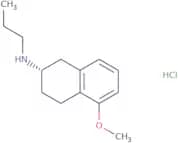
CAS:<p>Please enquire for more information about N-alpha-Z-L-tryptophan N-hydroxysuccinimide ester including the price, delivery time and more detailed product information at the technical inquiry form on this page</p>Fórmula:C23H21N3O6Pureza:Min. 95%Peso molecular:435.43 g/mol(S)-1,2,3,4-Tetrahydro-5-methoxy-N-propyl-2-naphthalenamine hydrochloride
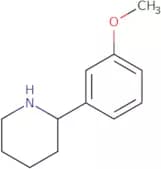
CAS:Producto controlado<p>Please enquire for more information about (S)-1,2,3,4-Tetrahydro-5-methoxy-N-propyl-2-naphthalenamine hydrochloride including the price, delivery time and more detailed product information at the technical inquiry form on this page</p>Fórmula:C14H22ClNOPureza:Min. 95%Peso molecular:255.78 g/mol2-(3-Methoxyphenyl)piperidine
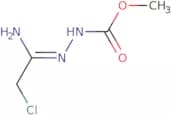
CAS:<p>Please enquire for more information about 2-(3-Methoxyphenyl)piperidine including the price, delivery time and more detailed product information at the technical inquiry form on this page</p>Fórmula:C12H17NOPureza:Min. 95%Forma y color:PowderPeso molecular:191.27 g/molN-Methylcarbonyl-2-chloroacetamidrazone
CAS:<p>Please enquire for more information about N-Methylcarbonyl-2-chloroacetamidrazone including the price, delivery time and more detailed product information at the technical inquiry form on this page</p>Fórmula:C4H8ClN3O2Pureza:Min. 95%Peso molecular:165.58 g/mol4-Methoxyphenylacetylene
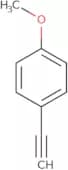
CAS:<p>4-Methoxyphenylacetylene is a phosphane that has been extensively studied for its reactivity in cross-coupling reactions with electron-deficient olefins. 4-Methoxyphenylacetylene has been shown to react with chlorides and form an intermediate chloride, which reacts with an olefin to form an ether. X-ray crystal structures of the reaction mechanism have been determined. The transfer mechanism involves nucleophilic attack of chloride on the phosphorus atom followed by elimination of hydrogen chloride from the phosphorus. The reaction product is an ether.</p>Fórmula:C9H8OPureza:Min. 95%Forma y color:White Clear LiquidPeso molecular:132.16 g/mol4-Methoxyphenethylamine HCl
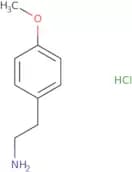
CAS:Producto controlado<p>4-Methoxyphenethylamine HCl is a chemical that inhibits the activity of the protein tyrosine phosphatase 1B (PTP1B). It has been shown to inhibit the growth of lung fibroblasts and fruit tree cells. 4-Methoxyphenethylamine HCl has also been used in animal experiments to diagnose animals with growth factor-β1 deficiency. It is also used to stain collagen for diagnosis.</p>Fórmula:C9H13NO·HClPureza:Min. 95%Peso molecular:187.67 g/mol2-Methylfuran
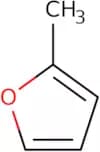
CAS:<p>2-Methylfuran is a compound that has been used as a catalyst in the synthesis of 2-methylpentane. The presence of nitrogen atoms in the molecule gives it some synergic effect with other catalysts, such as palladium and nickel. 2-Methylfuran can be detected at sensitivities of 10 parts per billion. A kinetic energy of ˜400 kJ/mole and a hydroxyl group give this compound the ability to react with laminar tissue culture cells. 2-Methylfuran is also a solid catalyst for methyl ethyl ketones, which are used in the production of solvents, plastics, and pharmaceuticals. Its transport properties are similar to those of isooctane, making it useful for studies on gas chromatography analysis.</p>Fórmula:C5H6OPureza:Min. 95%Forma y color:Clear LiquidPeso molecular:82.1 g/mol10-Methoxy iminostilbene
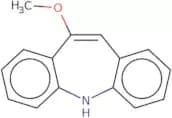
CAS:<p>10-Methoxy iminostilbene is a photophysical that has been shown to be toxic to mouse erythrocytes and to inhibit the DNA polymerase activity of calf thymus. It has also been shown to inhibit the growth of bacteria in an industrial process. 10-Methoxy iminostilbene is insoluble in water and organic solvents, which makes it difficult to purify. 10-Methoxy iminostilbene also has high levels of impurities and is sensitive to hydrochloric acid, methylbenzene, and amines. The functional groups present on this molecule are carbonyl, nitro, hydroxyls, ethers, amides, esters, ketones.</p>Fórmula:C15H13NOPureza:95%NmrForma y color:SolidPeso molecular:223.27 g/molN-Phenylpropanamide
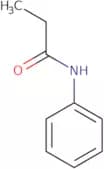
CAS:<p>N-Phenylpropanamide is a chemical inhibitor that has been shown to have a protective effect against the light-induced degradation of drugs in urine samples. The compound also inhibits the hydrolysis of amides by hydrochloric acid and hydrogen bonds with the receptor binding site on human liver cells. N-Phenylpropanamide has been shown to affect cardiac function, as well as growth factor production.</p>Fórmula:C9H11NOPureza:Min. 95%Peso molecular:149.19 g/mol3-Fluoro-4-methylaniline
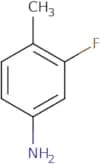
CAS:<p>3-Fluoro-4-methylaniline is a synthesized compound that is used to produce anti-cancer agents. It is an amide and has anti-cancer properties. 3-Fluoro-4-methylaniline also binds to DNA and inhibits the synthesis of proteins in cancer cells. The binding constants for ligands are found to be high. 3-Fluoro-4-methylaniline can also bind with DNA through intercalation or hybridization, which prevents transcription of RNA from DNA, thereby inhibiting protein synthesis. This results in cell death by apoptosis.</p>Fórmula:C7H8FNPureza:Min. 95%Forma y color:Clear LiquidPeso molecular:125.14 g/mol3-(4-Methyl-1,4-diazepan-1-yl)propanoic acid
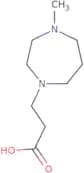
CAS:<p>Please enquire for more information about 3-(4-Methyl-1,4-diazepan-1-yl)propanoic acid including the price, delivery time and more detailed product information at the technical inquiry form on this page</p>Fórmula:C9H18N2O2Pureza:Min. 95%Peso molecular:186.25 g/molDiphenylprolinol
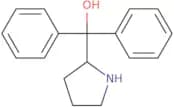
CAS:Producto controlado<p>Diphenylprolinol is a synthetic cannabinoid that is used as an agonist of the CB1 and CB2 receptors in the brain. It has been shown to have high affinity for both the CB1 and CB2 receptors, with Ki values of 0.07 and 0.05 nM respectively. Diphenylprolinol is a full agonist of the CB1 receptor, but only a partial agonist of the CB2 receptor. Diphenylprolinol binds to these receptors in a manner that resembles endocannabinoids, which are endogenous cannabinoids produced by animals. This drug has shown antipsychotic effects through its binding to serotonin reuptake inhibitors and its ability to block dopamine release in the prefrontal cortex. Diphenylprolinol also acts as a potent growth factor by stimulating cell proliferation via activation of protein kinase C (PKC). PKC activation leads to increased levels of intracellular calcium ions (Ca2+) and stimulates growth factor production such as</p>Pureza:Min. 95%1-Methylcyclopropane-1-carboxylic acid
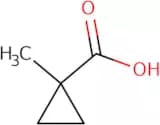
CAS:<p>1-Methylcyclopropane-1-carboxylic acid is a reactive, stereoisomeric amide with an alkaline metal. It can be prepared by the reaction of methoxide and nitrobenzene in the presence of a base such as potassium hydroxide. 1-Methylcyclopropane-1-carboxylic acid has been shown to have potent antitumor activity against solid tumors in vivo. This compound was also shown to inhibit the growth of human prostate cancer cells in vitro. Additionally, 1-methylcyclopropane-1-carboxylic acid has been shown to inhibit the generation of reactive oxygen species (ROS) from xylene and other aromatic hydrocarbons, which may be due to its ability to nitrosylate these compounds and prevent them from reacting with oxygen.</p>Fórmula:C5H8O2Pureza:Min. 95%Peso molecular:100.12 g/mol3-Amino-5-methoxybenzoic acid
CAS:<p>3-Amino-5-methoxybenzoic acid is a macrocyclist, which means that it can switch between two different forms. When the temperature is below 27 degrees Celsius, it exists as a mesomorphic phase and when the temperature increases above 27 degrees Celsius, it exists as an isotropic phase. 3-Amino-5-methoxybenzoic acid also has homologues that are also mesomorphic or isotropic depending on their temperatures. The chemoenzymatic parameters of the two phases are different and so are their lamellar morphologies. The fluorine atom in 3-amino-5-methoxybenzoic acid makes it act like a Lewis acid, decreasing its melting point and increasing its vapor pressure. There are two isomers of 3-amino-5-methoxybenzoic acid: dodecyl and octadecyl 3--amino--5--methoxyben</p>Fórmula:C8H9NO3Pureza:Min. 95%Forma y color:White To Yellow To Light Brown SolidPeso molecular:167.16 g/mol3-(4--Chloro-phenyl)-7-hydroxy-chromen-4-one
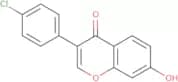
CAS:<p>3-(4-Chloro-phenyl)-7-hydroxy-chromen-4-one is an intermediate that is used in the research of Alzheimer's disease. It coordinates transition metals, such as copper (Cu), zinc (Zn), and nickel (Ni) to form a pharmacophore. This pharmacophore binds with flavones, which are compounds found in plants that have hypotensive and antihypertensive properties. 3-(4-Chloro-phenyl)-7-hydroxy-chromen-4-one has been shown to be an effective inhibitor of angiotensin II type 1 receptors and has a crystalline structure. 3-(4--Chloro---></p>Fórmula:C15H9ClO3Pureza:Min. 95%Peso molecular:272.68 g/mol