Aminoácidos (AA)
Los aminoácidos (AAs) son los componentes fundamentales de las proteínas y desempeñan un papel crucial en diversos procesos biológicos. Estos compuestos orgánicos son esenciales para la síntesis de proteínas, las rutas metabólicas y la señalización celular. En esta categoría, encontrará una gama completa de aminoácidos, incluyendo formas esenciales, no esenciales y modificadas, que son vitales para la investigación en bioquímica, biología molecular y ciencias de la nutrición. En CymitQuimica, ofrecemos aminoácidos de alta calidad para apoyar sus necesidades de investigación y desarrollo, asegurando precisión y fiabilidad en sus resultados experimentales.
Subcategorías de "Aminoácidos (AA)"
- Derivados de aminoácidos(3.955 productos)
- Aminoácidos y compuestos relacionados con aminoácidos(3.464 productos)
- Aminoácidos con oxígeno o azufre(168 productos)
- Aminoácidos protegidos con Boc(351 productos)
- Aminoácidos protegidos con Fmoc(1.710 productos)
Se han encontrado 38247 productos de "Aminoácidos (AA)"
Ordenar por
Pureza (%)
0
100
|
0
|
50
|
90
|
95
|
100
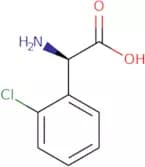
D-(+)-2-ChlorophenylglycIne
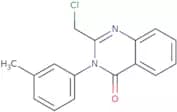
CAS:<p>D-(+)-2-Chlorophenylglycine is a synthetic, chiral aldehyde that serves as an industrial solvent. It is used to produce other organic compounds and has been shown to cause environmental pollution. D-(+)-2-Chlorophenylglycine is also used in the synthesis of thiourea and organocatalysts. This compound is synthesized from quinidine and enantiomeric (D or L) thionyl chloride, which are both manufactured on an industrial scale. The stereoselective process for D-(+)-2-chlorophenylglycine involves the use of a chiral catalyst.</p>Pureza:Min. 95%2-(Chloromethyl)-3-(3-methylphenyl)quinazolin-4(3H)-one
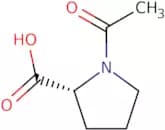
CAS:Producto controlado<p>Please enquire for more information about 2-(Chloromethyl)-3-(3-methylphenyl)quinazolin-4(3H)-one including the price, delivery time and more detailed product information at the technical inquiry form on this page</p>Fórmula:C16H13ClN2OPureza:Min. 95%Peso molecular:284.74 g/molN-Acetyl-D-Proline
CAS:<p>N-Acetyl-D-proline is a ligand that binds to the calcium ion. It has been shown to enhance the cross-linking of collagen, elastin, and other proteins. N-Acetyl-D-proline is also used as a crosslinking agent for polymers such as silicone rubber and epoxy resin. This compound can be found in devices such as connectors, valves, and pipes. N-Acetyl-D-proline can be used as a ligand to bind cphpc (carbon paste), which is an important component of membranes in fuel cells.</p>Fórmula:C7H11NO3Pureza:Min. 95%Peso molecular:157.17 g/mol(S)-(-)-1-Phenylethylamine
CAS:Producto controlado<p>(S)-(-)-1-Phenylethylamine is an amide that is synthesized by reacting an acid chloride with a primary amine. (S)-(-)-1-Phenylethylamine is a white solid that has a molecular weight of 110.11 g/mol and the chemical formula CH3CH2CH2NHCOCl. The compound has been isolated in yields of up to 60% from diethyl ketone and ethyl acetate, which is dependent on the solvent used. The compound can be purified by recrystallization from diethyl ether or ethyl acetate/petroleum ether mixtures. (S)-(-)-1-Phenylethylamine exhibits hydrogen bonding interactions with water, which is why it has a pH optimum around 7.5. This compound also reacts with ester hydrochlorides to form amides and carbonyl groups as well as undergoes reactions with amines to form urea derivatives</p>Fórmula:C8H11NPureza:Min. 95%Forma y color:Colorless Clear LiquidPeso molecular:121.18 g/molH-D-Glu-OMe
CAS:<p>H-D-Glu-OMe is a synthetic amino acid that is used as an antibacterial agent. It inhibits bacterial cell wall synthesis by binding to the enzyme murein. H-D-Glu-OMe has been shown to have antimicrobial activity against Escherichia coli and Pseudomonas aeruginosa, with minimal side effects on mammalian cells. The uptake of H-D-Glu-OMe into bacteria is dependent on the concentration of glutamic acid in the extracellular environment; this uptake also leads to an increase in intracellular glutamate levels, which activates nociceptive neurons in the brain. The following product description was generated: Rifapentine Rifapentine is an anti-tuberculosis drug that belongs to the class of rifamycins. It is the most active of the rifamycins for the treatment of tuberculosis. Rifapentine</p>Fórmula:C6H11NO4Pureza:Min. 95%Peso molecular:161.16 g/mol2-[(4-Phenylpiperazin-1-yl)carbonyl]phenol
CAS:Producto controlado<p>Please enquire for more information about 2-[(4-Phenylpiperazin-1-yl)carbonyl]phenol including the price, delivery time and more detailed product information at the technical inquiry form on this page</p>Fórmula:C17H18N2O2Pureza:Min. 95%Peso molecular:282.34 g/moltrans-Methyl crotonate
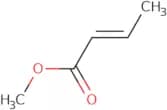
CAS:<p>Trans-methyl crotonate (trans-Methyl crotonate) is a dimethyl fumarate that is used as an analytical reagent for the determination of fatty acids. This reagent is prepared by an asymmetric synthesis and has been shown to be a potential candidate for the treatment of infectious diseases because it inhibits cell growth in the presence of oxygen. The reaction mechanism is not yet fully understood, but it has been found to inhibit glycol ethers and esters, which may play a role in its anti-inflammatory activities. Trans-methyl crotonate has also been shown to have kinetic properties that are dependent on its structure.</p>Fórmula:C5H8O2Pureza:Min. 95%Peso molecular:100.12 g/mol4-Methoxybenzylamine
CAS:<p>4-Methoxybenzylamine is an organic amine that has a redox potential of -0.14 V (vs. SHE) and a pK a of 10.5. It is used in the synthesis of trifluoroacetic acid esters, which are used as pharmaceutical intermediates. 4-Methoxybenzylamine has been shown to be effective in alleviating pain in animal models, and its mechanism of action may be due to inhibition of the enzyme cyclooxygenase. The kinetic data for this reaction were obtained by studying the deuterium isotope effect, which is characterized by a low energy barrier and rapid reaction rate. The hydrolysis step is also important for the reaction mechanism, with protocatechuic acid being an intermediate product. Hydrochloric acid is needed for dehydration of the reactants, while an aryl halide can be used instead in some cases. In these reactions, there are many possible reaction</p>Fórmula:C8H11NOPureza:Min. 95%Peso molecular:137.18 g/molN2-Lauroyl-L-glutamine
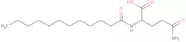
CAS:<p>N2-Lauroyl-L-glutamine is a surfactant that is used in skin care products. It is an amphiphilic molecule that has a hydrophilic head and lipophilic tail, which allows it to form micelles. This surfactant can be found as either the L or D isomer, which are mirror images of each other. The L form is more soluble and less hygroscopic than the D form. N2-Lauroyl-L-glutamine also contains fatty acids, polycarboxylic acid, and monomers. In addition to being used in skin care products, this surfactant can be found in cosmetics such as sunscreens and moisturizers. It also has a polymerization initiator function for silicone polymers and polyurethanes.</p>Fórmula:C17H32N2O4Pureza:Min. 95%Forma y color:White/Off-White SolidPeso molecular:328.45 g/molFmoc-D-Dap(Alloc)-OH
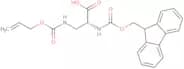
CAS:<p>Fmoc-D-Dap(Alloc)-OH is a synthetic compound that inhibits bacterial growth. It binds to the lipase active site and prevents hydrolysis of substrates such as c1-6 alkyl, phenoxy, and coumarin derivatives. Fmoc-D-Dap(Alloc)-OH is also an analog of Daptomycin. Fmoc-D-Dap(Alloc)-OH has been shown to inhibit the growth of human cancer cells by inhibiting the activity of cytotoxic heterocyclic amines, which are a class of chemicals that can cause DNA damage. The compound has also been shown to inhibit oxytocin receptor function in vitro, which may be due to its ability to bind with this receptor on the cell surface.</p>Fórmula:C22H22N2O6Pureza:Min. 95%Forma y color:PowderPeso molecular:410.42 g/molBenzyl-O-benzyl-serine
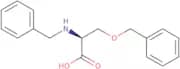
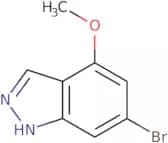
CAS:<p>Please enquire for more information about Benzyl-O-benzyl-serine including the price, delivery time and more detailed product information at the technical inquiry form on this page</p>Fórmula:C17H19NO3Pureza:95%NmrPeso molecular:285.34 g/mol6-Bromo-4-methoxy-1H-indazole
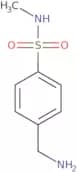
CAS:<p>Please enquire for more information about 6-Bromo-4-methoxy-1H-indazole including the price, delivery time and more detailed product information at the technical inquiry form on this page</p>Fórmula:C8H7BrN2OPureza:Min. 95%Peso molecular:227.06 g/mol4-(Aminomethyl)-N-Methylbenzenesulfonamide
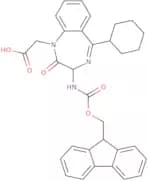
CAS:<p>Please enquire for more information about 4-(Aminomethyl)-N-Methylbenzenesulfonamide including the price, delivery time and more detailed product information at the technical inquiry form on this page</p>Fórmula:C8H12N2O2SPureza:Min. 95%Peso molecular:200.26 g/molFmoc-(R,S)-3-amino-N-1-carboxymethyl-2-oxo-5-cyclohexyl-1,4-benzodiazepine
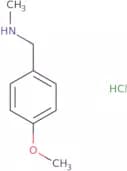
CAS:Producto controlado<p>Please enquire for more information about Fmoc-(R,S)-3-amino-N-1-carboxymethyl-2-oxo-5-cyclohexyl-1,4-benzodiazepine including the price, delivery time and more detailed product information at the technical inquiry form on this page</p>Fórmula:C32H31N3O5Pureza:Min. 95%Peso molecular:537.61 g/mol4-Methoxy-N-methylbenzylamine hydrochloride
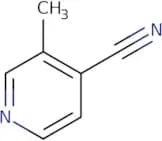
CAS:<p>Please enquire for more information about 4-Methoxy-N-methylbenzylamine hydrochloride including the price, delivery time and more detailed product information at the technical inquiry form on this page</p>Fórmula:C9H14NOClPureza:Min. 95%Peso molecular:187.67 g/mol3-Methylisonicotinonitrile
CAS:<p>3-Methylisonicotinonitrile (3MI) is a gaseous functional theory that is synthesized by the reaction of methyl groups and ammonia in the presence of an acid catalyst. 3MI has been shown to have anti-inflammatory properties, including inhibiting prostaglandin synthesis and reducing serum levels of tumor necrosis factor-α (TNF-α). The inflammatory response may be mediated by receptor subtypes such as PPARγ, which regulates lipid metabolism. 3MI also inhibits the production of proinflammatory cytokines from macrophages and neutrophils. This drug has been shown to inhibit acute inflammation in animal models.</p>Fórmula:C7H6N2Pureza:Min. 95%Peso molecular:118.14 g/mol2-Methylnaphthalene
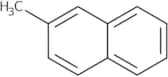
CAS:<p>2-Methylnaphthalene is a carcinogenic compound that is used as a solid catalyst. It has been shown to increase the activity of hydrochloric acid, an inorganic acid, and acylation reactions. 2-Methylnaphthalene also has been found to be a good catalyst for cyclohexane ring formation and activation energies. The reaction mechanism of 2-methylnaphthalene is not completely understood but it is thought that the carbonyl group on the benzene ring may be involved. 2-Methylnaphthalene can react with piperonyl butoxide, which is an organic compound, and naphthalene to form 1-methylnaphthalene.</p>Fórmula:C11H10Pureza:Min. 95%Forma y color:PowderPeso molecular:142.2 g/molMethyl 6-methyl-2-oxo-4-phenyl-1,2,3,4-tetrahydropyrimidine-5-carboxylate
CAS:<p>Please enquire for more information about Methyl 6-methyl-2-oxo-4-phenyl-1,2,3,4-tetrahydropyrimidine-5-carboxylate including the price, delivery time and more detailed product information at the technical inquiry form on this page</p>Fórmula:C13H14N2O3Pureza:Min. 95%Peso molecular:246.26 g/mol(R)-(-)-2-[Hydroxy(diphenyl)methyl]-1-methylpyrrolidine
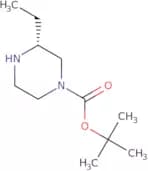
CAS:Producto controlado<p>Please enquire for more information about (R)-(-)-2-[Hydroxy(diphenyl)methyl]-1-methylpyrrolidine including the price, delivery time and more detailed product information at the technical inquiry form on this page</p>Fórmula:C18H21NOPureza:Min. 95%Peso molecular:267.37 g/mol(R)-1-Boc-3-ethyl-piperazine
CAS:<p>Please enquire for more information about (R)-1-Boc-3-ethyl-piperazine including the price, delivery time and more detailed product information at the technical inquiry form on this page</p>Fórmula:C11H22N2O2Pureza:Min. 95%Peso molecular:214.3 g/mol



![2-[(4-Phenylpiperazin-1-yl)carbonyl]phenol](/_next/image/?url=https%3A%2Fstatic.cymitquimica.com%2Fproducts%2F3D%2Fthumb-webp%2FFP131062.webp&w=3840&q=75)


![(R)-(-)-2-[Hydroxy(diphenyl)methyl]-1-methylpyrrolidine](/_next/image/?url=https%3A%2Fstatic.cymitquimica.com%2Fproducts%2F3D%2Fthumb-webp%2FFH59893.webp&w=3840&q=75)