Aminoácidos (AA)
Los aminoácidos (AAs) son los componentes fundamentales de las proteínas y desempeñan un papel crucial en diversos procesos biológicos. Estos compuestos orgánicos son esenciales para la síntesis de proteínas, las rutas metabólicas y la señalización celular. En esta categoría, encontrará una gama completa de aminoácidos, incluyendo formas esenciales, no esenciales y modificadas, que son vitales para la investigación en bioquímica, biología molecular y ciencias de la nutrición. En CymitQuimica, ofrecemos aminoácidos de alta calidad para apoyar sus necesidades de investigación y desarrollo, asegurando precisión y fiabilidad en sus resultados experimentales.
Subcategorías de "Aminoácidos (AA)"
- Derivados de aminoácidos(3.955 productos)
- Aminoácidos y compuestos relacionados con aminoácidos(3.461 productos)
- Aminoácidos con oxígeno o azufre(168 productos)
- Aminoácidos protegidos con Boc(351 productos)
- Aminoácidos protegidos con Fmoc(1.710 productos)
Se han encontrado 38244 productos de "Aminoácidos (AA)"
Ordenar por
Pureza (%)
0
100
|
0
|
50
|
90
|
95
|
100
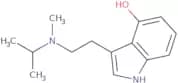
4-Hydroxy-N-isopropyl-N-methyltryptamine
CAS:Producto controlado<p>4-Hydroxy-N-isopropyl-N-methyltryptamine (4OHMIT) is an analytical chemical that has been shown to bind to various receptors in the rat brain. 4OHMIT has also been found to inhibit the binding of serotonin, dopamine and norepinephrine. This drug is a synthetic compound that has been detected in human urine samples.br>br>4OHMIT is a psychedelic substance that can be used for the acute treatment of depressive disorders and anxiety. It also has pharmacological treatments, such as analytical chemistry, which can be used to detect this drug in biological samples.</p>Fórmula:C14H20N2OPureza:Min. 95%Peso molecular:232.32 g/molmPEG8-OH
CAS:<p>mPEG8-OH is a PEG polymer categorised as monofunctional (OH-PEG-X). Used as a linker, mPEG8-OH is used to attached PEG to proteins, peptides, oligonucleotides, nanoparticles and small molecules via pegylation, a bioconjugation technique.</p>Fórmula:C17H36O9Pureza:Min. 95%Peso molecular:384.46 g/molrac-cis-1-benzyl-2-methyl-4-(N-propananilido)piperidine
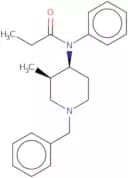
CAS:Producto controlado<p>Racemic cis-1-benzyl-2-methyl-4-(N-propananilido)piperidine (SBP) is a synthetic opioid analgesic that has been shown to bind to the μ-opioid receptor. It is the racemic form of the more potent S(+)-isomer. SBP is metabolized in vivo by cytochrome P450 2C19 and cytochrome P450 3A5, and its metabolites can be detected in human liver. The metabolism of SBP also produces propanamide as an intermediate. Recreational use of SBP has been reported with adverse effects including nausea, vomiting, headache, and dizziness.</p>Fórmula:C22H28N2OPureza:Min. 95%Peso molecular:336.47 g/mol1-(4-Methoxyphenyl)-7-oxo-6-(4-(2-oxopiperidin-1-yl)phenyl)-4,5,6,7-tetrahydro-1H-pyrazolo[3,4-c]pyridine-3-carboxylic acid
CAS:<p>Apixaban is a novel, orally active, and selective factor Xa inhibitor. It is the first oral anticoagulant that has been developed to inhibit both free and clot-bound thrombin. Apixaban binds reversibly to the active site of factor Xa and inhibits factor Xa-mediated conversion of prothrombin to thrombin, resulting in an increased concentration of prothrombin in blood. Apixaban also inhibits the activity of thrombin-activated protein C (APC) that degrades fibrin clots by proteolytic cleavage of fibrinogen. This drug has a crystalline form with a particle size between 10 and 100 μm.</p>Fórmula:C25H24N4O5Pureza:Min. 95%Peso molecular:460.48 g/molN-Phenyliminodiacetic acid
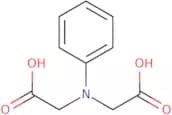
CAS:<p>N-Phenyliminodiacetic acid (NPD) is an organic acid that functions as a monomer and polymerization initiator in polyanhydrides. It has been shown to function as a redox potential sensor, having a strong response to changes in the environment. NPD has been shown to be sensitive to reactive oxygen species, such as HCl, which can affect its fluorescence properties. This compound is also active against aneurysms and has been used in simulations of these lesions. NPD also chelates with metal ions and can be used in the treatment of heavy metal poisoning.</p>Fórmula:C10H11NO4Pureza:Min. 95%Peso molecular:209.2 g/mol5-[3-Methoxy-4-(4-methoxy-benzyloxy)-benzyl]-pyrimidine-2,4-diamine
CAS:<p>5-[3-Methoxy-4-(4-methoxy-benzyloxy)-benzyl]-pyrimidine-2,4-diamine is a monoclonal antibody that blocks the signal of CTLA-4, a receptor on T cells. It has been shown to be effective in inhibiting skin cancer and primary breast cancers. This drug also has immunomodulatory effects and can be used to treat autoimmune diseases. 5-[3-Methoxy-4-(4-methoxy-benzyloxy)-benzyl]-pyrimidine-2,4-diamine binds to ctla-4 with high affinity and specificity, preventing the interaction of ctla-4 with its ligands such as CD80 (B7.1) and CD86 (B7.2). This prevents the activation of T cells by antigen presenting cells and suppresses the immune response.</p>Fórmula:C20H22N4O3Pureza:Min. 95%Peso molecular:366.41 g/mol17-Methylene-4-androsten-3-one
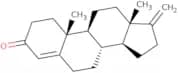
CAS:Producto controlado<p>17-Methylene-4-androsten-3-one is a natural steroid that belongs to the class of 17,20-lyase. This compound has been reported as an endogenous metabolite in human urine, plasma, and cerebrospinal fluid. It has been detected at low concentrations in the brain and liver. The nmr spectrum of 17-methylene-4-androsten-3-one displays a singlet at δ 3.2 ppm for the C=C double bond, which is characteristic of the A ring.<br>17 methylene 4 androsten 3 one is found in human urine, plasma, and cerebrospinal fluid with a concentration of 0.1 ng/ml. The nmr spectrum displays a singlet at δ 3.2 ppm for the C=C double bond which is characteristic of the A ring.</p>Fórmula:C20H28OPureza:Min. 95%Peso molecular:284.44 g/mol2-Diphenylphosphino-6-methylpyridine
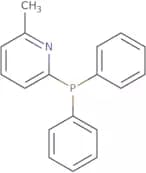
CAS:<p>2-Diphenylphosphino-6-methylpyridine is a luminescent phosphor with aryl substituents. It has been shown to emit light in the near-infrared region of the spectrum, which can be used for devices such as night lights. The compound has two isomers that differ in the position of the methyl group on the pyridine ring. Although it has not been studied systematically, it appears that one isomer has better photophysical properties than the other. This compound also shows chloride ion binding and changes its emission properties when exposed to temperatures above 300 K.</p>Fórmula:C18H16NPPureza:90%MinPeso molecular:277.3 g/mol3,7,4'-Trihydroxy-5-methoxy-8-prenylflavanone, (2R,3R)-
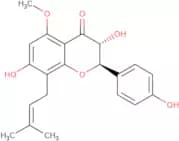
CAS:<p>3,7,4'-Trihydroxy-5-methoxy-8-prenylflavanone, (2R,3R)- is a prenylated flavonoid compound, which is a type of naturally occurring polyphenol. These compounds are known for their complex structures and biological activities, frequently contributing to the therapeutic properties of various plants. The source of this flavanone is often plants belonging to the Fabaceae family, including the roots and other parts of certain legumes, where it accumulates as part of the plant’s secondary metabolism.</p>Pureza:Min. 95%Pro-Gln-OH
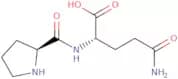
CAS:<p>Please enquire for more information about Pro-Gln-OH including the price, delivery time and more detailed product information at the technical inquiry form on this page</p>Fórmula:C10H17N3O4Pureza:Min. 95%Peso molecular:243.26 g/mol17-Methyl-4-androstene-3a,17a-diol
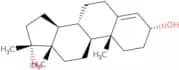
CAS:Producto controlado<p>Please enquire for more information about 17-Methyl-4-androstene-3a,17a-diol including the price, delivery time and more detailed product information at the technical inquiry form on this page</p>Fórmula:C20H32O2Pureza:Min. 95%Peso molecular:304.47 g/molZ-NH-PEG3-CH2CH2COOH
<p>Z-NH-PEG3-CH2CH2COOH is a PEG compound with two different functional groups (also known as heterobifunctional). Unlike homobifunctional PEG compounds (same functional group on both ends), this type of compounds are more versatile as have two different anchor points. Z-NH-PEG3-CH2CH2COOH is used as a linker and spacer to add a PEG moiety, via pegylation (a bioconjugation technique) to proteins, peptides, oligonucleotides, small molecules and nanoparticles.</p>Fórmula:C17H25NO7Pureza:Min. 95%Peso molecular:355.38 g/molN-(1,2,3,4-Tetrahydro-7-methoxy-1-oxo-2-naphthalenyl)propanamide
CAS:Producto controlado<p>Please enquire for more information about N-(1,2,3,4-Tetrahydro-7-methoxy-1-oxo-2-naphthalenyl)propanamide including the price, delivery time and more detailed product information at the technical inquiry form on this page</p>Fórmula:C14H17NO3Pureza:Min. 95%Peso molecular:247.29 g/mol2-Hydroxy-4-methylpyrimidine HCI
CAS:<p>2-Hydroxy-4-methylpyrimidine HCI is a crystalline solid that belongs to the group of organic compounds. It has a molecular formula of C5H5N3O2 and a molecular weight of 137.15 g/mol. The crystal structure is stabilized by hydrogen bonding between the hydroxyl groups on the molecules and water molecules present in the crystal lattice. Crystals are found in orthorhombic form, meaning they have three axes at right angles to each other with lengths that are not equal.</p>Fórmula:C5H7ClN2OPureza:Min. 95%Peso molecular:146.57 g/mol3-(Dimethylaminomethyl)-5-methyl-2-hexanone
CAS:<p>3-(Dimethylaminomethyl)-5-methyl-2-hexanone is a chemical compound that can be used as an intermediate in the synthesis of tetrabenazine. It is a colorless liquid that can be synthesized from 2,4-diiodobenzene and dimethylamine. The optimal reaction time for this chemical is at reflux conditions. 3-(Dimethylaminomethyl)-5-methyl-2-hexanone has a molecular weight of 164.27 g/mol and an elemental composition of C: 68.09%, H: 18.07%, N: 7.91%. The target product for this chemical is 2,5-dimethyloctane, which has a molecular weight of 116.14 g/mol and an elemental composition of C: 73.06%, H: 9.11%, N: 5.79%. This chemical reacts with triethylbenzylammonium to form 3-(dim</p>Fórmula:C10H21NOPureza:Min. 95%Peso molecular:171.28 g/molMethyl 2-methylpropanimidic acid hydrochloride
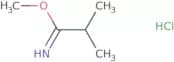
CAS:<p>Methyl 2-methylpropanimidic acid hydrochloride is a neutralizing agent that can be used to react with water, acids, and bases. It has been shown to react with gaseous compounds at temperatures as high as 200°C. Methyl 2-methylpropanimidic acid hydrochloride is soluble in organic solvents such as alcohols, ethers, and acetone and can be used to prepare esters by reacting with the corresponding alcohol or phenol. In addition, it has been shown to interact with haloalkyl groups and oxazinones. This compound also has nod-like receptor binding properties that have been shown to play a role in mediating the transport of organic solutions into cells. A receptor protein that reacts with methyl 2-methylpropanimidic acid hydrochloride has been identified in some organisms. The stereostructure of this compound resembles that of triazines and other organometallic compounds.</p>Fórmula:C5H11NO·HClPureza:Min. 95%Peso molecular:137.61 g/molβ-Asp-Phe methyl ester
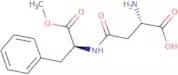
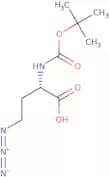
CAS:<p>The beta-Asp-Phe methyl ester is a sweetener that is used in many different food and drink products. It is a mixture of the amino acid phenylalanine, methylester and chrysanthemum petal extract. The beta-Asp-Phe methyl ester is used as a buffer to achieve the desired pH for the product. Beta-Asp-Phe methyl ester is also used as an anti-tumour agent, which has been shown to be effective against breast cancer cells. This compound can be synthesized using ammonium formate and chromatography to isolate the desired product.</p>Fórmula:C14H18N2O5Pureza:Min. 95%Peso molecular:294.3 g/molN-α-Boc-Nγ-Azido-L-2,4-diaminobutyric acid cyclohexylamine salt
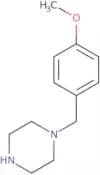
CAS:<p>Please enquire for more information about N-alpha-Boc-Ngamma-Azido-L-2,4-diaminobutyric acid cyclohexylamine salt including the price, delivery time and more detailed product information at the technical inquiry form on this page</p>Fórmula:C9H16N4O4·C6H13NPureza:Min. 95%Peso molecular:343.42 g/mol1-(4-Methoxybenzyl)piperazine
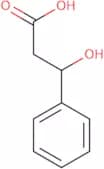
CAS:Producto controlado<p>1-(4-Methoxybenzyl)piperazine is a chemical compound that has been shown to have inhibitory activities against cancer cells. It also shows potential for the treatment of type 2 diabetes and Alzheimer's disease. The mechanism of action is not well understood, but it may be due to its ability to induce mitochondrial biogenesis and insulin sensitivity. 1-(4-Methoxybenzyl)piperazine has also been shown to improve memory in rats with spontaneous dementia, similar to the effects of donepezil (a drug used for Alzheimer's disease). 1-(4-Methoxybenzyl)piperazine can be taken orally or administered via injection.</p>Fórmula:C12H18N2OPureza:Min. 95%Peso molecular:206.28 g/mol3-Hydroxy-3-phenylpropanoic acid
CAS:<p>3-Hydroxy-3-phenylpropanoic acid, or 3HPPA, is an intermediate in the synthesis of salicylic acid. It is also an endogenous metabolite found in urine samples and is a product of the metabolism of glucosinolates by hydrolysis. The hydroxyl group on 3HPPA reacts with a carbonyl group to form a Schiff base, which is then hydrolyzed by hydrochloric acid to form hippuric acid. The biosynthesis of 3HPPA occurs through the oxidation of fatty acids with the addition of a hydroxyl group from water.</p>Fórmula:C9H10O3Pureza:Min. 95%Forma y color:PowderPeso molecular:166.17 g/mol


![1-(4-Methoxyphenyl)-7-oxo-6-(4-(2-oxopiperidin-1-yl)phenyl)-4,5,6,7-tetrahydro-1H-pyrazolo[3,4-c]p…](/_next/image/?url=https%3A%2Fstatic.cymitquimica.com%2Fproducts%2F3D%2Fthumb-webp%2FFM155764.webp&w=3840&q=75)
![5-[3-Methoxy-4-(4-methoxy-benzyloxy)-benzyl]-pyrimidine-2,4-diamine](/_next/image/?url=https%3A%2Fstatic.cymitquimica.com%2Fproducts%2F3D%2Fthumb-webp%2FFM31223.webp&w=3840&q=75)