Aminoácidos (AA)
Los aminoácidos (AAs) son los componentes fundamentales de las proteínas y desempeñan un papel crucial en diversos procesos biológicos. Estos compuestos orgánicos son esenciales para la síntesis de proteínas, las rutas metabólicas y la señalización celular. En esta categoría, encontrará una gama completa de aminoácidos, incluyendo formas esenciales, no esenciales y modificadas, que son vitales para la investigación en bioquímica, biología molecular y ciencias de la nutrición. En CymitQuimica, ofrecemos aminoácidos de alta calidad para apoyar sus necesidades de investigación y desarrollo, asegurando precisión y fiabilidad en sus resultados experimentales.
Subcategorías de "Aminoácidos (AA)"
- Derivados de aminoácidos(3.971 productos)
- Aminoácidos y compuestos relacionados con aminoácidos(3.477 productos)
- Aminoácidos con oxígeno o azufre(168 productos)
- Aminoácidos protegidos con Boc(351 productos)
- Aminoácidos protegidos con Fmoc(1.710 productos)
Se han encontrado 38321 productos de "Aminoácidos (AA)"
Ordenar por
Pureza (%)
0
100
|
0
|
50
|
90
|
95
|
100
Fmoc-Lys(Boc)-Wang resin (200-400 mesh)
CAS:<p>Please enquire for more information about Fmoc-Lys(Boc)-Wang resin (200-400 mesh) including the price, delivery time and more detailed product information at the technical inquiry form on this page</p>Pureza:Min. 95%IDR-1 trifluoroacetate salt
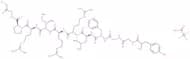
CAS:<p>IDR-1 is a peptide that is derived from the sequence of the human typhimurium protein. IDR-1 has been shown to have anti-inflammatory properties and modulates immune responses in mice. In particular, IDR-1 inhibits neutrophil chemotaxis by inhibiting formyl peptide receptor signaling. This peptide also inhibits bacterial chemokines, which are important for the recruitment of neutrophils. IDR-1 also has been shown to be effective against methicillin-resistant Staphylococcus aureus (MRSA) and pertussis.</p>Fórmula:C65H118N18O15Pureza:Min. 95%Peso molecular:1,391.74 g/mol(D-Phe6,Leu-NHEt 13,des-Met14)-Bombesin (6-14) trifluoroacetate salt
CAS:<p>Bombesin is a peptide hormone that is secreted by the intestines and the pancreas. Bombesin stimulates the adrenal glands to release adrenaline, which in turn stimulates the bladder to contract. Bombesin has been shown to increase bladder efficiency significantly when given intravenously to patients with chronic urinary retention. This drug also has significant effects on pain syndrome, as it can facilitate or inhibit pain depending on its concentration. Bombesin's mechanism of action is still unclear, but it may work by antagonizing other neurotransmitters like noradrenaline or adrenaline.</p>Fórmula:C49H69N13O9Pureza:Min. 95%Peso molecular:984.15 g/molH-Val-4MbNA·HCl
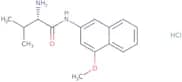
CAS:<p>Please enquire for more information about H-Val-4MbNA·HCl including the price, delivery time and more detailed product information at the technical inquiry form on this page</p>Fórmula:C16H20N2O2·HClPureza:Min. 95%Peso molecular:308.8 g/molLysozyme C (46-61) (chicken) trifluoroacetate salt
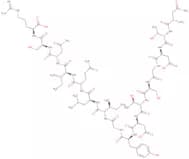
CAS:<p>Lysozyme C (46-61) (chicken) trifluoroacetate salt is a conjugated synthetic peptide that binds to the antigen. It is a reactive molecule with solubilized properties that has been shown to bind to the peptide in binding experiments. This synthetic peptide has been found to be efficacious in transfected murine bone cells and antigen-presenting cells. The binding of Lysozyme C (46-61) (chicken) trifluoroacetate salt to phospholipid membranes may be due to its reactivity with the membrane's hydrophobic surface.</p>Fórmula:C72H116N22O29Pureza:Min. 95%Peso molecular:1,753.82 g/molH-Tyr-Val-OH
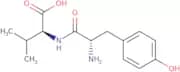
CAS:<p>H-Tyr-Val-OH is a model system for the study of monoclonal antibodies that are unable to bind to antigen. It has been shown to inhibit the production of signal protein, which is involved in cell proliferation and differentiation. H-Tyr-Val-OH also inhibits cell factor, which is a key component in the immune system. H-Tyr-Val-OH has been used as an oxidation catalyst to destroy the human immunodeficiency virus (HIV). The drug binds to human macrophages and blocks the activity of ATP binding cassette transporter. This leads to inhibition of HIV infection by preventing HIV from entering cells, thus inhibiting its replication.</p>Fórmula:C14H20N2O4Pureza:Min. 95%Peso molecular:280.32 g/molMyelin Basic Protein (85-99) Peptide Antagonist trifluoroacetate salt
CAS:<p>Please enquire for more information about Myelin Basic Protein (85-99) Peptide Antagonist trifluoroacetate salt including the price, delivery time and more detailed product information at the technical inquiry form on this page</p>Fórmula:C70H114N18O21Pureza:Min. 95%Peso molecular:1,543.76 g/molH-Lys(Z)-AMC·HCl
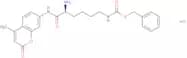
CAS:<p>Please enquire for more information about H-Lys(Z)-AMC·HCl including the price, delivery time and more detailed product information at the technical inquiry form on this page</p>Fórmula:C24H27N3O5·HClPureza:Min. 95%Peso molecular:473.95 g/molH-Ala-Pro-Val-EDANS
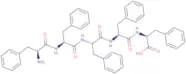
CAS:<p>Please enquire for more information about H-Ala-Pro-Val-EDANS including the price, delivery time and more detailed product information at the technical inquiry form on this page</p>Fórmula:C25H35N5O6SPureza:Min. 95%Peso molecular:533.64 g/molH-Phe-Phe-Phe-Phe-Phe-OH
CAS:<p>H-Phe-Phe-Phe-Phe-Phe-OH is a peptide that inhibits the protease dpp-iv. It is a potent inhibitor of dpp-iv, with an IC50 value of 0.2 μM. H-Phe-Phe-Phe-Phe-Phe-OH is not active against other proteases, such as papain and cathepsin B, and it does not inhibit the activity of pepsin. The inhibition effect of HFPHP has been shown to be dose dependent. Inhibition of dpp-IV by HFPHP leads to inhibition of the activation of other proenzymes such as trypsin and chymotrypsin, which are required for protein digestion in the stomach.</p>Fórmula:C45H47N5O6Pureza:Min. 95%Peso molecular:753.88 g/molDynorphin A (1-10)-Gly-chloromethylketone trifluoroacetate salt
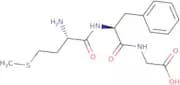
CAS:<p>Please enquire for more information about Dynorphin A (1-10)-Gly-chloromethylketone trifluoroacetate salt including the price, delivery time and more detailed product information at the technical inquiry form on this page</p>Fórmula:C60H95ClN20O12Pureza:Min. 95%Peso molecular:1,323.98 g/molH-Met-Phe-Gly-OH
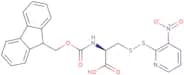
CAS:<p>H-Met-Phe-Gly-OH is a hydrophobic amino acid. It has been shown to be present in human proteins, and it has been used as a marker for determining the sequence of amino acids in peptides. H-Met-Phe-Gly-OH is an acidic tripeptide that can be analysed using reversed phase high performance liquid chromatography (RPHPLC). This tripeptide is found in the peptide transporter, which transports amino acids across cellular membranes. The structural studies of H-Met-Phe-Gly-OH have revealed that this tripeptide has an alpha helix conformation, with two hydrogen bonds from the backbone amides to the backbone carbonyl groups.</p>Fórmula:C16H23N3O4SPureza:Min. 95%Peso molecular:353.44 g/molFmoc-Cys(NPys)-OH
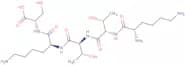
CAS:<p>Fmoc-Cys(NPys)-OH is a disulfide with a cyclic structure that can be used in the synthesis of peptides. It reacts efficiently with thiols to form stable, covalent bonds and can be used as an efficient ligation reagent for cyclic peptides. Fmoc-Cys(NPys)-OH is also useful for the synthesis of biomolecules because it has a systematic nature and does not react with other reactive groups on the molecule. It has been shown to have high reactivity towards oxytocin, which is important for its function in triggering labor contractions.</p>Fórmula:C23H19N3O6S2Pureza:Min. 95%Forma y color:White SolidPeso molecular:497.55 g/molProcollagen Type I (212-216) H-Lys-Thr-Thr-Lys-Ser-OH
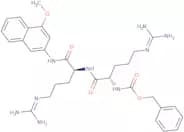
CAS:<p>Procollagen type I (212-216) H-Lys-Thr-Thr-Lys-Ser-OH is a tetrapeptide that is the most abundant component of human skin. It has been shown to have biological properties and can be synthesized in vitro. Procollagen type I (212-216) H-Lys-Thr-Thr-Lys-Ser-OH has an absorption maximum at 265 nm, which makes it suitable for use in uv protection creams. It also has a high chemical stability and can be stored for up to two years without degradation. Procollagen type I (212-216) H-Lys-Thr-Thr-Lys-Ser-OH is used as a substrate in cell culture to study protein synthesis and transcription, or polymerase chain reaction, technique. This peptide also inhibits the activity of proteases such as trypsin and chymotrypsin, making</p>Fórmula:C23H45N7O9Pureza:Min. 95%Forma y color:White Off-White PowderPeso molecular:563.65 g/molZ-Arg-Arg-4MbetaNA acetate salt
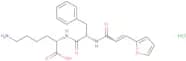
CAS:<p>Please enquire for more information about Z-Arg-Arg-4MbetaNA acetate salt including the price, delivery time and more detailed product information at the technical inquiry form on this page</p>Fórmula:C31H41N9O5·C2H4O2Pureza:Min. 95%Peso molecular:679.77 g/molFA-Phe-Lys-OH·HCl
CAS:<p>Please enquire for more information about FA-Phe-Lys-OH·HCl including the price, delivery time and more detailed product information at the technical inquiry form on this page</p>Fórmula:C22H27N3O5•HClPureza:Min. 95%Peso molecular:449.93 g/molH-Cys(4-methoxytrityl)-2-chlorotrityl resin (200-400 mesh)
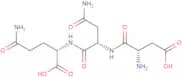
<p>Please enquire for more information about H-Cys(4-methoxytrityl)-2-chlorotrityl resin (200-400 mesh) including the price, delivery time and more detailed product information at the technical inquiry form on this page</p>Pureza:Min. 95%H-Asp-Asn-Gln-OH
CAS:<p>H-Asp-Asn-Gln-OH is a basic amino acid that is cleaved by endopeptidase to form H-Asp, H-Asn, and H-Gln. It is also cleaved by serine proteases to form the amino acid residues of arginyl, aspartyl, and glutamyl. The residue sequence can be determined through hplc analyses of microsomal proteins. This amino acid has been shown to have a regulatory effect on the metabolism of other amino acids in rat liver cells. Asparaginyl and glutamyl are essential for the synthesis of proproteins.</p>Fórmula:C13H21N5O8Pureza:Min. 95%Peso molecular:375.33 g/molZ-Glu-Leu-OH·DCHA
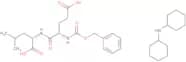
CAS:Producto controlado<p>Please enquire for more information about Z-Glu-Leu-OH·DCHA including the price, delivery time and more detailed product information at the technical inquiry form on this page</p>Fórmula:C19H26N2O7·C12H23NPureza:Min. 95%Peso molecular:575.74 g/molBrain Injury Derived Neurotrophic Peptide
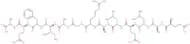
CAS:<p>Brain Injury Derived Neurotrophic Peptide H-Glu-Ala-Leu-Glu-Leu-Ala-Arg-Gly-Ala-Ile-Phe-Gln-Ala-NH2 is a growth factor that has been shown to have antiinflammatory and immunosuppressive effects in autoimmune diseases. It also has the ability to bind to peptides, proteins, and particle surfaces. This peptide has been shown to be effective against cancer cells by inhibiting tumor growth and increasing the effectiveness of radiation therapy. Brain Injury Derived Neurotrophic Peptide H-Glu-Ala-Leu-Glu-Leu-Ala Arg Gly Ala Ile Phe Gln Ala NH2 is also an immunosuppressant that can reduce inflammation caused by infectious diseases such as HIV/AIDS.</p>Fórmula:C62H102N18O18Pureza:Min. 95%Peso molecular:1,387.58 g/mol