Aminoácidos (AA)
Los aminoácidos (AAs) son los componentes fundamentales de las proteínas y desempeñan un papel crucial en diversos procesos biológicos. Estos compuestos orgánicos son esenciales para la síntesis de proteínas, las rutas metabólicas y la señalización celular. En esta categoría, encontrará una gama completa de aminoácidos, incluyendo formas esenciales, no esenciales y modificadas, que son vitales para la investigación en bioquímica, biología molecular y ciencias de la nutrición. En CymitQuimica, ofrecemos aminoácidos de alta calidad para apoyar sus necesidades de investigación y desarrollo, asegurando precisión y fiabilidad en sus resultados experimentales.
Subcategorías de "Aminoácidos (AA)"
- Derivados de aminoácidos(3.955 productos)
- Aminoácidos y compuestos relacionados con aminoácidos(3.464 productos)
- Aminoácidos con oxígeno o azufre(168 productos)
- Aminoácidos protegidos con Boc(351 productos)
- Aminoácidos protegidos con Fmoc(1.710 productos)
Se han encontrado 38247 productos de "Aminoácidos (AA)"
Ordenar por
Pureza (%)
0
100
|
0
|
50
|
90
|
95
|
100
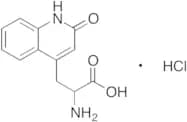
N-des(4-Chlorobenzoyl) Rebamipide
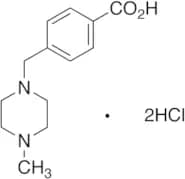
CAS:Fórmula:C12H13ClN2O3Forma y color:White To Off-WhitePeso molecular:268.74-(4-Methylpiperazinomethyl)benzoic Acid, Dihydrochloride
CAS:Producto controlado<p>Stability Hygroscopic<br>Applications 4-(4-Methylpiperazinomethyl)benzoic Acid, Dihydrochloride (cas# 106261-49-8) is a compound useful in organic synthesis.<br></p>Fórmula:C13H18N2O2·2ClHForma y color:NeatPeso molecular:307.22Thiodiglycolic Acid-d4
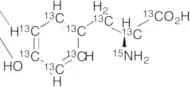
CAS:Producto controlado<p>Applications Thiodiglycolic Acid-d4 acts as a reagent for the synthesis of metabolites of S-carboxymethyl-L-cysteine and S-methyl-L-Cysteine and of some isotoically labelled (2H, 13C) analogs.<br>References Meese, C. O., et al.: Archiv der Pharmazie, 323, 957 (1990)<br></p>Fórmula:C4D4H2O4SForma y color:NeatPeso molecular:154.17L-Tyrosine-13C9,15N
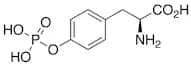
CAS:<p>Applications L-Tyrosine-13C9 ,15N is labelled analogue of L-Tyrosine (T899975), one of the 22 proteinogenic amino acids that are used by cells to synthesize proteins. L-Tyrosine is biologically converted from L-phenylalanine and is in turn is converted to L-DOPA and further converted into the neurotransmitters: dopamine, norepinephrine, and epinephrine.<br>References Rasmussen D.D. et al.: J. Clin. Endocrinol. Metab., 57, 760 (1983); Bagchi, S.P. et al.: Biochem. Pharmacol., 26, 900 (1977)<br></p>Fórmula:C9H1115NO3Forma y color:White To Off-WhitePeso molecular:191.1158O-Phospho-L-tyrosine
CAS:<p>Applications Useful in the study of tyrosine-phosphorylation, which has been linked with the malignant transformation of cells by some RNA tumour viruses.<br>References Sefton, B.M., et al.: Cell, 20, 807 (1980), Erikson, R., et al.: Perspect. Virol., 11, 93 (1981), Lee, E-S, et al.: J. Org. Chem., 59, 2086 (1994)<br></p>Fórmula:C9H12NO6PForma y color:NeatPeso molecular:261.17Sarcosine-d3 Hydrochloride
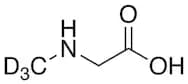
CAS:Producto controladoFórmula:C32H3H4NO2·ClHForma y color:NeatPeso molecular:128.57L-Ornithine-d6 Hydrochloride
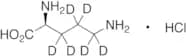
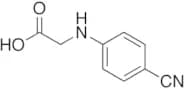
CAS:Producto controlado<p>Applications Labelled L-Ornithine. A non-essential amino acid for human development but is required intermediate in arginine biosynthesis. L-Ornithine is found in virtually all vertebrate tissues as well as incorporated into proteins, such as tyrocidine. Isolation from chicken excreta.<br>References Fattori, D. et al.: J. Med. Chem., 50, 550 (2007); Gomez-Alonso, S. et al.: J. Agric. Food Chem., 55, 608 (2007); Subramaniam, R. et al.: Bioorg. Med. Chem. Lett., 18, 3333 (2008);<br></p>Fórmula:C52H6H6N2O2·ClHForma y color:White To Off-WhitePeso molecular:174.66N-(4-Cyanophenyl)-glycine
CAS:Producto controlado<p>Applications N-(4-Cyanophenyl)-glycine (cas# 42288-26-6) is a compound useful in organic synthesis.<br></p>Fórmula:C9H8N2O2Forma y color:NeatPeso molecular:176.17L-Phenylalanine-d7
CAS:Producto controlado<p>Applications Labelled analogue of L-Phenylalanine, an essential amino acid.<br>References Hollunger, G. et al.: Acta Pharmacol. Toxicol., 34, 391 (1974); Bagchi, S.P. et al.: Biochem. Pharmacol., 26, 900 (1977);<br></p>Fórmula:C9H4D7NO2Forma y color:NeatPeso molecular:172.23(3R)-Tetrahydrofuran-3-yl 4-Methylbenzenesulfonate
CAS:Producto controlado<p>Applications (3R)-Tetrahydrofuran-3-yl 4-Methylbenzenesulfonate is derived from (R)-(-)-3-Hydroxytetrahydrofuran (H957760), which is a versatile chemical reactant used in the synthesis of pharmaceutical agents.<br>References Hrapchak, M., et al.: J. Labelled. Comp. Radiopharm., 57, 687 (2014);<br></p>Fórmula:C11H14O4SForma y color:White To Off-WhitePeso molecular:242.29Butyrylglycine
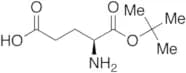
CAS:<p>Applications Butyrylglycine is one of the acylglycines, an important class of metabolites that have been used in the diagnosis of several inborn errors of metabolism (IEM).<br>References Costa, C., et al.: J. Pharmaceut. Biomed. Anal., 21, 1215 (2000), Garcia-Villoria, J., et al.: Clin. Biochem., 42, 2 (2009), Scalbert, A., et al.: Metabolomics, 5, 435 (2009),<br></p>Fórmula:C6H11NO3Forma y color:NeatPeso molecular:145.16L-Glutamic Acid α-tert-Butyl Ester
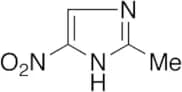
CAS:<p>Applications L-Glutamic Acid α-tert-Butyl Ester is an ester of L-Glutamic Acid used in the synthesis of enantiopure isotopomers of amino acids.<br>References Chauvel, E., et al.: J. Med. Chem., 37, 2950 (1994),<br></p>Fórmula:C9H17NO4Forma y color:NeatPeso molecular:203.242-Methyl-5-nitroimidazole
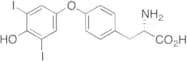
CAS:<p>Impurity Tinidazole EP Impurity A/ Metronidazole EP Impurity A<br>Applications 2-Methyl-5-nitroimidazole (Tinidazole EP Impurity A) is a Floconazole impurity.<br>References Sanderson, H., et al.: Toxicol. Lett., 187, 84 (2009), Kumar, L., et al.: Eur. J. Med. Chem., 45, 817 (2010),<br></p>Fórmula:C4H5N3O2Forma y color:Light YellowPeso molecular:127.103’,5’-Diiodo-L-thyronine
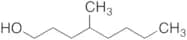
CAS:Producto controlado<p>Applications 3’,5’-Diiodo-L-thyronine is a thyroid hormone that has been shown to increase malic enzyme activity, and the activity of glucose-6-phosphate dehydrogenase in teleost Anabas testudineus. Thus, showing short term effect on lipid metabolism.<br>References Davey, K.G.: Insect Biochem. Mol. Bio., 30, 877 (2000); Shameena, B., et. al.: Endocr. Res., 26, 431 (2000)<br></p>Fórmula:C15H13I2NO4Forma y color:NeatPeso molecular:525.084-Methyl-1-octanol
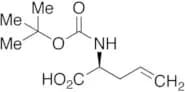
CAS:Producto controlado<p>Applications 4-Methyl-1-octanol is an intermediate in the synthesis of 1,2-Cyclohexanedicarboxylic Acid Mono 4-Methyloctan-1-ol Ester which is a possible metabolite of the di(isononyl)cyclohexane-1,2-dicarboxylate (DINCH) monoester (MINCH).<br>References Koch, H., et al.: Arch. Toxicol., 87, 799 (2013)<br></p>Fórmula:C9H20OForma y color:NeatPeso molecular:144.25N-Boc-L-Allylglycine
CAS:Producto controlado<p>Applications N-Boc-L-Allylglycine is a boc-protected allylglycine used in the preparation of arginine analogues including the natural amino acid enduracididine.<br>References Saniere, L. et al.: Tetrahedron, 60, 5889 (2004): Leman, L. et al.: ARKIVOC, 6, 126 (2003);<br></p>Fórmula:C10H17NO4Forma y color:NeatPeso molecular:215.25L-Homocysteine Thiolactone Hydrochloride
CAS:Producto controlado<p>Applications L-Homocysteine Thiolactone Hydrochloride is used to prepare substituted homocysteine analogs as inhibitors of peptidylglycine α-amidating monooxygenase. It is also used to synthesize (mercaptoacyl)alanylprolines as metalloprotease inhibitors.<br>References Erion, M., et al.: J. Med. Chem., 37, 4430 (1994); Slusarchyk, W., et al.: Bioorg. Med. Chem. Lett., 5, 753 (1995)<br></p>Fórmula:C4H8ClNOSForma y color:NeatPeso molecular:153.63(2R)-3-Amino-2-fluoropropanoic Acid-13C3
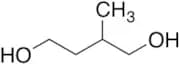
CAS:Producto controladoFórmula:C3H6FNO2Forma y color:NeatPeso molecular:110.062-Methyl-1,4-butanediol
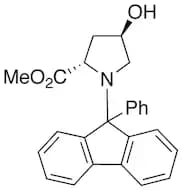
CAS:Producto controlado<p>Stability Unstable in Aqueous Solution<br>Applications 2-METHYL-1,4-BUTANEDIOL (cas# 2938-98-9) is a useful research chemical.<br></p>Fórmula:C5H12O2Forma y color:NeatPeso molecular:104.15(4R, 2S)-4-Hydroxy-1-(9-phenyl-9H-fluoren-9-yl)-proline Methyl Ester
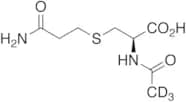
CAS:Producto controlado<p>Applications (4R, 2S)-4-Hydroxy-1-(9-phenyl-9H-fluoren-9-yl)-proline Methyl Ester (cas# 179990-59-1) is a compound useful in organic synthesis.<br></p>Fórmula:C25H23NO3Forma y color:Light BrownPeso molecular:385.46N-Acetyl-S-(carbamoylethyl)-L-cysteine-d3
CAS:Producto controlado<p>Stability Hygroscopic<br>Applications Labelled N-Acetyl-S-(carbamoylethyl)-L-cysteine (A171870). N-Acetyl-S-(carbamoylethyl)-L-cysteine is the urinary metabolite of Acrylamide (AA). Acrylamide is formed during the heating of food and is classified as a genotoxic carcinogen.<br>References Besaratinia, A., et al.: Mutat. Res., 80, 31 (2005), Bjellaas, T., et al.: Xenobiotica, 35, 1003 (2005), Bjellaas, T., et al.: Food Chem. Toxicol., 45, 1020 (2007), Bjellaas, T., et al.: Toxicol. Sci., 98, 110 (2007),<br></p>Fórmula:C8H11D3N2O4SForma y color:Off-WhitePeso molecular:237.29NG,NG-Dimethylarginine-D6 Dihydrochloride
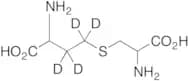
CAS:Producto controlado<p>Stability Very Hygroscopic<br>Applications A potent inhibitor of NO synthase of adrenal glands, brain, and vascular endothelial cells.<br>References Vallence, P., et al.: Lancet, 339, 572 (1992),<br></p>Fórmula:C8H14D6Cl2N4O2Forma y color:NeatPeso molecular:281.21D,L-Cystathionine-d4
CAS:Producto controlado<p>Applications Isotope labelled Intermediate for transsulfuration whereby a mammal transfers the sulfur of methionine via homocysteine to cysteine.<br>References Thompson, J.W., et al.: J. Biol. Chem., 266, 17011 (1991), Yoshida, Y., et al.: Microbiol., 148, 3961 (2002), Jiracek, J., et al.: J. Med. Chem., 49, 3982 (2006),<br></p>Fórmula:C72H4H10N2O4SForma y color:White To Light BrownPeso molecular:226.29N-[(Benzyloxy)carbonyl]glycylglycine
CAS:<p>Applications N-[(Benzyloxy)carbonyl]glycylglycine is a reagent in the synthesis of Glycylglycyl-L-tyrosine (G718500), which is a fungal tyrosinases and their capability to oxidize peptide-bound tyrosine residues is important in a view of applicability of tyrosinases.<br>References Bowness, J., et al.: Biochem. J., 53, 620 (1953), Cuff, M., et al.: J. Mol. Biol., 278, 855 (1998), Kubo, I., et al.: Bioorg. Med. Chem., 12, 5349 (2004),<br></p>Fórmula:C12H14N2O5Forma y color:NeatPeso molecular:266.25L-Alanine-d3
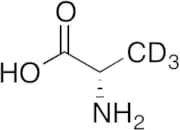
CAS:Producto controlado<p>Applications L-Alanine-d3 is the labeled analogue of L-Alanine (A481500), which is used to make in-vivo measurement of glucose and alanine metabolism in studies of patients with diabetes. L-Alanine is a non-essential amino acid for human development. L-Alanine is one of the 20 amino acids encoded by the genetic code.<br>References Bier, D.M. et al.: Diabetes, 26, 1005 (1977); Capaldo, B. et al.: J. Clin. Endocrinol. Metab., 71, 1220 (1990); Giacca, A. et al.: Diabetes, 47, 1763 (1998)<br></p>Fórmula:C3D3H4NO2Forma y color:NeatPeso molecular:92.11L-Ethionine
CAS:Producto controlado<p>Applications Ethionine-induced inhibition of protein synthesis and lowering of ATP level in the liver.<br>References Rotig, A., et al.: Lancet, 356, 391 (2000), Forsgren, M., et al.: Biochem. J., 382, 519 (2004), Johnson, A., et al.: J. Biol. Chem., 280, 31397 (2005), Horvath, R., et al.: Neurology, 66, 253 (2006), Mollet, M., et al.: J. Clin. Invest., 117, 765 (2007),<br></p>Fórmula:C6H13NO2SForma y color:NeatPeso molecular:163.24L-Aspartic Acid
CAS:<p>Applications L-Aspartic Acid is a non-essential amino acid found in food sources. L-Aspartic Acid is one of the 20 proteinogenic amino acids; the building blocks of proteins. Its conjugate base L-aspartate is an excitatory neurotransmitter in the central nervous system.<br>References Ager, D.J. et al.: J. Mol. Catal. Enzym., 11, 199 (2001); Velisek, J. et al.: Cze. J. Food. Sci., 24, 1 (2006); Nagahama, M. et al.: Cell Tiss. Res., 318, 483 (2004);<br></p>Fórmula:C4H7NO4Forma y color:WhitePeso molecular:133.10N-Acetyl-L-phenylalanine
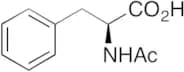
CAS:Producto controlado<p>Applications N-Acetyl-L-phenylalanine is an protected analogue of L-Phenylalanine (P319415), an essential amino acid produced for medical, feed, and nutritional applications such as in the preparation of Aspartame.<br>References Sriram, S., et al.: J. Med. Chem., 56, 2540 (2013); Parker, B.M., et al.: J. Biotech., 155, 396 (2011);<br></p>Fórmula:C11H13NO3Forma y color:NeatPeso molecular:207.23L-Methionine-34S
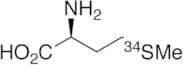
CAS:<p>Applications Labelled L-Methionine, an essential aminoacid for human development. Hepatoprotectant; antidote (acetominophen poisoning); urinary acidifier.<br>References Benevenga, N.J., et al.: J. Agric. Food Chem., 22, 2 (1974), Fleisher, L.D., et al.: Clin. Endocrinol. Metab., 3, 37 (1974), Meinnel, T., et al.: Biochimie, 75, 1061 (1993),<br></p>Fórmula:C5H11NO234SForma y color:NeatPeso molecular:151.113-N-Methyl-L-histidine
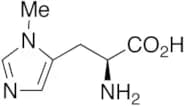
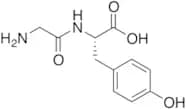
CAS:<p>Applications 3-N-Methyl-L-histidine is a potential compound to be used as a treatment with pharmacological PPARα agonists to stimulate the ubiquitin proteasome pathway and myofibrillar protein breakdown in skeletal muscle of rodents.<br>References Ringseis, R., et al.: Biochem. Biphys. Gen. Subject., 1830, 2105 (2013); Ubhi, B.K., et al.: Molec. Biosys., 8, 3125 (2012);<br></p>Fórmula:C7H11N3O2Forma y color:NeatPeso molecular:169.18Glycyl-L-Tyrosine Dihydrate
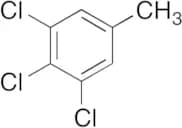
CAS:Producto controlado<p>Applications Glycyl-L-Tyrosine Dihydrate is used in process for producing N-Glycyltyrosine. Glycyl-L-Tyrosine Dihydrate is the anhydrous form of Glycyl-L-tyrosine(G720108); which is used in preparation method of high quality Aspartame and Aspartame crystallization-inducing agent.<br>References Mimura, T., et al.: Eur. Pat. Appl., (1999); Gao, Z., et al.: Faming Zhuanli Shenqing, (2019);<br></p>Fórmula:C11H14N2O4·2H2OForma y color:NeatPeso molecular:274.271,2,3-Trichloro-5-methylbenzene
CAS:<p>Applications 1,2,3-Trichloro-5-methylbenzene is useful in calculating 21 physical properties of organic compounds strictly from molecular structure.<br> Not a dangerous good if item is equal to or less than 1g/ml and there is less than 100g/ml in the package<br>References Jain, N., et al.: J. Pharm. Sci., 88, 852-860 (1999)<br></p>Fórmula:C7H5Cl3Forma y color:White To Off-WhitePeso molecular:195.4743-Ethyl-6,7,8,9-tetrahydro-9-hydroxy-2-methyl-4H-pyrido[1,2-a]pyrimidin-4-one
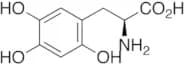
CAS:Producto controlado<p>Impurity Paliperidone USP Related Compound A<br>Applications 3-Ethyl-6,7,8,9-tetrahydro-9-hydroxy-2-methyl-4H-pyrido[1,2-a]pyrimidin-4-one (Paliperidone USP Related Compound A) is used in the synthesis of Paliperidone (P141000). Intermediate.<br>References Rein, A., et al.: Curr. Opin. Drug Discovery Dev., 3, 734 (2000),<br></p>Fórmula:C11H16N2O2Forma y color:NeatPeso molecular:208.266-Hydroxy-L-DOPA
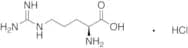
CAS:Producto controlado<p>Impurity Levodopa EP Impurity A; Levodopa USP Related Compound A<br>Stability Hygroscopic<br>Applications 6-Hydroxy-L-DOPA (Levodopa EP Impurity A; Levodopa USP Related Compound A) is the 6-hydroxy derivative of the amino acid L-DOPA (D533751) with neurotoxic properties. Studies show that exogenously administered 6-Hydroxy-L-DOPA is biotransformed by amino acid decarboxylase to the highly potent and catecholamine-selective neurotoxin, 6-Hydroxydopamine. The treatment of 6-Hydroxy-L-DOPA in rats resulted in the stimulation of acetylcholinesterase.<br>References Jaim-Etcheverry, G. et al.: Brain Res., 100, 699 (1975); Kostrzewa, R.M. et al.: Amino Acids, 14, 175 (1998); Berthet, A. et al.: J. Neurosci., 29, 4829 (2009);<br></p>Fórmula:C9H11NO5Forma y color:Brown To BlackPeso molecular:213.19L-Arginine Hydrochloride
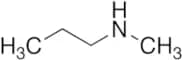
CAS:<p>Applications An essential amino acid for human development. Precursor for nitric oxide. Ammonia detoxicant (hepatic failure); diagnostic aid (pituitary function).<br>References Miura, T., et al.: Anal. Biochem., 139, 432 (1984), Jones, et al.: Adv. Enzyme Regul., 9, 19 (1970), Borders, C.L., et al.: Protein. Sci., 3, 541 (1994),<br></p>Fórmula:C6H14N4O2·ClHForma y color:NeatPeso molecular:210.66N-Methyl-1-propanamine
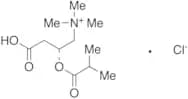
CAS:<p>Applications A naturally occurring nitrostable secondary amine found in tabacco smoke condensate.<br>References Singer, G.M. et al.: J. Agric. Food Chem. 24, 553(1976); Bush, L. P. et al.: Can. J. Plant Sci. 50, 289(1970).<br></p>Fórmula:C4H11NForma y color:ColourlessPeso molecular:73.14Isobutyryl L-Carnitine Chloride
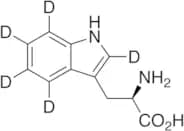
CAS:Producto controladoFórmula:C11H22NO4·ClForma y color:NeatPeso molecular:267.75D-Tryptophan-d5
CAS:Producto controlado<p>Applications Labelled analogue of an essential amino acid found in naturally produced peptides. Unlike its stereoisomer, L-tryptophan, it is not used in structural or enzyme proteins.<br>References Karunakaran, S.et al.: Bochem. J., 414, 343 (2008); Pallaghy, P.K. et al.: Biochem., 38, 11553 (1999);<br></p>Fórmula:C112H5H7N2O2Forma y color:NeatPeso molecular:209.26Nα-Acetyl-L-ornithine
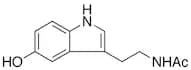
CAS:Producto controladoFórmula:C7H14N2O3Forma y color:Off-WhitePeso molecular:174.2N-Acetyl-5-hydroxytryptamine
CAS:<p>Stability Hygroscopic<br>Applications A metabolite of Melatonin (M215000).<br>References Reiter, R.J., et al.: J. Biomed. Sci., 7, 444 (2000), Chen, Z., et al.: Am. J. Physiol, 284, 1618 (2003), Barrenetxe, J., et al.: J. Physiol. Biochem., 60, 61 (2004),<br></p>Fórmula:C12H14N2O2Forma y color:White To GreyPeso molecular:218.2518N-Benzyl-L-tyrosine
CAS:Producto controlado<p>Applications Protected L-Tyrosine (T899975), an amino acid, used by cells to synthesize proteins. L-Tyrosine is biologically converted from L-phenylalanine and is in turn is converted to L-DOPA and further converted into the neurotransmitters: dopamine, norepinephrine, and epinephrine.<br>References Rasmussen D.D. et al.: J. Clin. Endocrinol. Metab., 57, 760 (1983); Bagchi, S.P. et al.: Biochem. Pharmacol., 26, 900 (1977)<br></p>Fórmula:C16H17NO3Forma y color:NeatPeso molecular:271.32L,L-Dityrosine Dihydrochloride
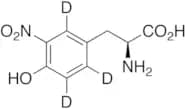
CAS:Producto controlado<p>Stability Hygroscopic<br>Applications Dityrosine (DY), a tyrosine dimer formed by 3,3’-biaryl bond formation can be used as a biomarker to detect oxidative protein damage and selective proteolysis. Fluorescence intensity decays of Dityrosine are generally characterized by two decay components, one with a lifetime in the range of 150 to 800 ps and another between 2.5 and 4.5 ns.<br>References Libertini, L., et al.: Biophys. J., 47, 765 (1985), Huggins, T., et al.: J. Biol. Chem., 268, 12341 (1993), Malencik, D., et al.: Biochemistry, 35, 4375 (1996),<br></p>Fórmula:C18H20N2O6·2ClHForma y color:NeatPeso molecular:433.283-Nitro-L-tyrosine-d3
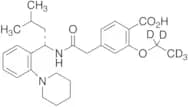
CAS:Producto controlado<p>Applications A labelled marker for peroxynitrite. Oxidant and cytotoxic agent.<br>References Sekiguchi, M., et al.: Brain Res., 978, 228 (2003), van den Tweel, E., et al.: J. Neurobiol., 167, 64 (2005), Shirakura, T., et al.: Biol. Pharm. Bull., 28, 1658 (2005),<br></p>Fórmula:C9D3H7N2O5Forma y color:NeatPeso molecular:229.2Repaglinide-ethyl-d5
CAS:Producto controlado<p>Applications Deuterated Repaglinide, a non-sulfonylurea oral hypoglycemic agent which is used as an antidiabetic.<br>References Wolffenbuttel, B.H.R., et al.: Eur. J. Clin. Pharmacol., 45, 113 (1993), Ampudia-Blasco, F.J., et al.: Diabetologia, 37, 703 (1994),<br></p>Fórmula:C272H5H31N2O4Forma y color:White SolidPeso molecular:457.62L-Thioproline
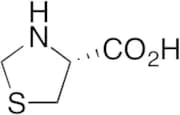
CAS:<p>Applications L-Thioproline is used to create a monolayer on gold electrodes for the determination Copper(II). L-Thioproline has shown to be an effect inhibitor of proline absorption in Saccharomyces chevalieri.<br> Not a dangerous good if item is equal to or less than 1g/ml and there is less than 100g/ml in the package<br>References Cui, X., et. al.: Sci. China Chem., 53, 257 (2010); Magana-Schwenchke, N., Schwencke, J.: BBA-Biomembranes, 173, 313 (1969)<br></p>Fórmula:C4H7NO2SForma y color:NeatPeso molecular:133.17D-Arginine
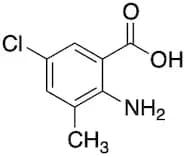
CAS:Producto controlado<p>Applications D-Arginine is an unnatural isomer of L-Arginine (A769505), and is used to inhibit glutamate-induced nitric oxide production in rats. Derivatives of D-Arginine are used for pharmaceutical purposes, one example is 1-Deamino-8-D-arginine vasopressin, which is used to treat various bleeding disorders.<br>References Castellano, M., et al.: Neurosci. Lett., 314, 127 (2001); Kobrinsky, N., et al.: Lancet, 323, 1145 (1984); Weyrich, A., et al.: Circulation, 86, 279 (1992)<br></p>Fórmula:C6H14N4O2Forma y color:NeatPeso molecular:174.202-Amino-5-chloro-3-methylbenzoic Acid
CAS:Producto controlado<p>Applications 2-Amino-5-chloro-3-methylbenzoic Acid is a useful research chemical for the preparation of benzoyl urea containing anthranillic acid groups with insecticidal activity.<br>References Peng, Y., et al.: Nongyao, 48, 326 (2009);<br></p>Fórmula:C8H8NO2ClForma y color:NeatPeso molecular:185.6α-Methyl-L-phenylalanine
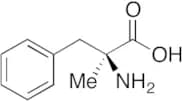
CAS:Producto controlado<p>Applications α-Methyl-L-phenylalanine is used to prepare hippuryl-α-methylphenylalanine and hippuryl-α-methylphenyllactic acid as substrates for carboxypeptidase A. It is also used in the synthesis of high affinity tachykinin NK2 receptor antagonists.<br>References Lee, M., et al.: Bioorg. Med. Chem., 8, 815 (2000); Boyle, S., et al.: Bioorg. Med. Chem., 2, 101 (1994)<br></p>Fórmula:C10H13NO2Forma y color:NeatPeso molecular:179.22








![N-[(Benzyloxy)carbonyl]glycylglycine](/_next/image/?url=https%3A%2Fstatic.cymitquimica.com%2Fproducts%2FTR%2Fthumb-webp%2FB287100.webp&w=3840&q=75)


![3-Ethyl-6,7,8,9-tetrahydro-9-hydroxy-2-methyl-4H-pyrido[1,2-a]pyrimidin-4-one](/_next/image/?url=https%3A%2Fstatic.cymitquimica.com%2Fproducts%2FTR%2Fthumb-webp%2FE926295.webp&w=3840&q=75)