Aminoácidos (AA)
Los aminoácidos (AAs) son los componentes fundamentales de las proteínas y desempeñan un papel crucial en diversos procesos biológicos. Estos compuestos orgánicos son esenciales para la síntesis de proteínas, las rutas metabólicas y la señalización celular. En esta categoría, encontrará una gama completa de aminoácidos, incluyendo formas esenciales, no esenciales y modificadas, que son vitales para la investigación en bioquímica, biología molecular y ciencias de la nutrición. En CymitQuimica, ofrecemos aminoácidos de alta calidad para apoyar sus necesidades de investigación y desarrollo, asegurando precisión y fiabilidad en sus resultados experimentales.
Subcategorías de "Aminoácidos (AA)"
- Derivados de aminoácidos(3.957 productos)
- Aminoácidos y compuestos relacionados con aminoácidos(3.472 productos)
- Aminoácidos con oxígeno o azufre(168 productos)
- Aminoácidos protegidos con Boc(351 productos)
- Aminoácidos protegidos con Fmoc(1.710 productos)
Se han encontrado 38265 productos de "Aminoácidos (AA)"
Ordenar por
Pureza (%)
0
100
|
0
|
50
|
90
|
95
|
100
1-Acetate 4-Methanesulfonate 1,4-Butanediol
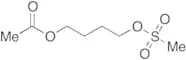
CAS:Producto controlado<p>Stability Moisture Sensitive<br>Applications 1-Acetate 4-Methanesulfonate 1,4-Butanediol is used in the facile cleavage of ethers. A Busulfan Impurity<br>References Mazur, Y., et al.: J. Org. Chem., 36, 532 (1971);<br></p>Fórmula:C7H14O5SForma y color:NeatPeso molecular:210.25Nα-Acetyl-L-ornithine
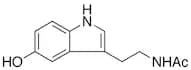
CAS:Producto controladoFórmula:C7H14N2O3Forma y color:Off-WhitePeso molecular:174.2N-Acetyl-5-hydroxytryptamine
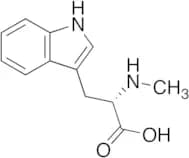
CAS:<p>Stability Hygroscopic<br>Applications A metabolite of Melatonin (M215000).<br>References Reiter, R.J., et al.: J. Biomed. Sci., 7, 444 (2000), Chen, Z., et al.: Am. J. Physiol, 284, 1618 (2003), Barrenetxe, J., et al.: J. Physiol. Biochem., 60, 61 (2004),<br></p>Fórmula:C12H14N2O2Forma y color:White To GreyPeso molecular:218.2518L-Abrine
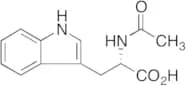
CAS:Producto controlado<p>Applications L-Abrine is an indoleamino acid that displays radical scavenging and antioxidant properties.<br>References Yang, M., et al.: Food. Funct., 5, 2268 (2014);<br></p>Fórmula:C12H14N2O2Forma y color:Off-WhitePeso molecular:218.2518N-Acetyl-L-Tryptophan
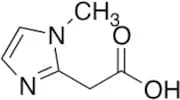
CAS:Producto controlado<p>Applications N-Acetyl-L-Tryptophan, is a derivative of L-Tryptophan (T947210), that can be used as competitive inhibitor to identify and characterize tryptophanases. It can also be used as an NK1 tachykinin receptor antagonist, that may help to develop a novel therapeutic intervention for the treatment of reperfusion injury in acute ischemic stroke.<br>References Turner, R. J., et al.: Neuroscience, 220, 1 (2012);<br></p>Fórmula:C13H14N2O3Forma y color:White To Off-WhitePeso molecular:246.26(1-Methyl-1H-imidazol-2-yl)-acetic Acid
CAS:Producto controlado<p>Applications (1-Methyl-1H-imidazol-2-yl)-acetic acid (cas# 118054-54-9) is a useful research chemical.<br></p>Fórmula:C6H8N2O2Forma y color:Off WhitePeso molecular:140.14N-(8-Aminooctyl)-1,8-octanediamine
CAS:Producto controladoFórmula:C16H37N3Forma y color:NeatPeso molecular:271.4855-Aminolevulinic Acid Methyl Ester Hydrochloride
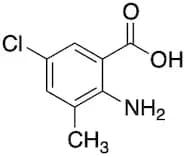
CAS:Producto controlado<p>Applications 5-Aminolevulinic Acid Methyl Ester Hydrochloride, is the methyl ester of Aminolevulinic Acid (ALA) (A611780), which has been shown to have higher lipophilicity, and to be highly efficient at inducing protoporphyrin IX (PpIX) production in cell culture.<br>References Morrow, D. I. J., et al.: J. Pharmac. Sci., 99, 3486 (2010); Peng, Q., et al.: Cancer, 79, 2282 (1997);<br></p>Fórmula:C6H11NO3·HClForma y color:NeatPeso molecular:181.622-Amino-5-chloro-3-methylbenzoic Acid
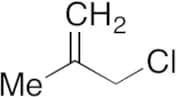
CAS:Producto controlado<p>Applications 2-Amino-5-chloro-3-methylbenzoic Acid is a useful research chemical for the preparation of benzoyl urea containing anthranillic acid groups with insecticidal activity.<br>References Peng, Y., et al.: Nongyao, 48, 326 (2009);<br></p>Fórmula:C8H8NO2ClForma y color:NeatPeso molecular:185.63-Chloro-2-methyl-1-propene
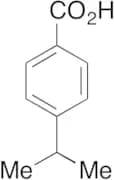
CAS:<p>Applications 3-Chloro-2-methyl-1-propene has been used in the synthesis of 2-S-substituted pyrimidines as antimetabolites of nucleic acid precursors for cancer therapy.<br> Not a dangerous good if item is equal to or less than 1g/ml and there is less than 100g/ml in the package<br>References Kaldrikyan, M.A., Melik-Ohanjanyan, R.G.: Hayastani Kimiakan Handes, 67, 321 (2014)<br></p>Fórmula:C4H7ClForma y color:NeatPeso molecular:90.554-(1-Methylethyl)benzoic Acid
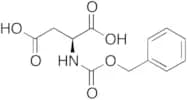
CAS:<p>Applications 4-(1-Methylethyl)benzoic Acid is used in the synthesis of quinuclidine benzamides as agonists for nicotinic acetylcholine receptors. Also used in the synthesis of nifuroxazide analogues showing antimicrobial activity against methicillin-resistant Staphylococcus.<br>References Bodnar, A. et al.: J. Med. Chem., 48, 905 (2005); Masunari, A. et al.: Bioorg. Med. Chem. Lett., 15, 4229 (2007);<br></p>Fórmula:C10H12O2Forma y color:NeatPeso molecular:164.2N-Cbz-L-aspartic Acid
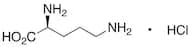
CAS:Producto controlado<p>Applications N-Cbz-L-aspartic acid is an N-Cbz-protected form of L-Aspartic acid (A790024). L-Aspartic acid is a nonessential amino acid that is used to biosynthesize other amino acids within the human body. L-Aspartic acid also increases membrane conductance of mammalian neurons by voltage-dependent means, causing depolarization and nerve impulses that travel to key areas of the central nervous system.<br>References Anderson, H., et al.: J. Nutr., 99, 82 (1969); Honey, C., et al.: Neurosci. Lett., 61, 135 (1985); MacDonald, J., et al.: Brain Res., 237, 248 (1982)<br></p>Fórmula:C12H13NO6Forma y color:White To Off-WhitePeso molecular:267.23L-Ornithine Hydrochloride
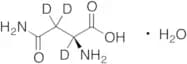
CAS:Producto controlado<p>Stability Hygroscopic<br>Applications L-Ornithine is a non-essential amino acid for human development but is required intermediate in arginine biosynthesis. L-Ornithine is found in virtually all vertebrate tissues as well as incorporated into proteins, such as tyrocidine. Isolation from chicken excreta.<br>References Fattori, D., et al.: J. Med. Chem., 50, 550 (2007), Gomez-Alonso, S., et al.: J. Agric. Food Chem., 55, 608 (2007), Subramaniam, R., et al.: Bioorg. Med. Chem. Lett., 18, 3333 (2008),<br></p>Fórmula:C5H12N2O2·ClHForma y color:White To Off-WhitePeso molecular:168.62L-Asparagine-d3 Hydrate
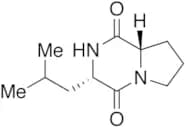
CAS:Producto controlado<p>Applications L-Asparagine-d3 Hydrate is an isotope labelled L-Asparagine Hydrate, a naturally occurring amino acid that is not a essential for humans and can be synthesized from central metabolic pathway intermediates.<br>References Burda, P., et al.: Biochim. Biophys. Acta., 1426, 239 (1999); Yamane, H., et al.: Animal. Sci. J., 80, 286 (2009);<br></p>Fórmula:C4D3H5N2O3·H2OForma y color:White To Off-WhitePeso molecular:153.1517Cyclo(L-prolyl-L-leucyl)
CAS:Producto controlado<p>Applications Sorbicillin analog. A bioactive secondary metabolites from terrestrial Streptomyces species TN262.<br>References Ma, L. et al. : J. Anitibiot. 64, 645 (2011); Elleuch, L. et al.: Appl. Biochem. Biotech. 162, 579 (2010)<br></p>Fórmula:C11H18N2O2Forma y color:NeatPeso molecular:210.27L-Leucine
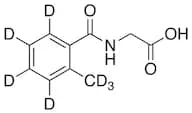
CAS:Producto controlado<p>Applications L-Leucine is an essential amino acid. L-Leucine acts as a nutrient signal to stimulate protein synthesis. It has also activates the mammalian target of rapamycin kinase that regulates cell growth.<br>References Demant, T. et al.: Am. J. Physiol., 270, E1022 (1996); Diraison, F. et al.: Am. J. Physiol., 277, E529 (1999); Suryawan, A. et al.: J. Anim. Sci., 89, 2004 (2011); Peyrollier, K. et al.: Biochem. J., 350, 361 (2000);<br></p>Fórmula:C6H13NO2Forma y color:NeatPeso molecular:131.172-Methyl Hippuric Acid-d7
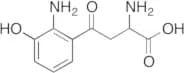
CAS:Producto controlado<p>Applications The main labelled metabolite of o-xylene.<br>References Gregus, Z., et al.: Drug Metab. Dispos., 26, 1082 (1998), Gregus, Z., et al.: Xenobiotica, 29, 547 (1999), Gonzalez-Reche, L., et al.: Arch. Toxicol., 77, 80 (2003),<br></p>Fórmula:C10D7H4NO3Forma y color:NeatPeso molecular:200.243-Hydroxy-DL-kynurenine
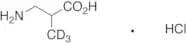
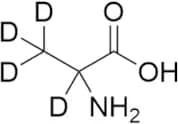
CAS:<p>Stability Hygroscopic<br>Applications 3-Hydroxy-DL-kynurenine is a tryptophan metabolite. Could be associated with symptoms in Parkinson's disease.<br>References Heilman, P. L., et al.: Movement Disorders, 35, 2028 (2020)<br></p>Fórmula:C10H12N2O4Forma y color:NeatPeso molecular:224.21rac-3-Aminoisobutyric Acid-d3 Hydrochloride
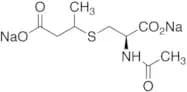
CAS:Producto controlado<p>Stability Hygroscopic<br>Applications Labelled 3-Aminoisobutyric Acid (A611585). Substituted β-alanines. Used for preparation and isolation of D(-)-β-aminoisobutyric acid.<br>References Kakimoto, Y., et al.: J. Biol. Chem., 236, 3288 (1961),<br></p>Fórmula:C4H7D3ClNO2Forma y color:NeatPeso molecular:142.6N-Acetyl-S-(3-carboxy-2-propyl)-L-cysteine Disodium Salt (Mixture of Diastereomers)
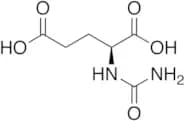
CAS:Producto controlado<p>Applications A metabolite of Crotonaldehyde.<br>References Gray, J.M., et al.: Xenobiotica, 1, 55 (1971), Chung, F., et al.: Mutat. Res., 424, 71 (1999), Smith, C., et al.: Food Chem. Toxicol., 38, 637 (2000), Pan, J., et al.: Chem. Res. Toxicol., 15, 367 (2002),<br></p>Fórmula:C9H13NO5S·2NaForma y color:NeatPeso molecular:293.25N-Carbamyl-L-glutamic Acid
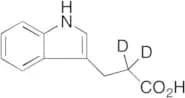
CAS:Producto controlado<p>Applications N-Carbamyl-L-glutamic Acid has been shown to have protective effects against ammonia intoxication and is used in the treatment of acute hyperammonemia.<br>References Paik, W.K. et al.: Life Sci., 15, 1189 (1974); O'Connor, J.E. et al.: Eur. J. Pediat., 148, 540 (1989); Lee, J.H. et al.: Biochem. Biophys. Res. Chem., 248, 391 (1998);<br></p>Fórmula:C6H10N2O5Forma y color:NeatPeso molecular:190.153-Indolepropionic-d2 Acid
CAS:Producto controlado<p>Stability Hygroscopic<br>Applications 3-Indolepropionic-d2 acid is deuterium labelled 3-Indolepropionic acid (I627170). 3-Indolepropionic acid is a deamination product of Tryptophan (T947200) that protects the hippocampus (studied in gerbils) from ischemic damage and oxidative stress. It’s ability to protect the neurons in this way is attributed to its potent antioxidative effects. 3-Indolepropionic acid is also hypothesized to have protective effects on the thyroid gland.<br>References Hwang, I., et al.: J. Neurosci. Res., 87, 2126 (2009); Karbownik, M., et al.: J. Cell. Biochem., 95, 131 (2005)<br></p>Fórmula:C11D2H9NO2Forma y color:NeatPeso molecular:191.22Oleoyl-L-carnitine
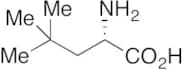
CAS:Producto controlado<p>Stability Hygroscopic<br>Applications Oleoyl-L-carnitine is a long-chain fatty ester of carnitine which is accumulated and released into the circulation, in fatty-acid oxidation defects. Pattern of Oleoyl-L-carnitine can be diagnostic for a number of ß-oxidation defects.<br>References Adams, S., et al.: J. Nutrition, 139, 1073 (2009); Ventura, F., et al.: Clinica Chimica Acta, 281, 1 (1999); Pourfarzam, M., et al.: Clinical Chem,, 40, 2267 (1994); Schaefer, J., et al.: Pediatric Res., 37, 354 (1995)<br></p>Fórmula:C25H47NO4Forma y color:NeatPeso molecular:425.64(S)-2-Amino-4-methylpentanol
CAS:Producto controlado<p>Applications (S)-2-Amino-4-methylpentanol is a starting material for the synthesis of aminopeptidase N and phospholipase A2 inhibitors.<br>References Fournié-Zaluski, M., et al.: J. Med. Chem., 35, 1259 (1992); Bennion, C., et al.: J. Med. Chem., 35, 2939 (1992)<br></p>Fórmula:C6H15NOForma y color:NeatPeso molecular:117.189Ethyl 5-Methyl-6-oxo-5,6-dihydro-4H-benzo[f]imidazo[1,5-a][1,4]diazepine-3-carboxylate
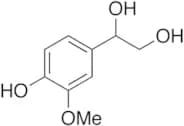
CAS:Producto controlado<p>Impurity Flumazenil EP Impurity E<br>Applications Ethyl 5-Methyl-6-oxo-5,6-dihydro-4H-benzo[f]imidazo[1,5-a][1,4]diazepine-3-carboxylate (Flumazenil EP Impurity E) is used in the biological studies and preparation of imidazobenzodiazepines as probes for diazepaminsensitive receptor pharmacophore.<br>References Zhang, P., et al.: J. Med. Chem., 38, 1679 (1995)<br></p>Fórmula:C15H15N3O3Forma y color:NeatPeso molecular:285.30rac 4-Hydroxy-3-methoxyphenylethylene Glycol
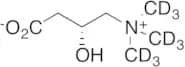
CAS:Producto controlado<p>Stability Hygroscopic<br>Applications A metabolite of Catecholamines.<br>References Kopin, I.J., et al.: J. Biol. Chem., 236, 2109 (1961), Short, F.W., et al.: J. Med. Pharm. Chem., 5, 642 (1962)<br></p>Fórmula:C9H12O4Forma y color:White To Off-WhitePeso molecular:184.19L-Carnitine-d9
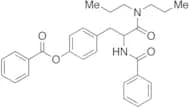
CAS:Producto controlado<p>Applications L-Carnitine-d9 is the isotope labelled analog of L-Carnitine (C184110); an essential cofactor of fatty acid metabolism; required for the transport of fatty acids through the inner mitochondrial membrane. Synthesized primarily in the liver and kidney; highest concentrations found in heart and skeletal muscle. Dietary sources include red meat, dairy products, beans, avocado.<br>References Mitchell, M.E., et al.: Am. J. Clin. Nutr., 31, 293 (1978); Lango, R., et al.: Cardiovasc. Res., 51, 21 (2001); Vaz, F.M., et al.: Biochem. J., et al.: 361, 417 (2002); Karlic, H., et al.: Nutrition, 20, 709 (2004)<br></p>Fórmula:C7D9H7NO3Forma y color:NeatPeso molecular:171.26N,O-Dibenzoyl-DL-tyrosyl-N’,N’-dipropylamide
CAS:Producto controlado<p>Applications N,O-Dibenzoyl-DL-tyrosyl-N',N'-dipropylamide is a metabolite of the antispasmodic agent Tiropramide (T446900). Tiropramide impurity B.<br>References Janssen, et al.: J. Pharm. Pharmacol., 9, 381 (1956), Bertaccini, et al.: Br. J. Pharmac., 34, 310 (1968),<br></p>Fórmula:C29H32N2O4Forma y color:White To Light RedPeso molecular:472.584-Methyl-2-(4-(trifluoromethyl)phenyl)thiazole-5-carboxylic Acid
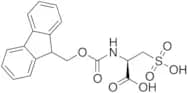
CAS:Producto controlado<p>Applications 4-methyl-2-(4-(trifluoromethyl)phenyl)thiazole-5-carboxylic acid (cas# 144059-86-9) is a useful research chemical.<br></p>Fórmula:C12H8F3NO2SForma y color:NeatPeso molecular:287.26Fmoc-L-cysteic Acid
CAS:Producto controlado<p>Applications Fmoc-L-cysteic acid (cas# 751470-47-0) is a useful research chemical for organic synthesis and other chemical processes.<br>References Dialer, L. O., et al.: J. Med. Chem., 56, 7552 (2013); Revell, J. D., et al.: Tetrahedron, 63, 8420, (2007)<br></p>Fórmula:C18H17NO7SForma y color:NeatPeso molecular:391.44,6,7,8-Tetrahydro-8-hydroxy-6-methylpyrimido[1,2-a]purin-10(3H)-one (Mixture of Diastereomers)
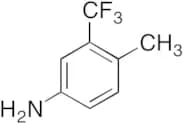
CAS:Producto controlado<p>Applications Cyclic propano guanine adduct DNA acetaldehyde histone.<br>References Nath, R., et al.: Cancer Res., 58, 581 (1998), Wang, M., et al.: Chem. Res., 13, 1065 (2000), Terashima, I., et al.: Biochemistry, 40, 4106 (2001), Yokoyama, A., et al.: Carcinogenesis, 23, 1851 (2002),<br></p>Fórmula:C9H11N5O2Forma y color:Off-WhitePeso molecular:221.225-Amino-2-methylbenzotrifluoride
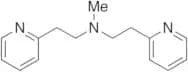
CAS:Producto controlado<p>Applications 5-Amino-2-methylbenzotrifluoride is used to prepare azoles as inhibitors of VEGF receptors 1 and 2 with high intestinal permeability. It can also be used to prepare curcumin analogs conjugated with antiandrogens.<br>References Kiselyov, A., et al.: Bioorg. Med. Chem. Lett., 17, 1369 (2007); Shi, Q., et al.: Bioorg. Med. Chem., 20, 4020 (2012)<br></p>Fórmula:C8H8F3NForma y color:NeatPeso molecular:175.15N-Methyl-N,N-bis(2-pyridylethyl)amine
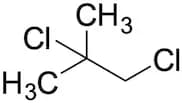
CAS:<p>Impurity Betahistine EP Impurity C (Free Base)<br>Applications N-Methyl-N,N-bis(2-pyridylethyl)amine is used as a reagent in the preparation of copper pyridylmethylethylenediamine dicyanamido polymeric complexes.<br>References Mautner, F.A. et al.: Inorg. Chim. Acta, 362, 4073 (2009);<br></p>Fórmula:C15H19N3Forma y color:NeatPeso molecular:241.331,2-Dichloro-2-methylpropane
CAS:<p>Applications 1,2-Dichloro-2-methylpropane (cas# 594-37-6) is a useful research chemical.<br> Not a dangerous good if item is equal to or less than 1g/ml and there is less than 100g/ml in the package<br></p>Fórmula:C4H8Cl2Forma y color:NeatPeso molecular:127.01L-Allo-isoleucine-d10
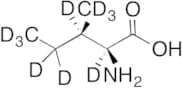
CAS:Producto controlado<p>Applications L-Allo-isoleucine-d10 is a derivative compound of L-allo-isoleucine (A548200), which has been suggested to induce epithelial β-defensin expression. In addition, L-allo-isoleucine is utilized in the biosynthesis pathway for coronamic acid.<br>References Fehlbaum, P., et al.: Proc. Natl. Acad. Sci. USA 97, 12723 (2000); Parry, R. J., et al.: J. Am. Chem. Soc. 113, 1849 (1991)<br></p>Fórmula:C6H3D10NO2Forma y color:White To Off-WhitePeso molecular:141.231-[1-(2-methoxyethyl)piperidin-3-yl]methanamine
CAS:Producto controlado<p>Applications 1-[1-(2-methoxyethyl)piperidin-3-yl]methanamine (cas# 936940-49-7) is a useful research chemical.<br></p>Fórmula:C9H20N2OForma y color:NeatPeso molecular:172.268a-Methacrylic Acid
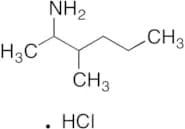
CAS:Producto controlado<p>Stability Light Sensitive<br>Applications α-Methacrylic acid is used in chemistry as a stabilizing agent, forming a thin capping layer on the surface of nanoparticles. α-Methacrylic acid is also used as a surfactant, so that control is maintained during nanocrystal growth. α-Methacrylic acid is also used as a chelating agent.<br> Not a dangerous good if item is equal to or less than 1g/ml and there is less than 100g/ml in the package<br>References Peng, W., et al.: J. Cryst. Growth, 279, 454 (2005); Qu, S., et al.: Appl. Phys. Lett., 80, 3605 (2002); Zhao, G., et al.: Phys. C: Supercond., 468, 2317 (2008)<br></p>Fórmula:C4H6O2Forma y color:ColourlessPeso molecular:86.093-Methyl-2-hexanamine Hydrochloride Salt
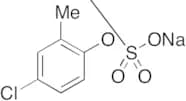
CAS:<p>Applications 3-Methyl-2-hexanamine HCl Salt is more stable and easier to purify compared to the free base.<br></p>Fórmula:C7H17N·HClForma y color:Off-White To BeigePeso molecular:115.2236464-Chloro-2-methylphenol Sulfate Sodium Salt
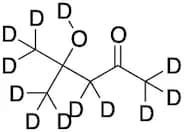
CAS:<p>Stability Unstable in methanol solution<br>Applications 4-Chloro-2-methylphenol Sulfate Sodium Salt is a halogenated derivative of o-toluenesulfonate, present in landfill leachates. o-Toluenesulfonate is an analog of the strong organic acid p-Toluenesulfonate.<br>References Riediker, S. et al.: Environ. Sci. Tech., 34, 2156 (2000);<br></p>Fórmula:C7H6ClNaO4SForma y color:NeatPeso molecular:244.6284-Hydroxy-4-methyl-2-pentanone-d12
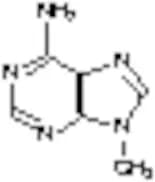
CAS:Producto controlado<p>Applications 4-Hydroxy-4-methyl-2-pentanone-d12 (CAS# 114253-85-9) is a useful isotopically labeled research compound.<br></p>Fórmula:C6D12O2Forma y color:NeatPeso molecular:128.236-Amino-9-methylpurine(9-Methyl Adenine)
CAS:Producto controlado<p>Applications A receptor adenine derivative binding membrane brain animal cell line.<br>References Camaioni, E., et al.: Bioorg. Med. Chem., 6, 523 (1998), Kelly, M., et al.: Br. J. Pharmacol., 125, 979 (1998), Redzic, Z., et al.: Brain Res., 888, 66 (2001), Levy, D., et al.: J. Med. Chem., 46, 2177 (2003),<br></p>Fórmula:C6H7N5Forma y color:NeatPeso molecular:149.155-Oxo-DL-proline-d5
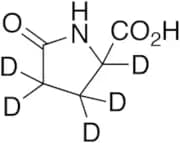
CAS:Producto controlado<p>Applications 5-Oxo-DL-proline-d5 is a labelled cyclized derivative of L-Glutamic Acid (G596960). The pyroglutamate core has potential application for synthesis of novel anti-bacterials.<br>References Mischo A. et al.: ChemBioChem., 13, 1421 (2012); Angelov P. et al.: Org. Biomol. Chem.: 10, 3472 (2012);<br></p>Fórmula:C52H5H2NO3Forma y color:NeatPeso molecular:134.141-Methylpiperazine
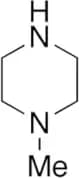
CAS:Producto controlado<p>Impurity Imatinib EP Impurity G<br>Applications 1-Methylpiperazine (Imatinib EP Impurity G) is used in the preparation of 2-(4-Methyl-1-piperazinylmethyl)acrylophenone(MPMAP), an antimicrotubular drug. It is a COVID19-related research product.<br>References Mallevais, M.L. et al.: Biochimie, 66, 477 (1984);<br></p>Fórmula:C5H12N2Forma y color:Colourless To Light YellowPeso molecular:100.163-Methyloxindole
CAS:Producto controlado<p>Applications 3-Methylindole metabolite.<br>References Skordos, K., et al.: Chem. Res. Toxicol., 11, 741 (1998), Lanza, D., et al.: Drug Metab. Disposition, 29, 950 (2001), Hoenicke, K., et al.: J. Agric. Food Chem., 50, 4303 (2002),<br></p>Fórmula:C9H9NOForma y color:BeigePeso molecular:147.179-(N-Methylaminomethyl)anthracene
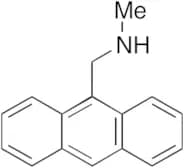
CAS:Producto controlado<p>Applications 9-(N-Methylaminomethyl)anthracene is a reactant that has been used in the synthesis of anthracene-oxyquinoline dyad as a fluorescent indicator for Hg(II).<br>References Praveen, L., et. al.: Tetrahedron Lett., 53, 3951 (2012)<br></p>Fórmula:C16H15NForma y color:NeatPeso molecular:221.3






![Ethyl 5-Methyl-6-oxo-5,6-dihydro-4H-benzo[f]imidazo[1,5-a][1,4]diazepine-3-carboxylate](/_next/image/?url=https%3A%2Fstatic.cymitquimica.com%2Fproducts%2FTR%2Fthumb-webp%2FE923525.webp&w=3840&q=75)


![4,6,7,8-Tetrahydro-8-hydroxy-6-methylpyrimido[1,2-a]purin-10(3H)-one (Mixture of Diastereomers)](/_next/image/?url=https%3A%2Fstatic.cymitquimica.com%2Fproducts%2FTR%2Fthumb-webp%2FT293685.webp&w=3840&q=75)
![1-[1-(2-methoxyethyl)piperidin-3-yl]methanamine](/_next/image/?url=https%3A%2Fstatic.cymitquimica.com%2Fproducts%2FTR%2Fthumb-webp%2FM139405.webp&w=3840&q=75)