Aminoácidos (AA)
Los aminoácidos (AAs) son los componentes fundamentales de las proteínas y desempeñan un papel crucial en diversos procesos biológicos. Estos compuestos orgánicos son esenciales para la síntesis de proteínas, las rutas metabólicas y la señalización celular. En esta categoría, encontrará una gama completa de aminoácidos, incluyendo formas esenciales, no esenciales y modificadas, que son vitales para la investigación en bioquímica, biología molecular y ciencias de la nutrición. En CymitQuimica, ofrecemos aminoácidos de alta calidad para apoyar sus necesidades de investigación y desarrollo, asegurando precisión y fiabilidad en sus resultados experimentales.
Subcategorías de "Aminoácidos (AA)"
- Derivados de aminoácidos(3.957 productos)
- Aminoácidos y compuestos relacionados con aminoácidos(3.472 productos)
- Aminoácidos con oxígeno o azufre(168 productos)
- Aminoácidos protegidos con Boc(351 productos)
- Aminoácidos protegidos con Fmoc(1.710 productos)
Se han encontrado 38265 productos de "Aminoácidos (AA)"
Ordenar por
Pureza (%)
0
100
|
0
|
50
|
90
|
95
|
100
Z-Gln(Mtt)-OH
CAS:<p>Please enquire for more information about Z-Gln(Mtt)-OH including the price, delivery time and more detailed product information at the technical inquiry form on this page</p>Fórmula:C33H32N2O5Pureza:Min. 95%Peso molecular:536.62 g/molHIV (gp120) Fragment (421-438) trifluoroacetate salt
CAS:<p>Please enquire for more information about HIV (gp120) Fragment (421-438) trifluoroacetate salt including the price, delivery time and more detailed product information at the technical inquiry form on this page</p>Fórmula:C99H148N24O25S2Pureza:Min. 95%Peso molecular:2,138.51 g/molMCH (salmon) trifluoroacetate salt
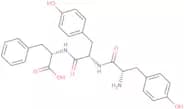
CAS:<p>Trifluoroacetate salt</p>Fórmula:C89H139N27O24S4Pureza:Min. 95%Peso molecular:2,099.49 g/molH-Tyr-Tyr-Phe-OH acetate salt
CAS:<p>H-Tyr-Tyr-Phe-OH acetate salt is a reaction product of the matrix-assisted laser desorption ionization (MALDI) technique. It is an analog of tyrosine, with a hydroxyl group substituted for the amino group. The protonation state of this molecule has been determined by the hydration constant and the centroid to be a neutral pH. Using hydrogen bonding, H-Tyr-Tyr-Phe-OH acetate salt binds to the mitochondria in cells, which may lead to a higher rate of reaction.</p>Fórmula:C27H29N3O6Pureza:Min. 95%Peso molecular:491.54 g/molFmoc-Lys-OH·HCl
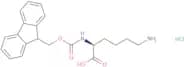
CAS:<p>Fmoc-Lys-OH·HCl is an acidic pyrylium that has been shown to be a potent inhibitor of tumor vasculature. It binds to the human serum albumin and inhibits the binding of ligands to the receptor tyrosine kinases, which are involved in brain tumor proliferation. Fmoc-Lys-OH·HCl has also been shown to inhibit the growth of cancer cells by binding to cell membrane receptors and inhibiting protein synthesis. This compound is also isomeric, meaning it can exist in different forms with different properties.</p>Fórmula:C21H24N2O4·HClPureza:Min. 95 Area-%Forma y color:White PowderPeso molecular:404.89 g/molFmoc-Leu-Gly-OH
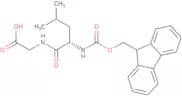
CAS:<p>Fmoc-Leu-Gly-OH is a dipeptide that is reversibly soluble in water and organic solvents. It has been found to be stable at millimeter and nanometer scales, which makes it suitable for use as a hydrogel or fiber. Fmoc-Leu-Gly-OH has also been shown to form membranes of variable thickness (from micrometers to nanometers) that are sensitive to pH changes. This means that the membrane can be used for sensing pH levels in a variety of environments. Dipeptides are amphiphiles, meaning they have both hydrophilic and lipophilic properties. This makes them useful for forming self-assembled structures, such as hydrogels and membranes, that are capable of transporting water molecules through the structure.</p>Fórmula:C23H26N2O5Pureza:Min. 95%Forma y color:PowderPeso molecular:410.46 g/mol(Lys4)-Sarafotoxin C acetate salt
CAS:<p>A component of snake venom, this product contains disulfide bonds between Cys1 and Cys15/Cys3 and Cys11. <br>Due to their structural and functional homology to the endothelin peptides, Sarafotoxins can enhance vasoconstriction through stimulating the class A G-protein-coupled, endothelin ETA and ETB receptors. This in turn leads to left ventricular dysfunction and bronchoconstriction.</p>Fórmula:C105H153N27O36S5Pureza:Min. 95%Peso molecular:2,529.83 g/molIL-8 Inhibitor
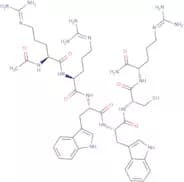
CAS:<p>IL-8 Inhibitor Ac-Arg-Arg-Trp-Trp-Cys-Arg-NH2 is a molecule that blocks the receptor for IL-8, a c-c chemokine. This leads to reduced inflammation and decreased activation of cells in the inflammatory process. IL-8 Inhibitor Ac-Arg-Arg-Trp-Trp-Cys--Arg--NH2 has been shown to be effective in reducing chronic bronchitis and pancreatitis in animal models. The effective dose for IL 8 inhibitor is not yet known.</p>Fórmula:C45H66N18O7SPureza:Min. 95%Peso molecular:1,003.19 g/mol6-Diazo-5-oxo-L-norleucine
CAS:<p>Inhibitor of hexosamine biosynthetic pathway</p>Fórmula:C6H9N3O3Pureza:Min. 95%Forma y color:Slightly Yellow PowderPeso molecular:171.15 g/molHSV-1 Glycoprotein (gB) (497-507)
CAS:<p>Please enquire for more information about HSV-1 Glycoprotein (gB) (497-507) including the price, delivery time and more detailed product information at the technical inquiry form on this page</p>Fórmula:C59H91N15O18Pureza:Min. 95%Peso molecular:1,298.44 g/molLQEQ-19 (human) trifluoroacetate salt
<p>Please enquire for more information about LQEQ-19 (human) trifluoroacetate salt including the price, delivery time and more detailed product information at the technical inquiry form on this page</p>Fórmula:C106H170N30O34Pureza:Min. 95%Peso molecular:2,408.67 g/molH-His-Leu-Pro-Pro-Pro-Val-His-Leu-Pro-Pro-Pro-Val-OH
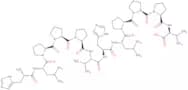
CAS:<p>Please enquire for more information about H-His-Leu-Pro-Pro-Pro-Val-His-Leu-Pro-Pro-Pro-Val-OH including the price, delivery time and more detailed product information at the technical inquiry form on this page</p>Fórmula:C64H98N16O13Pureza:Min. 95%Peso molecular:1,299.56 g/molH-Gly-His-OH
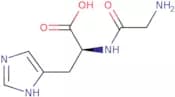
CAS:<p>H-Gly-His-OH is a cationic surfactant that can be used as an emulsifying agent, dispersing agent, or wetting agent. It has been shown to form model complexes with hydrogen bond strength and the ability to bind to nitrogen atoms. H-Gly-His-OH has been detected in a detectable concentration of 0.01% in neutral pH and at least 0.1% in acidic pH. The chemical shift of the proton NMR spectra for H-Gly-His-OH are found at 8.5 ppm (δ) and 8.2 ppm (δ). Magnetic resonance spectroscopy performed on ternary mixtures containing H-Gly-His-OH show peaks at δ 2.6 ppm and δ 1.9 ppm from the amide protons of the His residue, which are characteristic for this molecule's chemical structure.</p>Fórmula:C8H12N4O3Pureza:Min. 95%Peso molecular:212.21 g/molH-D-Lys(Z)-OMe·HCl
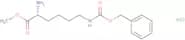
CAS:<p>H-D-Lys(Z)-OMe·HCl is a chemical compound that belongs to the group of organic nitrogen. It has been used in an experiment that monitored the population of a specific ecosystem. The experiment focused on the effects of organic nitrogen on the organisms living in this ecosystem. H-D-Lys(Z)-OMe·HCl was also used as a permission for an ecological research project, which focused on the behavioural patterns of animals in a natural environment. This compound has also been sponsored by science organisations, such as Ecological Society of America and Society for Experimental Biology.</p>Fórmula:C15H22N2O4·HClPureza:Min. 95%Peso molecular:330.81 g/molH-Trp-Asp-OH trifluoroacetic acid
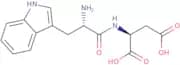
CAS:<p>H-Trp-Asp-OH trifluoroacetic acid is a protein that is localized in the kinase domain of the gene product. It has been shown to activate leishmania and human serum regulatory proteins. H-Trp-Asp-OH trifluoroacetic acid binds to guanine nucleotide binding proteins in the nuclear DNA, which may play a role in mitotic checkpoint control. This protein has also been shown to have basic properties and may be involved in plant metabolism.</p>Fórmula:C17H18N3O7F3Pureza:Min. 95%Peso molecular:319.31 g/molN-(2-Carbamoyl-ethyl)-Val-Leu-anilide
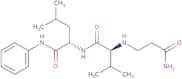
CAS:<p>Please enquire for more information about N-(2-Carbamoyl-ethyl)-Val-Leu-anilide including the price, delivery time and more detailed product information at the technical inquiry form on this page</p>Fórmula:C20H32N4O3Pureza:Min. 95%Peso molecular:376.49 g/molN-[(RS)-1-Carboxy-3-phenyl-propyl]-Ala-Ala-Phe-4-Abz-OH trifluoroacetate salt
CAS:<p>The N-[(RS)-1-carboxy-3-phenyl-propyl]-Ala-Ala-Phe-4-Abz-OH trifluoroacetate salt is a synthetic substrate for the study of metalloendopeptidase. This compound was used to develop a model system to study the function of human liver, and has been shown to inhibit the growth of PC12 cells. The N-[(RS)-1-Carboxy-3-phenyl-propyl]-Ala-Ala-Phe-4-Abz-OH trifluoroacetate salt is also an experimental model for congestive heart failure. This compound has been shown to increase glomerular filtration rate in experimental animals as well as basic fibroblast growth factor activity in cell culture by increasing intracellular calcium levels.</p>Fórmula:C32H36N4O7Pureza:Min. 95%Peso molecular:588.65 g/mol(Glu1)-Fibrinopeptide B (human)
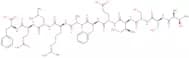
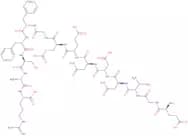
CAS:<p>Fibrinopeptide B (FPB) is a protein fragment of the blood clotting process. It is a member of the group of fibrinopeptides, which are formed by proteolytic cleavage of the precursor prothrombin. FPB is a low molecular weight peptide with an amino acid sequence that contains tryptophan and arginine residues, which are susceptible to oxidation by radiation. The presence of FPB in plasma can be used as an indicator for exposure to ionizing radiation. Matrix-assisted laser desorption/ionization (MALDI) mass spectrometry has been used to identify and quantify FPB in human plasma samples. This technique has also been applied to monitor the proteomic profile of activated platelets with high sensitivity using matrix molecules such as glycerol, ethylene glycol, and formamide as matrices for MALDI analysis.</p>Fórmula:C66H95N19O26Pureza:Min. 95%Peso molecular:1,570.57 g/molFluorescein-6-carbonyl-Leu-Glu(OMe)-His-DL-Asp(OMe)-fluoromethylketone
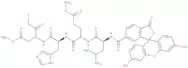
CAS:<p>Please enquire for more information about Fluorescein-6-carbonyl-Leu-Glu(OMe)-His-DL-Asp(OMe)-fluoromethylketone including the price, delivery time and more detailed product information at the technical inquiry form on this page</p>Fórmula:C45H47FN6O14Pureza:Min. 95%Peso molecular:914.89 g/molH-Gly-Asp-Arg-Ala-Asp-Gly-Gln-Pro-Ala-Gly-Asp-Arg-Ala-Asp-Gly-Gln-Pro-Ala-OH
CAS:<p>Please enquire for more information about H-Gly-Asp-Arg-Ala-Asp-Gly-Gln-Pro-Ala-Gly-Asp-Arg-Ala-Asp-Gly-Gln-Pro-Ala-OH including the price, delivery time and more detailed product information at the technical inquiry form on this page</p>Fórmula:C68H108N26O29Pureza:Min. 95%Peso molecular:1,753.74 g/molH-Gly-Gly-His-Ala-OH
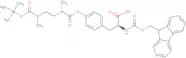
CAS:<p>H-Gly-Gly-His-Ala-OH is a peptide of four amino acids. It has been shown experimentally that the side chain of His is always oriented in the same direction, regardless of the conformation. The proton shift constants and vicinal coupling constants for Gly, Gly and Ala are constant, while His has a variable proton shift constant. The experimental parameters for the molecule have been rationalized by using conformational shifts to explain their variability. For example, the proton shift constants have been found to be dependent on the rotation about an axis perpendicular to the peptide backbone. H-Ala-Gly-Gly-His-OH is a pentapeptide with five amino acids that differs from HGGHAOH by having Ala instead of His at position 1. The vicinal coupling constants are different and so are other experimental parameters.</p>Fórmula:C13H20N6O5Pureza:Min. 95%Peso molecular:340.34 g/molFmoc-Tyr(Boc-Nmec)-OH
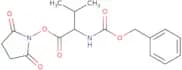
CAS:<p>Fmoc-Tyr(Boc-Nmec)-OH is a hydrophobic amino acid that can be used in the synthesis of peptides. It is soluble in organic solvents and has been shown to have intramolecular cyclization reaction. Fmoc-Tyr(Boc-Nmec)-OH can be coupled with other amino acids using an amide bond, and has been shown to react with cationic groups such as tyrosine residues. This compound is often used in solid-phase peptide synthesis, where the product is cleaved from the resin by the action of aqueous acid or base before being purified. Fmoc-Tyr(Boc-Nmec)-OH can also be used for neutralizing alkaline conditions during peptide synthesis.</p>Fórmula:C34H39N3O8Pureza:Min. 95%Peso molecular:617.69 g/molZ-L-Valine N-hydroxysuccinimide ester
CAS:<p>Z-L-Valine N-hydroxysuccinimide ester is a synthetic δ opioid ligand that has been shown to have potent inhibitory activity against casein. The compound has also been shown to have high affinity for opioid receptors and δ opioid receptors, which may be due to its ability to form supramolecular complexes with these proteins. Z-L-Valine N-hydroxysuccinimide ester binds to the receptor binding site of the protein, preventing it from interacting with other molecules. It is not selective for one receptor over another and can bind to both the δ and μ opioid receptors. This synthetic substance may be used as a lead compound in drug development.</p>Fórmula:C17H20N2O6Pureza:Min. 95%Peso molecular:348.35 g/mol(His(3-Me)2)-LHRH trifluoroacetate salt
CAS:<p>Please enquire for more information about (His(3-Me)2)-LHRH trifluoroacetate salt including the price, delivery time and more detailed product information at the technical inquiry form on this page</p>Fórmula:C56H77N17O13·C2HF3O2Pureza:Min. 95%Peso molecular:1,310.34 g/molFibronectin Fragment (1376-1380) trifluoroacetate salt
CAS:<p>Please enquire for more information about Fibronectin Fragment (1376-1380) trifluoroacetate salt including the price, delivery time and more detailed product information at the technical inquiry form on this page</p>Fórmula:C24H39N11O8Pureza:Min. 95%Peso molecular:609.64 g/mol(Des-Gly10,D-Tyr5,D-Leu6,Pro-NHEt 9)-LHRH
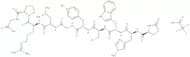
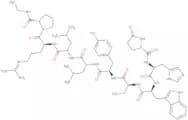
CAS:<p>Please enquire for more information about (Des-Gly10,D-Tyr5,D-Leu6,Pro-NHEt 9)-LHRH including the price, delivery time and more detailed product information at the technical inquiry form on this page</p>Fórmula:C59H84N16O12Pureza:Min. 95%Peso molecular:1,209.4 g/mol(S)-9,10-Difluoro-2,3-dihydro-3-methyl-7-oxo-7H-pyrido[1,2,3-de]-1,4-benzoxazine-6-carboxylic acid ethyl ester
CAS:<p>(S)-9,10-Difluoro-2,3-dihydro-3-methyl-7-oxo-7H-pyrido[1,2,3-de]-1,4-benzoxazine-6-carboxylic acid ethyl ester is an acidic substance that can be produced by the amination of piperazine with chloroacetic acid. The reaction solution is heated to a temperature of about 120°C for about 30 minutes and then cooled to room temperature. The product precipitates as a white solid. This compound has been shown to have antibacterial activity against methicillin resistant Staphylococcus aureus (MRSA) in plates.</p>Fórmula:C15H13F2NO4Pureza:Min. 95%Peso molecular:309.26 g/molC5a Anaphylatoxin (37-53) (human) trifluoroacetate salt
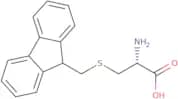
CAS:<p>Please enquire for more information about C5a Anaphylatoxin (37-53) (human) trifluoroacetate salt including the price, delivery time and more detailed product information at the technical inquiry form on this page</p>Fórmula:C82H141N27O22SPureza:Min. 95%Peso molecular:1,889.23 g/molH-Cys(Fm)-OH
CAS:<p>Please enquire for more information about H-Cys(Fm)-OH including the price, delivery time and more detailed product information at the technical inquiry form on this page</p>Fórmula:C17H17NO2SPureza:Min. 95%Peso molecular:299.39 g/mol(Asn7)-Amyloid b-Protein (1-40) trifluoroacetate salt
CAS:<p>(Asn7)-Amyloid b-Protein (1-40) trifluoroacetate salt H-Asp-Ala-Glu-Phe-Arg-His-Asn-Ser-Gly-Tyr-Glu-Val-His-His-Gln-Lys<br>The product is a compound that has been shown to inhibit the formation of beta amyloid peptides in the brain. It binds to the beta amyloid peptide and prevents its aggregation, thereby preventing the formation of plaques and inhibiting neuronal cell death. The product contains no detectable levels of trehalose, which makes it ideal for use in brain imaging studies. This product may also be used as a predictive biomarker for Alzheimer's disease because it can be detected in cerebrospinal fluid and plasma.</p>Fórmula:C194H296N54O57SPureza:Min. 95%Peso molecular:4,328.82 g/molN-Benzoyl-L-leucine-β-naphthylamide
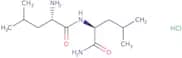
CAS:<p>N-Benzoyl-L-leucine-beta-naphthylamide is a chromogenic substrate for transpeptidase. It is hydrolyzed to L-phenylalanine and 2-naphthylamine, which react with the chromogen to produce a color change. The reaction occurs in both spermatozoa and epithelial cells, but can be inhibited by aminopeptidase and peptidase. This substrate is used as a marker for spermatozoa in semen analysis.</p>Fórmula:C23H24N2O2Pureza:Min. 95%Forma y color:PowderPeso molecular:360.45 g/molH-Leu-Leu-NH2·HCl
CAS:<p>Please enquire for more information about H-Leu-Leu-NH2·HCl including the price, delivery time and more detailed product information at the technical inquiry form on this page</p>Fórmula:C12H25N3O2·HClPureza:Min. 95%Peso molecular:279.81 g/molDecanoyl-Arg-Val-Arg-Lys-chloromethylketone
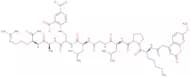
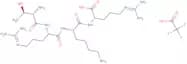
CAS:<p>Decanoyl-Arg-Val-Arg-Lys-chloromethylketone is a potent activin antagonist that has been shown to inhibit follicle development in ovary cells. It also blocks the protease activity of leishmania, which is a parasite that causes cutaneous leishmaniasis. This drug binds to proteases and inhibits their activity by competing with substrates for the active site. Decanoyl-Arg-Val-Arg-Lys-chloromethylketone is not expressed in the submandibular gland or the submaxillary gland, which are salivary glands.</p>Fórmula:C34H66ClN11O5Pureza:Min. 95%Peso molecular:744.41 g/molMca-Lys-Pro-Leu-Gly-Leu-Dap (Dnp)-Ala-Arg-NH2 trifluoroacetate salt
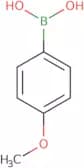
CAS:<p>Please enquire for more information about Mca-Lys-Pro-Leu-Gly-Leu-Dap (Dnp)-Ala-Arg-NH2 trifluoroacetate salt including the price, delivery time and more detailed product information at the technical inquiry form on this page</p>Fórmula:C55H80N16O16Pureza:Min. 95%Peso molecular:1,221.32 g/mol4-Methoxyphenyl boronic acid
CAS:<p>4-Methoxyphenyl boronic acid is a molecule with a hydroxyl group and a boronic acid. It is synthesized by reacting biphenyl with trifluoroacetic acid in the presence of sodium carbonate and palladium-catalyzed coupling. 4-Methoxyphenyl boronic acid has shown to bind to the receptor for fatty acids, which may be due to its structural similarity to p-hydroxybenzoic acid. The protonated form of this molecule has been shown to react with an electrophilic carbon atom and an electron-deficient alkyl or vinyl halide, resulting in ring formation. This reaction is known as the Suzuki coupling reaction.</p>Fórmula:C7H9BO3Pureza:Min. 95%Forma y color:PowderPeso molecular:151.96 g/molCholecystokinin Octapeptide (desulfated)
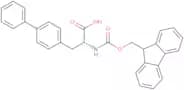
CAS:<p>Cholecystokinin octapeptide (CCK-8) is a peptide hormone that is secreted from the pancreas. It is a conjugate of CCK and desulfated cholinesterase, which has been shown to have surfactant properties. The concentration-response curves for CCK-8 are biphasic, with an initial increase in contractility followed by a decrease. This response is caused by activation of both the B2 and B1 receptors in the paraventricular nucleus of the hypothalamus and subsequently release of pancreatic enzymes into the bloodstream. CCK-8 has also been shown to stimulate protein synthesis in gland cells such as those found in the pancreas.</p>Fórmula:C49H62N10O13S2Pureza:Min. 95%Peso molecular:1,063.21 g/molFmoc-p-phenyl-D-phenylalanine
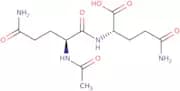
CAS:<p>Please enquire for more information about Fmoc-p-phenyl-D-phenylalanine including the price, delivery time and more detailed product information at the technical inquiry form on this page</p>Fórmula:C30H25NO4Pureza:Min. 95%Peso molecular:463.52 g/molAc-Gln-Gln-OH
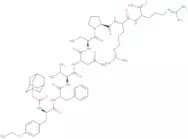
CAS:<p>Glutamine is a non-essential amino acid that is found in the cell in large amounts. It functions as a precursor of glutamate, an important neurotransmitter and intermediate in protein synthesis. Glutamine also has antioxidant properties, which may be due to its ability to donate hydrogen atoms or act as a reducing agent. Glutamine can be synthesized by glutaminase from glutamate and ammonia, but it can also be obtained from dietary sources. The uptake of glutamine is rapid at low concentrations, but becomes slower at higher concentrations. Glutamine is catabolized by the liver and kidney into glutamate and ammonia.<br>Glutamate dehydrogenase (GLDH) catalyzes the conversion of glutamate to α-ketoglutarate, producing NADH and H+.<br>The genetic mechanisms underlying the synthesis of glutamine are not well understood; however, one hypothesis states that glutamine could be synthesized from alpha-ketoglutarate via the reverse transamination reaction during periods when glucose</p>Fórmula:C12H20N4O6Pureza:Min. 95%Peso molecular:316.31 g/mol(1-Adamantaneacetyl1,D-Tyr(Et)2,Val4, Abu 6, Arg8·9)-vasopressin
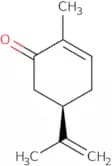
CAS:<p>(1-Adamantaneacetyl1,D-Tyr(Et)2,Val4, Abu 6, Arg8·9)-vasopressin is a vasopressor analog that has been shown to be an effective treatment for congestive heart failure by acting as an agonist at the V1 receptor. It has been shown to stimulate cyclase activity and increase levels of adenosine 3',5'-cyclic monophosphate (cAMP). This drug also stimulates the production of immunoglobulin A antibodies in mice and increases the expression of leucine aminopeptidase and immunofluorescence in rat kidney cells. Vasopressin analogs are used primarily for their vasoconstrictive properties.</p>Fórmula:C62H94N16O11Pureza:Min. 95%Forma y color:White Off-White PowderPeso molecular:1,239.51 g/mol(R)-2-Methyl-5-(prop-1-en-2-yl)cyclohex-2-enone
CAS:<p>(R)-2-Methyl-5-(prop-1-en-2-yl)cyclohex-2-enone is an organic compound that has been shown to induce apoptosis in prostate cancer cells. The mechanism of this induction is not yet fully understood, but it may be due to the inhibition of the synthesis of proteins required for cell division. It also had a significant effect on locomotor activity in mice. This compound has been shown to have acute toxicities, and its phase transition temperature is below room temperature. It can be used as a fumigant and an inorganic acid, and it has been proposed as a potential fluorescence probe for natural compounds.</p>Pureza:Min. 95%H-Arg-Arg-Leu-Ile-Glu-Asp-Asn-Glu-Tyr-Thr-Ala-Arg-Gly-OH
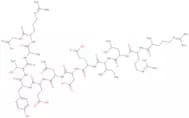
CAS:<p>H-Arg-Arg-Leu-Ile-Glu-Asp-Asn-Glu-Tyr-Thr-Ala-Arg-Gly-OH is a synthetic peptide that has been shown to have a homologous sequence with the amino acid sequence of a primary tumor. This peptide has strong binding affinity to tyrosine kinase, which is an enzyme involved in cellular signal transduction. H-Arg-Arg-Leu-Ile-Glu-Asp-Asn Glu Tyr Thr Ala Arg Gly OH has been shown to inhibit the growth of tumors and can be used as an analytical method for identifying carcinoma cells in vitro. HAAGLTEIGDATASNTTAHARGLTRALAGRGGYOH is also a potential drug for cardiovascular diseases, as it can be taken up intracellularly and may inhibit the proliferation of vascular smooth muscle cells.</p>Fórmula:C66H109N23O23Pureza:Min. 95%Peso molecular:1,592.71 g/molFmoc-O-tert-butyl-L-trans-4-hydroxyproline
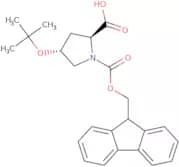
CAS:<p>Fmoc-O-tert-butyl-L-trans-4-hydroxyproline is a synthetic, cleavable peptide that can be used as a biomaterial. It is synthesized by coupling Fmoc-O-(tert-butoxycarbonyl)-L-trans(4R)-hydroxyproline with the amino acid N,N'-diisopropylcarbodiimide and 4-(dimethylamino)pyridine in a microwave reactor. The peptide has been shown to inhibit the enzyme matrix metalloproteinase 9 (MMP9), which plays an important role in tumor cell invasion and metastasis. This compound also has the ability to form conjugates with other molecules, such as lipopeptides, which may improve its therapeutic potential.</p>Fórmula:C24H27NO5Pureza:Min. 98 Area-%Forma y color:White PowderPeso molecular:409.47 g/molFmoc-D-Cys(Mob)-OH
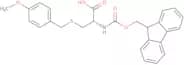
CAS:<p>Please enquire for more information about Fmoc-D-Cys(Mob)-OH including the price, delivery time and more detailed product information at the technical inquiry form on this page</p>Fórmula:C26H25NO5SPureza:Min. 95%Peso molecular:463.55 g/molµ-Conotoxin GIIIA
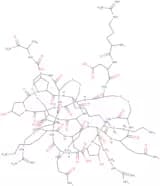
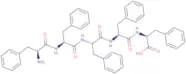
CAS:Producto controlado<p>Conotoxins are peptides that can bind to specific receptors on the surface of cells. Their function is to regulate ion channels and thus affect cellular physiology. Conotoxin GIIIA is a disulfide-bonded peptide with a molecular weight of 5808 Da. It has been shown to inhibit Na+ channel activity in human serum, and may have diagnostic and therapeutic applications for diseases such as epilepsy. The amino acid sequence of conotoxin GIIIA is Arg-Asp-Cys-Cys-Thr-Hyp-Hyp-Lys-Lys-Cys-Lys-Asp-Arg-Gln-Cys (NH2)</p>Fórmula:C100H170N38O32S6Pureza:Min. 95%Peso molecular:2,609.05 g/molH-Phe-Phe-Phe-Phe-Phe-OH
CAS:<p>H-Phe-Phe-Phe-Phe-Phe-OH is a peptide that inhibits the protease dpp-iv. It is a potent inhibitor of dpp-iv, with an IC50 value of 0.2 μM. H-Phe-Phe-Phe-Phe-Phe-OH is not active against other proteases, such as papain and cathepsin B, and it does not inhibit the activity of pepsin. The inhibition effect of HFPHP has been shown to be dose dependent. Inhibition of dpp-IV by HFPHP leads to inhibition of the activation of other proenzymes such as trypsin and chymotrypsin, which are required for protein digestion in the stomach.</p>Fórmula:C45H47N5O6Pureza:Min. 95%Peso molecular:753.88 g/molAnti-Kentsin trifluoroacetate salt
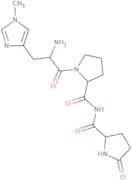
CAS:<p>Please enquire for more information about Anti-Kentsin trifluoroacetate salt including the price, delivery time and more detailed product information at the technical inquiry form on this page</p>Fórmula:C22H45N11O6Pureza:Min. 95%Peso molecular:559.66 g/mol(His(1-Me)2)-TRH Pyr-His(1-Me)-Pro-NH2
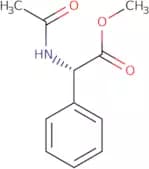
CAS:<p>Please enquire for more information about (His(1-Me)2)-TRH Pyr-His(1-Me)-Pro-NH2 including the price, delivery time and more detailed product information at the technical inquiry form on this page</p>Fórmula:C17H24N6O4Pureza:Min. 95%Peso molecular:376.41 g/molAc-Phg-OMe
CAS:<p>Please enquire for more information about Ac-Phg-OMe including the price, delivery time and more detailed product information at the technical inquiry form on this page</p>Fórmula:C11H13NO3Pureza:Min. 95%Peso molecular:207.23 g/molBiotinyl-Neuromedin S (human) trifluoroacetate salt
CAS:<p>Please enquire for more information about Biotinyl-Neuromedin S (human) trifluoroacetate salt including the price, delivery time and more detailed product information at the technical inquiry form on this page</p>Fórmula:C183H279N55O46SPureza:Min. 95%Peso molecular:4,017.58 g/mol(Deamino-Pen 1,Val4,D-Arg8)-Vasopressin
CAS:<p>Vasopressin is a peptide hormone that regulates water balance. It is synthesized in the hypothalamus and stored in the posterior pituitary gland, from where it is released when blood pressure falls. Vasopressin binds to V1 receptors in the kidney and vascular smooth muscle cells, causing vasoconstriction and increased blood pressure. Vasopressin also stimulates phosphatidic acid synthesis and hypotension, which are mediated through V2 receptors. Vasopressin has been found to be effective against cardiac arrest and myocardial infarction in animals. This drug has also been shown to stimulate the paraventricular nucleus of the hypothalamus and inhibit sympathetic activity in ganglia.</p>Fórmula:C48H69N13O11S2Pureza:Min. 95%Peso molecular:1,068.27 g/mol




![N-[(RS)-1-Carboxy-3-phenyl-propyl]-Ala-Ala-Phe-4-Abz-OH trifluoroacetate salt](/_next/image/?url=https%3A%2Fstatic.cymitquimica.com%2Fproducts%2F3D%2Fthumb-webp%2FFR111118.webp&w=3840&q=75)

![(S)-9,10-Difluoro-2,3-dihydro-3-methyl-7-oxo-7H-pyrido[1,2,3-de]-1,4-benzoxazine-6-carboxylic acid…](/_next/image/?url=https%3A%2Fstatic.cymitquimica.com%2Fproducts%2F3D%2Fthumb-webp%2FFD21854.webp&w=3840&q=75)