Aminoácidos (AA)
Los aminoácidos (AAs) son los componentes fundamentales de las proteínas y desempeñan un papel crucial en diversos procesos biológicos. Estos compuestos orgánicos son esenciales para la síntesis de proteínas, las rutas metabólicas y la señalización celular. En esta categoría, encontrará una gama completa de aminoácidos, incluyendo formas esenciales, no esenciales y modificadas, que son vitales para la investigación en bioquímica, biología molecular y ciencias de la nutrición. En CymitQuimica, ofrecemos aminoácidos de alta calidad para apoyar sus necesidades de investigación y desarrollo, asegurando precisión y fiabilidad en sus resultados experimentales.
Subcategorías de "Aminoácidos (AA)"
- Derivados de aminoácidos(3.957 productos)
- Aminoácidos y compuestos relacionados con aminoácidos(3.472 productos)
- Aminoácidos con oxígeno o azufre(168 productos)
- Aminoácidos protegidos con Boc(351 productos)
- Aminoácidos protegidos con Fmoc(1.710 productos)
Se han encontrado 38265 productos de "Aminoácidos (AA)"
Ordenar por
Pureza (%)
0
100
|
0
|
50
|
90
|
95
|
100
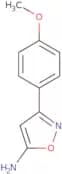
3-(4-Methoxyphenyl)-1,2-oxazol-5-amine
CAS:<p>Please enquire for more information about 3-(4-Methoxyphenyl)-1,2-oxazol-5-amine including the price, delivery time and more detailed product information at the technical inquiry form on this page</p>Fórmula:C10H10N2O2Pureza:Min. 95%Peso molecular:190.2 g/moltrans-2-[3-(4-tert-Butylphenyl)-2-methyl-2-propenylidene]malononitrile
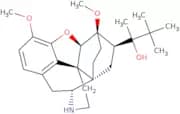
CAS:<p>Trans-2-[3-(4-tert-butylphenyl)-2-methyl-2-propenylidene]malononitrile is a reactive chemical that has been used to study the mechanism of tubular transport. This compound has been shown to be a potential cancer gene therapy agent, as it can stimulate the growth of cells in culture and induce tumor regression in mice. Trans-2-[3-(4-tert-butylphenyl)-2-methyl-2-propenylidene]malononitrile binds to fatty acids and causes them to coordinate with metal ions, which may be responsible for its antitumor properties. Trans-2-[3-(4-tert-butylphenyl)-2-methyl-2-propenylidene]malononitrile also binds to DNA polymerase and transcription factors, inhibiting their function and rendering them incapable of binding RNA polymerase. The sensitivity of this compound</p>Fórmula:C17H18N2Pureza:Min. 95%Peso molecular:250.34 g/mol3-O-Methyl norbuprenorphine
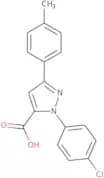
CAS:Producto controlado<p>Please enquire for more information about 3-O-Methyl norbuprenorphine including the price, delivery time and more detailed product information at the technical inquiry form on this page</p>Fórmula:C26H37NO4Pureza:Min. 95%Peso molecular:427.58 g/mol1-(4-Chlorophenyl)-3-(4-methylphenyl)-1H-pyrazole-5-carboxylic acid
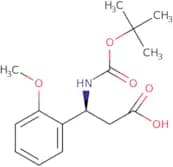
CAS:Producto controlado<p>Please enquire for more information about 1-(4-Chlorophenyl)-3-(4-methylphenyl)-1H-pyrazole-5-carboxylic acid including the price, delivery time and more detailed product information at the technical inquiry form on this page</p>Fórmula:C17H13ClN2O2Pureza:Min. 95%Peso molecular:312.75 g/molBoc-(S)-3-amino-3-(2-methoxyphenyl)propionic acid
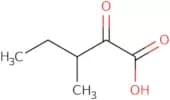
CAS:<p>Please enquire for more information about Boc-(S)-3-amino-3-(2-methoxyphenyl)propionic acid including the price, delivery time and more detailed product information at the technical inquiry form on this page</p>Fórmula:C15H21NO5Pureza:Min. 95%Forma y color:PowderPeso molecular:295.33 g/mol(±)-3-Methyl-2-oxovaleric acid
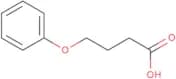
CAS:<p>(±)-3-Methyl-2-oxovaleric acid is a fatty acid that is found in the mitochondria of liver cells and other tissues. It is an intermediate in the citric acid cycle and can be converted into acetyl-CoA, which is used for energy production. (±)-3-Methyl-2-oxovaleric acid has been shown to cause necrotic cell death when it binds to the mitochondrial membrane potential and causes a loss of ATP production. This results in a lack of energy for the cell, leading to cell death. (±)-3-Methyl-2-oxovaleric acid has also been shown to inhibit protein synthesis by decreasing uptake and increasing creatine kinase activity. This inhibition leads to decreased body formation and tissue culture growth in vitro. In vivo, (±)-3-Methyl-2-oxovaleric acid causes primary sclerosing cholangitis, a disease characterized by inflammation of bile ducts that</p>Fórmula:C6H10O3Pureza:Min. 95%Forma y color:White PowderPeso molecular:130.14 g/mol4-Phenoxybutyric acid
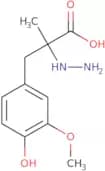
CAS:Producto controlado<p>4-Phenoxybutyric acid is a molecule that is produced by filamentous fungi. It has been shown to inhibit the growth of many bacteria, including Staphylococcus aureus, Salmonella typhimurium, and Enterobacter aerogenes. 4-Phenoxybutyric acid binds to the receptor on the surface of the bacterial cell membrane and prevents it from functioning correctly. It also prevents the production of proteins necessary for growth and survival. This inhibition leads to a loss of energy in the cell, which eventually leads to death. The molecule has been shown to be effective in inhibiting bacteria even if they are resistant to antibiotics. 4-Phenoxybutyric acid has been shown to be more efficient than other methods for microbial biotransformation, such as dispersive solid-phase extraction or liquid-liquid extraction.</p>Fórmula:C10H12O3Pureza:Min. 95%Peso molecular:180.2 g/mol3-O-Methyl carbidopa
CAS:Producto controlado<p>3-O-Methyl carbidopa is a metabolite of L-3,4-dihydroxyphenylalanine that is used as a drug in the treatment of Parkinson's disease. 3-O-Methyl carbidopa is a racemic mixture of two stereoisomers that have different chemical properties. The (+) form is more active and has been shown to be more potent than the (-) form. Analysis of this compound by magnetic resonance spectroscopy (NMR) at different magnetic fields showed that it has six distinct resonances: three from the protonated molecule and three from the deprotonated molecule. The proton nmr spectrum showed peaks at 2.02 ppm (D1), 2.81 ppm (D2), 3.84 ppm (D3), 4.07 ppm (D4), 4.28 ppm (D5), and 4.53 ppm (D6). These peaks correspond to resonances for protons</p>Fórmula:C11H16N2O4Pureza:Min. 95%Forma y color:PowderPeso molecular:240.26 g/mol1-Methylhydantoin
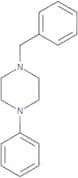
CAS:<p>1-Methylhydantoin is a molecule that has been shown to inhibit the production of TNF-α in vivo. It also inhibits the activity of aconitine alkaloids and hydrochloric acid, which are molecules that have been shown to stimulate TNF-α production. 1-Methylhydantoin has a logistic regression coefficient of -0.7 with a p value of 0.0054. 1-Methylhydantoin has been shown to be effective in patients with diabetes mellitus as well as patients with fatty acid metabolism disorders.</p>Fórmula:C4H6N2O2Pureza:Min. 95%Peso molecular:114.1 g/mol1-Benzyl-4-phenylpiperazine
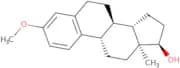
CAS:Producto controlado<p>1-Benzyl-4-phenylpiperazine is a type of phenylpiperazine that has hydroxy, phenyl ring, alkylthio, naphthyl and dopamine. It is an agonist for the D2 receptor and a specific ligand for the serotonin 5HT1A receptor. 1-Benzyl-4-phenylpiperazine has been shown to be effective in treating depression and psychotic depression. This drug can also be used as a substance in research on the neuropsychology of depression.</p>Fórmula:C17H20N2Pureza:Min. 95%Forma y color:Clear LiquidPeso molecular:252.35 g/mol3-O-Methyl 17a-estradiol
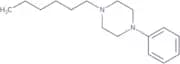
CAS:Producto controlado<p>Please enquire for more information about 3-O-Methyl 17a-estradiol including the price, delivery time and more detailed product information at the technical inquiry form on this page</p>Fórmula:C19H26O2Pureza:Min. 95%Peso molecular:286.41 g/mol1-Hexyl-4-phenylpiperazine
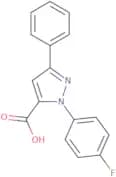
CAS:Producto controlado<p>Please enquire for more information about 1-Hexyl-4-phenylpiperazine including the price, delivery time and more detailed product information at the technical inquiry form on this page</p>Fórmula:C16H26N2Pureza:Min. 95%Peso molecular:246.39 g/mol1-(4-Fluorophenyl)-3-phenyl-1H-pyrazole-5-carboxylic acid
CAS:Producto controlado<p>Please enquire for more information about 1-(4-Fluorophenyl)-3-phenyl-1H-pyrazole-5-carboxylic acid including the price, delivery time and more detailed product information at the technical inquiry form on this page</p>Fórmula:C16H11FN2O2Pureza:Min. 95%Forma y color:PowderPeso molecular:282.27 g/mol2-Valeryl-17'-estradiol 17-valerate
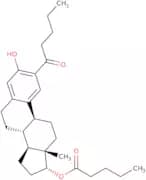
CAS:Producto controlado<p>Please enquire for more information about 2-Valeryl-17'-estradiol 17-valerate including the price, delivery time and more detailed product information at the technical inquiry form on this page</p>Fórmula:CHOPureza:Min. 95%3-Methyl-2-oxo-2,3-dihydro-1H-benzo[d]imidazole-4-carboxylic acid
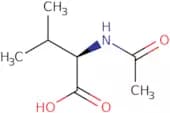
CAS:<p>Please enquire for more information about 3-Methyl-2-oxo-2,3-dihydro-1H-benzo[d]imidazole-4-carboxylic acid including the price, delivery time and more detailed product information at the technical inquiry form on this page</p>Fórmula:C9H8N2O3Pureza:Min. 95%Peso molecular:192.17 g/molAcetyl-D-valine
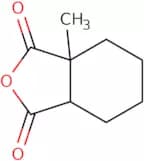
CAS:<p>Acetyl-D-valine is an amino acid that is naturally produced by the human body. Acetyl-D-valine has been shown to inhibit bacterial enzyme activities, such as racemase and sephadex g-100. Acetyl-D-valine may be used in the treatment of bacterial infections caused by Stenotrophomonas maltophilia. It has also been shown to have a high detection sensitivity which can be used to detect other bacteria that are not sensitive to antibiotics. The linear regression analysis showed that acetyl-D-valine inhibited microbial growth in a dose dependent manner with an IC50 value of 2 mM.</p>Fórmula:C7H13NO3Pureza:Min. 95%Peso molecular:159.18 g/mol3a-Methyl-5,6,7,7a-Tetrahydro-4H-Isobenzofuran-1,3-Dione
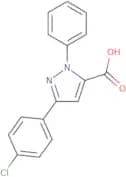
CAS:Producto controlado<p>3a-Methyl-5,6,7,7a-tetrahydro-4H-isobenzofuran-1,3-dione (MBF) is a reactive epoxy that can be used as a sealant. It has been shown to react with fatty acids and form epoxy esters. MBF also reacts with anhydrides to form polyesters. MBF has also been shown to be a potent inducer of cationic polymerization by reacting with hydroxyl groups on polymers. This reaction is reversible and the methylene groups are cleaved from the polymers to form new bonds with MBF. The resultant product is a cationic polymer that contains the hydroxyl group in place of the methylene group.</p>Fórmula:C9H12O3Pureza:Min. 95%Peso molecular:168.19 g/mol3-(4-Chlorophenyl)-1-phenyl-1H-pyrazole-5-carboxylic acid
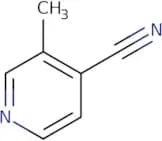
CAS:Producto controlado<p>Please enquire for more information about 3-(4-Chlorophenyl)-1-phenyl-1H-pyrazole-5-carboxylic acid including the price, delivery time and more detailed product information at the technical inquiry form on this page</p>Fórmula:C16H11ClN2O2Pureza:Min. 95%Peso molecular:298.72 g/mol3-Methylisonicotinonitrile
CAS:<p>3-Methylisonicotinonitrile (3MI) is a gaseous functional theory that is synthesized by the reaction of methyl groups and ammonia in the presence of an acid catalyst. 3MI has been shown to have anti-inflammatory properties, including inhibiting prostaglandin synthesis and reducing serum levels of tumor necrosis factor-α (TNF-α). The inflammatory response may be mediated by receptor subtypes such as PPARγ, which regulates lipid metabolism. 3MI also inhibits the production of proinflammatory cytokines from macrophages and neutrophils. This drug has been shown to inhibit acute inflammation in animal models.</p>Fórmula:C7H6N2Pureza:Min. 95%Peso molecular:118.14 g/mol4-Methyl mebendazole
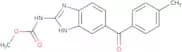
CAS:<p>Please enquire for more information about 4-Methyl mebendazole including the price, delivery time and more detailed product information at the technical inquiry form on this page</p>Fórmula:C17H15N3O3Pureza:Min. 95%Peso molecular:309.32 g/mol

![trans-2-[3-(4-tert-Butylphenyl)-2-methyl-2-propenylidene]malononitrile](/_next/image/?url=https%3A%2Fstatic.cymitquimica.com%2Fproducts%2F3D%2Fthumb-webp%2FFB166374.webp&w=3840&q=75)

![3-Methyl-2-oxo-2,3-dihydro-1H-benzo[d]imidazole-4-carboxylic acid](/_next/image/?url=https%3A%2Fstatic.cymitquimica.com%2Fproducts%2F3D%2Fthumb-webp%2FFM143449.webp&w=3840&q=75)