Aminoácidos (AA)
Los aminoácidos (AAs) son los componentes fundamentales de las proteínas y desempeñan un papel crucial en diversos procesos biológicos. Estos compuestos orgánicos son esenciales para la síntesis de proteínas, las rutas metabólicas y la señalización celular. En esta categoría, encontrará una gama completa de aminoácidos, incluyendo formas esenciales, no esenciales y modificadas, que son vitales para la investigación en bioquímica, biología molecular y ciencias de la nutrición. En CymitQuimica, ofrecemos aminoácidos de alta calidad para apoyar sus necesidades de investigación y desarrollo, asegurando precisión y fiabilidad en sus resultados experimentales.
Subcategorías de "Aminoácidos (AA)"
- Derivados de aminoácidos(3.955 productos)
- Aminoácidos y compuestos relacionados con aminoácidos(3.469 productos)
- Aminoácidos con oxígeno o azufre(168 productos)
- Aminoácidos protegidos con Boc(351 productos)
- Aminoácidos protegidos con Fmoc(1.710 productos)
Se han encontrado 38260 productos de "Aminoácidos (AA)"
Ordenar por
Pureza (%)
0
100
|
0
|
50
|
90
|
95
|
100
2,5-Dichloro-4-methoxybenzoic acid
CAS:<p>2,5-Dichloro-4-methoxybenzoic acid is a synthetic herbicide that inhibits the enzyme 5-enolpyruvylshikimate-3-phosphate synthase (EPSPS). This enzyme is necessary for the synthesis of aromatic amino acids. 2,5-Dichloro-4-methoxybenzoic acid is used as a selective herbicide in plants grown in vitro to eliminate weeds. It is also used to control populations of wild plants and grasses. 2,5-Dichloro-4-methoxybenzoic acid has been shown to inhibit the growth of glyphosate resistant weed species by inhibiting EPSPS activity.</p>Pureza:Min. 95%4-Methyl-2-hexanamine hydrochloride
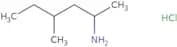
CAS:Producto controlado<p>4-Methyl-2-hexanamine hydrochloride is a synthetic amide that is used as a solvent in laboratories. It is a psychoactive substance and has been found to be an inhibitor of serotonin uptake, which may be related to its ability to inhibit the function of the serotonin transporter. The amount of 4-methyl-2-hexanamine hydrochloride absorbed by the body varies depending on how it is taken. When taken orally, 4-methyl-2-hexanamine hydrochloride enters through the digestive tract and reaches high levels in the blood stream. When taken intravenously, it enters the bloodstream directly and can reach higher concentrations in the blood. When inhaled, 4-methyl-2-hexanamine hydrochloride can enter into the lungs at high concentrations and then is absorbed into the bloodstream. 4-Methyl-2-hexanamine hydrochloride also degrades quickly in natural environments due to its biodegradable properties.</p>Fórmula:C7H18ClNPureza:Min. 95%Forma y color:PowderPeso molecular:151.68 g/molH-Cys-Glu-OH
<p>Please enquire for more information about H-Cys-Glu-OH including the price, delivery time and more detailed product information at the technical inquiry form on this page</p>Pureza:Min. 95%17-Methyl-4-androstene-3a,17a-diol
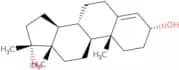
CAS:Producto controlado<p>Please enquire for more information about 17-Methyl-4-androstene-3a,17a-diol including the price, delivery time and more detailed product information at the technical inquiry form on this page</p>Fórmula:C20H32O2Pureza:Min. 95%Peso molecular:304.47 g/mol1-Benzyl-4-phenylpiperazine
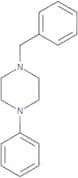
CAS:Producto controlado<p>1-Benzyl-4-phenylpiperazine is a type of phenylpiperazine that has hydroxy, phenyl ring, alkylthio, naphthyl and dopamine. It is an agonist for the D2 receptor and a specific ligand for the serotonin 5HT1A receptor. 1-Benzyl-4-phenylpiperazine has been shown to be effective in treating depression and psychotic depression. This drug can also be used as a substance in research on the neuropsychology of depression.</p>Fórmula:C17H20N2Pureza:Min. 95%Forma y color:Clear LiquidPeso molecular:252.35 g/mol3-Hydroxy-3-phenylpropanoic acid
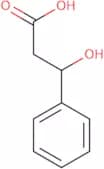
CAS:<p>3-Hydroxy-3-phenylpropanoic acid, or 3HPPA, is an intermediate in the synthesis of salicylic acid. It is also an endogenous metabolite found in urine samples and is a product of the metabolism of glucosinolates by hydrolysis. The hydroxyl group on 3HPPA reacts with a carbonyl group to form a Schiff base, which is then hydrolyzed by hydrochloric acid to form hippuric acid. The biosynthesis of 3HPPA occurs through the oxidation of fatty acids with the addition of a hydroxyl group from water.</p>Fórmula:C9H10O3Pureza:Min. 95%Forma y color:PowderPeso molecular:166.17 g/molZ-NH-PEG3-CH2CH2COOH
<p>Z-NH-PEG3-CH2CH2COOH is a PEG compound with two different functional groups (also known as heterobifunctional). Unlike homobifunctional PEG compounds (same functional group on both ends), this type of compounds are more versatile as have two different anchor points. Z-NH-PEG3-CH2CH2COOH is used as a linker and spacer to add a PEG moiety, via pegylation (a bioconjugation technique) to proteins, peptides, oligonucleotides, small molecules and nanoparticles.</p>Fórmula:C17H25NO7Pureza:Min. 95%Peso molecular:355.38 g/molMethyl 2-methylthiopropionate
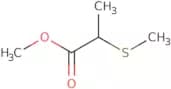
CAS:<p>Methyl 2-methylthiopropionate is an organic compound that is found in organisms and has been detected in the environment. It can be synthesized by the reaction of methane, carbon disulfide, and formaldehyde. Methyl 2-methylthiopropionate can also be produced by the reaction of β-unsaturated ketones with acid molecules. This substance is a potential precursor to ferrite. Methyl 2-methylthiopropionate has been shown to have physiological effects on fibrinogen and c-reactive protein levels in rats exposed to radiation. The production of this substance may lead to dry powder formation, which causes environmental pollution.</p>Fórmula:C5H10O2SPureza:Min. 95%Peso molecular:134.2 g/molZ-NH-PEG2-CH2COOH
CAS:<p>Z-NH-PEG2-CH2COOH is a PEG compound with two different functional groups (also known as heterobifunctional). Unlike homobifunctional PEG compounds (same functional group on both ends), this type of compounds are more versatile as have two different anchor points. Z-NH-PEG2-CH2COOH is used as a linker and spacer to add a PEG moiety, via pegylation (a bioconjugation technique) to proteins, peptides, oligonucleotides, small molecules and nanoparticles.</p>Fórmula:C14H19NO6Pureza:Min. 95%Peso molecular:297.3 g/mol4-Phenylbenzoyl chloride
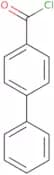
CAS:<p>4-Phenylbenzoyl chloride is a primary amino compound that has been studied extensively in the context of biological studies and as an electroluminescent device. It is also used to study the effects of alkylation on biological systems. 4-Phenylbenzoyl chloride has been shown to be cytotoxic against monocytic cell lines, with a mechanism of action that involves its ability to react with DNA, forming adducts that interfere with DNA replication. In addition, it also reacts with amines in human tissue samples, which may lead to carcinogenic effects. This compound is also effective against protozoan parasites and Leishmania species, although not thiosemicarbazide.</p>Fórmula:C13H9ClOPureza:Min. 95%Forma y color:PowderPeso molecular:216.66 g/mol2-Methyl-5-(tributylstannyl)pyridine
CAS:Producto controlado<p>Please enquire for more information about 2-Methyl-5-(tributylstannyl)pyridine including the price, delivery time and more detailed product information at the technical inquiry form on this page</p>Fórmula:C18H33NSnPureza:Min. 95%Peso molecular:382.17 g/mol5-Methyl-5-propyl-2-dioxanone
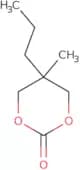
CAS:<p>5-Methyl-5-propyl-2-dioxanone is a polymer that has reactivities similar to those of dioxane. It can be polymerized by an azobenzene catalyze or polymerization. 5-Methyl-5-propyl-2-dioxanone can also be polymerized into an alternating, cyclic structure with moieties of esters. This polymer is chemically inert and insoluble in water.</p>Fórmula:C8H14O3Pureza:Min. 95%Peso molecular:158.19 g/molFmoc-(4-aminomethyl) benzoic acid
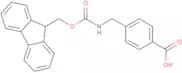
CAS:<p>Please enquire for more information about Fmoc-(4-aminomethyl) benzoic acid including the price, delivery time and more detailed product information at the technical inquiry form on this page</p>Fórmula:C23H19NO4Pureza:Min. 95%Peso molecular:373.4 g/mol4-Methyl mebendazole
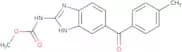
CAS:<p>Please enquire for more information about 4-Methyl mebendazole including the price, delivery time and more detailed product information at the technical inquiry form on this page</p>Fórmula:C17H15N3O3Pureza:Min. 95%Peso molecular:309.32 g/mol1-Methyl-1H-benzimidazole-2-carboxylic acid
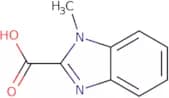
CAS:Producto controlado<p>1-Methyl-1H-benzimidazole-2-carboxylic acid is a synthetic compound that can be used as an antiprotozoal. It has been shown to have good activity against intestinalis, vaginalis, and intestinalis species. 1-Methyl-1H-benzimidazole-2-carboxylic acid binds to the acetyl groups of the parasite's cell membrane and inhibits the formation of the cytoplasmic membrane. This prevents the parasite from synthesizing ATP, which causes them to die. 1-Methyl-1H-benzimidazole-2-carboxylic acid also has strong activity against Giardia lamblia, which is caused by its ability to inhibit protein synthesis in this organism.</p>Fórmula:C9H8N2O2Pureza:Min. 95%Forma y color:PowderPeso molecular:176.17 g/molL-Proline-β-naphthylamide hydrochloride
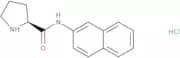
CAS:<p>L-proline analogue</p>Fórmula:C15H16N2O·HClPureza:Min. 95%Peso molecular:276.76 g/molEthyl 1-N-Boc-3-oxopiperidine-4-carboxylate
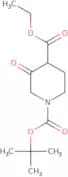
CAS:<p>Please enquire for more information about Ethyl 1-N-Boc-3-oxopiperidine-4-carboxylate including the price, delivery time and more detailed product information at the technical inquiry form on this page</p>Fórmula:C13H21NO5Pureza:Min. 95%Peso molecular:271.31 g/mol4-Methoxy-N-methylbenzylamine hydrochloride
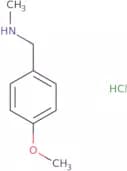
CAS:<p>Please enquire for more information about 4-Methoxy-N-methylbenzylamine hydrochloride including the price, delivery time and more detailed product information at the technical inquiry form on this page</p>Fórmula:C9H14NOClPureza:Min. 95%Peso molecular:187.67 g/mol(S)-(+)-5-Methyl-1-heptanol
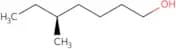
CAS:<p>(S)-(+)-5-Methyl-1-heptanol is a naturally occurring chemical compound that has been found to be effective against bacteria, fungi, and viruses. It is a volatile liquid that is soluble in water. The (S)-(+)-5-Methyl-1-heptanol molecule contains a hydroxyl group, which can bind to the bacterial cell wall and inhibit the synthesis of proteins necessary for cell division. This compound also has the ability to inhibit fungal growth by binding to ergosterol, which is an important component of fungal cell membranes. The (S)-(+)-5-Methyl-1-heptanol molecule inhibits microbial growth by inhibiting protein synthesis and DNA replication.</p>Fórmula:C8H18OPureza:Min. 95%Peso molecular:130.23 g/mol1-Ethyl-3-methylimidazolium hexafluorophosphate
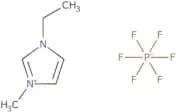
CAS:<p>1-Ethyl-3-methylimidazolium hexafluorophosphate is an ionic liquid that has been used as a solvent and electrolyte in electrochemical impedance spectroscopy. It has also been shown to be effective for the removal of hydrogen fluoride from water and wastewater treatment. 1-Ethyl-3-methylimidazolium hexafluorophosphate has been found to be chemically stable, which makes it suitable for use in chemical reactions with other compounds. This ionic liquid is not toxic, making it a good candidate for use as a model system.</p>Fórmula:C6H11N2·F6PPureza:Min. 95%Peso molecular:256.13 g/mol