Aminoácidos (AA)
Los aminoácidos (AAs) son los componentes fundamentales de las proteínas y desempeñan un papel crucial en diversos procesos biológicos. Estos compuestos orgánicos son esenciales para la síntesis de proteínas, las rutas metabólicas y la señalización celular. En esta categoría, encontrará una gama completa de aminoácidos, incluyendo formas esenciales, no esenciales y modificadas, que son vitales para la investigación en bioquímica, biología molecular y ciencias de la nutrición. En CymitQuimica, ofrecemos aminoácidos de alta calidad para apoyar sus necesidades de investigación y desarrollo, asegurando precisión y fiabilidad en sus resultados experimentales.
Subcategorías de "Aminoácidos (AA)"
- Derivados de aminoácidos(3.955 productos)
- Aminoácidos y compuestos relacionados con aminoácidos(3.461 productos)
- Aminoácidos con oxígeno o azufre(168 productos)
- Aminoácidos protegidos con Boc(351 productos)
- Aminoácidos protegidos con Fmoc(1.710 productos)
Se han encontrado 38244 productos de "Aminoácidos (AA)"
Ordenar por
Pureza (%)
0
100
|
0
|
50
|
90
|
95
|
100
6-Benzyloxy-5-methoxyindole-2-carboxylic acid
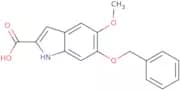
CAS:<p>Please enquire for more information about 6-Benzyloxy-5-methoxyindole-2-carboxylic acid including the price, delivery time and more detailed product information at the technical inquiry form on this page</p>Fórmula:C17H15NO4Pureza:Min. 95%Peso molecular:297.31 g/mol6-Chloro-5-methylpyridin-2-amine
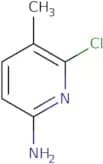
CAS:<p>6-Amino-2-chloro-3-methylpyridine is a heteroaromatic compound that belongs to the class of imidazopyridine. It is a monomer used in research, and can be transformed into the cross-coupling reaction with electron irradiation, which provides an efficient method for synthesizing other heteroaromatic compounds. 6-Amino-2-chloro-3-methylpyridine has low ionization potential and can be used as a drug discovery agent.</p>Fórmula:C6H7ClN2Pureza:Min. 95%Peso molecular:142.59 g/mol(S)-N-Boc-3-amino-1-butyne
CAS:<p>Please enquire for more information about (S)-N-Boc-3-amino-1-butyne including the price, delivery time and more detailed product information at the technical inquiry form on this page</p>Fórmula:C9H15NO2Pureza:Min. 95%Peso molecular:169.22 g/mol1,2-Dilauroyl-sn-glycero-3-phosphocholine
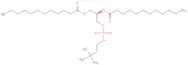
CAS:<p>The liposome is a spherical lipid bilayer that encloses an aqueous interior. It is used in the treatment of hyperproliferative diseases, such as cancer, and infectious diseases. The lipid bilayer membrane of the liposomes are made up of phospholipids, mostly phosphatidylcholine, with cholesterol or other molecules added to increase stability. The liposome is composed of two layers: the external layer which includes the phosphate head groups and hydrophilic polymers, and the internal layer which includes the hydrophobic fatty acid tails. Liposomes can be manipulated to target specific cells by adding proteins to either side of the membrane. These proteins are called targeting factors and they usually bind to receptors on the surface of cells that have particular features (e.g., CD4+ T-cells). This drug is toxic because it causes significant cytotoxicity when exposed to various types of cells at a concentration greater than 1 mM. There is significant</p>Fórmula:C32H64NO8PPureza:Min. 95%Peso molecular:621.83 g/mol1,2,3,4-Tetrahydro-4,6-dihydroxy-2-methyl-isoquinoline
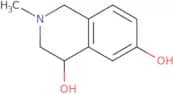
CAS:<p>1,2,3,4-Tetrahydro-4,6-dihydroxy-2-methyl-isoquinoline is a useful building block in the synthesis of various compounds such as pharmaceuticals and pesticides. It is an intermediate for the preparation of other valuable chemicals such as the antihistamine diphenhydramine, which is used to treat allergies. Tetrahydroisoquinoline can also be used as a reagent to synthesize other chemical compounds. This compound has been used in research as well as commercial applications. Tetrahydroisoquinoline is also a versatile scaffold that can be modified to produce different derivatives with different properties.</p>Fórmula:C10H13NO2Pureza:Min. 95%Forma y color:White PowderPeso molecular:179.22 g/mol4-Methyl-2-hexanamine hydrochloride
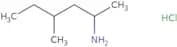
CAS:Producto controlado<p>4-Methyl-2-hexanamine hydrochloride is a synthetic amide that is used as a solvent in laboratories. It is a psychoactive substance and has been found to be an inhibitor of serotonin uptake, which may be related to its ability to inhibit the function of the serotonin transporter. The amount of 4-methyl-2-hexanamine hydrochloride absorbed by the body varies depending on how it is taken. When taken orally, 4-methyl-2-hexanamine hydrochloride enters through the digestive tract and reaches high levels in the blood stream. When taken intravenously, it enters the bloodstream directly and can reach higher concentrations in the blood. When inhaled, 4-methyl-2-hexanamine hydrochloride can enter into the lungs at high concentrations and then is absorbed into the bloodstream. 4-Methyl-2-hexanamine hydrochloride also degrades quickly in natural environments due to its biodegradable properties.</p>Fórmula:C7H18ClNPureza:Min. 95%Forma y color:PowderPeso molecular:151.68 g/molN-Boc-3-carboethoxy-4-piperidone
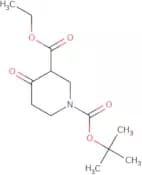
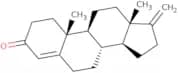
CAS:<p>Please enquire for more information about N-Boc-3-carboethoxy-4-piperidone including the price, delivery time and more detailed product information at the technical inquiry form on this page</p>Fórmula:C13H21NO5Pureza:Min. 95%Peso molecular:271.31 g/mol17-Methylene-4-androsten-3-one
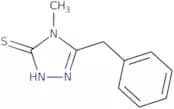
CAS:Producto controlado<p>17-Methylene-4-androsten-3-one is a natural steroid that belongs to the class of 17,20-lyase. This compound has been reported as an endogenous metabolite in human urine, plasma, and cerebrospinal fluid. It has been detected at low concentrations in the brain and liver. The nmr spectrum of 17-methylene-4-androsten-3-one displays a singlet at δ 3.2 ppm for the C=C double bond, which is characteristic of the A ring.<br>17 methylene 4 androsten 3 one is found in human urine, plasma, and cerebrospinal fluid with a concentration of 0.1 ng/ml. The nmr spectrum displays a singlet at δ 3.2 ppm for the C=C double bond which is characteristic of the A ring.</p>Fórmula:C20H28OPureza:Min. 95%Peso molecular:284.44 g/mol5-Benzyl-4-methyl-4H-1,2,4-triazole-3-thiol
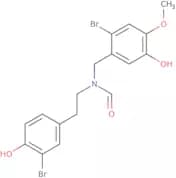
CAS:<p>Please enquire for more information about 5-Benzyl-4-methyl-4H-1,2,4-triazole-3-thiol including the price, delivery time and more detailed product information at the technical inquiry form on this page</p>Fórmula:C10H11N3SPureza:Min. 95%Peso molecular:205.28 g/molN-(3-Bromo-4-hydroxyphenethyl)-N-(2-bromo-5-hydroxy-4-methoxybenzyl)formamide
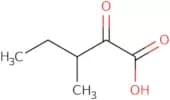
CAS:Producto controlado<p>Please enquire for more information about N-(3-Bromo-4-hydroxyphenethyl)-N-(2-bromo-5-hydroxy-4-methoxybenzyl)formamide including the price, delivery time and more detailed product information at the technical inquiry form on this page</p>Fórmula:C17H17Br2NO4Pureza:Min. 95%Peso molecular:459.13 g/mol(±)-3-Methyl-2-oxovaleric acid
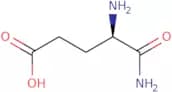
CAS:<p>(±)-3-Methyl-2-oxovaleric acid is a fatty acid that is found in the mitochondria of liver cells and other tissues. It is an intermediate in the citric acid cycle and can be converted into acetyl-CoA, which is used for energy production. (±)-3-Methyl-2-oxovaleric acid has been shown to cause necrotic cell death when it binds to the mitochondrial membrane potential and causes a loss of ATP production. This results in a lack of energy for the cell, leading to cell death. (±)-3-Methyl-2-oxovaleric acid has also been shown to inhibit protein synthesis by decreasing uptake and increasing creatine kinase activity. This inhibition leads to decreased body formation and tissue culture growth in vitro. In vivo, (±)-3-Methyl-2-oxovaleric acid causes primary sclerosing cholangitis, a disease characterized by inflammation of bile ducts that</p>Fórmula:C6H10O3Pureza:Min. 95%Forma y color:White PowderPeso molecular:130.14 g/molD-Glutamic acid α-amide
CAS:<p>D-Glutamic acid alpha-amide is a carbohydrate that has been shown to have antibiotic properties. It can be produced by chemoenzymatic synthesis and is used as an animal feed additive. D-Glutamic acid alpha-amide is a conjugate of D-glutamic acid with either glycine or beta-alanine. The residue of this compound on red blood cells is measured in order to assess the amount of D-glutamic acid alpha-amide that has been ingested. This compound has also been shown to have antigenic properties, which can elicit immune responses when injected into animals. The meningococcal vaccine that contains D-glutamic acid alpha-amide was found to be effective at stimulating an immune response in mice against meningitis caused by gram negative species, such as Neisseria meningitidis.</p>Fórmula:C5H10N2O3Pureza:Min. 95%Forma y color:PowderPeso molecular:146.14 g/molH-Cys-Asn-OH
<p>Please enquire for more information about H-Cys-Asn-OH including the price, delivery time and more detailed product information at the technical inquiry form on this page</p>Pureza:Min. 95%3-[2-(Ethoxycarbonyl)-1-methyl-1H-indol-3-yl]propanoic acid
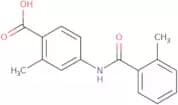
CAS:Producto controlado<p>Please enquire for more information about 3-[2-(Ethoxycarbonyl)-1-methyl-1H-indol-3-yl]propanoic acid including the price, delivery time and more detailed product information at the technical inquiry form on this page</p>Fórmula:C15H17NO4Pureza:Min. 95%Peso molecular:275.3 g/mol2-Methyl-4-(2-methylbenzamido)benzoic acid
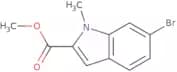
CAS:<p>2-Methyl-4-(2-methylbenzamido)benzoic acid is a synthetic drug that has oxidizing properties. It is used as an intermediate in the synthesis of medicines, and can also be used as an intermediate in the synthesis of dyes and pesticides. The structure of this molecule consists of two methyl groups on a benzene ring with two aminobenzoic acid molecules attached to it. This molecule has hydrogen bonds with both aminobenzoic acid groups, one of which has an alkyl group attached to it. 2-Methyl-4-(2-methylbenzamido)benzoic acid crystallizes in the monoclinic system and its molecular weight is 256.24 g/mol.</p>Fórmula:C16H15NO3Pureza:Min. 95%Peso molecular:269.3 g/molMethyl 6-Bromo-1-Methyl-1H-Indole-2-Carboxylate
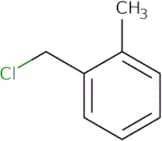
CAS:Producto controlado<p>Please enquire for more information about Methyl 6-Bromo-1-Methyl-1H-Indole-2-Carboxylate including the price, delivery time and more detailed product information at the technical inquiry form on this page</p>Fórmula:C11H10BrNO2Pureza:Min. 95%Peso molecular:268.11 g/mol2-Methylbenzyl chloride
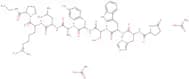
CAS:<p>2-Methylbenzyl chloride is a reactive compound that has been shown to have inhibitory properties against cancer cells. It is an aromatic compound that is synthesized by the reaction of benzene and methyl chloride. This chemical appears as a white solid at room temperature. 2-Methylbenzyl chloride has been shown to have antimicrobial properties, which are due to its ability to react with fatty acids. The addition of 2-methylbenzyl chloride to fatty acid esters leads to the formation of hydroxylated derivatives, which are reactive and inhibit the growth of bacteria and fungi. This chemical also reacts with carbon disulphide, hydrogen chloride, and chloride in the presence of light or heat. The metabolic profiles of this chemical have not been well characterized, but it has been shown to be reactive with Mcf-7 cells.br>br> The following product details are for a product called "3DCTKP." br>br</p>Fórmula:C8H9ClPureza:Min. 95%Forma y color:Clear LiquidPeso molecular:140.61 g/mol(Des-Gly10,D-Ala6,Pro-NHEt 9)-LHRH acetate salt
CAS:Producto controlado<p>Des-Gly10,D-Ala6,Pro-NHEt 9)-LHRH acetate salt Pyr-His-Trp-Ser-Tyr-D-Ala-Leu-Arg-Pro-NHEt acetate (DGPRP) is a drug that is used to treat endometriosis. It is an agonist of the LHRH receptor and inhibits body formation by preventing the release of gonadotropin hormones. DGPRP has been shown to inhibit cell proliferation in cancer tissues and may be useful for the treatment of leukemia. This drug has also been shown to be biocompatible with polymer scaffolds and can be synthesized using methods such as solid phase peptide synthesis.</p>Fórmula:C56H78N16O12•xC2H4O2Pureza:Min. 95%Peso molecular:1,167.32 g/molEthyl 5-methyl-2,4-dioxohexanoate
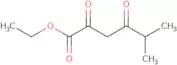
CAS:<p>Ethyl 5-methyl-2,4-dioxohexanoate is an intermediate in the preparation of cyclobutene. This compound can be prepared from triphenylphosphine and ethyl acetoacetate via a Wittig reaction. This process is intramolecular, meaning that the two molecules react to form one product without any molecules being lost or added. The Wittig Reaction was first discovered by Georg Wittig in 1953. Intramolecular reactions are often used to synthesize organic compounds with high yields because they do not require any external reagents or catalysts. Ethyl 5-methyl-2,4-dioxohexanoate has also been shown to be reactive with protonation and alkylation reactions.</p>Fórmula:C9H14O4Pureza:Min. 95%Peso molecular:186.21 g/mol6-Methyl-2-pyridinemethanamine
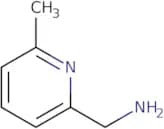
CAS:<p>6-Methyl-2-pyridinemethanamine is an imine that is used in cancer therapy. It has been shown to have antitumor activity at nanomolar concentrations, which is a very low dose. 6-Methyl-2-pyridinemethanamine is not sensitive to the body's enzymes and does not show any signs of toxicity. This drug also has a pharmacokinetic profile that enhances the uptake of other drugs and can be used for the treatment of cancers that are resistant to chemotherapy. The mechanism of action of 6-methyl-2-pyridinemethanamine is constitutive activation, which means it binds to the constitutively active site on the protein target and inhibits its function.</p>Fórmula:C7H10N2Pureza:Min. 95%Peso molecular:122.17 g/mol


![3-[2-(Ethoxycarbonyl)-1-methyl-1H-indol-3-yl]propanoic acid](/_next/image/?url=https%3A%2Fstatic.cymitquimica.com%2Fproducts%2F3D%2Fthumb-webp%2FFE127998.webp&w=3840&q=75)