


Aminoácidos (AA)
Los aminoácidos (AAs) son los componentes fundamentales de las proteínas y desempeñan un papel crucial en diversos procesos biológicos. Estos compuestos orgánicos son esenciales para la síntesis de proteínas, las rutas metabólicas y la señalización celular. En esta categoría, encontrará una gama completa de aminoácidos, incluyendo formas esenciales, no esenciales y modificadas, que son vitales para la investigación en bioquímica, biología molecular y ciencias de la nutrición. En CymitQuimica, ofrecemos aminoácidos de alta calidad para apoyar sus necesidades de investigación y desarrollo, asegurando precisión y fiabilidad en sus resultados experimentales.
Subcategorías de "Aminoácidos (AA)"
- Derivados de aminoácidos(3.955 productos)
- Aminoácidos y compuestos relacionados con aminoácidos(3.461 productos)
- Aminoácidos con oxígeno o azufre(168 productos)
- Aminoácidos protegidos con Boc(351 productos)
- Aminoácidos protegidos con Fmoc(1.710 productos)
Se han encontrado 38244 productos de "Aminoácidos (AA)"
Ordenar por
Pureza (%)
0
100
|
0
|
50
|
90
|
95
|
100
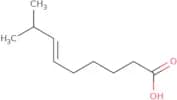
(E)-8-Methyl-6-nonenoic acid - predominantly trans
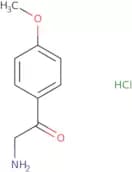
CAS:<p>(E)-8-Methyl-6-nonenoic acid is a fatty acid that is found in the acetate extract of Capsicum annuum. It is an analog of the natural compound (E)-8-methyl-6-nonenal, which has been shown to have anticancer properties. The synthesis of this compound has been achieved using a novel approach based on enzymatic reactions and chemical transformations. This compound has been shown to have potential anticancer activity against human prostate cancer cells in vitro and to inhibit the growth of triticum aestivum seeds.</p>Fórmula:C10H18O2Pureza:Min. 95%Peso molecular:170.25 g/mol2-Amino-4'-methoxyacetophenone hydrochloride
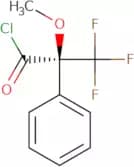
CAS:Producto controlado<p>Please enquire for more information about 2-Amino-4'-methoxyacetophenone hydrochloride including the price, delivery time and more detailed product information at the technical inquiry form on this page</p>Fórmula:C9H11NO2·HClPureza:Min. 95%Forma y color:PowderPeso molecular:201.65 g/mol(R)-(-)-α-Methoxy-α-(trifluoromethyl)phenylacetyl chloride
CAS:<p>(R)-(-)-alpha-Methoxy-alpha-trifluoromethyl-phenylacetyl chloride is an enantiomer that has a chiral center. It is used in the synthesis of metoprolol and bisoprolol, which are drugs that are prescribed to treat hypertension and angina pectoris. The racemate is used in the separation of amines by high performance liquid chromatography (Hplc). This compound also has a hydroxyl group and two fatty acids, which can be identified using a chromatographic method. The compound contains a chloride as well as a transfer group.</p>Fórmula:C10H8ClF3O2Pureza:Min. 95%Forma y color:Clear LiquidPeso molecular:252.62 g/mol1-Methyl-1,3-dihydro-2H-imidazol-2-one
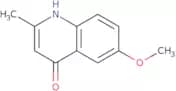
CAS:<p>1-Methyl-1,3-dihydro-2H-imidazol-2-one is a chemical compound with the formula CHN. It has been used as a precursor to other compounds and can be prepared by reaction of methanol with chlorine or chloramine. 1,3-Dihydroimidazole reacts with UV light to generate photoproducts that contain pyrimidine or pyridinium rings. It is also reactive with chloride ion and can be used as a raw material for organic synthesis. 1,3-Dihydroimidazole can also be synthesized from chlorinated methanesulfonate esters.</p>Fórmula:C4H6N2OPureza:Min. 95%Peso molecular:98.1 g/mol6-Methoxy-2-methylquinolin-4(1H)-one
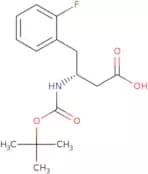
CAS:<p>6-Methoxy-2-methylquinolin-4(1H)-one is a heterocyclic molecule that has the ability to undergo oxidation reactions. It is an intermediate in the synthesis of other molecules, such as 4-hydroxyquinoline and 4-hydroxybenzaldehyde. The acidity of 6-methoxy-2-methylquinolin-4(1H)-one can be increased by adding alkali, which will cause it to react with hydroxyl and form a phenylhydrazine. When heated with hydrazine, 6-methoxy-2-methylquinolin-4(1H)-one undergoes tautomerism and forms 2-(phenylhydrazinyl) quinoline. The chemical structure of 6-methoxy-2 methylquinolin 4(1H)-one can be detected by analyzing its spectrum (i.e., absorption or emission spectra). This chemical shows bands</p>Fórmula:C11H11NO2Pureza:Min. 95%Peso molecular:189.21 g/molBoc-D-b-HoPhe(2-F)-OH
CAS:<p>Please enquire for more information about Boc-D-b-HoPhe(2-F)-OH including the price, delivery time and more detailed product information at the technical inquiry form on this page</p>Fórmula:C15H20FNO4Pureza:Min. 95%Peso molecular:297.32 g/mol(1R,2R)-Boc-aminocyclopentane carboxylic acid
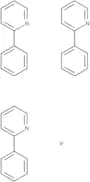
CAS:<p>(1R,2R)-Boc-aminocyclopentane carboxylic acid (BCPC) is a high quality, reagent, and useful intermediate. It is a versatile building block that can be used as a speciality chemical or research chemical. BCPC has been shown to react with amines to form ureas, with nitriles to form oxazolidines, and with epoxides to form aziridinones.</p>Fórmula:C11H19NO4Pureza:Min. 95%Forma y color:White PowderPeso molecular:229.27 g/molTris(2-phenylpyridine)iridium
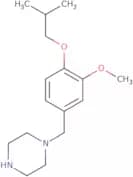
CAS:<p>Tris(2-phenylpyridine)iridium (IrCl) is a coordination compound that is used as a catalyst to initiate cationic polymerization of biphenyl. It is also used as an analytical reagent for determining the content of fatty acids in oils and fats. The steric interactions between the phenyl groups and the electron-rich iridium atoms lead to a high degree of conversion of ethylene oxide to ethylene glycol, which can be observed by UV absorption. The synthesis of IrCl occurs in two steps: first, the reaction of chloroacetone with phenylmagnesium bromide followed by addition of hydrated iridium chloride. The product crystallizes in red needles, which are analyzed using x-ray crystal structures. Analysis using nmr spectroscopy reveals that IrCl contains four nitrogen atoms and three oxygen atoms. Its redox potentials are -0.9 volts for oxidation and +1.3 volts for reduction, making</p>Fórmula:C33H24IrN3Pureza:Min. 98 Area-%Forma y color:PowderPeso molecular:654.78 g/mol1-(4-Isobutoxy-3-methoxybenzyl)piperazine
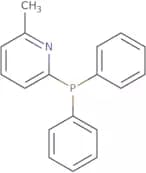
CAS:Producto controlado<p>Please enquire for more information about 1-(4-Isobutoxy-3-methoxybenzyl)piperazine including the price, delivery time and more detailed product information at the technical inquiry form on this page</p>Fórmula:C16H26N2O2Pureza:Min. 95%Peso molecular:278.39 g/mol2-Diphenylphosphino-6-methylpyridine
CAS:<p>2-Diphenylphosphino-6-methylpyridine is a luminescent phosphor with aryl substituents. It has been shown to emit light in the near-infrared region of the spectrum, which can be used for devices such as night lights. The compound has two isomers that differ in the position of the methyl group on the pyridine ring. Although it has not been studied systematically, it appears that one isomer has better photophysical properties than the other. This compound also shows chloride ion binding and changes its emission properties when exposed to temperatures above 300 K.</p>Fórmula:C18H16NPPureza:90%MinPeso molecular:277.3 g/mol6-Methoxy-2-(4-methoxyphenyl)benzo[b]thiophene
CAS:<p>6-Methoxy-2-(4-methoxyphenyl)benzo[b]thiophene (6MBT) is a mesomorphic, acid catalyst that has been used to synthesize polyphosphoric acid. It reacts with chloride to form 6-chloro-2-(4-methoxyphenyl)benzo[b]thiophene, which can be converted to the desired product by sulfoxide. The reaction time for this process is relatively short and the yield is high. 6MBT can also be used as a semiconductor in devices such as solar cells and electronic displays. The photoelectric effect of 6MBT was demonstrated in 1972, when it was found that electron emission from a photocurrent could be obtained at room temperature. This property has been shown to be due to the molecule's absorption of light energy and subsequent conversion into electrical energy.</p>Fórmula:C16H14O2SPureza:Min. 95%Forma y color:PowderPeso molecular:270.35 g/mol3-(2-Pyridyl)-D-alanine
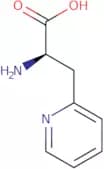
CAS:<p>3-(2-Pyridyl)-D-alanine is an amino acid that is a precursor to the peptide antibiotic, pyrithione. It can be prepared from 2-pyridylacetic acid and D-alanine. 3-(2-Pyridyl)-D-alanine is a chiral molecule with two stereogenic centres, which means it has four different optical isomers: L-, D-, S-, and R-. The L form of 3-(2-pyridyl)-D-alanine was found in Streptomyces sp. strain NRRL 8057. This amino acid is synthesized by a peptide synthetase enzyme. The sequence of this biosynthetic gene has not been determined yet.</p>Fórmula:C8H10N2O2Pureza:Min. 95%Peso molecular:166.18 g/mol4-Amino-5-methoxy-2-methyl-N-methylbenzenesulfonamide
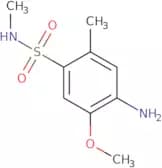
CAS:<p>4-Amino-5-methoxy-2-methyl-N-methylbenzenesulfonamide is a surfactant that is used in the chemical industry to dissolve diazotized aromatic amines. It is also used in the preparation of coupling agents, such as naphthol, and hydrochloric acid. 4-Amino-5-methoxy-2-methylbenzenesulfonamide can be prepared by the diazotization of aniline followed by coupling with hydrochloric acid and sodium phosphate. The product can then be purified by recrystallization from a salt solution containing sodium acetate.</p>Fórmula:C9H14N2O3SPureza:Min. 95%Peso molecular:230.29 g/molFmoc-N-Me-Trp(Trt)-OH
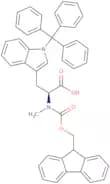
CAS:Producto controlado<p>Please enquire for more information about Fmoc-N-Me-Trp(Trt)-OH including the price, delivery time and more detailed product information at the technical inquiry form on this page</p>Fórmula:C46H38N2O4Pureza:Min. 95%Peso molecular:682.81 g/molNG,NG'-Dimethyl-L-arginine dihydrochloride
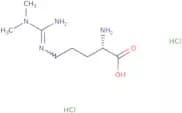
CAS:<p>NG,NG'-Dimethyl-L-arginine dihydrochloride is a substrate for nitrite reductase and is used to diagnose kidney disease. It has been shown in vitro to inhibit the activity of steroidogenic enzymes in the zona fasciculata of the adrenal gland. NG,NG'-Dimethyl-L-arginine dihydrochloride is also used as a diagnostic agent in pediatric patients with hypogonadotropic hypogonadism and during inhalation therapy in adults with asthma. NG,NG'-Dimethyl-L-arginine dihydrochloride has been shown to reduce inflammatory diseases such as rheumatoid arthritis and Crohn's disease by inhibiting arginine methylation. The drug also reduces age-related changes in steroidogenesis and blood pressure.</p>Fórmula:C8H18N4O2·2HClPureza:Min. 95%Forma y color:PowderPeso molecular:275.18 g/molmPEG8-OH
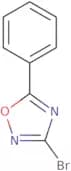
CAS:<p>mPEG8-OH is a PEG polymer categorised as monofunctional (OH-PEG-X). Used as a linker, mPEG8-OH is used to attached PEG to proteins, peptides, oligonucleotides, nanoparticles and small molecules via pegylation, a bioconjugation technique.</p>Fórmula:C17H36O9Pureza:Min. 95%Peso molecular:384.46 g/mol3-Bromo-5-phenyl-1,2,4-oxadiazole
CAS:<p>3-Bromo-5-phenyl-1,2,4-oxadiazole (3BrO) is an organic compound that can be synthesized by coupling a benzoyl chloride with a cyanide salt. 3BrO is also produced in the pyrolysis of benzophenone and 1,2,4-triazole. The fragmentation of 3BrO produces catechol and phenylhydrazine. The deoxygenative coupling reaction of 3BrO with sodium azide produces the explosive compound 2,4,6-trinitrobenzamide. This chemical has been used as the starting material for the synthesis of many other explosives such as RDX and TNT.</p>Fórmula:C8H5BrN2OPureza:Min. 95%Peso molecular:225.04 g/molH-Ile-Asn-OH trifluroacetate
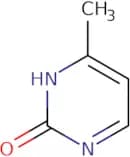
CAS:<p>Please enquire for more information about H-Ile-Asn-OH trifluroacetate including the price, delivery time and more detailed product information at the technical inquiry form on this page</p>Fórmula:C10H19N3O4•(C2HF3O2)xPureza:Min. 95%2-Hydroxy-4-methylpyrimidine
CAS:<p>2-Hydroxy-4-methylpyrimidine is a heterocyclic compound that is used in the synthesis of other heterocycles. It is prepared by the reaction of methylbenzene and nitrous acid, followed by hydrolysis to form an imine. This compound has been synthesized with various substituents at different positions on the ring and also as a series of homologues. The 2-hydroxy-4-methylpyrimidine molecule has four nitroso groups, which are substituted with methyl groups. X-ray crystallography studies have shown that the molecule can exist in two different forms: one with the methyl groups pointing "homotopically" towards each other and the other with them directed "heterotopically."</p>Fórmula:C5H6N2OPureza:Min. 95%Peso molecular:110.11 g/mol1,4-Phenylenebis[tributylstannane]
CAS:Producto controlado<p>The tributylstannane group is a hypervalent group that contains three bonds and two lone pairs. 1,4-Phenylenebis[tributylstannane] belongs to the class of inorganic compounds that are semiconducting. It has been synthesized by cross-coupling with hydroxyl groups and trifluoromethanesulfonic acid. The synthesis of this compound is rather challenging due to its high reactivity, but it has been studied extensively for its potential use in organic electronics.</p>Fórmula:C30H58Sn2Pureza:Min. 95%Peso molecular:656.2 g/mol



![6-Methoxy-2-(4-methoxyphenyl)benzo[b]thiophene](/_next/image/?url=https%3A%2Fstatic.cymitquimica.com%2Fproducts%2F3D%2Fthumb-webp%2FFM25206.webp&w=3840&q=75)

![1,4-Phenylenebis[tributylstannane]](/_next/image/?url=https%3A%2Fstatic.cymitquimica.com%2Fproducts%2F3D%2Fthumb-webp%2FFB43960.webp&w=3840&q=75)