Aminoácidos (AA)
Los aminoácidos (AAs) son los componentes fundamentales de las proteínas y desempeñan un papel crucial en diversos procesos biológicos. Estos compuestos orgánicos son esenciales para la síntesis de proteínas, las rutas metabólicas y la señalización celular. En esta categoría, encontrará una gama completa de aminoácidos, incluyendo formas esenciales, no esenciales y modificadas, que son vitales para la investigación en bioquímica, biología molecular y ciencias de la nutrición. En CymitQuimica, ofrecemos aminoácidos de alta calidad para apoyar sus necesidades de investigación y desarrollo, asegurando precisión y fiabilidad en sus resultados experimentales.
Subcategorías de "Aminoácidos (AA)"
- Derivados de aminoácidos(3.955 productos)
- Aminoácidos y compuestos relacionados con aminoácidos(3.461 productos)
- Aminoácidos con oxígeno o azufre(168 productos)
- Aminoácidos protegidos con Boc(351 productos)
- Aminoácidos protegidos con Fmoc(1.710 productos)
Se han encontrado 38244 productos de "Aminoácidos (AA)"
Ordenar por
Pureza (%)
0
100
|
0
|
50
|
90
|
95
|
100
1-(3-Methoxybenzyl)-1H-indole-3-carbaldehyde
CAS:Producto controlado<p>Please enquire for more information about 1-(3-Methoxybenzyl)-1H-indole-3-carbaldehyde including the price, delivery time and more detailed product information at the technical inquiry form on this page</p>Fórmula:C17H15NO2Pureza:Min. 95%Peso molecular:265.31 g/molEthyl 1-N-Boc-3-oxopiperidine-4-carboxylate
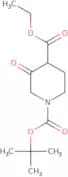
CAS:<p>Please enquire for more information about Ethyl 1-N-Boc-3-oxopiperidine-4-carboxylate including the price, delivery time and more detailed product information at the technical inquiry form on this page</p>Fórmula:C13H21NO5Pureza:Min. 95%Peso molecular:271.31 g/molL-Phenylglycinol
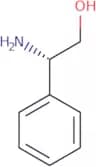
CAS:<p>L-phenylglycinol is a chiral compound that is synthesized by the reaction of phenylglycinol with hydroxide solution in the presence of an asymmetric synthesis catalyst. It is used as a precursor to chiral amides and aziridines, which are important for addressing the need for enantiopure compounds. The reaction mechanism involves nucleophilic substitution at the amino function, which can be catalyzed by copper complexes in solution. This reaction can also be monitored using liquid chromatography methods.</p>Fórmula:C8H11NOPureza:Min. 95%Forma y color:White PowderPeso molecular:137.18 g/molBoc-L-Gly-MBHA Resin
<p>Please enquire for more information about Boc-L-Gly-MBHA Resin including the price, delivery time and more detailed product information at the technical inquiry form on this page</p>Pureza:Min. 95%5-(5-Chloro-1-methyl-1H-benzimidazol-2-yl)pentanoic acid
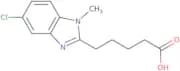
CAS:Producto controlado<p>Please enquire for more information about 5-(5-Chloro-1-methyl-1H-benzimidazol-2-yl)pentanoic acid including the price, delivery time and more detailed product information at the technical inquiry form on this page</p>Fórmula:C13H15ClN2O2Pureza:Min. 95%Peso molecular:266.72 g/mol9-Chloro-11β,17,21-trihydroxy-16β-methylpregna-1,4-diene-3,20-dione 17-valerate
CAS:Producto controlado<p>Prednisolone is a synthetic corticosteroid that is used in the treatment of a number of lung diseases, including asthma. Prednisolone is used to decrease the inflammation and swelling around the airways and lungs. Prednisolone is used to treat certain skin conditions, such as eczema and dermatitis. This drug also decreases the activity of the immune system by inhibiting production of substances that cause inflammation. The onset of action for prednisolone is typically one day with a duration of up to two weeks. It has been shown to be more effective when taken orally than when applied topically. It may be taken with or without food and can be given as an oral or an intravenous dose. Prednisolone tablets must be dissolved in water before they are placed under the tongue (sublingual). The tablets will dissolve quickly under the tongue, releasing prednisolone into your bloodstream. Enteric-coated tablets should not be crushed or chewed</p>Fórmula:C27H37ClO6Pureza:Min. 95%Peso molecular:493.03 g/molAcetyl-L-methionine sulfoxide
CAS:<p>Please enquire for more information about Acetyl-L-methionine sulfoxide including the price, delivery time and more detailed product information at the technical inquiry form on this page</p>Fórmula:C7H13NO4SPureza:Min. 95%Forma y color:PowderPeso molecular:207.25 g/molL-Cysteinesulfinic acid, monohydrate
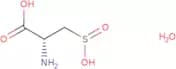
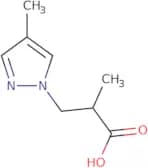
CAS:<p>Please enquire for more information about L-Cysteinesulfinic acid, monohydrate including the price, delivery time and more detailed product information at the technical inquiry form on this page</p>Fórmula:C3H7NO4S·H2OPureza:Min. 95%Peso molecular:171.17 g/mol2-Methyl-3-(4-methyl-1H-pyrazol-1-yl)propanoic acid
CAS:Producto controlado<p>Please enquire for more information about 2-Methyl-3-(4-methyl-1H-pyrazol-1-yl)propanoic acid including the price, delivery time and more detailed product information at the technical inquiry form on this page</p>Fórmula:C8H12N2O2Pureza:Min. 95%Peso molecular:168.19 g/molZ-NH-PEG10-CH2CH2COOH
<p>Z-NH-PEG10-CH2CH2COOH is a PEG compound with two different functional groups (also known as heterobifunctional). Unlike homobifunctional PEG compounds (same functional group on both ends), this type of compounds are more versatile as have two different anchor points. Z-NH-PEG10-CH2CH2COOH is used as a linker and spacer to add a PEG moiety, via pegylation (a bioconjugation technique) to proteins, peptides, oligonucleotides, small molecules and nanoparticles.</p>Fórmula:C31H53NO14Pureza:Min. 95%Peso molecular:663.75 g/mol8-Chloro-1-methyl-2,3,4,5-tetrahydro-1H-benzo[d]azepine
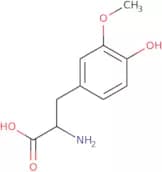
CAS:Producto controlado<p>8-Chloro-1-methyl-2,3,4,5-tetrahydro-1H-benzo[d]azepine is an antipsychotic drug that is a member of the class of drugs known as serotonin receptor antagonists. It is a synthetic process that has been used to produce antidepressant and antipsychotic drugs. This drug was first synthesized in 1966 by chemists at Smith Kline & French Laboratories as part of a program to develop novel antidepressants. 8-Chloro-1-methyl-2,3,4,5-tetrahydro-1H-benzo[d]azepine is one of the few antipsychotics that does not cause extrapyramidal side effects such as tardive dyskinesia. The enantiomers are active with the (S) form being more potent than the (R) form.</p>Fórmula:C11H14ClNPureza:Min. 95%Peso molecular:195.69 g/mol2-Amino-3-(4-hydroxy-3-methoxyphenyl)propanoic acid
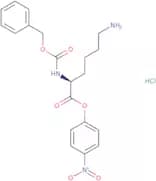
CAS:Producto controlado<p>2-Amino-3-(4-hydroxy-3-methoxyphenyl)propanoic acid is a metabolite of levodopa in the body. It is formed by oxidation of levodopa via the enzyme catechol-O-methyltransferase (COMT). This compound is used as an analytical reagent to measure levels of levodopa and its metabolites in biological samples. 2-Amino-3-(4-hydroxy-3-methoxyphenyl)propanoic acid can also be used to diagnose Parkinson’s disease, since it is produced in excess when dopamine production decreases due to the degeneration of dopaminergic neurons. The concentration–time curve for this compound can be used to calculate the clearance rate of levodopa from the blood plasma.</p>Fórmula:C10H13NO4Pureza:Min. 95 Area-%Forma y color:PowderPeso molecular:211.21 g/molN-α-Z-L-lysine 4-nitrophenyl ester hydrochloride
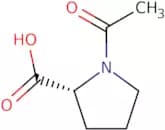
CAS:<p>N-alpha-Z-L-lysine 4-nitrophenyl ester hydrochloride is a protease that belongs to the family of serine proteases. It is produced by the biotechnological process of enzymatic extraction from the natural polysaccharide carrageenan. This product has been used in the production of high yield and purified enzymes for industrial applications. The enzyme has been shown to have cysteine and hydrolytic activity, as well as being able to break peptidic bonds in peptides. N-alpha-Z-L-lysine 4-nitrophenyl ester hydrochloride also has a high specificity for proteolytic cleavage of proteins at their carboxy terminal end.</p>Fórmula:C20H23N3O6•HClPureza:Min. 95%Peso molecular:437.87 g/molN-Acetyl-D-Proline
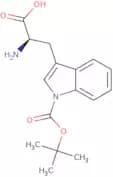
CAS:<p>N-Acetyl-D-proline is a ligand that binds to the calcium ion. It has been shown to enhance the cross-linking of collagen, elastin, and other proteins. N-Acetyl-D-proline is also used as a crosslinking agent for polymers such as silicone rubber and epoxy resin. This compound can be found in devices such as connectors, valves, and pipes. N-Acetyl-D-proline can be used as a ligand to bind cphpc (carbon paste), which is an important component of membranes in fuel cells.</p>Fórmula:C7H11NO3Pureza:Min. 95%Peso molecular:157.17 g/molNin-Boc-D-tryptophan
CAS:<p>Please enquire for more information about Nin-Boc-D-tryptophan including the price, delivery time and more detailed product information at the technical inquiry form on this page</p>Fórmula:C16H20N2O4Pureza:Min. 95%Peso molecular:304.34 g/molD,L-Alanosine sodium salt
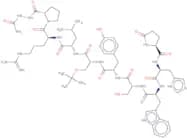
<p>Please enquire for more information about D,L-Alanosine sodium salt including the price, delivery time and more detailed product information at the technical inquiry form on this page</p>Fórmula:C3H6N3NaO4Pureza:Min. 95%Peso molecular:171.09 g/mol(D-Ser4,D-Ser(tBu)6,Azagly10)-LHRH
CAS:<p>Please enquire for more information about (D-Ser4,D-Ser(tBu)6,Azagly10)-LHRH including the price, delivery time and more detailed product information at the technical inquiry form on this page</p>Fórmula:C59H84N18O14Pureza:Min. 95%Peso molecular:1,269.41 g/molZ-NH-PEG5-CH2COOH
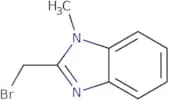
CAS:<p>Z-NH-PEG5-CH2COOH is a PEG compound with two different functional groups (also known as heterobifunctional). Unlike homobifunctional PEG compounds (same functional group on both ends), this type of compounds are more versatile as have two different anchor points. Z-NH-PEG5-CH2COOH is used as a linker and spacer to add a PEG moiety, via pegylation (a bioconjugation technique) to proteins, peptides, oligonucleotides, small molecules and nanoparticles.</p>Fórmula:C20H31NO9Pureza:Min. 95%Peso molecular:429.46 g/mol2-(Bromomethyl)-1-methyl-1H-benzimidazole hydrobromide
CAS:Producto controlado<p>Please enquire for more information about 2-(Bromomethyl)-1-methyl-1H-benzimidazole hydrobromide including the price, delivery time and more detailed product information at the technical inquiry form on this page</p>Fórmula:C9H9BrN2Pureza:Min. 95%Peso molecular:225.09 g/molL-Tyrosine
CAS:<p>L-Tyrosine is a non-essential amino acid with versatile building block properties. It can be used as a reagent in organic synthesis, as a building block for complex compounds, and as a speciality chemical. L-Tyrosine is also useful as a reaction component in the synthesis of peptides and proteins. L-Tyrosine is an important intermediate in the production of pharmaceuticals, agrochemicals, dyes, flavors and fragrances. The CAS number for L-Tyrosine is 60-18-4.</p>Fórmula:C9H11NO3Peso molecular:181.19 g/molRef: 3D-T-9010
1kgA consultar5kgA consultar10kgA consultar25kgA consultar2500gA consultar-Unit-kgkgA consultar




![8-Chloro-1-methyl-2,3,4,5-tetrahydro-1H-benzo[d]azepine](/_next/image/?url=https%3A%2Fstatic.cymitquimica.com%2Fproducts%2F3D%2Fthumb-webp%2FFC148171.webp&w=3840&q=75)