Péptidos
Subcategorías de "Péptidos"
Se han encontrado 29598 productos de "Péptidos"
SARS-CoV-2 Spike RBD 513-520 peptide
SARS-CoV-2 Spike RBD 513-520 peptide is an epitope of interest of the SARS-CoV-2 Spike S glycoprotein Receptor-Binding Domain (RBD). SARS-CoV-2 Spike RBD 513-520 peptide is useful for vaccine development and for structure-activity relationship studies
SARS-CoV-2 Spike (S) glycoprotein
Spike (S) glycoprotein corresponds to one of the leading targets for COVID-19 disease. Present on the surface of Sars-CoV-2 virus, Spike S protein is a class I fusion protein that allows the virus to enter host cells.
With a 1 273 aa length, Spike protein has 2 subunits : S1 contains the receptor-binding domain RBD and S2 induces the fusion of the viral envelop with the cellular membrane.
SARS-CoV-2 Spike RBD:
The receptor-binding domain in SARS-CoV-2 Spike protein allows binding to the Angiotensin-Converting Enzyme receptor 2 (ACE2 receptor) which mediates the viral entry.
SB-PEPTIDE also offers SARS-CoV-2 Spike RBD 513-520 (Biotin-LC) peptideNeuropeptide W-30 (Human)
CAS:Neuropeptide W-30 is a peptide that has been shown to activate the receptor for neuropeptide W (NPW). Neuropeptide W is a member of the tachykinin family of peptides, which are known to function as activators of G protein-coupled receptors. Neuropeptide W-30 has been shown to be a potent inhibitor of ion channels and ligand-gated ion channels, including potassium channels, calcium channels, and sodium channels. Neuropeptide W-30 also blocks the release of neurotransmitters such as acetylcholine, noradrenaline, dopamine, and serotonin in animal cells.Fórmula:C165H249N49O37SPureza:Min. 95%Peso molecular:3,543.1 g/molSARS-CoV-2 Spike RBD 395-430 peptide
SARS-CoV-2 Spike RBD 395-430 peptide is an epitope of interest of the SARS-CoV-2 Spike S glycoprotein Receptor-Binding Domain (RBD). SARS-CoV-2 Spike RBD 395-430 peptide is useful for vaccine development and for structure-activity relationship studies
SARS-CoV-2 Spike (S) glycoprotein
Spike (S) glycoprotein corresponds to one of the leading targets for COVID-19 disease. Present on the surface of Sars-CoV-2 virus, Spike S protein is a class I fusion protein that allows the virus to enter host cells.
With a 1 273 aa length, Spike protein has 2 subunits : S1 contains the receptor-binding domain RBD and S2 induces the fusion of the viral envelop with the cellular membrane.
SARS-CoV-2 Spike RBD:
The receptor-binding domain in SARS-CoV-2 Spike protein allows binding to the Angiotensin-Converting Enzyme receptor 2 (ACE2 receptor) which mediates the viral entry.
SB-PEPTIDE also offers SARS-CoV-2 Spike RBD 395-430 (Biotin-LC) peptideSARS-CoV-2 Spike RBD 319-335 peptide
SARS-CoV-2 Spike RBD 319-335 peptide is an epitope of interest of the SARS-CoV-2 Spike S glycoprotein Receptor-Binding Domain (RBD). SARS-CoV-2 Spike RBD 319-335 peptide is useful for vaccine development and for structure-activity relationship studies
SARS-CoV-2 Spike (S) glycoprotein
Spike (S) glycoprotein corresponds to one of the leading targets for COVID-19 disease. Present on the surface of Sars-CoV-2 virus, Spike S protein is a class I fusion protein that allows the virus to enter host cells.
With a 1 273 aa length, Spike protein has 2 subunits : S1 contains the receptor-binding domain RBD and S2 induces the fusion of the viral envelop with the cellular membrane.
SARS-CoV-2 Spike RBD:
The receptor-binding domain in SARS-CoV-2 Spike protein allows binding to the Angiotensin-Converting Enzyme receptor 2 (ACE2 receptor) which mediates the viral entry.
SB-PEPTIDE also offers SARS-CoV-2 Spike RBD 319-335 (Biotin-LC) peptideTetanus Toxin (830-844) peptide - QYIKANSKFIGITEL
TET 830/Tetanus Toxin (830-844) peptide – QYIKANSKFIGITEL
TAT (47-57) peptide
AT (47-57) peptide, also known as HIV-1 TAT protein, is the most characterized fragment of the HIV transactivator protein (TAT). TAT (47-57) peptide was show to be a cell-penetrating peptide (CPP). TAT (47-57) is an arginine-rich peptide which directly penetrates plasma membrane and stabilized DNA. TAT (47-57) has the ability to translocate the plasma membrane and facilitate the delivery of various cargoes such as protein, peptide, antibodies, and liposomes. It represents an important tool to increase the biodistribution of drugs.ovalbumine 154-159
Ovalbumin 154-159, also nammed TNGIIR peptide, is a portion of interest of the egg white albumen.
ω-Hexatoxin-Hv1a
Blocker of mid-low- (M-LVA) and high-voltage-activated (HVA) insect calcium channel (Ca(v)) currents
RANTES
RANTES (or Regulated upon Activation, Normal T-cell Expressed and Secreted), also known as CCL5 (Chemokine (CC chemokine ligand 5), is a protein classified as a chemotactic cytokine or chemokine.
Chemokines are small soluble proteins that act as molecular signals to induce cellular migration during inflammation.
RANTES is a member of the CC chemokine family and is involved in immunoregulatory and inflammatory processes.
RANTES is expressed in a lot of immune cells and acts as a potent chemoattractant for T-cells, basophils, eosinophils, monocytes and other cell types by playing a major role in recruiting leukocytes into inflammatory sites and to activate them. RANTES also induces proliferation and activation of certain natural killer cells.
RANTES synthesis is induced by TNF-alpha and IL-1 alpha, interacts with CCR3, CCR1 and CCR5 and activates some G-protein coupled receptors.
Many of the biological activities of RANTES (Ca2+ influx, chemotactic response, basophil activation, T-cell signaling) are observed between 40 and 8000 ng/mL.ACE2 biotinylated peptide library
Angiotensin-converting enzyme 2 (ACE2) is an enzyme involved in the cardiovascular system by decreasing arterial pressure by catalyzing the conversion of angiotensin II to angiotensin (1-7). Angiotensin II is a vasoconstrictor and angiotensin (1-7) is a vasodilatator. This effect makes ACE2 a therapeutic target for cardiovascular disease.ACE Light Tryptic Peptide Standard (4nmol)
Angiotensin converting enzyme (ACE) light tryptic peptide standard for use in proteomics studies. ACE is involved in the regulation of blood pressure through converting inactive angiotensin I to active angiotensin II and also degrading active Bradykinin.
Pureza:Min. 95%SARS-CoV-2 Spike RBM 500-509 peptide
SARS-CoV-2 Spike RBM 500-509 peptide is an epitope of interest of the SARS-CoV-2 Spike S glycoprotein Receptor-Binding Motif (RBM). SARS-CoV-2 Spike RBM 500-509 peptide is useful for vaccine development and for structure-activity relationship studies
SARS-CoV-2 Spike (S) glycoprotein
Spike (S) glycoprotein corresponds to one of the leading targets for COVID-19 disease. Present on the surface of Sars-CoV-2 virus, Spike S protein is a class I fusion protein that allows the virus to enter host cells.
With a 1 273 aa length, Spike protein has 2 subunits : S1 contains the receptor-binding domain RBD and S2 induces the fusion of the viral envelop with the cellular membrane.
SARS-CoV-2 Spike RBM:
The receptor-binding domain in SARS-CoV-2 Spike protein contains a receptor-binding motif RBM. SARS-CoV-2 Spike RBM is the main functional motif in RBD and allows contacts between the S protein and the Angiotensin-Converting Enzyme receptor 2 (ACE2 receptor) which mediates the viral entry.
SB-PEPTIDE also offers SARS-CoV-2 Spike RBM 500-509 (Biotin-LC) peptideMBP (85-99)
MBP (85-99) peptide competes with Myelin Basic Protein, it inhibits its binding to HLA-DR2 and IL-2. MBP (85-99) peptide is able to suppress experimental autoimmune encephalomyelitis (EAE).DBCO-dPEG®12-Meso-TP-IR775
DBCO-dPEG®12-Meso-TP-IR775 is a PEG compound with two different functional groups (also known as heterobifunctional). Unlike homobifunctional PEG compounds (same functional group on both ends), this type of compounds are more versatile as have two different anchor points. DBCO-dPEG®12-Meso-TP-IR775 is used as a linker and spacer to add a PEG moiety, via pegylation (a bioconjugation technique) to proteins, peptides, oligonucleotides, small molecules and nanoparticles.Pureza:Min. 95%Peso molecular:1,447.26 g/mol1-Naphthalenylsulfonyl-Ile-Trp-aldehyde
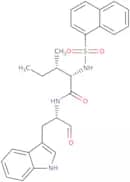
CAS:1-Naphthalenylsulfonyl-Ile-Trp-aldehyde is a recombinant protein that has protease activity. It is a serine protease that cleaves proteins at the amino acid sequence Ser-Xaa-Gly or Ser-Xaa. The recombinant protein has been shown to have proteolytic activity and can be used in assays to measure the amount of β-catenin, collagen, and growth factor in cells. 1-Naphthalenylsulfonyl-Ile-Trp-aldehyde also binds to monoclonal antibodies and can be used as a neutralizing agent for these proteins. This recombinant protein also has been shown to inhibit the growth of lung fibroblasts.Fórmula:C27H29N3O4SPureza:Min. 95%Forma y color:PowderPeso molecular:491.6 g/molHeavy calcitonin peptide
Heavy calcitonin peptide – Stable Isotope PeptideHuman Calcitonin (hCT) is a 32-amino acid hormone peptide belonging to the Calcitonin/Calcitonin-gene related peptide (CGRP) family, that also comprises amylin, adrenomedullin (AM) and adrenomedullin2/intermedin (AM2/IMD). Calcitonin is characterized by a N-terminal disulfide bond that forms a 7 amino acid ring structure, a region with a α-helix tendency and an amidated C-terminus1.Calcitonin peptide is produced by C cells of the thyroid gland and binds preferentially to the G-protein coupled receptor, calcitonin receptor (CTR)1. Calcitonin receptor signals through activated Gs protein and the production of cAMP second messenger molecules by adenylyl cyclase1. The dissociation constant (Kd) of calcitonin receptors expressed by a human ovarian small cell carcinoma line is approximately 4.6 nM for human Calcitonin2.Calcitonin is involved in the homeostasis of calcium and phosphorus, and the regulation of bone dynamics. At the basal state, calcitonin secretion reduces plasma calcium and phosphorus levels, and promote bone formation. In Calca -/- mice, a murin particle-induced osteolysis model, Calcitonin peptide has been used as a test compound for studying the effects of calcitonin deficiency. It has been shown that artificial calcitonin subsitution inhibits bone resorption by reducing the formation of osteoclasts and thereby the resulting osteolytic reaction3. The Hypocalcemic Human calcitonin was also used as a positive control to monitor changes in serum calcium levels in HHD transgenic mice vaccinated with Parathyroid hormone-related protein (PTH-rP)-derived peptides in the context of anti-cancer immunotherapy study4. Moreover, it has been reported that calcitonin peptide is a potent stimulator of uncapacitated mouse spermatozoa by regulating a specific isoform of adenylyl cyclase and the production of cAMP, which plays a pivotal role in mammalian sperm function5.sb-PEPTIDE provides stable isotope labeled calcitonin peptide. This peptide has been quantified accurately using amino acid analysis.Biotin-FluM1 (58-66)
Biotin-FluM1 (58-66) is the N-ter biotinylated version of FluM1 (58-66). Biotin-FluM1 (58-66) can be used in the analysis of antigen-specific T cells. FluM1 (58-66): FluM1 (58-66) is a short part of the matrix protein of Influenza A virus which is the most abundant component of this enveloped virus localized under the viral lipid envelope. The GILGFVFTL epitope is highly conserved in Influenza A virus strains at a rate of 93% for 69 strains tested. Human Influenza epitopes may bind MHC molecules and then may be recognized by CD8+ cytotoxic T cells. Applications of FluM1 (58-66): FluM1 (58-66) is used to stimulate CTL responses in peripheral blood mononuclear cells (PBMCs). Then, ELISPOT assay is used to quantify peptide epitope specificity and IFN-γ releasing effector cells. FluM1 (58-66) has shown CTL responses qualified of immunodominant with restriction by HLA-A*02:01. It has also been detected CTL responses when FluM1 (58-66) is restricted by all HLA-C. Therefore, FluM1 (58-66) may help to understand the reaction of immune system against Influenza virus of each populations having different HLA type. FluM1 (58-66) has indeed prompted research to develop T-cell vaccine strategies capable of inducing specific CTL responses in patients upon immunization with Influenza M1 antigenic epitope. MVA-NP+M1 vaccine use GILGFVFTL epitope and is tested in clinical trial. Potential cross-reactivity with HIV-1 p17 Gag (77-85): Moreover, FluM1 (58-66) share similarities with HIV-1 p17 Gag (77-85) which can potentially show a cross-reactivity between these epitopes. It has been demonstrated a cross-reactivity and results suggest that immunity following infection by Influenza virus causes specific immune response to HIV-1 p17 Gag (77-85). Sequence: Biotin-GILGFVFTLNeurofilament Medium Polypeptide Bovine
Neurofilament Medium Polypeptide Bovine is a freeze-dried preparation of the protein neurofilament medium polypeptide. It is used for the quantitative determination of neurofilaments in spinal cord tissue and for functional studies of neurofilaments in neuronal cells. The protein is purified from bovine spinal cord by fractionation with ammonium sulfate precipitation and desalting on a DEAE-cellulose column, followed by two cycles of freeze-drying. The molecular mass is about 190 kDa. Reconstitute in 0.1 M methylammonium chloride and store at 4°C before use.Pureza:Min. 95%Urocortin 2 (Rat)-ELISA Kit (1ea)
Urocortin 2 (Rat)-EIA Kit (1ea) is an antibody-based sandwich ELISA kit for the quantitative determination of Urocortin 2 in rat serum and other biological fluids. The assay utilizes a monoclonal antibody to Urocortin 2 to capture the target analyte and a biotinylated polyclonal antibody to Urocortin 2 to detect the captured analyte. The amount of Urocortin 2 in samples is determined by measuring the amount of biotin complexed with streptavidin. The Urocortin 2 (Rat)-EIA Kit (1ea) has been designed for use in conjunction with a spectrophotometer or fluorimeter.Pureza:Min. 95%ICI 174864
CAS:Please enquire for more information about ICI 174864 including the price, delivery time and more detailed product information at the technical inquiry form on this page
Fórmula:C34H46N4O6Pureza:Min. 95%Peso molecular:606.75 g/molScrambled Cathelicidin antimicrobial peptide 18
Scrambled LL-37 has the same peptide sequence as LL-37 but loses helixforming property.
Scrambled LL-37 can be used as a negative control of LL-37 studies.Melan-A (26-35) scrambled
SB-peptide offers the scrambled version of Melan-A/MART-1 (26-35). AIEIAGGLTV can be used as a negative control of Melan-A/MART-1 (26-35) studies. SB-peptide offers also Melan-A/MART-1 (26-35) (see section Melan-A/MART-1 (26-35)). Native Melan-A (26-35) decapepetide derives from the melanocyte lineage-specific protein Melan-A/MART-1, which is expressed in almost 75-100% of primary and metastatic melanomas1.Insulin II (Rat, Mouse)
CAS:Insulin II is a peptide hormone that is secreted by the beta cells of the pancreas. Insulin II regulates glucose metabolism, promotes protein synthesis and inhibits lipolysis. It can be used as a research tool to study protein interactions, activators and ligands, receptor binding and ion channel activity. Insulin II can also be used to generate monoclonal antibodies against insulin II. This product has the three code sequence: A-chain: Gly-Ile-Val-Asp-Gln-Cys-Cys-Thr-Ser-Ile-Cys-Ser-Leu-Tyr-Gln-Leu-Glu-Asn-Tyr-Cys-Asn ; B-chain:Phe-Val-Lys-Gln-His-Leu-Cys-Gly-Ser-His-Leu-Val-Glu-Ala-Leu-Tyr-Leu-Val-Cys-Gly-Glu-Arg-Gly-Phe-Phe-Tyr-Thr-Pro-Met-Ser, has the disulfide bonds: CysA6-CysA11, CysA7-CysB7, and CysA20-CysB19 and is available as a 50 µg vial.Fórmula:C256H382N64O76S7Pureza:Min. 95%Peso molecular:5,796.6 g/molEpidermal Growth Factor Receptor, Mouse Anti Human
Epidermal Growth Factor Receptor, Mouse Anti Human is a mouse monoclonal antibody that blocks the receptor for epidermal growth factor (EGF). It is used as an inhibitor of EGF to study the cell biology of EGF-dependent processes and for diagnosis of diseases such as cancer. Epidermal Growth Factor Receptor, Mouse Anti Human has shown specificity for human EGFR. This antibody can be used in immunohistochemistry and Western blotting procedures. The antibody recognizes the extracellular domain of EGFR, which is present on all cells that express this receptor.
Pureza:Min. 95%Favipiravir-5-hydroxy
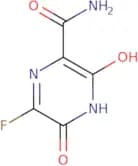
CAS:Please enquire for more information about Favipiravir-5-hydroxy including the price, delivery time and more detailed product information at the technical inquiry form on this page
Fórmula:C5H4FN3O3Pureza:Min. 95%Forma y color:PowderPeso molecular:173.1 g/molThyroglobulin VIF Light Tryptic Peptide Standard (4nmol)
This Thyroglobulin VIF Light Tryptic Peptide Standard is useful in protein identification and quantitation studies such as liquid chromatography-tandem mass spectrometry (LC-MS/MS). The use of tryptic peptides overcomes the challenges of quantifying serum thyroglobulin levels using immunoassays through removing the risk of interferences from Thyroglobulin antibodies. Thyroglobulin is a thyroid hormone production substrate and thus an important biomarker for differentiated thyroid cancer.
Pureza:Min. 95%Cell Penetrating Peptide IMT-P8
Peptide Cell Penetrating Peptide IMT-P8 is a Research Peptide with significant interest within the field academic and medical research. This peptide is available for purchase at Cymit Quimica in multiple sizes and with a specification of your choice.CMVpp65 - 72
CMVpp65 - 72 is a custom research peptide; min purity 95%, TFA salt. For different specs please use the Peptide Quote Tool
Programmed cell death 1 ligand 1 (15-23)
Peptide Programmed cell death 1 ligand 1 (15-23) is a Research Peptide with significant interest within the field academic and medical research. This peptide is available for purchase at Cymit Quimica in multiple sizes and with a specification of your choice.H-WHVSC-OH
Peptide H-WHVSC-OH is a Research Peptide with significant interest within the field academic and medical research. This peptide is available for purchase at Cymit Quimica in multiple sizes and with a specification of your choice.
H-HSLLDEGKQSLTKLA-OH
H-HSLLDEGKQSLTKLA-OH is a custom research peptide; min purity 95%, TFA salt. For different specs please use the Peptide Quote Tool
H-QRMHLRQYELL-OH
Peptide H-QRMHLRQYELL-OH is a Research Peptide with significant interest within the field academic and medical research. This peptide is available for purchase at Cymit Quimica in multiple sizes and with a specification of your choice.
H-DGRGYVPATIK-OH
Peptide H-DGRGYVPATIK-OH is a Research Peptide with significant interest within the field academic and medical research. This peptide is available for purchase at Cymit Quimica in multiple sizes and with a specification of your choice.
H-LQEYTQTILR-OH
H-LQEYTQTILR-OH is a custom research peptide; min purity 95%, TFA salt. For different specs please use the Peptide Quote Tool
H-EPQTTVIHNPDGNK-OH
Peptide H-EPQTTVIHNPDGNK-OH is a Research Peptide with significant interest within the field academic and medical research. This peptide is available for purchase at Cymit Quimica in multiple sizes and with a specification of your choice.
H-VNTEIHFVTK-OH
Peptide H-VNTEIHFVTK-OH is a Research Peptide with significant interest within the field academic and medical research. This peptide is available for purchase at Cymit Quimica in multiple sizes and with a specification of your choice.H-EFGHEFDLYENK-OH
Peptide H-EFGHEFDLYENK-OH is a Research Peptide with significant interest within the field academic and medical research. This peptide is available for purchase at Cymit Quimica in multiple sizes and with a specification of your choice.Hepcidin-1 (mouse)
Hepcidin-1 (mouse) is a custom research peptide; min purity 95%, TFA salt. For different specs please use the Peptide Quote ToolH-RLMGEGTSSL-OH
Peptide H-RLMGEGTSSL-OH is a Research Peptide with significant interest within the field academic and medical research. This peptide is available for purchase at Cymit Quimica in multiple sizes and with a specification of your choice.