Péptidos
Subcategorías de "Péptidos"
Se han encontrado 29654 productos de "Péptidos"
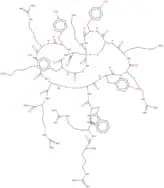
(Tyr5·12,Lys7)-Polyphemusin II
CAS:T22 peptide, also known as [Tyr5,12,Lys7]-polyphemusin II peptide, is a short, positively charged peptide, analog of polyphemusin peptide which exerts a strong anti- HIV activity. Polyphemusins are known to inhibit the growth of gram-negative bacteria and some fungi such as Candida Albicans. T22 is a potent antagonist of CXCR4 (IC50 = 5.05 nM), a co-receptor used by HIV to penetrate cells. It has been suggested that T22 exerts its effect against HIV-1 especially by blocking virus-cell fusion and that T22 might interact with HIV envelope protein (such as gp120 ) and T-cell surface protein. T22 antiviral activity has been shown on HIV-infected MT-4 cells with an IC50 of 0.008 µg/mL (2.6 nM). The cytotoxic concentration on HIV virus (CC50) of T22 is 54 µg/mL (17 mM).Fórmula:C109H164N38O22S4Pureza:Min. 95%Peso molecular:2,486.98 g/molAla-Arg-Gly-Ile-Lys-Gly-Ile-Arg-Gly-Phe-Ser-Gly• 3AcOH• 5H2O [Lysine Hydroxylase Substrate L-1]
Ala-Arg-Gly-Ile-Lys-Gly-Ile-Arg-Gly-Phe-Ser-Gly• 3AcOH• 5H2O is a peptide that is the substrate for lysine hydroxylase. Lysine hydroxylase catalyzes the conversion of lysine to 2,3 diaminopropionic acid (DAPA) and hydrogen peroxide. The reaction proceeds in two steps: first, the enzyme converts L -lysine to L -3,4 diaminobutyric acid (DABA), then it reacts with oxygen to form DAPA.Fórmula:C53H91N19O14•3CH3COOH•5H2OPureza:Min. 95%Peso molecular:1,488.64 g/molTFP-dPEG®4-Biotinidase Resistant Biotin
CAS:TFP-dPEG®4-Biotinidase Resistant Biotin is a PEG compound with two different functional groups (also known as heterobifunctional). Unlike homobifunctional PEG compounds (same functional group on both ends), this type of compounds are more versatile as have two different anchor points. TFP-dPEG®4-Biotinidase Resistant Biotin is used as a linker and spacer to add a PEG moiety, via pegylation (a bioconjugation technique) to proteins, peptides, oligonucleotides, small molecules and nanoparticles.Fórmula:C38H51N3O12S2Pureza:Min. 95%Peso molecular:805.96 g/molDIRAS family, GTP-binding RAS-like 1, human, recombinant
This is a vivitide catalogue product. Please send your vivitide product enquiry to sales@vivitide.com for an up-to-date price and availability.
Pureza:Min. 95%H-NVEDLSGGELQR-OH
Peptide H-NVEDLSGGELQR-OH is a Research Peptide with significant interest within the field academic and medical research. This peptide is available for purchase at Cymit Quimica in multiple sizes and with a specification of your choice.
m-dPEG®48-NH-CO(CH2)3CO-TFP Ester
m-dPEG®48-NH-CO(CH2)3CO-TFP Ester is a PEG compound with two different functional groups (also known as heterobifunctional). Unlike homobifunctional PEG compounds (same functional group on both ends), this type of compounds are more versatile as have two different anchor points. m-dPEG®48-NH-CO(CH2)3CO-TFP Ester is used as a linker and spacer to add a PEG moiety, via pegylation (a bioconjugation technique) to proteins, peptides, oligonucleotides, small molecules and nanoparticles.
Fórmula:C108H203F4NO51Pureza:Min. 95%Peso molecular:2,407.76 g/molCyclin-Dependent Kinase Inhibitor 2A, human, recombinant
Cyclin-Dependent Kinase Inhibitor 2A (CDK2A) is a cyclin-dependent kinase inhibitor that inhibits the activity of cyclin-dependent kinases. CDK2A is a protein that belongs to the family of cyclin-dependent kinase inhibitors. It inhibits the activity of various cyclin-dependent kinases and prevents cell growth by suppressing protein synthesis. CDK2A is expressed in many human tissues, including erythrocytes, brain, heart, lung, muscle, pancreas, spleen, and testis. Cyclin-Dependent Kinase Inhibitor 2A can be used as an anti-cancer agent due to its ability to inhibit tumor proliferation.Pureza:Min. 95%GHRP 4 TFA
CAS:GHRP 4 TFA is a synthetic hexapeptide, which is derived from non-natural amino acids, with a primary function of stimulating the secretion of growth hormone (GH). The source of this peptide is chemical synthesis, using solid-phase peptide synthesis techniques that allow precise chain assembly. The mode of action of GHRP 4 involves binding to growth hormone secretagogue receptors (GHS-R) located in the pituitary gland and hypothalamus. This interaction triggers the release of endogenous growth hormone by mimicking the action of ghrelin, a natural endogenous ligand.In scientific research, GHRP 4 TFA is utilized to explore the physiological and cellular pathways involved in GH release and its systemic effects. Applications include studying metabolic regulation, muscle growth, and cellular proliferation. Additionally, its role in aging and age-related disorders makes it a valuable tool in gerontological studies. The peptide's ability to modulate endocrine responses is of interest for developing therapeutic approaches in GH deficiency and other metabolic disorders. However, research into its full biological effects and potential clinical applications is ongoing, emphasizing its utility in experimental and preclinical settings.Fórmula:C34H37N7O4Pureza:Min. 95%Peso molecular:607.7 g/molZBTB46 Blocking Peptide
A synthetic peptide for use as a blocking control in assays to test for specificity of ZBTB46 antibody, catalog no. 70R-8971Pureza:Min. 95%CoV-2 S1 (319-529)
COVID-19 is a recombinant protein that was derived from the SARS-CoV. It is an antibody, which binds to the SARS-CoV and prevents it from infecting cells. COVID-19 is a monoclonal antibody that targets the glycoprotein spike of the coronavirus. The 319-529 region of this protein shows high binding affinity for SARS-CoV and SARS-CoV/SARS-CoV-2, which are two types of coronaviruses. This region can be used as a diagnostic marker for these viruses. COVID-19 may also have therapeutic potential as it has shown to neutralize SARS in cell culture and protect mice against lethal challenge with the virus.Pureza:Min. 95%Urocortin 1 (Mouse, Rat)-EIA Kit (1ea)
Urocortin 1 (Mouse, Rat)-EIA Kit is an antibody-based sandwich ELISA kit for the quantitative determination of urocortin 1 in mouse and rat serum. This kit is designed to measure urocortin 1 concentrations in samples with a high level of accuracy. The antibody used in this kit has been shown to react with rat and mouse urocortin 1.Pureza:Min. 95%Des-Asp1-[Ile8]-Angiotensin II
CAS:Des-Asp1-[Ile8]-Angiotensin II is an artificial peptide that has been shown to activate the angiotensin receptor. It is a high purity, potent inhibitor of angiotensin II. This peptide is also suitable for research and antibody production.Fórmula:C43H68N12O9Pureza:Min. 95%Peso molecular:897.08 g/molAnti NO Synthase II (77-105) (Rat) Serum
The Anti NO Synthase II (77-105) (Rat) Serum is a research tool that can be used to activate, ligand or receptor. It can also be used to study cell biology as well as protein interactions. The Anti NO Synthase II (77-105) (Rat) Serum can inhibit ion channels and is a high purity antibody. This serum is made of peptides and proteins.Pureza:Min. 95%Maleimide activated-KLH
This product is produced via the activation of mariculture Keyhole Limpet (Megathura crenulata) Hemocyanin with a maleimide group. The activated material will readily bind free sulfhydryl groups present in solution.KLH is a highly antigenic protein with a high molecular mass (4.5 x 10⁵ - 1.3 x 10⁷ Daltons, in aggregates of 350 and 390 kDa subunits) that elicits a strong immune response when used to immunize animals.As many as 400 moles of Cysteine-containing peptide can bind to one mole of maleimide-activated KLH.Pureza:Min. 95%Lys(1-Deoxyfructosyl)
CAS:Lys(1-Deoxyfructosyl) is a research tool used in cell biology and pharmacology. It interacts with many receptor types, such as ion channels, ligands, and antibodies. Lys(1-Deoxyfructosyl) binds to receptors and activates them. This leads to changes in the cells that are observed under a microscope. Lys(1-Deoxyfructosyl) has also been shown to inhibit protein interactions in living cells.Fórmula:C12H24N2O7Pureza:Min. 95%Peso molecular:308.33 g/molCNP-53 (Porcine, Rat)
CNP-53 is a peptide that is an inhibitor of protein interactions. It is a peptide sequence consisting of 53 amino acids and has been shown to inhibit the binding of human CNPase to its substrate, cyclic nucleotide monophosphate (cNMP). CNP-53 can also be used as a research tool to study the function of ion channels and receptors. This peptide has been shown to be highly purified and is produced in mammalian cells. It has a CAS number:
Fórmula:C251H414N82O70S3Pureza:Min. 95%Peso molecular:5,796.7 g/molHeat Shock 70kDa Protein-8 , human, recombinant
This is a vivitide catalogue product. Please send your vivitide product enquiry to sales@vivitide.com for an up-to-date price and availability.
Pureza:Min. 95%Neuromedin U, human
Neuromedin U is a neuropeptide that has been found to bind to the receptor neuromedin U receptor. It is a potent activator of ion channels and ligand for the neuromedin U receptor. Neuromedin U is also an inhibitor of angiotensin II, histamine, and serotonin release. The purified recombinant human neuromedin U protein is supplied at >98% purity with no detectable endotoxin contamination.Pureza:Min. 95%CNTF Mouse
Cntf is a cytokine that belongs to the family of neurotrophins. It is a ligand for the receptor c-ret, which is expressed in cells of the central and peripheral nervous system. The Cntf protein can be used as an activator or inhibitor in cell biology and pharmacology research. The Cntf mouse has been created by fusing a human c-ret gene with a mouse agouti gene. This mouse has high levels of Cntf protein and can be used to study the effects of this protein on ion channels, cell biology, and other areas of research.Pureza:Min. 95%TentaGel® R PHB Resin (90 um)
TentaGel® R PHB Resin (90 um) can be used for the preparation of peptide acids; particle size 90 µm; capacity: 018-023 meq/g and is specially designed for difficult and long sequences.
TentaGel, is a gelatinous resin, an important support for solid phase synthesis. TentaGel resins are constructed with a backbone of low crosslinked polystyrene grafted with polyoxyethylene (polyethylene glycol) as shown below. The typical chain length of POE (n) is approximately 68 ethylene oxide units or an average MW of 3000. This long chain creates a spacer that effectively separates the reactive site (X) from the crosslinked backbone matrix.Pureza:Min. 95%ANP (Rat, 3-28)
CAS:ANP (Rat, 3-28) is a peptide that is a potent inhibitor of protein interactions. This peptide binds to the ligand-binding domain of the receptor and blocks the binding of the ligand. ANP (Rat, 3-28) also has high purity and can be used as a research tool or an antibody in life science studies.
Fórmula:C119H189N43O36S2Pureza:Min. 95%Peso molecular:2,862.2 g/molHemoglobin, α 2, human, recombinant
Hemoglobin, α 2, human, recombinant is a protein that belongs to the group of hemoglobins. It is a recombinant protein that has been produced by inserting the human alpha-2 globin gene into a bacterial expression system. This product can be used as an ion channel probe, an activator of G-protein coupled receptors or as an inhibitor of ligand binding to receptors. It has been shown to interact with a variety of peptides and proteins. Hemoglobin, α 2, human, recombinant can be used in research for cell biology and pharmacology studies.Pureza:Min. 95%Anti C-Peptide II (Rat) Serum
Anti C-Peptide II (Rat) Serum is a high-purity peptide that can be used as a research tool to study the pharmacology of peptides and their interactions with receptors. It can also be used as an inhibitor in cell biology experiments.Pureza:Min. 95%Bz-Ala-OMe
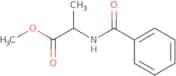
CAS:Bz-Ala-OMe is a reactive mercuric chloride that undergoes hydrolysis to form reactive mercuric acetate. It has been shown that the activation energy of the reaction is high and the reaction can be initiated by soybean trypsin. The reactive site of Bz-Ala-OMe is composed of chloride atoms and sephadex g-100. This compound reacts with serine proteases, such as trypsin or chymotrypsin, to form an amide intermediate. This intermediate reacts with n-acetyl-l-tyrosine to produce a chloromethyl ketone which then undergoes a nucleophilic attack by histidine to produce histamine in the presence of H2O2 or O2. Histamine binds to H1 receptors in the body, leading to an inflammatory response.
Fórmula:C11H13NO3Pureza:Min. 95%Peso molecular:207.23 g/molHSP-70 Cofactor (HSP24) E.coli (recombinant)
HSP-70 Cofactor (HSP24) E.coli (recombinant) is a recombinant protein that can be used as a research tool to investigate protein interactions, receptor binding, and peptide activation. HSP-70 Cofactor (HSP24) E.coli (recombinant) binds to the N terminus of Hsp70, which is involved in the chaperone cycle and facilitates the folding of newly synthesized proteins. It also activates peptides by binding to them and stabilizing their tertiary structure. The protein also plays a role in ion channel activity and ligand binding, thereby affecting cellular processes such as receptor signaling, neurotransmitter release, or memory formation. This product has a CAS number of 628255-27-4.END>>Pureza:Min. 95%α Synuclein, human, recombinant
α-Synuclein is a protein that is encoded by the SNCA gene, and is one of the main components of Lewy bodies, which are found in neurons in people with Parkinson's Disease. α-Synuclein has been shown to protect cells from stress and prevent their death. It also acts as a chaperone for other proteins, regulating their activity. This protein has been shown to be able to bind to GTPase activators and inhibit them from activating GTPases. The molecular weight of α-synuclein is 25 kDa and it has a pI value of 4.5. It has an acidic C-terminus and its shift on gel electrophoresis is 11.5 kDaPureza:Min. 95%AGT, SERPINA8 MS Calibrator-7 (25nmol)
High quality, quantitated heavy/light peptide calibrator for angiotensinogen in Mass Spectroscopy researchPureza:Min. 95%TNF a Human, HEK
TNF-α is a cytokine that is synthesized and secreted by cells such as activated macrophages, T cells, endothelial cells, fibroblasts, and keratinocytes. It has been shown to be a potent mediator of inflammation and plays an important role in the pathogenesis of many diseases. TNF-α is produced in response to immunological stimulation (e.g., LPS) or microbial invasion (e.g., bacteria). It binds to two receptors: TNF receptor 1 (TNFR1) and TNF receptor 2 (TNFR2), which are expressed on many cell types including monocytes, macrophages, neutrophils, dendritic cells, B lymphocytes, eosinophils, mast cells and keratinocytes. The binding of TNF-α to TNFR1 leads to activation of NF-κB and JNK pathways. The binding of TNF-α to TNFR2 leads to activationPureza:Min. 95%DOTA-tris(Acid)-Amido-dPEG®23-Bromoacetamide
DOTA-tris(Acid)-Amido-dPEG®23-Bromoacetamide is a PEG compound with two different functional groups (also known as heterobifunctional). Unlike homobifunctional PEG compounds (same functional group on both ends), this type of compounds are more versatile as have two different anchor points. DOTA-tris(Acid)-Amido-dPEG®23-Bromoacetamide is used as a linker and spacer to add a PEG moiety, via pegylation (a bioconjugation technique) to proteins, peptides, oligonucleotides, small molecules and nanoparticles.Pureza:Min. 95%Peso molecular:1,808.69 g/molAnti Galanin (Porcine) Serum
Anti Galanin (Porcine) Serum is a research tool that is used to activate, bind, and inhibit the ligand-receptor interactions. It is also used for the study of ion channels and cell biology. Anti Galanin (Porcine) Serum can be used as an antibody or as a peptide in pharmacology studies. The protein interactions are used in life science research, as well as for inhibitor studies.Pureza:Min. 95%Big Endothelin-1 (Rat, 1-39)
This product has disulfide bonds between Cys1-Cys15 and Cys3-Cys11, is courced from: Rat, 1-39 and is available as a 0.1mg vial. Big Endothelin-1 (Rat, 1-39) is a precursor peptide of the vasoconstrictor Endothelin-1 (ET-1). ET-1 exhibits vasoconstrictive properties and is an activator of endothelin G-protein coupled receptors. Furthermore ET-1 is produced when inflammation, vascular stress or hypoxia occurs. In vivo Big Endothelin-1 has a greater half life compared to ET-1 and therefore makes it useful to study secretory activity in the endothelial system. Overall Big Endothelin-1 (Rat, 1-39) can be used as a research tool for studying protein interactions, receptor activation and function, and ligand binding. This peptide is also used in pharmacology to study the effects of therapeutic agents on receptor activity and expression.Fórmula:C192H292N50O58S5Pureza:Min. 95%Peso molecular:4,389 g/molSerum amyloid A Heavy Tryptic Peptide Standard (4nmol)
Serum Amyloid A Heavy Tryptic Peptide Standard can be use in protein identification and quantitation studies and level of serum amyloid A are present at a blood concentration of below 3 mg/L in healthy individual. However elevated levels of this protein are found in inflammatory rheumatic diseases, hence making serum amyloid A an excellent biomarker for these types of diseases.Pureza:Min. 95%[Gln18]-Platelet Factor 4 (15-22) (human)
CAS:Please enquire for more information about [Gln18]-Platelet Factor 4 (15-22) (human) including the price, delivery time and more detailed product information at the technical inquiry form on this pageFórmula:C38H69N15O13Peso molecular:944.06 g/molm-dPEG®48-OH
m-dPEG®48-OH is a PEG polymer categorised as monofunctional (OH-PEG-X). Used as a linker, m-dPEG®48-OH is used to attached PEG to proteins, peptides, oligonucleotides, nanoparticles and small molecules via pegylation, a bioconjugation technique.Fórmula:C98H198O49Pureza:Min. 95%Peso molecular:2,160.59 g/molTentaGel® M RAM
TentaGel is a water-soluble polymer that can be used as a building block for various applications including drug delivery, food and beverage, cosmetics, and electronics. It consists of two main components: polyethylene glycol (PEG) and polypropylene glycol (PPG). TentaGel is soluble in water and has an average molecular weight of about 10,000 Da. The PEG-based component allows the polymer to be easily processed into particles or fibers by sonication or extrusion. TentaGel M RAM is a modified version of the original TentaGel. It contains methacrylic acid groups that have been grafted onto the PEG backbone to provide additional functionality such as reactive surfaces for conjugation with proteins or other molecules.Pureza:Min. 95%Anti PHI (Rat) Serum
Anti PHI (Rat) Serum is a research tool that can be used in antibody detection, receptor binding, cell biology, ion channels and pharmacology. It is a high purity product with a CAS number of 613-12-5.Pureza:Min. 95%Alkyne-agarose
Alkyne-Agarose targets azide-modified proteins with an activation level of 10-20 umol alkyne groups per mL resin. Alkyne-Agarose is a 6% crosslinked agarose resin that is activated with terminal alkyne functional groups for covalent capturing azide-tagged biomolecules. This product is adequate to work in batch or column purification (low pressure).Forma y color:Powder[Asu1,6,Arg8]-Vasotocin
CAS:Vasotocin is a peptide that regulates blood pressure and heart rate by acting on the vasoconstrictor and vasodilator systems. It has been shown to inhibit the binding of vasopressin to its receptor, which may be due to the presence of an Arg8 residue in position 6 of the peptide. Vasotocin also stimulates the release of nitric oxide, which leads to smooth muscle relaxation and vasodilation. Vasotocin is a ligand for receptors in both invertebrates and mammals. It is used as a research tool to study ion channels, antibodies, and other proteins that interact with it. Vasotocin can also be used as an anti-inflammatory drug because it can inhibit leukocyte chemotaxis and adhesion.Fórmula:C45H70N14O12Pureza:Min. 95%Peso molecular:999.12 g/molZ-Asn-Gly-OH
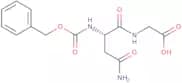
CAS:Please enquire for more information about Z-Asn-Gly-OH including the price, delivery time and more detailed product information at the technical inquiry form on this page
Fórmula:C14H17N3O6Pureza:Min. 95%Forma y color:PowderPeso molecular:323.3 g/molAmino-dPEG®12 Acid
CAS:Amino-dPEG®12 Acid is a PEG compound with two different functional groups (also known as heterobifunctional). Unlike homobifunctional PEG compounds (same functional group on both ends), this type of compounds are more versatile as have two different anchor points. Amino-dPEG®12 Acid is used as a linker and spacer to add a PEG moiety, via pegylation (a bioconjugation technique) to proteins, peptides, oligonucleotides, small molecules and nanoparticles.Fórmula:C27H55NO14Pureza:Min. 95%Peso molecular:617.72 g/molAmyloid beta (40-1)
Amyloid beta (Aβ) is a peptide fragment of the amyloid precursor protein, which is cleaved by β- and γ-secretases to form Aβ. It has been shown to be an activator of presynaptic ion channels and can bind to receptors such as the low density lipoprotein receptor related protein 1 (LRP1). Amyloid beta influences cell biology in many different ways. For example, it inhibits the growth of neurons and can induce apoptosis. In addition, this peptide can inhibit the activity of ion channels by binding to specific sites on their surface. Amyloid beta also binds to antibodies that are used for research purposes. Aβ40-1 is an antibody for research purposes only.Pureza:Min. 95%Vasoconstriction-Inhibiting Factor, human
Vasoconstriction-Inhibiting Factor, human (VIF) is a peptide that inhibits the activity of ATP-sensitive potassium channels. It has been shown to be an inhibitor of both P2X and P2Y purinergic receptors. VIF is a cell biology research tool that can be used as a high purity reagent for antibody production. The use of this factor in ion channels may lead to the discovery of new drugs for treating cardiovascular diseases.Fórmula:C163H256N42O67SPureza:Min. 95%Peso molecular:3,908.1 g/mol[Sar1,Ala8]-Angiotensin II
Angiotensin II is a peptide hormone that is part of the renin-angiotensin system. It is used as an antagonist to study the effects of angiotensin in the cardiovascular system. Angiotensin II has been shown to decrease blood pressure by acting on specific receptors that are found on cells in the walls of blood vessels. These receptors cause constriction of these vessels and the release of aldosterone, which increases sodium retention and decreases potassium excretion. This leads to increased blood volume, which results in decreased blood pressure.Fórmula:C43H67N13O10•CH3COOH•4H2OPureza:Min. 95%Peso molecular:1,058.18 g/mol[D-Pro2,D-Trp7,9]-Substance P (1ea)
This product is a Substance P antagonist and is available in the Hydrochloride salt form. Substance P is a member of the tachykinin neuropeptide family which is produced in the central nervous system (CNS) and acts through its specific receptor neurokinin 1 receptor (NK-1R). NK-1R is present in neurons and on glial cell types. Substance P is involved in: pain perceptions as a neurotransmitter; gut motility; increased inflammation in the lungs, gastrointestinal tract and the skin and neuroinflammation. Interestingly the levels of Substance P are raised in inflammatory bowel diseases and through its involvement in cytokine release, it contributes to asthma pathology. These diverse selection of functions makes substance P a target for therapeutic research.Fórmula:C74H106N20O13S•3HCI•6H2OPureza:Min. 95%Peso molecular:1,733.3 g/molPhe-Met-MCA
Phe-Met-MCA is a peptide that specifically activates the ATP-sensitive potassium (KATP) channels. These channels are important for regulating cellular energy metabolism and membrane potential. Phe-Met-MCA is an inhibitor of protein kinase C (PKC), which regulates the activity of KATP channels by phosphorylation. The peptide is also an inhibitor of other protein kinases, including PKCζ, PKCε, and PKCθ.Pureza:Min. 95%RLN1
The RLN1 gene encodes a protein that is involved in the regulation of cell growth, differentiation, and apoptosis. It interacts with a number of proteins involved in cancer, tumour progression and metastasis. The function of RLN1 is to interact with other proteins, such as p53 and BRCA2, and regulate their activity. The frequency of this gene has been analysed in healthy controls versus patients with cancer. A number of different tissues have been analysed for this gene including testicular tissue from healthy controls versus patients with testicular cancer. There are also data on the expression levels in normal tissue and cancerous tissue from the same individual. This gene has also been shown to be homologous to other genes that are involved in DNA repair and apoptosis.Pureza:Min. 95%

![Ala-Arg-Gly-Ile-Lys-Gly-Ile-Arg-Gly-Phe-Ser-Gly• 3AcOH• 5H2O [Lysine Hydroxylase Substrate L-1]](/_next/image/?url=https%3A%2Fstatic.cymitquimica.com%2Fproducts%2F3D%2Fthumb-webp%2FSAG-4166.webp&w=3840&q=75)








![Des-Asp1-[Ile8]-Angiotensin II](/_next/image/?url=https%3A%2Fstatic.cymitquimica.com%2Fproducts%2F3D%2Fthumb-webp%2FPAN-4037-V.webp&w=3840&q=75)






![[Gln18]-Platelet Factor 4 (15-22) (human)](/_next/image/?url=https%3A%2Fstatic.cymitquimica.com%2Fproducts%2F3D%2Fthumb-webp%2FVAC-00001.webp&w=3840&q=75)



![[Asu1,6,Arg8]-Vasotocin](/_next/image/?url=https%3A%2Fstatic.cymitquimica.com%2Fproducts%2F3D%2Fthumb-webp%2FPVP-4027-V.webp&w=3840&q=75)


![[Sar1,Ala8]-Angiotensin II](/_next/image/?url=https%3A%2Fstatic.cymitquimica.com%2Fproducts%2F3D%2Fthumb-webp%2FPAN-4035.webp&w=3840&q=75)
![[D-Pro2,D-Trp7,9]-Substance P (1ea)](/_next/image/?url=https%3A%2Fstatic.cymitquimica.com%2Fproducts%2F3D%2Fthumb-webp%2FPSP-4113.webp&w=3840&q=75)