Péptidos
Subcategorías de "Péptidos"
Se han encontrado 29788 productos de "Péptidos"
Lipoamido-dPEG®8-Acid
CAS:Lipoamido-dPEG®8-Acid is a PEG molecule conjugated with a lipid moiety. Lipoamido-dPEG®8-Acid, conjugated to this lipid constituent, is very important especially in drug delivery and vaccine development as it helps improve the stability and circulation time of lipid nanoparticles (LNPs) and liposomes.
Fórmula:C41H67F4NO15S2Pureza:Min. 95%Peso molecular:954.09 g/molWWP1 Blocking Peptide
A synthetic peptide for use as a blocking control in assays to test for specificity of WWP1 antibody, catalog no. 70R-5902Pureza:Min. 95%Ac-Gly-Lys-OMe • AcOH [AGLME]
CAS:Ac-Gly-Lys-OMe • AcOH is a synthetic substrate that is used in enzymatic reactions. This product is a peptide that contains an amide bond and a disulfide bond. It has been shown to be inactive when exposed to human serum for up to 30 minutes. Ac-Gly-Lys-OMe • AcOH has been shown to have inhibitory effects on the activity of monoclonal antibodies as well as dodecyl, which belongs to the group of lipids found in blood plasma. The rate of this reaction increases with increasing temperature and pH, but decreases with increasing concentrations of AGLME or dodecanol.Fórmula:C11H21N3O4•CH3COOHPureza:Min. 95%Peso molecular:319.35 g/molSyntaxin 19 Blocking Peptide
A synthetic peptide for use as a blocking control in assays to test for specificity of STX19 antibody, catalog no. 70R-3408Pureza:Min. 95%Angiotensin IV acetate
CAS:Angiotensin IV (Human) is a peptide hormone and peptidase inhibitor that belongs to the family of angiotensins. It is produced by the renin-angiotensin system and inhibits the action of angiotensin converting enzyme, an enzyme that converts angiotensin I into angiotensin II. Angiotensin IV has been used for research purposes as well as for therapeutic applications in cardiovascular diseases, hypertension, and congestive heart failure. Angiotensin IV is a high purity product with a purity greater than 99%.
Fórmula:C40H54N8O8Pureza:Min. 95%Peso molecular:774.91 g/molZFP3 Blocking Peptide
A synthetic peptide for use as a blocking control in assays to test for specificity of ZFP3 antibody, catalog no. 70R-8144Pureza:Min. 95%Somatostatin (Human, Ovine, Porcine, Rat, Mouse)
CAS:Somatostatin is a peptide hormone that has been found to inhibit pituitary growth hormone release as well as endocrine, pancreatic and GI secretions. It is widely expressed throughout the body for example in the gastrointestinal (GI) tract, hypothalamus, pancreas and the central nervous system. In the central nervous system somatostatin plays a role in neurotransmission modification and it has also demonstrated to be effective against a number of cancers such as squamous carcinoma. This product contains disulfide bonds between Cys3-Cys14 and is available as a 0.5mg vial.
Fórmula:C76H10N18O19S2Pureza:Min. 95%Peso molecular:1,637.9 g/molWBP11 Blocking Peptide
A synthetic peptide for use as a blocking control in assays to test for specificity of WBP11 antibody, catalog no. 70R-2408Pureza:Min. 95%Secretin (Human)
CAS:Secretin (human) is a peptide hormone that is produced in the duodenum and is involved in the regulation of pancreatic bicarbonate, gastric acid and osmoregulation. Secretin binds to secretin receptors which are G-protein coupled receptors and are expressed in pancreatic centroacinar cells. Secretin binds to these receptors and activates adenylate cyclase which converts ATP into cAMP which results in the secretion of bicarbonate from the pancreas. Secretin plays a role in osmoregulation through its effects on the kidney, pituitary gland and the hypothalamus. This product is available as a 0.5mg vial.
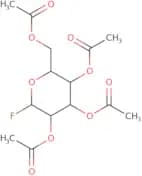
Fórmula:C130H220N44O40Pureza:Min. 95%Peso molecular:3,039.4 g/mol2,3,4,6-Tetra-O-Acetyl-α-D-Mannopyranosyl Fluoride
CAS:2,3,4,6-Tetra-O-acetyl-α-D-mannopyranosyl fluoride is a fluorinated glycoside that is used as a reagent in organic synthesis to fluorinate alcohols and amines. It selectively reacts with primary and secondary alcohols to give the corresponding fluorides. The product can be used for the synthesis of carboxylic acids and esters. 2,3,4,6-Tetra-O-acetyl-α-D-mannopyranosyl fluoride is also used in biochemistry research as a substrate for oligosaccharide synthesis. This product has been shown to react with proteins to form peptides and with DNA to form nucleosides.Fórmula:C14H19O9FPureza:Min. 95%Peso molecular:350.29 g/molMUC3B Blocking Peptide
A synthetic peptide for use as a blocking control in assays to test for specificity of MUC3B antibody, catalog no. 70R-7090Pureza:Min. 95%RNF133 Blocking Peptide
A synthetic peptide for use as a blocking control in assays to test for specificity of RNF133 antibody, catalog no. 70R-7337Pureza:Min. 95%Melanin-Concentrating Hormone (Human)
CAS:Melanin-concentrating hormone (MCH) is a neuropeptide that is used to study the regulation of food intake and body weight. MCH binds to its receptor, the melanocortin-4 receptor (MC4R), which is coupled to an ion channel. This binding causes the release of potassium ions from cells, leading to depolarization and increased neuronal excitability. It has been shown that MCH can be used as a research tool for studying ion channels, ligand-receptor interactions, and cell biology.
Fórmula:C105H160N30O26S4Pureza:Min. 95%Peso molecular:2,386.8 g/molCl-Ac-(OH)Leu-Ala-Gly-NH2
CAS:Cl-Ac-(OH)Leu-Ala-Gly-NH2 is a peptide with an amino acid composition of Cl-Ac-(OH)Leu-Ala-Gly. It is synthesized by the chemical reaction of hydrochloric acid and L-alanine. This peptide has been shown to be an irreversible inhibitor of metalloendopeptidase, preventing the breakdown of proteins in the stomach. The pH profile for this peptide is acidic and its molecular weight is approximately 1296 daltons.Fórmula:C13H23N4O5ClPureza:Min. 95%Peso molecular:350.8 g/molL-685,458
CAS:L-685,458 is a peptide that is used as a research tool to study protein interactions and the role of ion channels in cell biology. It binds to the receptor site and inhibits the binding of natural ligands. L-685,458 is an inhibitor of ion channels and acts by blocking the voltage-dependent activation of sodium channels. It also blocks potassium channels, which are responsible for regulating membrane potentials and controlling nerve impulses. L-685,458 has been shown to inhibit protein interactions in pharmacology studies with receptor binding assays.Fórmula:C39H52N4O6Pureza:Min. 95%Peso molecular:672.85 g/molHNRPDL Blocking Peptide
A synthetic peptide for use as a blocking control in assays to test for specificity of HNRPDL antibody, catalog no. 70R-1322
Pureza:Min. 95%Bis-dPEG®17-PFP Ester
CAS:Bis-dPEG®17-PFP Ester is a PEG polymer categorised as homobifunctional PEG (X-PEG X). Used as a linker, bis-dPEG®17-PFP Ester is used to attached PEG to proteins, peptides, oligonucleotides, nanoparticles and small molecules via pegylation, a bioconjugation technique.Fórmula:C50H72F10O21Pureza:Min. 95%Peso molecular:1,199.08 g/molSARS Spike (408-470, 540-573)
The SARS Spike peptide is a research tool that can be used as an activator and an antibody. It has a high purity and is contained in a CAS number. This peptide can be used for the study of protein interactions, receptor binding, ligand binding, and pharmacology.Pureza:Min. 95%Bis-dPEG®17-NHS Ester
CAS:Bis-dPEG®17-NHS Ester is a PEG polymer categorised as homobifunctional PEG (X-PEG X). Used as a linker, bis-dPEG®17-NHS Ester is used to attached PEG to proteins, peptides, oligonucleotides, nanoparticles and small molecules via pegylation, a bioconjugation technique.
Fórmula:C46H80N2O25Pureza:Min. 95%Peso molecular:1,061.13 g/molVSIG1 Blocking Peptide
A synthetic peptide for use as a blocking control in assays to test for specificity of VSIG1 antibody, catalog no. 70R-7017
Pureza:Min. 95%Salusin-β (Human)
CAS:Salusin-Beta is a peptide that belongs to the group of activators. It has been shown to inhibit the activity of ion channels. Salusin-Beta (Human) is an antibody that can be used for research purposes. Salusin-Beta (Human) has been shown to have high purity and it can be used as a reagent for research and development in Cell Biology and Pharmacology.Fórmula:C115H176N32O21Pureza:Min. 95%Peso molecular:2,342.8 g/molSLC10A1 Blocking Peptide
A synthetic peptide for use as a blocking control in assays to test for specificity of SLC10A1 antibody, catalog no. 70R-7046
Pureza:Min. 95%KIF5B Blocking Peptide
A synthetic peptide for use as a blocking control in assays to test for specificity of KIF5B antibody, catalog no. 70R-5599
Pureza:Min. 95%CYP2D6 Blocking Peptide
A synthetic peptide for use as a blocking control in assays to test for specificity of CYP2D6 antibody, catalog no. 70R-7497Pureza:Min. 95%Azido-dPEG® 12-NHS ester
CAS:Azido-dPEG® 12-NHS ester is a PEG compound with two different functional groups (also known as heterobifunctional). Unlike homobifunctional PEG compounds (same functional group on both ends), this type of compounds are more versatile as have two different anchor points. Azido-dPEG® 12-NHS ester is used as a linker and spacer to add a PEG moiety, via pegylation (a bioconjugation technique) to proteins, peptides, oligonucleotides, small molecules and nanoparticles.Pureza:Min. 95%Peso molecular:740.79 g/molUrotensin II-Related Peptide (Human, Rat)
CAS:Urotensin II-related peptide (URP) is a potent, selective, nonpeptide antagonist of the calcitonin gene-related peptide receptor. URP inhibits the binding of calcitonin gene-related peptide to its receptor and blocks the effects of this peptide on a variety of cell types. In addition, URP suppresses the release of substance P from sensory neurons in rat skin and blocks neurogenic inflammation. This product is purified by HPLC and has an analytical purity of >95%.Fórmula:C49H64N10O10S2Pureza:Min. 95%Peso molecular:1,017.2 g/molATP2A1 Blocking Peptide
A synthetic peptide for use as a blocking control in assays to test for specificity of ATP2A1 antibody, catalog no. 70R-6261Pureza:Min. 95%MFI2 Blocking Peptide
A synthetic peptide for use as a blocking control in assays to test for specificity of MFI2 antibody, catalog no. 70R-10040
Pureza:Min. 95%PPFIBP1 Blocking Peptide
A synthetic peptide for use as a blocking control in assays to test for specificity of PPFIBP1 antibody, catalog no. 70R-1229
Pureza:Min. 95%SIGLEC12 Blocking Peptide
A synthetic peptide for use as a blocking control in assays to test for specificity of SIGLEC12 antibody, catalog no. 70R-6148Pureza:Min. 95%FEM1B Blocking Peptide
A synthetic peptide for use as a blocking control in assays to test for specificity of FEM1B antibody, catalog no. 70R-6027Pureza:Min. 95%CHRNA3 Blocking Peptide
A synthetic peptide for use as a blocking control in assays to test for specificity of CHRNA3 antibody, catalog no. 70R-5188Pureza:Min. 95%Des-Acyl Ghrelin (Human)
CAS:Des-Acyl Ghrelin (Human) is a Des-Octanoylated Ghrelin product available in the Trifluoroacetate Salt form and as a 0.1mg vial. Ghrelin is a peptide horone which plays a role in regulating energy balance, stimulating appetite, nutrient sensing and meal initiation. It influences bodily functions through associating with growth hormone secretagogue receptors (GHS-R) through its unique N-octanoyl group which is linked to its serine 3 residue covalently. It wider functions are in the regulation of insulin resistance, diabetes and obesity. On top of this Ghrelin is also found to be involved with glucose homeostasis, energy homeostasis, cardio-protective effects, bone metabolism and is a potential target for cancer. Therefore it can be used to develop therapies for a whole spectrum of diseases. This molecule is used as a research tool for studying cell biology and pharmacology.Fórmula:C141H235N47O41Pureza:Min. 95%Peso molecular:3,244.7 g/molAminooxy-dPEG®12-amido-dPEG®12-(m-dPEG®11)3
CAS:Aminooxy-dPEG®12-amido-dPEG®12-(m-dPEG®11)3 is a PEG compound with two different functional groups (also known as heterobifunctional). Unlike homobifunctional PEG compounds (same functional group on both ends), this type of compounds are more versatile as have two different anchor points. Aminooxy-dPEG®12-amido-dPEG®12-(m-dPEG®11)3 is used as a linker and spacer to add a PEG moiety, via pegylation (a bioconjugation technique) to proteins, peptides, oligonucleotides, small molecules and nanoparticles.
Fórmula:C19H37N3O10Pureza:Min. 95%Peso molecular:467.51 g/molCES6 Blocking Peptide
A synthetic peptide for use as a blocking control in assays to test for specificity of CES6 antibody, catalog no. 20R-1163Pureza:Min. 95%TFP-dPEG®12-Biotinidase Resistant Biotin
CAS:TFP-dPEG®12-Biotinidase Resistant Biotin is a PEG compound with two different functional groups (also known as heterobifunctional). Unlike homobifunctional PEG compounds (same functional group on both ends), this type of compounds are more versatile as have two different anchor points. TFP-dPEG®12-Biotinidase Resistant Biotin is used as a linker and spacer to add a PEG moiety, via pegylation (a bioconjugation technique) to proteins, peptides, oligonucleotides, small molecules and nanoparticles.
Fórmula:C14H26O9Pureza:Min. 95%Peso molecular:338.35 g/molPoly-L-lysine hydrochloride
CAS:Poly-L-Lysine Hydrochloride is a synthetic polymer that has been shown to inhibit the growth of cancer cells. It has also been shown to be effective in preventing neuronal cell death, as well as toxicity caused by exposure to high levels of water vapor. Poly-L-Lysine Hydrochloride can be used as an anticancer agent and has a synergistic effect with other drugs. This polymer is thought to work by blocking the synthesis of DNA, RNA, and proteins, which are vital for the cell's survival.
Fórmula:(C6H14N2O2•HCl)xPureza:Min. 95%Azido-dPEG®4-Acid
CAS:Azido-dPEG®4-Acid is a PEG compound with two different functional groups (also known as heterobifunctional). Unlike homobifunctional PEG compounds (same functional group on both ends), this type of compounds are more versatile as have two different anchor points. Azido-dPEG®4-Acid is used as a linker and spacer to add a PEG moiety, via pegylation (a bioconjugation technique) to proteins, peptides, oligonucleotides, small molecules and nanoparticles.Fórmula:C11H21N3O6Pureza:Min. 95%Peso molecular:291.3 g/molAmino-dPEG®4-t-Butyl Ester
CAS:Amino-dPEG®4-t-Butyl Ester is a PEG compound with two different functional groups (also known as heterobifunctional). Unlike homobifunctional PEG compounds (same functional group on both ends), this type of compounds are more versatile as have two different anchor points. Amino-dPEG®4-t-Butyl Ester is used as a linker and spacer to add a PEG moiety, via pegylation (a bioconjugation technique) to proteins, peptides, oligonucleotides, small molecules and nanoparticles.
Fórmula:C22H42O13Pureza:Min. 95%Peso molecular:514.56 g/molCalcitonin (Human)
CAS:Calcitonin is a hormone produced by the C cells (also known as parafollicular cells) in the thyroid gland. Its main function is to regulate the levels of calcium and phosphate in the blood. Calcitonin works by inhibiting the activity of osteoclasts, which are cells that break down bone tissue and release calcium and phosphate into the bloodstream. This leads to a decrease in the amount of calcium and phosphate in the blood. Calcitonin is released in response to high levels of calcium in the blood, and it acts to reduce these levels by increasing the excretion of calcium by the kidneys and inhibiting the absorption of calcium by the intestines. It also promotes the storage of calcium in the bones, which helps to maintain their strength and density. Calcitonin may be used therapeutically to treat conditions such as osteoporosis and hypercalcemia (high levels of calcium in the blood) or even diagnostically as a marker for tumors in medullary thyroid cancer. This product has a disulfide bond between Cys1-Cys7 and is available as a 0.5mg vial.Fórmula:C151H226N40O45S3Pureza:Min. 95%Peso molecular:3,417.8 g/molBis-Maleimide Amine, TFA Salt
CAS:Bis-Maleimide Amine, TFA Salt is a pharmacological research tool that is used to study protein interactions. It is also used as an inhibitor and activator of proteins, specifically ion channels. This product has a CAS number of 62921-76-0, which can be found on the Chemical Abstracts Services website. This product is high purity and is used in life science research. The salt form of this product is used as a ligand for receptor binding studies.Fórmula:C16H26O7SPureza:Min. 95%Peso molecular:362.44 g/molAdenylate Kinase 4, human, recombinant
Adenylate kinase 4 (AK4) is a protein that in humans is encoded by the AK4 gene. AK4 catalyzes the conversion of adenosine triphosphate (ATP) to adenosine monophosphate (AMP). The enzyme has been shown to play an important role in the regulation of cell proliferation and survival, as well as in the regulation of ion channels, neurotransmitter release, and other biological processes. AK4 is also an activator of G-protein coupled receptors and a ligand for certain nuclear receptors. It can also function as an inhibitory receptor for certain G-protein coupled receptors.Pureza:Min. 95%SURF6 Blocking Peptide
A synthetic peptide for use as a blocking control in assays to test for specificity of SURF6 antibody, catalog no. 70R-1324Pureza:Min. 95%Amylin (Rat)
CAS:Producto controladoAmylin is a peptide that belongs to the group of activators. It has been shown to be an inhibitor of ion channels, and has also been demonstrated to activate cell signaling pathways. Amylin can be used as a research tool for studying protein interactions, receptor ligands, and pharmacology. Amylin can be used in antibody production or as a high-purity reagent for life science or cell biology applications.
Fórmula:C167H272N52O53S2Pureza:Min. 95%Peso molecular:3,920.4 g/mol(3,5-Difluorophenylacetyl)-Ala-Phg-OtBu
CAS:(3,5-Difluorophenylacetyl)-Ala-Phg-OtBu is a peptide that is an inhibitor of Protein interactions. It blocks the binding of the enzyme to its substrate and prevents the conversion of substrate to product. This peptide was used as a research tool for studying protein interactions in cell biology and as an activator for Ligands. This peptide can be used as a reagent for antibody production. The purity of this peptide is high and it has been shown to have no adverse effects in animal research studies.Fórmula:C23H26N2O4F2Pureza:Min. 95%Peso molecular:432.46 g/molB4galt6 Blocking Peptide
A synthetic peptide for use as a blocking control in assays to test for specificity of B4galt6 antibody, catalog no. 70R-8655Pureza:Min. 95%Azido-dPEG®4-NHS ester
CAS:Azido-dPEG®4-NHS ester is a PEG compound with two different functional groups (also known as heterobifunctional). Unlike homobifunctional PEG compounds (same functional group on both ends), this type of compounds are more versatile as have two different anchor points. Azido-dPEG®4-NHS ester is used as a linker and spacer to add a PEG moiety, via pegylation (a bioconjugation technique) to proteins, peptides, oligonucleotides, small molecules and nanoparticles.
Fórmula:C27H53N3O14Pureza:Min. 95%Peso molecular:643.72 g/molMet-Met
CAS:Met-Met is a dipeptide that is synthesized from the amino acids methionine and methyltetrahydrofolate. It is used in the synthesis of peptides and biochemicals, as well as in pharmacological treatments for diseases including bacterial infections. Met-Met has significant interactions with dopamine, catechol-o-methyltransferase, and energy metabolism. The enzyme catechol-o-methyltransferase catalyzes the conversion of dopamine to 3,4-dihydroxyphenylacetic acid (DOPAC), which may lead to a decrease in dopamine levels. Met-Met also inhibits the metabolism of catecholamines, leading to an increase in cellular levels of catecholamines such as dopamine and norepinephrine. This inhibition may be responsible for metabolic disorders such as obesity or low body mass index (BMI)
Fórmula:C10H20N2O3S2Pureza:Min. 95%Peso molecular:280.41 g/molFMNL2 Blocking Peptide
A synthetic peptide for use as a blocking control in assays to test for specificity of FMNL2 antibody, catalog no. 70R-8755Pureza:Min. 95%Bz-Arg-AMC
CAS:Bz-Arg-AMC is a fluorescent probe that binds to the nicotinic acetylcholine receptor (nAChR) in the presence of calcium ions and emits light when excited by ultraviolet light. It can be used to study the activation of nAChRs, as well as their interactions with other proteins such as peptides. Bz-Arg-AMC has a molecular weight of 551.9 g/mol, with a purity of > 98% and an optical purity of > 99%. This product can be used for research purposes only, not for diagnostic or therapeutic purposes.
Fórmula:C23H25N5O4Pureza:Min. 95%Peso molecular:435.48 g/mol


![Ac-Gly-Lys-OMe • AcOH [AGLME]](/_next/image/?url=https%3A%2Fstatic.cymitquimica.com%2Fproducts%2F3D%2Fthumb-webp%2FSGK-3058.webp&w=3840&q=75)