Péptidos
Subcategorías de "Péptidos"
Se han encontrado 29699 productos de "Péptidos"
Bis-dPEG®2-PFP Ester
CAS:Bis-dPEG®2-PFP Ester is a PEG polymer categorised as homobifunctional PEG (X-PEG X). Used as a linker, bis-dPEG®2-PFP Ester is used to attached PEG to proteins, peptides, oligonucleotides, nanoparticles and small molecules via pegylation, a bioconjugation technique.Fórmula:C20H12F10O6Pureza:Min. 95%Peso molecular:538.29 g/molTentaGel® Macrobead RAM particle size: 140 - 170 µm
Please enquire for more information about TentaGel® Macrobead RAM particle size: 140 - 170 µm including the price, delivery time and more detailed product information at the technical inquiry form on this pagePureza:Min. 95%SPDP-dPEG®24-NHS Ester
CAS:SPDP-dPEG®24-NHS Ester is a PEG compound with two different functional groups (also known as heterobifunctional). Unlike homobifunctional PEG compounds (same functional group on both ends), this type of compounds are more versatile as have two different anchor points. SPDP-dPEG®24-NHS Ester is used as a linker and spacer to add a PEG moiety, via pegylation (a bioconjugation technique) to proteins, peptides, oligonucleotides, small molecules and nanoparticles.Fórmula:C37H60N4O20Pureza:Min. 95%Peso molecular:880.89 g/molGly-Phe
Gly-Phe is a kinetic glycolytic inhibitor that has antiviral properties. It has been shown to be effective against a number of viruses, including the herpes simplex virus type 1 (HSV-1), influenza virus A/PR/8/34 (PR8), and human immunodeficiency virus type 1 (HIV-1). Gly-Phe inhibits viral growth by blocking the synthesis of nucleic acids in cells infected with these viruses. The antiviral activity of Gly-Phe was demonstrated in animal models and humans, where it acted as an effective treatment for HSV-1 infection. Gly-Phe also has anti-inflammatory properties, which may be due to its ability to inhibit bacterial enzymes in the intestinal tract.Fórmula:C11H14N2O3Pureza:Min. 95%Peso molecular:222.24 g/molMAL-dPEG®12-TFP Ester
MAL-dPEG®12-TFP Ester is a PEG compound with two different functional groups (also known as heterobifunctional). Unlike homobifunctional PEG compounds (same functional group on both ends), this type of compounds are more versatile as have two different anchor points. MAL-dPEG®12-TFP Ester is used as a linker and spacer to add a PEG moiety, via pegylation (a bioconjugation technique) to proteins, peptides, oligonucleotides, small molecules and nanoparticles.Fórmula:C31H45N5O13Pureza:Min. 95%Peso molecular:695.71 g/molFmoc-N-Amido-dPEG®8-Acid
CAS:Fmoc-N-Amido-dPEG®8-Acid is a PEG compound with two different functional groups (also known as heterobifunctional). Unlike homobifunctional PEG compounds (same functional group on both ends), this type of compounds are more versatile as have two different anchor points. Fmoc-N-Amido-dPEG®8-Acid is used as a linker and spacer to add a PEG moiety, via pegylation (a bioconjugation technique) to proteins, peptides, oligonucleotides, small molecules and nanoparticles.Fórmula:C34H49NO12Pureza:Min. 98 Area-%Peso molecular:663.75 g/molSPDP-dPEG®4-Acid
CAS:SPDP-dPEG®4-Acid is a PEG compound with two different functional groups (also known as heterobifunctional). Unlike homobifunctional PEG compounds (same functional group on both ends), this type of compounds are more versatile as have two different anchor points. SPDP-dPEG®4-Acid is used as a linker and spacer to add a PEG moiety, via pegylation (a bioconjugation technique) to proteins, peptides, oligonucleotides, small molecules and nanoparticles.Fórmula:C59H110N2O27S2Pureza:Min. 95%Peso molecular:1,343.63 g/molStreptavidin-NC Recombinant
Streptavidin-NC is a recombinant protein that is used in immunoassays. It binds to biotin and can be used as an alternative to the antigen-antibody reaction. Streptavidin-NC binds to the biotinylated antigen at the same time as it binds to the specific antibody, forming a sandwich complex. Streptavidin-NC has been shown to be more sensitive than antibodies in cardiac muscle and skeletal muscle immunoassays, with better specificity for cardiac troponin I and T than monoclonal antibodies. The molecular mass of this protein is about 50000 Da, which corresponds to a chain with about 500 amino acids.Pureza:>93% By Sds-Page.Bromoacetamido-dPEG®23-Azide
Bromoacetamido-dPEG®23-Azide is a PEG compound with two different functional groups (also known as heterobifunctional). Unlike homobifunctional PEG compounds (same functional group on both ends), this type of compounds are more versatile as have two different anchor points. Bromoacetamido-dPEG®23-Azide is used as a linker and spacer to add a PEG moiety, via pegylation (a bioconjugation technique) to proteins, peptides, oligonucleotides, small molecules and nanoparticles.
Pureza:Min. 95%Peso molecular:1,220.24 g/molGly-Gly-Tyr-Arg acetate dihydrate
Gly-Gly-Tyr-Arg acetate dihydrate is a tetrapeptide and a ligand for the enzyme papain. It binds to the active site of papain and inhibits its proteolytic activity. Gly-Gly-Tyr-Arg acetate dihydrate has been shown to be an inhibitor of trypsin and chymotrypsin, but not other proteases. It has also been shown to inhibit the polymerase chain reaction and RNA synthesis in vitro.Fórmula:C19H29N7O6•CH3COOH•2H2OPureza:Min. 95%Peso molecular:547.56 g/molβ-Ala-Lys(AMCA)
CAS:β-Ala-Lys(AMCA) is a peptide that can inhibit the interactions of proteins. β-Ala-Lys(AMCA) is an inhibitor of protein interactions and can be used as a research tool to study the interactions between proteins. β-Ala-Lys(AMCA) has been shown to activate certain receptors, such as the receptor for angiotensin II, and can be used to increase or decrease the activity of ligands. This drug also has a high purity level, which makes it suitable for use in life science research.Fórmula:C21H28N4O6Pureza:Min. 95%Peso molecular:432.47 g/molCarboxyfluorescein-dPEG®24-Amido-dPEG®24-DSPE
Carboxyfluorescein-dPEG®24-Amido-dPEG®24-DSPE is a PEG compound containing a fluorescein dye used for tagging biomolecules, and serving as fluorescent probe for bioimaging applications.
Pureza:Min. 95%Peso molecular:3,363.04 g/molMAL-dPEG®2-NHS Ester
MAL-dPEG®2-NHS Ester is a PEG compound with two different functional groups (also known as heterobifunctional). Unlike homobifunctional PEG compounds (same functional group on both ends), this type of compounds are more versatile as have two different anchor points. MAL-dPEG®2-NHS Ester is used as a linker and spacer to add a PEG moiety, via pegylation (a bioconjugation technique) to proteins, peptides, oligonucleotides, small molecules and nanoparticles.Pureza:Min. 95%t-Boc-N-Amido-dPEG®11-Amine
CAS:t-Boc-N-Amido-dPEG®11-Amine is a PEG compound with two different functional groups (also known as heterobifunctional). Unlike homobifunctional PEG compounds (same functional group on both ends), this type of compounds are more versatile as have two different anchor points. t-Boc-N-Amido-dPEG®11-Amine is used as a linker and spacer to add a PEG moiety, via pegylation (a bioconjugation technique) to proteins, peptides, oligonucleotides, small molecules and nanoparticles.Pureza:Min. 95%Peso molecular:644.79 g/molTentaGel® Macrobead HMBA Resin
TentaGel; is a gelatinous resin, an important support for solid phase synthesis. TentaGel resins are constructed with a backbone of low crosslinked polystyrene grafted with polyoxyethylene (polyethylene glycol) as shown below. The typical chain length of POE (n) is approximately 68 ethylene oxide units or an average MW of 3000. This long chain creates a spacer that effectively separates the reactive site (X) from the crosslinked backbone matrix.
Pureza:Min. 95%CRF (Human, Rat)
CAS:Corticotropin-Releasing Factor (CRF) (Human, Rat) is a peptide hormone product that is available as a 0.5mg vial and has the potential to be used as a research tool to study the effects of CRF in the body. CRF is a natural hormone that regulates many physiological processes, such as blood pressure, temperature control, and food intake. CRF binds to receptors on cells and triggers a number of cellular responses within the cell. This peptide can be used for pharmacological studies or for antibody production.Fórmula:C208H344N60O63S2Pureza:Min. 95%Peso molecular:4,757.5 g/molAmyloid β-Protein (Human,11-40)
CAS:The amyloid β-protein (Aβ) is a peptide of 40 amino acids that is a major constituent of the amyloid deposits in the brain. The Aβ peptide is derived from the proteolytic cleavage of the beta-amyloid precursor protein (APP). This product can be used as a research tool and as an activator or ligand for receptor, cell biology, antibody, ion channels, and pharmacology. It can also be used to study protein interactions and peptides in life science.Fórmula:C143H228N38O40SPureza:Min. 95%Peso molecular:3,151.6 g/molLGALS1 Human
LGALS1 is a cytokine that is secreted by macrophages in response to LPS, IL-1 and TNF. This cytokine has been shown to promote the secretion of inflammatory cytokines, such as IL-6, IL-8 and TNF-α. LGALS1 is also involved in the recruitment of neutrophils and monocytes to sites of inflammation. LGALS1 has been shown to be involved in regulating the expression of proteins that are involved in cell signaling pathways, including NF-κB and MAPK.Pureza:Min. 95%Anti Preprogalanin (89-124) (Rat) Serum
Anti Preprogalanin (89-124) (Rat) Serum is a research tool that can be used to study the interactions of proteins with other proteins, peptides, and receptors. Anti Preprogalanin (89-124) (Rat) Serum has been shown to activate ion channels and ligand-gated ion channels. It also has an antibody against it, which can be used in immunoassays. This serum is purified from rat plasma and contains no preservatives.Pureza:Min. 95%BD 3 MOUSE
BD 3 MOUSE is a peptide that is used as a research tool for the study of ion channels. BD 3 MOUSE is an activator of the nicotinic acetylcholine receptor. It can be used to inhibit protein interactions, such as those between ligands and receptors. BD 3 MOUSE is also an inhibitor of potassium channels, which are important for neuronal excitability and muscle contraction. This peptide has been shown to bind to voltage-gated sodium channels, leading to a decrease in sodium current. This inhibition leads to an increase in action potential duration and amplitude.Pureza:Min. 95%monobiotin INSL4
Monobiotin INSL4 is a biologically active peptide that belongs to the group of relaxins. It is an analogue of human relaxin and has been labelled with biotin for use in in vitro experiments.
Pureza:Min. 95%[D-Leu7]-(-)-Ternatin
Ternatin is a type of molecule known as a natural product or secondary metabolite and can be used as a fat accumulation inhibitor against 3T3-L1 adipocytes. Specifically, it is a cyclic peptide isolated from marine sources. Ternatins have been studied for their potential biological activities, including their anticancer properties. These molecules belong to the broader category of natural products, which are compounds derived from living organisms and often possess interesting biological activities that make them of interest for various applications in medicine, agriculture, and other fields.This product comes as a 1mg vial.Pureza:Min. 95%m-dPEG®15-OH
CAS:m-dPEG®15-OH is a PEG polymer categorised as monofunctional (OH-PEG-X). Used as a linker, m-dPEG®15-OH is used to attached PEG to proteins, peptides, oligonucleotides, nanoparticles and small molecules via pegylation, a bioconjugation technique.Fórmula:C31H64O16Pureza:Min. 95%Peso molecular:692.83 g/molMuscarinic Toxin 3
A synthetic snake venom peptide, sourced from the Green Mamba, Dendroaspis angusticeps. It can be applied as a specific ligand for Muscarinic Acetylcholine Receptor-4 (M4) and this product is available as a 0.1mg vial with disulfide bonds between Cys3- Cys24, Cys17- Cys42, Cys46- Cys57, and Cys58- Cys63.Fórmula:C319H489N89O97S8Pureza:Min. 95%Peso molecular:7,379.4 g/molZ-Asn-Gly-OH trifluoroacetate
CAS:Please enquire for more information about Z-Asn-Gly-OH trifluoroacetate including the price, delivery time and more detailed product information at the technical inquiry form on this pageFórmula:C14H17N3O6•(C2HF3O2)xPureza:Min. 95%[Tyr1]-Somatostatin
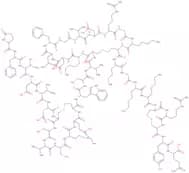
CAS:This product contains disulfide bonds between Cys3-Cys14 can is suitable for use in radioimmunoassays. Somatostatin is a peptide hormone that is produced by the hypothalamus and inhibits the release of growth hormones, insulin, and glucagon. It is widely expressed throughout the body for example in the gastrointestinal (GI) tract, hypothalamus, pancreas and the central nervous system. In the central nervous system somatostatin plays a role in neurotransmission modification and it has also demonstrated to be effective against a number of cancers such as squamous carcinoma.
Fórmula:C82H108N18O20S2Pureza:Min. 95%Peso molecular:1,730 g/molIberiotoxin
CAS:Iberiotoxin is a neurotoxin that is synthesized by the bacterium Clostridium botulinum. It inhibits the activity of a number of enzymes, including protein kinase C and cyclase, but has no effect on phosphatases. Iberiotoxin has been shown to be effective against models systems of bowel disease, such as colonic inflammation and ulceration. Iberiotoxin binds to specific neuronal receptors in the central nervous system, leading to inhibition of intracellular calcium levels, which may play an important role in the mechanisms of action for this toxin.Fórmula:C179H274N50O55S7Pureza:Min. 95%Peso molecular:4,230.86 g/molEpidermal Growth Factor Receptor, Mouse Anti Human
Epidermal Growth Factor Receptor, Mouse Anti Human is a mouse monoclonal antibody that blocks the receptor for epidermal growth factor (EGF). It is used as an inhibitor of EGF to study the cell biology of EGF-dependent processes and for diagnosis of diseases such as cancer. Epidermal Growth Factor Receptor, Mouse Anti Human has shown specificity for human EGFR. This antibody can be used in immunohistochemistry and Western blotting procedures. The antibody recognizes the extracellular domain of EGFR, which is present on all cells that express this receptor.
Pureza:Min. 95%L-Lysyl-L-cysteine trifluoroacetate
CAS:Please enquire for more information about L-Lysyl-L-cysteine trifluoroacetate including the price, delivery time and more detailed product information at the technical inquiry form on this pageFórmula:C9H19N3O3S•(C2HF3O2)xPureza:Min. 95%L-Cysteinyl-L-lysine trifluoroacetate
CAS:Please enquire for more information about L-Cysteinyl-L-lysine trifluoroacetate including the price, delivery time and more detailed product information at the technical inquiry form on this pageFórmula:C9H19N3O3S•(C2HF3O2)xPureza:Min. 95%Phrixotoxin 3
CAS:Phrixotoxin 3 is a neurotoxin that belongs to the class of bioconjugate chemistry. It has been shown to have inhibitory effects on voltage-dependent calcium channels in ganglion cells and on voltage-gated sodium channels in rat dorsal root ganglia. Phrixotoxin 3 has also been shown to bind to bacteria, including gram-negative bacteria, and to target complementarity regions. The amino acid composition of Phrixotoxin 3 is homologous with a region of the C3 protein, which is involved in the complement system. This neurotoxin can be used as a research tool for investigating the role of voltage-gated channels in pain pathways.Fórmula:C176H269N51O48S6Pureza:Min. 95%Peso molecular:4,060 g/molBekm 1
CAS:Bekm 1 is a peptide that binds to the nicotinic acetylcholine receptor and activates it. This receptor is found on the post-synaptic membrane of neurons, which are responsible for transmitting messages from one nerve cell to another. Bekm 1 is an agonist at this receptor, which means that it binds to the receptor and triggers a response. The activation of these receptors has been shown to inhibit neuronal activity.
Fórmula:C174H261N51O52S6Pureza:Min. 95%Peso molecular:4,092 g/molH-2kb tetramer peptide - G4
Please enquire for more information about H-2kb tetramer peptide - G4 including the price, delivery time and more detailed product information at the technical inquiry form on this pageH-2kb tetramer peptide - A2
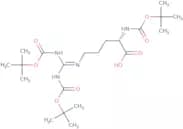
Please enquire for more information about H-2kb tetramer peptide - A2 including the price, delivery time and more detailed product information at the technical inquiry form on this pageBoc-Arg(Boc)2-OH
CAS:Boc-Arg(Boc)2-OH is a protected derivative of the amino acid arginine. The Boc (tert-butyloxycarbonyl) groups shield both the amino group and the side chain's guanidine functionality. This protection scheme allows for its selective incorporation during peptide synthesis while offering stability under various reaction conditions. Boc-Arg(Boc)2-OH has been also used in the synthesis of amino acid prodrugs of cytotoxic anthraquinones, demonstrating its potential utility in developing targeted cancer therapies.Fórmula:C21H38N4O8Pureza:Min. 95%Forma y color:PowderPeso molecular:474.55 g/molNoggin Mouse
Noggin Mouse is a protein that is secreted by the mouse brain. It is a member of the transforming growth factor-beta superfamily and is involved in development, cell differentiation, and immune regulation. Noggin Mouse has been shown to inhibit cytokine production by E. coli and other bacterial strains. Noggin Mouse also inhibits the release of proinflammatory cytokines from macrophages and synoviocytes.
Pureza:Min. 95%Amino-dPEG® Acid
CAS:Amino-dPEG® Acid is a PEG compound with two different functional groups (also known as heterobifunctional). Unlike homobifunctional PEG compounds (same functional group on both ends), this type of compounds are more versatile as have two different anchor points. Amino-dPEG® Acid is used as a linker and spacer to add a PEG moiety, via pegylation (a bioconjugation technique) to proteins, peptides, oligonucleotides, small molecules and nanoparticles.
Pureza:Min. 95%Peso molecular:441.51 g/molBiotin-dPEG®23-NH2
CAS:Biotin-dPEG®23-NH2 is a PEG compound with two different functional groups (also known as heterobifunctional). Unlike homobifunctional PEG compounds (same functional group on both ends), this type of compounds are more versatile as have two different anchor points. Biotin-dPEG®23-NH2 is used as a linker and spacer to add a PEG moiety, via pegylation (a bioconjugation technique) to proteins, peptides, oligonucleotides, small molecules and nanoparticles.Fórmula:C58H114N4O25SPureza:Min. 95%Peso molecular:1,299.6 g/molCRF, Human Antiserum
CRF is a human antibody that is used as a research tool. It has reactivity with cells that are activated by CRF, and binds to the receptor on these cells. CRF is also known as a ligand, which can bind to the receptor and trigger changes in the cell, such as ion channels or protein interactions. CRF is an activator of G-protein coupled receptors.
FRETS-25Lys (1 umol) (1umol)
FRETS-25Lys is a peptide that can be used as an activator, inhibitor, or ligand for various receptors and ion channels. It has been shown to bind with high affinity to the acetylcholine receptor on the surface of muscle cells. FRETS-25Lys also inhibits the interaction between protein kinase C (PKC) and phospholipase Cγ2 (PLCγ2).
Pureza:Min. 95%Agitoxin 2
CAS:Agitoxin 2 is a peptide with high resistance to the proteolytic activity of various enzymes, including trypsin, pepsin, and chymotrypsin. Agitoxin 2 is a structural analogue of the acetylcholine receptor agonist carbamylcholine. It binds to the alpha subunit of the nicotinic acetylcholine receptor and inhibits its activation by acetylcholine. Agitoxin 2 has been shown to be effective in animal models for autoimmune diseases such as multiple sclerosis and rheumatoid arthritis. Agitoxin 2 also has an analgesic effect in animals. The molecule's ability to inhibit the release of inflammatory cytokines may be due to its inhibition of transcription-polymerase chain reaction (PCR).Fórmula:C169H278N54O48S8Pureza:Min. 95%Peso molecular:4,091 g/molmonobiotin INSL5
Monobiotin INSL5 is a peptide that is biologically active and is obtained from the New England Peptide Company. Monobiotin INSL5 has shown to be an antagonist of the insulin-like growth factor II receptor and may have potential as a therapeutic agent for diabetes mellitus.Pureza:Min. 95%Cell Penetrating Peptide Click Kit (Alkyne)
Our CPP Click Kit (alkyne) facilitates efficient exploration of intracellular delivery. It includes four commonly used cell-penetrating peptides (CPPs) with alkyne functionalization, enabling easy conjugation with azide-modified cargo via Click chemistry. This kit streamlines the process of attaching cargo to a variety of CPPs, allowing researchers to optimize delivery for specific cargo and cell types.m-dPEG®36-Azide (Azido-m-dPEG®36)
CAS:m-dPEG®36-Azide (Azido-m-dPEG®36) is a PEG compound with two different functional groups (also known as heterobifunctional). Unlike homobifunctional PEG compounds (same functional group on both ends), this type of compounds are more versatile as have two different anchor points. m-dPEG®36-Azide (Azido-m-dPEG®36) is used as a linker and spacer to add a PEG moiety, via pegylation (a bioconjugation technique) to proteins, peptides, oligonucleotides, small molecules and nanoparticles.
Pureza:Min. 95%Peso molecular:1,642.95 g/molOrexin-A, Human Antiserum
Orexin-A is a peptide that has been shown to activate orexin receptors, which are ligand-gated ion channels. It is used as a research tool in cell biology and pharmacology. Orexin-A, also known as hypocretin-1, is an endogenous neuropeptide that regulates arousal and wakefulness. The activation of the orexin receptor by Orexin-A leads to the opening of voltage-gated Ca2+ channels, resulting in Ca2+ influx into the cell and increased neurotransmitter release. Orexin-A binds to both orexin receptor subtypes (orexins 1 and 2) with similar affinity but with different binding modes. This antibody can be used for western blotting or immunohistochemistry studies in order to detect the presence of Orexin-A in cells or tissues.Pureza:Min. 95%GHRP 4 TFA
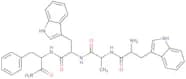
CAS:GHRP 4 TFA is a synthetic hexapeptide, which is derived from non-natural amino acids, with a primary function of stimulating the secretion of growth hormone (GH). The source of this peptide is chemical synthesis, using solid-phase peptide synthesis techniques that allow precise chain assembly. The mode of action of GHRP 4 involves binding to growth hormone secretagogue receptors (GHS-R) located in the pituitary gland and hypothalamus. This interaction triggers the release of endogenous growth hormone by mimicking the action of ghrelin, a natural endogenous ligand.In scientific research, GHRP 4 TFA is utilized to explore the physiological and cellular pathways involved in GH release and its systemic effects. Applications include studying metabolic regulation, muscle growth, and cellular proliferation. Additionally, its role in aging and age-related disorders makes it a valuable tool in gerontological studies. The peptide's ability to modulate endocrine responses is of interest for developing therapeutic approaches in GH deficiency and other metabolic disorders. However, research into its full biological effects and potential clinical applications is ongoing, emphasizing its utility in experimental and preclinical settings.Fórmula:C34H37N7O4Pureza:Min. 95%Peso molecular:607.7 g/molH-GPDC-OH
GPCD peptide; synthetic substrate that mimics the DPP-IV (dipeptidyl peptidase IV) natural substrate. 95%, TFA salt.Angiotensin IV trifluoroacetate
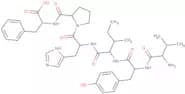
CAS:Angiotensin IV trifluoroacetate is an active analogue of angiotensin. It has been shown to have a high affinity for AT1 receptors and is able to enhance the uptake of angiotensin in proximal tubules, which may be due to its ability to bind DNA. Angiotensin IV trifluoroacetate has also been shown to have beneficial effects on skin cells, such as the reduction of skin inflammation and alleviation of pain. Angiotensin IV trifluoroacetate has shown anti-inflammatory activities, which may be due to its ability to reduce pro-inflammatory cytokines such as IL-6 and TNF-α. This drug also binds to the CD4 receptor, thereby inhibiting inflammatory responses in autoimmune diseases.Mass spectrometry of peptides and proteins using digestion by a grape cysteine protease at pH 3Z Perutka, M Ã Â ebela - Journal of mass spectrometry, 2020 - Wiley Online Libraryhttps://analyticalsciencejournals.onlinelibrary.wiley.com/doi/abs/10.1002/jms.4444Integrating computational modeling and experimental assay to discover new potent ACE-inhibitory peptidesY Ren, Q Wang, S Chen, H Cao - Molecular Informatics, 2014 - Wiley Online Libraryhttps://onlinelibrary.wiley.com/doi/abs/10.1002/minf.201300131Absorption of casein antihypertensive peptides through an in vitro model of intestinal epitheliumM del Mar Contreras , AI Sancho , I Recio, C Mills - Food Digestion, 2012 - Springerhttps://link.springer.com/article/10.1007/s13228-012-0020-2Enhanced recombinant expression and purification of human IRAP for biochemical and crystallography studiesL Sui , HC Guo - Biochemistry and Biophysics Reports, 2021 - Elsevierhttps://www.sciencedirect.com/science/article/pii/S2405580821001369The specific isolation of C-terminal peptides of proteins through a transamination reaction and its advantage for introducing functional groups into the peptideK Sonomura, H Kuyama , E Matsuo - Journal Devoted to , 2009 - Wiley Online Libraryhttps://analyticalsciencejournals.onlinelibrary.wiley.com/doi/abs/10.1002/rcm.3920Fragmentation mechanisms of oxidized peptides elucidated by SID, RRKM modeling, and molecular dynamicsJM Spraggins , JA Lloyd, MV Johnston , J Laskin - Journal of the American , 2009 - Springerhttps://link.springer.com/article/10.1016/j.jasms.2009.04.012Gold ion-angiotensin peptide interaction by mass spectrometryJ Lee, LP Jayathilaka, S Gupta - Journal of the , 2012 - ACS Publicationshttps://pubs.acs.org/doi/abs/10.1007/s13361-011-0328-0Structure-activity study of LVV-hemorphin-7: angiotensin AT4 receptor ligand and inhibitor of insulin-regulated aminopeptidaseJ Lee , T Mustafa, SG McDowall - of Pharmacology and , 2003 - ASPEThttps://jpet.aspetjournals.org/content/305/1/205.shortA mechanistic investigation of the enhanced cleavage at histidine in the gas-phase dissociation of protonated peptidesG Tsaprailis, H Nair, W Zhong , K Kuppannan - Analytical , 2004 - ACS Publicationshttps://pubs.acs.org/doi/abs/10.1021/ac034971jStudy of secondary specificity of enteropeptidase in comparison with trypsinAG Mikhailova, VV Likhareva, BV Vaskovsky - Biochemistry , 2004 - Springerhttps://link.springer.com/article/10.1023/B:BIRY.0000040224.47278.3bFórmula:C40H54N8O8•(C2HF3O2)xPureza:Min. 95%Peso molecular:774.9 g/mol





![[D-Leu7]-(-)-Ternatin](/_next/image/?url=https%3A%2Fstatic.cymitquimica.com%2Fproducts%2F3D%2Fthumb-webp%2FTNN-4464-V.webp&w=3840&q=75)


![[Tyr1]-Somatostatin](/_next/image/?url=https%3A%2Fstatic.cymitquimica.com%2Fproducts%2F3D%2Fthumb-webp%2FPSI-4038-V.webp&w=3840&q=75)