Péptidos
Subcategorías de "Péptidos"
Se han encontrado 29634 productos de "Péptidos"
H-YLEYRQVPV-OH
MAGE-A protein: MAGE-A p248V9, also kwon as multi-MAGE-A (YLEYRQVPV) is an epitope of Melanoma Antigen Gene expressed by tumors of different histological types and is a Cancer/Testis Antigens (CTA). Type of MAGE-A expressed in tumors cells varies according to the type of tumor. Targeting epitopes shared by all MAGE-A antigens would be interest in immunotherapy against a broad spectrum of cancers. Applications of MAGE-A p248V9 (multi-MAGE-A) : MAGE-A p248V9 is very useful because it could generate an HLA-A*02:01-restricted CTL response and shared by MAGE-A1,-A2,-A3,-A4,-A6,-A10 and -A12. MAGE-A p248V9 is used to stimulate specific cytotoxic T lymphocytes (CTL) in PBMCs and then to analyze CTL response especially the cytokine production by ELISPOT assay.m-dPEG®8-Azide (Azido-m-dPEG®8)
m-dPEG®8-Azide (Azido-m-dPEG®8) is a PEG compound with two different functional groups (also known as heterobifunctional). Unlike homobifunctional PEG compounds (same functional group on both ends), this type of compounds are more versatile as have two different anchor points. m-dPEG®8-Azide (Azido-m-dPEG®8) is used as a linker and spacer to add a PEG moiety, via pegylation (a bioconjugation technique) to proteins, peptides, oligonucleotides, small molecules and nanoparticles.Fórmula:C20H20F4N2O7Pureza:Min. 95%Peso molecular:476.38 g/molKD20 peptide
KD20 peptide is a lysine-aspartic acid peptide with 20 repeating units. KD20 peptide is used to stimulate CD4+ T cells in vitro and KD20 actions result in protection against abscesses induced by bacteria.
SARS-CoV-2 Spike RBD 348-357 peptide
SARS-CoV-2 Spike RBD 348-357 peptide is an epitope of interest of the SARS-CoV-2 Spike S glycoprotein Receptor-Binding Domain (RBD). SARS-CoV-2 Spike RBD 348-357 peptide is useful for vaccine development and for structure-activity relationship studies SARS-CoV-2 Spike (S) glycoprotein Spike (S) glycoprotein corresponds to one of the leading targets for COVID-19 disease. Present on the surface of Sars-CoV-2 virus, Spike S protein is a class I fusion protein that allows the virus to enter host cells. With a 1 273 aa length, Spike protein has 2 subunits : S1 contains the receptor-binding domain RBD and S2 induces the fusion of the viral envelop with the cellular membrane. SARS-CoV-2 Spike RBD: The receptor-binding domain in SARS-CoV-2 Spike protein allows binding to the Angiotensin-Converting Enzyme receptor 2 (ACE2 receptor) which mediates the viral entry. SB-PEPTIDE also offers SARS-CoV-2 Spike RBD 348-357 (Biotin-LC) peptideSARS-CoV-2 Spike RBD 513-520 peptide
SARS-CoV-2 Spike RBD 513-520 peptide is an epitope of interest of the SARS-CoV-2 Spike S glycoprotein Receptor-Binding Domain (RBD). SARS-CoV-2 Spike RBD 513-520 peptide is useful for vaccine development and for structure-activity relationship studies
SARS-CoV-2 Spike (S) glycoprotein
Spike (S) glycoprotein corresponds to one of the leading targets for COVID-19 disease. Present on the surface of Sars-CoV-2 virus, Spike S protein is a class I fusion protein that allows the virus to enter host cells.
With a 1 273 aa length, Spike protein has 2 subunits : S1 contains the receptor-binding domain RBD and S2 induces the fusion of the viral envelop with the cellular membrane.
SARS-CoV-2 Spike RBD:
The receptor-binding domain in SARS-CoV-2 Spike protein allows binding to the Angiotensin-Converting Enzyme receptor 2 (ACE2 receptor) which mediates the viral entry.
SB-PEPTIDE also offers SARS-CoV-2 Spike RBD 513-520 (Biotin-LC) peptideSARS-CoV-2 Spike RBD 395-430 peptide
SARS-CoV-2 Spike RBD 395-430 peptide is an epitope of interest of the SARS-CoV-2 Spike S glycoprotein Receptor-Binding Domain (RBD). SARS-CoV-2 Spike RBD 395-430 peptide is useful for vaccine development and for structure-activity relationship studies
SARS-CoV-2 Spike (S) glycoprotein
Spike (S) glycoprotein corresponds to one of the leading targets for COVID-19 disease. Present on the surface of Sars-CoV-2 virus, Spike S protein is a class I fusion protein that allows the virus to enter host cells.
With a 1 273 aa length, Spike protein has 2 subunits : S1 contains the receptor-binding domain RBD and S2 induces the fusion of the viral envelop with the cellular membrane.
SARS-CoV-2 Spike RBD:
The receptor-binding domain in SARS-CoV-2 Spike protein allows binding to the Angiotensin-Converting Enzyme receptor 2 (ACE2 receptor) which mediates the viral entry.
SB-PEPTIDE also offers SARS-CoV-2 Spike RBD 395-430 (Biotin-LC) peptideSARS-CoV-2 Spike RBD 319-335 peptide
SARS-CoV-2 Spike RBD 319-335 peptide is an epitope of interest of the SARS-CoV-2 Spike S glycoprotein Receptor-Binding Domain (RBD). SARS-CoV-2 Spike RBD 319-335 peptide is useful for vaccine development and for structure-activity relationship studies
SARS-CoV-2 Spike (S) glycoprotein
Spike (S) glycoprotein corresponds to one of the leading targets for COVID-19 disease. Present on the surface of Sars-CoV-2 virus, Spike S protein is a class I fusion protein that allows the virus to enter host cells.
With a 1 273 aa length, Spike protein has 2 subunits : S1 contains the receptor-binding domain RBD and S2 induces the fusion of the viral envelop with the cellular membrane.
SARS-CoV-2 Spike RBD:
The receptor-binding domain in SARS-CoV-2 Spike protein allows binding to the Angiotensin-Converting Enzyme receptor 2 (ACE2 receptor) which mediates the viral entry.
SB-PEPTIDE also offers SARS-CoV-2 Spike RBD 319-335 (Biotin-LC) peptideTetanus Toxin (830-844) peptide - QYIKANSKFIGITEL
TET 830/Tetanus Toxin (830-844) peptide – QYIKANSKFIGITEL
TAT (47-57) peptide
AT (47-57) peptide, also known as HIV-1 TAT protein, is the most characterized fragment of the HIV transactivator protein (TAT). TAT (47-57) peptide was show to be a cell-penetrating peptide (CPP). TAT (47-57) is an arginine-rich peptide which directly penetrates plasma membrane and stabilized DNA. TAT (47-57) has the ability to translocate the plasma membrane and facilitate the delivery of various cargoes such as protein, peptide, antibodies, and liposomes. It represents an important tool to increase the biodistribution of drugs.ovalbumine 154-159
Ovalbumin 154-159, also nammed TNGIIR peptide, is a portion of interest of the egg white albumen.
ω-Hexatoxin-Hv1a
Blocker of mid-low- (M-LVA) and high-voltage-activated (HVA) insect calcium channel (Ca(v)) currents
RANTES
RANTES (or Regulated upon Activation, Normal T-cell Expressed and Secreted), also known as CCL5 (Chemokine (CC chemokine ligand 5), is a protein classified as a chemotactic cytokine or chemokine.
Chemokines are small soluble proteins that act as molecular signals to induce cellular migration during inflammation.
RANTES is a member of the CC chemokine family and is involved in immunoregulatory and inflammatory processes.
RANTES is expressed in a lot of immune cells and acts as a potent chemoattractant for T-cells, basophils, eosinophils, monocytes and other cell types by playing a major role in recruiting leukocytes into inflammatory sites and to activate them. RANTES also induces proliferation and activation of certain natural killer cells.
RANTES synthesis is induced by TNF-alpha and IL-1 alpha, interacts with CCR3, CCR1 and CCR5 and activates some G-protein coupled receptors.
Many of the biological activities of RANTES (Ca2+ influx, chemotactic response, basophil activation, T-cell signaling) are observed between 40 and 8000 ng/mL.ACE2 biotinylated peptide library
Angiotensin-converting enzyme 2 (ACE2) is an enzyme involved in the cardiovascular system by decreasing arterial pressure by catalyzing the conversion of angiotensin II to angiotensin (1-7). Angiotensin II is a vasoconstrictor and angiotensin (1-7) is a vasodilatator. This effect makes ACE2 a therapeutic target for cardiovascular disease.SARS-CoV-2 Spike RBM 500-509 peptide
SARS-CoV-2 Spike RBM 500-509 peptide is an epitope of interest of the SARS-CoV-2 Spike S glycoprotein Receptor-Binding Motif (RBM). SARS-CoV-2 Spike RBM 500-509 peptide is useful for vaccine development and for structure-activity relationship studies
SARS-CoV-2 Spike (S) glycoprotein
Spike (S) glycoprotein corresponds to one of the leading targets for COVID-19 disease. Present on the surface of Sars-CoV-2 virus, Spike S protein is a class I fusion protein that allows the virus to enter host cells.
With a 1 273 aa length, Spike protein has 2 subunits : S1 contains the receptor-binding domain RBD and S2 induces the fusion of the viral envelop with the cellular membrane.
SARS-CoV-2 Spike RBM:
The receptor-binding domain in SARS-CoV-2 Spike protein contains a receptor-binding motif RBM. SARS-CoV-2 Spike RBM is the main functional motif in RBD and allows contacts between the S protein and the Angiotensin-Converting Enzyme receptor 2 (ACE2 receptor) which mediates the viral entry.
SB-PEPTIDE also offers SARS-CoV-2 Spike RBM 500-509 (Biotin-LC) peptideAF647 RGD peptide
The RGD peptide is an adhesive peptide present in extracellular matrix proteins allowing them to attach to a range of biological materials. It is labelled with Alexa Fluor 647.Peso molecular:1,432.2 g/molMBP (85-99)
MBP (85-99) peptide competes with Myelin Basic Protein, it inhibits its binding to HLA-DR2 and IL-2. MBP (85-99) peptide is able to suppress experimental autoimmune encephalomyelitis (EAE).Alyteserin-1d
Alyerserin-1b is a C-terminally α-amidated 23 residue Cationic anti-microbial peptide (AMP). Anti-microbial peptides (AMPs) are produced by the innate immune system and are expressed when the host is challenged by a pathogen. The Alyerserin family of peptides was first identified in norepinephrine-stimulated skin secretions of the midwife toad-Alytes obstetricans-(Alytidae). Alyteserin-1 peptides have limited structural similarity to the ascaphins from the skins of frogs of the Leiopelmatidae family. Alyteserin-1 peptides are selective at inhibiting growth activity of Gram-negative bacteria-such as Escherichia coli and show weak haemolytic activity against human erythrocytes.Alyteserin contain at least 50% hydrophobic amino acids. Hydrophobic residues contribute to the insertion of the peptide into the hydrophobic membrane core which results in membrane disruption and death of the pathogen. Due to their mechanism of action it is thought to be less likely for resistance to develop towards these peptides compared to conventional antibiotics.
Forma y color:PowderPeso molecular:2,334.4 g/molHeavy calcitonin peptide
Heavy calcitonin peptide – Stable Isotope PeptideHuman Calcitonin (hCT) is a 32-amino acid hormone peptide belonging to the Calcitonin/Calcitonin-gene related peptide (CGRP) family, that also comprises amylin, adrenomedullin (AM) and adrenomedullin2/intermedin (AM2/IMD). Calcitonin is characterized by a N-terminal disulfide bond that forms a 7 amino acid ring structure, a region with a α-helix tendency and an amidated C-terminus1.Calcitonin peptide is produced by C cells of the thyroid gland and binds preferentially to the G-protein coupled receptor, calcitonin receptor (CTR)1. Calcitonin receptor signals through activated Gs protein and the production of cAMP second messenger molecules by adenylyl cyclase1. The dissociation constant (Kd) of calcitonin receptors expressed by a human ovarian small cell carcinoma line is approximately 4.6 nM for human Calcitonin2.Calcitonin is involved in the homeostasis of calcium and phosphorus, and the regulation of bone dynamics. At the basal state, calcitonin secretion reduces plasma calcium and phosphorus levels, and promote bone formation. In Calca -/- mice, a murin particle-induced osteolysis model, Calcitonin peptide has been used as a test compound for studying the effects of calcitonin deficiency. It has been shown that artificial calcitonin subsitution inhibits bone resorption by reducing the formation of osteoclasts and thereby the resulting osteolytic reaction3. The Hypocalcemic Human calcitonin was also used as a positive control to monitor changes in serum calcium levels in HHD transgenic mice vaccinated with Parathyroid hormone-related protein (PTH-rP)-derived peptides in the context of anti-cancer immunotherapy study4. Moreover, it has been reported that calcitonin peptide is a potent stimulator of uncapacitated mouse spermatozoa by regulating a specific isoform of adenylyl cyclase and the production of cAMP, which plays a pivotal role in mammalian sperm function5.sb-PEPTIDE provides stable isotope labeled calcitonin peptide. This peptide has been quantified accurately using amino acid analysis.Biotin-FluM1 (58-66)
Biotin-FluM1 (58-66) is the N-ter biotinylated version of FluM1 (58-66). Biotin-FluM1 (58-66) can be used in the analysis of antigen-specific T cells. FluM1 (58-66): FluM1 (58-66) is a short part of the matrix protein of Influenza A virus which is the most abundant component of this enveloped virus localized under the viral lipid envelope. The GILGFVFTL epitope is highly conserved in Influenza A virus strains at a rate of 93% for 69 strains tested. Human Influenza epitopes may bind MHC molecules and then may be recognized by CD8+ cytotoxic T cells. Applications of FluM1 (58-66): FluM1 (58-66) is used to stimulate CTL responses in peripheral blood mononuclear cells (PBMCs). Then, ELISPOT assay is used to quantify peptide epitope specificity and IFN-γ releasing effector cells. FluM1 (58-66) has shown CTL responses qualified of immunodominant with restriction by HLA-A*02:01. It has also been detected CTL responses when FluM1 (58-66) is restricted by all HLA-C. Therefore, FluM1 (58-66) may help to understand the reaction of immune system against Influenza virus of each populations having different HLA type. FluM1 (58-66) has indeed prompted research to develop T-cell vaccine strategies capable of inducing specific CTL responses in patients upon immunization with Influenza M1 antigenic epitope. MVA-NP+M1 vaccine use GILGFVFTL epitope and is tested in clinical trial. Potential cross-reactivity with HIV-1 p17 Gag (77-85): Moreover, FluM1 (58-66) share similarities with HIV-1 p17 Gag (77-85) which can potentially show a cross-reactivity between these epitopes. It has been demonstrated a cross-reactivity and results suggest that immunity following infection by Influenza virus causes specific immune response to HIV-1 p17 Gag (77-85). Sequence: Biotin-GILGFVFTLScrambled Cathelicidin antimicrobial peptide 18
Scrambled LL-37 has the same peptide sequence as LL-37 but loses helixforming property.
Scrambled LL-37 can be used as a negative control of LL-37 studies.Melan-A (26-35) scrambled
SB-peptide offers the scrambled version of Melan-A/MART-1 (26-35). AIEIAGGLTV can be used as a negative control of Melan-A/MART-1 (26-35) studies. SB-peptide offers also Melan-A/MART-1 (26-35) (see section Melan-A/MART-1 (26-35)). Native Melan-A (26-35) decapepetide derives from the melanocyte lineage-specific protein Melan-A/MART-1, which is expressed in almost 75-100% of primary and metastatic melanomas1.ACTB MS Calibrator (25nmol)
High quality, quantitated heavy/light peptide calibrator for actin beta in Mass Spectroscopy research. Actin beta is an actin isoform and is one of two non-muscle cytoskeletal actins. Actins play roles in cell integrity, structure and motility.Pureza:Min. 95%Lysyl-[Hyp3]-Bradykinin, human
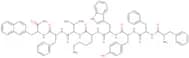
Lysyl-bradykinin is a potent activator of human bradykinin receptors. It is an inhibitor of protein interactions and has a high purity with CAS number 59814-34-8.Fórmula:C56H85N17O13Pureza:Min. 95%Peso molecular:1,204.4 g/molVon Willebrand Factor Heavy Tryptic Peptide Standard (4nmol)
This is a Von Willebrand Factor Heavy Tryptic Peptide Standard for use in protein identification and quantitation. Von Wilebrand Factor is a glycoprotein involved in platelet adhesion and when it is deficient in the body it can result in diseases such as von Willebrand disease.Pureza:Min. 95%GLP-1 (Human, Rat, Mouse)-EIA Kit (1ea)
GLP-1 (Human, Rat, Mouse)-EIA Kit is a ready-to-use kit that contains a recombinant human GLP-1 peptide. This kit is designed for the quantitative measurement of GLP-1 in human serum or plasma by ELISA. It uses a polyclonal antibody to detect the protein and has no cross-reactivity with other pancreatic hormones. The assay can be used with rat and mouse samples as well.
Pureza:Min. 95%C-Peptide (Mouse)-EIA Kit (1ea)
C-Peptide (Mouse)-EIA Kit is a mouse C-peptide EIA kit. It is designed for the quantitative measurement of C peptide in serum samples from mice. The kit contains an antibody that recognizes mouse C peptide, and a conjugate that binds to the antibody. The kit also contains a biotin-labeled anti-mouse IgG antibody, which reacts with the conjugate to form a complex that is subsequently detected by an enzyme-conjugated streptavidin. The amount of complex formed is proportional to the amount of C peptide present in the sample.Pureza:Min. 95%GRP, Human Antiserum
GRP is a protein that belongs to the G-protein-coupled receptor family. It is activated by the ligand ghrelin and has been shown to be involved in the regulation of food intake, energy expenditure, gastric acid secretion and other physiological processes. GRP is also expressed in various types of cells including neurons, pancreatic beta cells, and cardiac myocytes. The antibody against GRP recognizes human GRP with high purity. This antibody can be used as a research tool for studying the functions of GRP or for immunohistochemistry to study the distribution of GRP in tissues.Pureza:Min. 95%Anti Substance P Serum
Anti-Substance P Serum is a high purity protein that specifically binds to the receptor for substance P, which is a peptide hormone. This product has an affinity for the high affinity binding site of the receptor and inhibits the activity of substance P. Anti-Substance P Serum is used as a research tool in pharmacology and cell biology, as well as in antibody production.Pureza:Min. 95%BIM 23056 trifluoroacetate
CAS:BIM 23056 is a type of drug that binds to the receptor and inhibits its activity. BIM 23056 has been shown to have anticancer effects in vitro and in vivo. It is a membrane-permeable substance, which means it can pass through the cell membrane and into the cell where it blocks the function of certain receptors. This drug also has a physiological effect on mammalian tissue, including fibroblasts, as well as on other cells that are sensitive to growth factors.Fórmula:C71H81N11O9C2HF3O2Pureza:Min. 95%Peso molecular:1,346.5 g/molAnti IL-1beta (Rat) Serum
Anti IL-1beta (Rat) Serum is a peptide used as a research tool in immunology and cell biology. It is an inhibitor of the inflammatory cytokine IL-1β, and binds to its receptor with high affinity. This antibody can be used in pharmacological studies to investigate protein interactions. The use of this antibody has been shown to inhibit the activation of ion channels, which may lead to the treatment of diseases such as Alzheimer's disease and epilepsy.
[Sar1,Val5,Ala8]-Angiotensin II
Angiotensin II is a peptide hormone that has been found in all vertebrates. Angiotensin II acts as an agonist, binding to receptors and inducing the activation of adenylyl cyclase, which leads to an increase in intracellular cAMP. Angiotensin II also binds to AT1 receptors, leading to vasoconstriction, increased blood pressure and stimulation of the sympathetic nervous system. This peptide has been shown to be a potent antagonist for bradykinin-induced contractions in rat ileum and guinea pig ileum. It is thought that this peptide may have anti-inflammatory actions due to its ability to inhibit the production of inflammatory mediators such as prostaglandins and leukotrienes by inhibiting phospholipase A2 activity.Fórmula:C42H65N13O10•CH3COOH•4H2OPureza:Min. 95%Peso molecular:1,044.16 g/molCystatin C Light Tryptic Peptide Standard (4nmol)
Cystatin C Light Tryptic Peptide Standard for use in protein identification and quantitation studies. Cystatin C is a non-glycosylated, basic protein which can be used as a biomarker to determine kidney function.Pureza:Min. 95%Kurtoxin
Kurtoxin is a synthetic scorpion toxin sourced from the scorpion, Parabuthus transvaalicus and can be applied as a T-type Ca2+ channel blocker. This product has disulfide bonds between Cys12-Cys61Cys16-Cys37, Cys23-Cys44, and Cys27-Cys46 and is available as a 0.1mg vial.Fórmula:C324H478N94O90S8Pureza:Min. 95%Peso molecular:7,386.4 g/molAnti CRF (24-41), Human Serum
Anti CRF (24-41) is an activator of the CRF receptor, which is a G protein-coupled receptor. This antibody binds to a specific region of the human CRF1 receptor and can be used as a research tool to investigate the function of the CRF receptor. Anti CRF (24-41) can also be used to inhibit cell proliferation and induce apoptosis in cancer cells. It is also used to study protein interactions with fluorescence resonance energy transfer (FRET). This antibody has been shown to inhibit voltage-gated K+ channels in neuronal cells. Anti CRF (24-41) is purified from human serum and can be used for applications such as pharmacology, peptide synthesis, or life science research.
Pureza:Min. 95%Heat Shock 70kDa Protein-8 , human, recombinant
This is a vivitide catalogue product. Please send your vivitide product enquiry to sales@vivitide.com for an up-to-date price and availability.
Pureza:Min. 95%Acid-dPEG®13-NHS Ester
Acid-dPEG®13-NHS Ester is a PEG compound with two different functional groups (also known as heterobifunctional). Unlike homobifunctional PEG compounds (same functional group on both ends), this type of compounds are more versatile as have two different anchor points. Acid-dPEG®13-NHS Ester is used as a linker and spacer to add a PEG moiety, via pegylation (a bioconjugation technique) to proteins, peptides, oligonucleotides, small molecules and nanoparticles.Fórmula:C34H61NO19Pureza:Min. 95%Peso molecular:787.38 g/molAprotinin
Aprotinin is a serine protease inhibitor that has been used in clinical settings to reduce blood loss during surgery and prevent postoperative renal failure. It is also used as a cardioplegic solution, which prevents cardiac arrest during cardiac surgery. Aprotinin has been shown to have effects on the cardiovascular system, including increasing the glomerular filtration rate and reducing blood pressure. Aprotinin has also been shown to be safe with few side effects, such as allergic reactions.
Pureza:Min. 95%Abaecin
CAS:Abaecin is a proline-rich cationic antimicrobial peptide (PrAMP) and was isolated from Apis mellifera. Abaecin is a 34 amino acid peptide including 10 prolines positioned uniformly which prevents the α-helical conformation.
Fórmula:C187H270N48O43Pureza:Min. 95%Peso molecular:3,878.51 g/mol



































![Lysyl-[Hyp3]-Bradykinin, human](/_next/image/?url=https%3A%2Fstatic.cymitquimica.com%2Fproducts%2F3D%2Fthumb-webp%2FPBK-4191-V.webp&w=3840&q=75)


![[Sar1,Val5,Ala8]-Angiotensin II](/_next/image/?url=https%3A%2Fstatic.cymitquimica.com%2Fproducts%2F3D%2Fthumb-webp%2FPAN-4071.webp&w=3840&q=75)