


Péptidos
Subcategorías de "Péptidos"
Se han encontrado 29635 productos de "Péptidos"
Biotin-dPEG®11-NH2
CAS:Biotin-dPEG®11-NH2 is a PEG compound with two different functional groups (also known as heterobifunctional). Unlike homobifunctional PEG compounds (same functional group on both ends), this type of compounds are more versatile as have two different anchor points. Biotin-dPEG®11-NH2 is used as a linker and spacer to add a PEG moiety, via pegylation (a bioconjugation technique) to proteins, peptides, oligonucleotides, small molecules and nanoparticles.Fórmula:C34H66N4O13SPureza:Min. 95%Peso molecular:770.97 g/molPropargyl Amine
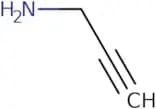
CAS:Propargyl amine is a biologically active compound that has been shown to induce neuronal death in hl-60 cells. It also inhibits the production of neurotrophic factors and induces the formation of coumarin derivatives. Propargyl amine is structurally related to other known neurotoxic compounds, such as coumarin and pyridine. The mechanism of action is currently unknown, but it may involve interactions with ubiquitin ligases or receptor activity. Propargyl amine was found to be an active analogue for the treatment of skin cancer and has shown good analytical properties for use in quantitative analysis. This product should be stored at room temperature in a dry place away from light in order to avoid chemical degradation.Pureza:Min. 95%Peso molecular:55.08 g/molCRF (Ovine)
CAS:This product is an ovine, Corticotropin Release Factor (CRF) and is available as a 0.5mg vial. CRF is a peptide hormone and a key regulator of the hypothalamic-pituitary adrenal (HPA) axis. In response to stress the hypothalams releases CRF which stimulates the production of glucocorticoids and adrenocorticotropin, which are stress hormones. Glucocorticoids are then involved in a negative feedback loop, in that they prevent the pituitary gland and hypothalamus from exhibiting any further endocrine activity. Studies have shown that symptoms of depression can be caused by the over production of CRF due to the overstimulation of the hypothalamic-pituitary adrenal axis. Interestingly CRF receptors are expressed in both glial cells and T cells. Elevated levels of CRF and glucocorticoids prevent T-cell proliferation. During stress cytokines can also stimulate the secretion of CRF. However CRF can also regulate these cytokines. CRF has the potential to be used in the research into depression treatments.Fórmula:C205H339N59O63SPureza:Min. 95%Peso molecular:4,670.3 g/molStresscopin (Human)
CAS:Stresscopin is a peptide that belongs to the family of activators. It is a molecular "switch" that can be used to control the activity of ion channels and protein interactions. Stresscopin is purified from human tissue and is supplied as lyophilized powder.Fórmula:C195H326N56O53S2Pureza:Min. 95%Peso molecular:4,367.1 g/molPropargyl Amine
CAS:Propargyl Amine is a monoamine neurotransmitter that is an active analogue of the neurotransmitter epidermal growth factor. It has been shown to have biological effects on skin cancer cells and have potential for use as a drug in the treatment of skin cancer. Propargyl amine has been shown to be an effective inhibitor of rat striatal dopamine uptake and amines, which may be due to its hydroxyl group. This propargylamine binds to the surface of the skin cancer cells, causing them to die. The asymmetric synthesis of propargyl amine has been studied using molecular modeling techniques.Fórmula:C24H50N4O11Pureza:Min. 95%Peso molecular:570.67 g/molBis-dPEG®21-Acid
CAS:Bis-dPEG®21-Acid is a PEG polymer categorised as homobifunctional PEG (X-PEG X). Used as a linker, bis-dPEG®21-Acid is used to attached PEG to proteins, peptides, oligonucleotides, nanoparticles and small molecules via pegylation, a bioconjugation technique.Fórmula:C46H90O25Pureza:Min. 95%Peso molecular:1,043.19 g/molAmylin (Human)
CAS:Amylin is a peptide hormone that is found in the pancreas. It regulates blood glucose levels and plays an important role in diabetes. Amylin is also used as a research tool for studying the function of ion channels, cell biology, protein interactions, and pharmacology.Fórmula:C165H261N51O55S2Pureza:Min. 95%Peso molecular:3,903.3 g/molm-dPEG®8-Lipoamide
CAS:m-dPEG®8-Lipoamide is a PEG molecule conjugated with a lipid moiety. m-dPEG®8-Lipoamide, conjugated to this lipid constituent, is very important especially in drug delivery and vaccine development as it helps improve the stability and circulation time of lipid nanoparticles (LNPs) and liposomes.
Fórmula:C19H35NO7S2Pureza:Min. 95%Peso molecular:453.61 g/molTertiapin
CAS:Tertiapin is a synthetic bee venom peptide (Honey Bee, Apis mellifera) containing disulfide bonds between Cys3-Cys14 and Cys5-Cys18. It is an inward rectifier K+ channel blocker and also blocks the activity of calcium activated large conductance potassium channels. The pain and inflammation symptoms experienced after a bee sting is caused by this peptide eventhough bee venom also has the potential to treat pain and inflammation in conditions such as rheumatoid arthritis and multiple sclerosis. This product is available as a 0.1mg vial.Fórmula:C106H176N34O23S5Pureza:Min. 95%Peso molecular:2,455.1 g/mol[Tyr8]-Bradykinin
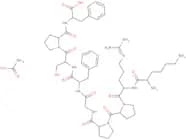
CAS:[Tyr8]-Bradykinin is a peptide that is an activator of the B2 receptor. It has been shown to have high purity, and can be used as a research tool. This product is also an inhibitor of ion channels, and has been shown to bind to antibody.Fórmula:C50H73N15O12Pureza:Min. 95%Peso molecular:1,076.2 g/molCCK-33 (Human)
CAS:CCK-33 is a synthetic peptide that is used as a research tool. It binds to the CCK2 receptor and activates it, triggering the release of the neurotransmitter acetylcholine. CCK-33 is also an inhibitor of voltage-gated potassium channels, which are important for neuronal communication. CCK-33 can be used to identify other ligands for this receptor, or as an antibody epitope tag in cell biology studies.Fórmula:C167H263N51O52S4Pureza:Min. 95%Peso molecular:3,945.4 g/molm-dPEG®24-MAL
CAS:m-dPEG®24-MAL is a PEG compound with two different functional groups (also known as heterobifunctional). Unlike homobifunctional PEG compounds (same functional group on both ends), this type of compounds are more versatile as have two different anchor points. m-dPEG®24-MAL is used as a linker and spacer to add a PEG moiety, via pegylation (a bioconjugation technique) to proteins, peptides, oligonucleotides, small molecules and nanoparticles.
Fórmula:C22H39F3N4O7SPureza:Min. 95%Peso molecular:560.63 g/molPTH-rP (Human,1-34 Amide)
CAS:PTH-rP is a peptide that has been used as a research tool for the study of ion channels, protein interactions, and receptor signaling. It is an inhibitor of PTH/PTH-related protein receptor. PTH-rP is a ligand for the PTH/PTH-related protein receptor and can be used to identify novel receptors or ligands. This compound has been shown to have the ability to inhibit cellular proliferation and induce apoptosis in certain cell lines.Fórmula:C180H288N58O47Pureza:Min. 95%Peso molecular:4,016.6 g/molMOCAc-Gly-Lys-Pro-Ile-Leu-Phe-Phe-Arg-Leu-Lys(Dnp)-D-Arg-NH₂
CAS:MOCAc-Gly-Lys-Pro-Ile-Leu-Phe-Phe-Arg-Leu-Lys(Dnp)-D-Arg is a peptide with ion channel activity. It is a potent activator of potassium channels and has been used in research as a tool for studying ion channel function. MOCAc is not an inhibitor of voltage sensitive sodium channels but does inhibit calcium currents. MOCAc also has been shown to be a ligand for the nicotinic acetylcholine receptor and is able to bind to the beta subunit of this receptor. This peptide binds to the alpha subunit of the calcium channel, leading to inhibition of calcium currents and activation of potassium channels.
Fórmula:C85H122N22O19Pureza:Min. 95%Peso molecular:1,756 g/molAzido-dPEG®36-Alcohol
CAS:Azido-dPEG®36-Alcohol is a PEG polymer categorised as monofunctional (OH-PEG-X). Used as a linker, azido-dPEG®36-Alcohol is used to attached PEG to proteins, peptides, oligonucleotides, nanoparticles and small molecules via pegylation, a bioconjugation technique.
Pureza:Min. 95%Peso molecular:1,628.92 g/molAmino-dPEG®12-ODMT
CAS:Amino-dPEG®12-ODMT is a PEG compound with two different functional groups (also known as heterobifunctional). Unlike homobifunctional PEG compounds (same functional group on both ends), this type of compounds are more versatile as have two different anchor points. Amino-dPEG®12-ODMT is used as a linker and spacer to add a PEG moiety, via pegylation (a bioconjugation technique) to proteins, peptides, oligonucleotides, small molecules and nanoparticles.
Fórmula:C10H20O5Pureza:Min. 95%Peso molecular:220.26 g/molGlucagon-like Peptide 1 (Human 7-37)
CAS:GLP-1 is a peptide hormone that is released by the pancreas in response to food intake. This hormone activates receptors on the L cells of the ileum and duodenum, which causes increased production of insulin and decreased production of glucagon. GLP-1 also decreases appetite, slows gastric emptying, and reduces blood glucose levels by increasing the uptake of glucose into muscle cells. GLP-1 has been shown to be effective in reducing body weight, lowering blood pressure and cholesterol levels, improving glycemic control, and preventing diabetes. The GLP-1 receptor is found in ion channels and cell biology as well as pharmacology.Fórmula:C151H228N40O47Pureza:Min. 95%Peso molecular:3,355.7 g/molBz-Arg-AMC
CAS:Bz-Arg-AMC is a fluorescent probe that binds to the nicotinic acetylcholine receptor (nAChR) in the presence of calcium ions and emits light when excited by ultraviolet light. It can be used to study the activation of nAChRs, as well as their interactions with other proteins such as peptides. Bz-Arg-AMC has a molecular weight of 551.9 g/mol, with a purity of > 98% and an optical purity of > 99%. This product can be used for research purposes only, not for diagnostic or therapeutic purposes.
Fórmula:C23H25N5O4Pureza:Min. 95%Peso molecular:435.48 g/molMet-Met
CAS:Met-Met is a dipeptide that is synthesized from the amino acids methionine and methyltetrahydrofolate. It is used in the synthesis of peptides and biochemicals, as well as in pharmacological treatments for diseases including bacterial infections. Met-Met has significant interactions with dopamine, catechol-o-methyltransferase, and energy metabolism. The enzyme catechol-o-methyltransferase catalyzes the conversion of dopamine to 3,4-dihydroxyphenylacetic acid (DOPAC), which may lead to a decrease in dopamine levels. Met-Met also inhibits the metabolism of catecholamines, leading to an increase in cellular levels of catecholamines such as dopamine and norepinephrine. This inhibition may be responsible for metabolic disorders such as obesity or low body mass index (BMI)
Fórmula:C10H20N2O3S2Pureza:Min. 95%Peso molecular:280.41 g/molAzido-dPEG®4-NHS ester
CAS:Azido-dPEG®4-NHS ester is a PEG compound with two different functional groups (also known as heterobifunctional). Unlike homobifunctional PEG compounds (same functional group on both ends), this type of compounds are more versatile as have two different anchor points. Azido-dPEG®4-NHS ester is used as a linker and spacer to add a PEG moiety, via pegylation (a bioconjugation technique) to proteins, peptides, oligonucleotides, small molecules and nanoparticles.
Fórmula:C27H53N3O14Pureza:Min. 95%Peso molecular:643.72 g/mol(3,5-Difluorophenylacetyl)-Ala-Phg-OtBu
CAS:(3,5-Difluorophenylacetyl)-Ala-Phg-OtBu is a peptide that is an inhibitor of Protein interactions. It blocks the binding of the enzyme to its substrate and prevents the conversion of substrate to product. This peptide was used as a research tool for studying protein interactions in cell biology and as an activator for Ligands. This peptide can be used as a reagent for antibody production. The purity of this peptide is high and it has been shown to have no adverse effects in animal research studies.Fórmula:C23H26N2O4F2Pureza:Min. 95%Peso molecular:432.46 g/molAmylin (Rat)
CAS:Producto controladoAmylin is a peptide that belongs to the group of activators. It has been shown to be an inhibitor of ion channels, and has also been demonstrated to activate cell signaling pathways. Amylin can be used as a research tool for studying protein interactions, receptor ligands, and pharmacology. Amylin can be used in antibody production or as a high-purity reagent for life science or cell biology applications.
Fórmula:C167H272N52O53S2Pureza:Min. 95%Peso molecular:3,920.4 g/molAdenylate Kinase 4, human, recombinant
Adenylate kinase 4 (AK4) is a protein that in humans is encoded by the AK4 gene. AK4 catalyzes the conversion of adenosine triphosphate (ATP) to adenosine monophosphate (AMP). The enzyme has been shown to play an important role in the regulation of cell proliferation and survival, as well as in the regulation of ion channels, neurotransmitter release, and other biological processes. AK4 is also an activator of G-protein coupled receptors and a ligand for certain nuclear receptors. It can also function as an inhibitory receptor for certain G-protein coupled receptors.Pureza:Min. 95%Bis-Maleimide Amine, TFA Salt
CAS:Bis-Maleimide Amine, TFA Salt is a pharmacological research tool that is used to study protein interactions. It is also used as an inhibitor and activator of proteins, specifically ion channels. This product has a CAS number of 62921-76-0, which can be found on the Chemical Abstracts Services website. This product is high purity and is used in life science research. The salt form of this product is used as a ligand for receptor binding studies.Fórmula:C16H26O7SPureza:Min. 95%Peso molecular:362.44 g/molCalcitonin (Human)
CAS:Calcitonin is a hormone produced by the C cells (also known as parafollicular cells) in the thyroid gland. Its main function is to regulate the levels of calcium and phosphate in the blood. Calcitonin works by inhibiting the activity of osteoclasts, which are cells that break down bone tissue and release calcium and phosphate into the bloodstream. This leads to a decrease in the amount of calcium and phosphate in the blood. Calcitonin is released in response to high levels of calcium in the blood, and it acts to reduce these levels by increasing the excretion of calcium by the kidneys and inhibiting the absorption of calcium by the intestines. It also promotes the storage of calcium in the bones, which helps to maintain their strength and density. Calcitonin may be used therapeutically to treat conditions such as osteoporosis and hypercalcemia (high levels of calcium in the blood) or even diagnostically as a marker for tumors in medullary thyroid cancer. This product has a disulfide bond between Cys1-Cys7 and is available as a 0.5mg vial.Fórmula:C151H226N40O45S3Pureza:Min. 95%Peso molecular:3,417.8 g/molNeurokinin A (Human, Porcine, Rat, Mouse)
CAS:Neurokinin A is a peptide that belongs to the tachykinin family and has been shown to activate receptors, such as NK-1. It is a potent inhibitor of ion channels and has also been shown to inhibit ligand binding to the receptor. Neurokinin A is used in research for studying protein interactions, receptor effects, peptides, and ion channels. It can be used in cell biology for studying life science and research tools for high purity and antibody production. This product is not intended for therapeutic use.
Fórmula:C50H80N14O14SPureza:Min. 95%Peso molecular:1,133.3 g/mol[Pyr1]-Apelin-13 (Human, Bovine)
CAS:Apelin-13 is a peptide that belongs to the class of activators. It has been shown to activate the ATP-sensitive potassium ion channels and inhibit the calcium ion channels in cells. Apelin-13 also binds to receptors on cells, which leads to activation of signaling pathways. The affinity for these receptors has been determined using an antibody. In addition, it has been shown that Apelin-13 interacts with other proteins and ligands in a variety of ways through protein interactions and receptor binding.Fórmula:C69H108N22O16SPureza:Min. 95%Peso molecular:1,533.8 g/molm-dPEG®11-OH
CAS:m-dPEG®11-OH is a PEG polymer categorised as monofunctional (OH-PEG-X). Used as a linker, m-dPEG®11-OH is used to attached PEG to proteins, peptides, oligonucleotides, nanoparticles and small molecules via pegylation, a bioconjugation technique.Pureza:Min. 95%Peso molecular:516.62 g/molMAL-dPEG®8-Acid
CAS:MAL-dPEG®8-Acid is a PEG compound with two different functional groups (also known as heterobifunctional). Unlike homobifunctional PEG compounds (same functional group on both ends), this type of compounds are more versatile as have two different anchor points. MAL-dPEG®8-Acid is used as a linker and spacer to add a PEG moiety, via pegylation (a bioconjugation technique) to proteins, peptides, oligonucleotides, small molecules and nanoparticles.
Fórmula:C19H38O10SPureza:Min. 95%Peso molecular:458.57 g/molt-boc-N-Amido-dPEG®12-OH
CAS:t-boc-N-Amido-dPEG®12-OH is a PEG polymer categorised as monofunctional (OH-PEG-X). Used as a linker, t-boc-N-amido-dPEG®12-OH is used to attached PEG to proteins, peptides, oligonucleotides, nanoparticles and small molecules via pegylation, a bioconjugation technique.
Fórmula:C29H59NO14Pureza:Min. 95%Peso molecular:645.78 g/molSARS Spike (14-1195)
SARS Coronavirus is an enveloped virus containing 3 outer structural proteins, namely the membrane (M), envelope (E), and spike (S) proteins. Spike (S)-glycoprotein of the virus interacts with a cellular receptor and mediates membrane fusion to allow viral entry into susceptible target cells. Accordingly, S-protein takes part in virus infection cycle and is the primary target of neutralizing antibodies. SARS Spike is produced in Sf9 Baculovirus cells and is a single, glycosylated polypeptide chain containing 1188 amino acids (14-1195 aa) and having a molecular mass of 131.9kDa.SARS Spike is fused to a 6 amino acid His tag at C-terminus and purified by proprietary chromatographic techniques. The formulation of the SARS Spike (14-1195) solution (0.25mg/ml) contains Phosphate-Buffered Saline (pH 7.4) and 10% Glycerol. Its biological activity has been measured by its binding ability in a functional ELISA with Human ACE-2. For long term storage it is recommended to add a carrier protein (0.1% HSA or BSA). One-Letter Formula: SDLDRCTTFD DVQAPNYTQH TSSMRGVYYP DEIFRSDTLY LTQDLFLPFY SNVTGFHTIN HTFGNPVIPF KDGIYFAATE KSNVVRGWVF GSTMNNKSQS VIIINNSTNV VIRACNFELC DNPFFAVSKP MGTQTHTMIF DNAFNCTFEY ISDAFSLDVS EKSGNFKHLR EFVFKNKDGF LYVYKGYQPI DVVRDLPSGF NTLKPIFKLP LGINITNFRA ILTAFSPAQD IWGTSAAAYF VGYLKPTTFM LKYDENGTIT DAVDCSQNPL AELKCSVKSF EIDKGIYQTS NFRVVPSGDV VRFPNITNLC PFGEVFNATK FPSVYAWERK KISNCVADYS VLYNSTFFST FKCYGVSATK LNDLCFSNVY ADSFVVKGDD VRQIAPGQTG VIADYNYKLP DDFMGCVLAW NTRNIDATST GNYNYKYRYL RHGKLRPFER DISNVPFSPD GKPCTPPALN CYWPLNDYGF YTTTGIGYQP YRVVVLSFEL LNAPATVCGP KLSTDLIKNQ CVNFNFNGLT GTGVLTPSSK RFQPFQQFGR DVSDFTDSVR DPKTSEILDI SPCAFGGVSV ITPGTNASSE VAVLYQDVNC TDVSTAIHAD QLTPAWRIYS TGNNVFQTQA GCLIGAEHVD TSYECDIPIG AGICASYHTV SLLRSTSQKS IVAYTMSLGA DSSIAYSNNT IAIPTNFSIS ITTEVMPVSM AKTSVDCNMY ICGDSTECAN LLLQYGSFCT QLNRALSGIA AEQDRNTREV FAQVKQMYKT PTLKYFGGFN FSQILPDPLK PTKRSFIEDL LFNKVTLADA GFMKQYGECL GDINARDLIC AQKFNGLTVL PPLLTDDMIA AYTAALVSGT ATAGWTFGAG AALQIPFAMQ MAYRFNGIGV TQNVLYENQK QIANQFNKAI SQIQESLTTT STALGKLQDV VNQNAQALNT LVKQLSSNFG AISSVLNDIL SRLDKVEAEV QIDRLITGRL QSLQTYVTQQ LIRAAEIRAS ANLAATKMSE CVLGQSKRVD FCGKGYHLMS FPQAAPHGVV FLHVTYVPSQ ERNFTTAPAI CHEGKAYFPR EGVFVFNGTS WFITQRNFFS PQIITTDNTF VSGNCDVVIG IINNTVYDPL QPELDSFKEE LDKYFKNHTS PDVDLGDISG INASVVNIQK EIDRLNEVAK NLNESLIDLQ ELGKYEQYIK WPHHHHHHPureza:Min. 95%m-dPEG®48-MAL
CAS:m-dPEG®48-MAL is a PEG compound with two different functional groups (also known as heterobifunctional). Unlike homobifunctional PEG compounds (same functional group on both ends), this type of compounds are more versatile as have two different anchor points. m-dPEG®48-MAL is used as a linker and spacer to add a PEG moiety, via pegylation (a bioconjugation technique) to proteins, peptides, oligonucleotides, small molecules and nanoparticles.
Fórmula:C104H202N2O51Pureza:Min. 95%Peso molecular:2,296.7 g/molDes-Arg10-Kallidin
CAS:Producto controladoKallidin is a peptide that is found in the venom of the Brazilian pit viper (Bothrops jararaca). It has been shown to activate ion channels and receptors. Des-Arg10-Kallidin is a research tool that can be used in cell biology, pharmacology, and life science research. This peptide binds to antibodies and creates an ion channel when it binds to a receptor. Kallidin also inhibits protein interactions by binding to the active site of proteases such as thrombin, trypsin, and cathepsin B. The high purity of this peptide makes it ideal for use in pharmaceuticals.Fórmula:C50H73N13O11Pureza:Min. 95%Peso molecular:1,032.2 g/molEpoxomicin
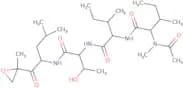
CAS:Epoxomicin is an activator that binds to the ligand-binding site of a receptor. It has been used as a research tool in cell biology, pharmacology, and immunology. Epoxomicin has been shown to inhibit ion channels by binding to them and blocking their activity. This property makes epoxomicin a good candidate for the treatment of epilepsy. Epoxomicin also inhibits protein synthesis through inhibition of ribosomal S6 kinase, which is involved in signal transduction pathways.
Fórmula:C28H50N4O7Pureza:Min. 95%Peso molecular:554.72 g/molBis-dPEG®13-Acid
CAS:Bis-dPEG®13-Acid is a PEG polymer categorised as homobifunctional PEG (X-PEG X). Used as a linker, bis-dPEG®13-Acid is used to attached PEG to proteins, peptides, oligonucleotides, nanoparticles and small molecules via pegylation, a bioconjugation technique.
Fórmula:C30H58O17Pureza:Min. 95%Peso molecular:690.77 g/molThiol-dPEG®4-Acid
CAS:Thiol-dPEG®4-Acid is a PEG compound with two different functional groups (also known as heterobifunctional). Unlike homobifunctional PEG compounds (same functional group on both ends), this type of compounds are more versatile as have two different anchor points. Thiol-dPEG®4-Acid is used as a linker and spacer to add a PEG moiety, via pegylation (a bioconjugation technique) to proteins, peptides, oligonucleotides, small molecules and nanoparticles.Pureza:Min. 95%Peso molecular:282.35 g/molβ-Endorphin (Human)
CAS:Human beta-endorphin is an opioid receptor agonist that belongs to the group of endogenous opioids. It is released by the pituitary gland and binds to receptors in the brain, where it stimulates the release of dopamine, which acts on many regions of the brain. Beta-endorphin has been used as a research tool for its ability to activate opioid receptors and study ligand-receptor interactions. This protein has also been used as a tool for studying ion channels, cell biology, pharmacology, and protein interactions. This product is available as an 0.5mg vial.Fórmula:C158H251N39O46SPureza:Min. 95%Peso molecular:3,465 g/molAc-Ile-Glu-Thr-Asp-AMC
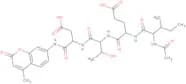
CAS:Ac-Ile-Glu-Thr-Asp-AMC is a high purity, water soluble peptide consisting of the amino acid sequence Ile-Glu-Thr-Asp. Ac-Ile-Glu-Thr-Asp-AMC has been shown to activate the nicotinic acetylcholine receptor and inhibit ligand binding to the NMDA glutamate receptor in rat cortical neurons. Ac-Ile-Glu-Thr-Asp AMC is also an inhibitor of voltage gated potassium channels and has been used as a research tool for studying ion channel function.Fórmula:C31H41N5O12Pureza:Min. 95%Peso molecular:675.68 g/molGuanylin (Human)
CAS:Guanylin is a human gastrointestinal hormone which can be used to activate the transmembrane receptor Guanylate Cyclase C on the intestinal epithelial cells surface. This product contains disulfide bonds between Cys4-Cys12 and Cys7-Cys15 and is available as a 0.1mg vial.Fórmula:C58H87N15O21S4Pureza:Min. 95%Peso molecular:1,458.7 g/mol[Pyr3]-Amyloid Beta-Protein (Human, 3-42)
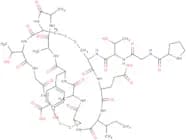
CAS:[Pyr3]-Amyloid Beta-Protein (Human, 3-42) is a fragment of the human amyloid beta protein that inhibits ion channels and ligand-activated receptors. It has been shown to be an inhibitor of ion channel activity in vitro. [Pyr3]-Amyloid Beta-Protein (Human, 3-42) is a synthetic peptide that can be used as a research tool for investigating the effects of amyloid beta protein on cell biology.Fórmula:C196H299N53O55SPureza:Min. 95%Peso molecular:4,309.9 g/mol2-Deoxy-2-Phthalimido-3,4,6-Tri-O-Acetyl-α-D-Glucopyranosyl Fluoride
CAS:2-Deoxy-2-Phthalimido-3,4,6-Tri-O-Acetyl-α-D-Glucopyranosyl Fluoride is a glycosyl compound that is used as a fluorinating agent. It reacts with proteins to form glycosyl fluorides by the action of fluoride ion, which introduces fluorine atoms into the carbohydrate side chains of proteins. This product is specifically designed for use in peptide synthesis. 2DGTGF may be used in the preparation of peptides for use in protein sequencing and mapping techniques.Fórmula:C20H20NO9FPureza:Min. 95%Peso molecular:437.37 g/molVIP (Human, Porcine)
CAS:VIP is a peptide that is an activator of cAMP-dependent protein kinase (PKA) and phospholipase C. It also inhibits the release of histamine from mast cells, stimulates gastric acid secretion, and causes vasodilation. VIP has been shown to interact with a number of proteins including ion channels and receptors. The peptide is a ligand for the neuropeptide Y receptor (NPY-R) and is involved in the regulation of appetite, immune responses, and blood pressure. VIP can be used as a research tool for studying protein interactions or as an inhibitor in pharmacological studies.Fórmula:C147H238N44O42SPureza:Min. 95%Peso molecular:3,325.8 g/molBoc-Leu-Gly-Arg-AMC
CAS:Boc-Leu-Gly-Arg-AMC is a peptide that binds to the receptor for N-methyl-D-aspartate (NMDA) and inhibits the ion channel. It has been used as a research tool to study NMDA receptor interactions, as well as in cell biology and pharmacology. Boc-Leu-Gly-Arg-AMC is a high purity, ionic analog of glutamate that binds to the NMDA receptor without activating it, thereby inhibiting ion flow through the channel. This inhibition can be reversed by adding excess glutamate or glycine. The binding of this compound to the NMDA receptor has been shown to block activation of voltage gated calcium channels and reduce neuronal excitation, which may provide an alternative therapeutic strategy for controlling seizures or other neurological disorders.
Fórmula:C29H43N7O7Pureza:Min. 95%Peso molecular:601.69 g/molm-dPEG®12-Azide (Azido-m-dPEG®12)
CAS:m-dPEG®12-Azide (Azido-m-dPEG®12) is a PEG compound with two different functional groups (also known as heterobifunctional). Unlike homobifunctional PEG compounds (same functional group on both ends), this type of compounds are more versatile as have two different anchor points. m-dPEG®12-Azide (Azido-m-dPEG®12) is used as a linker and spacer to add a PEG moiety, via pegylation (a bioconjugation technique) to proteins, peptides, oligonucleotides, small molecules and nanoparticles.Pureza:Min. 95%Peso molecular:585.69 g/molDCCD (Redistilled for Solid-Phase Synthesis)
CAS:DCCD is a chemical inhibitor of the enzyme pyruvate dehydrogenase kinase that is used to study metabolic pathways. It inhibits the activity of this enzyme by binding reversibly to its active site, thereby blocking its phosphorylation of pyruvate dehydrogenase and thus inhibiting the conversion of pyruvate into acetyl-CoA. DCCD also has been shown to have antidiabetic effects in an experimental model. This drug has been used as a reagent for polymyxin B and other chemical inhibitors in vitro experiments.Fórmula:C13H22N2Pureza:Min. 95%Peso molecular:206.33 g/molCCK-Octapeptide (26-33) (Sulfated Form)
CAS:CCK-Octapeptide (26-33) (Sulfated Form) is a peptide that has been shown to have a variety of biological effects. It has been found to enhance the activity of rifampicin against tuberculosis by increasing the activity of the kinase protein. CCK-Octapeptide (26-33) (Sulfated Form) also has natriuretic peptide-like activity, which means it can regulate blood pressure and fluid balance in the body. In addition, it has been shown to inhibit tumor growth and metastasis in animal models, possibly through its ability to modulate guanosine triphosphate-binding proteins. CCK-Octapeptide (26-33) (Sulfated Form) also exhibits trypsin inhibitory activity and thymidine uptake inhibition. Furthermore, it has been studied as a potential treatment for cancer and as an alternative to vasopressin or nesiritide in certain medical conditions where natriuretic peptides are used therFórmula:C49H62N10O16S3Pureza:Min. 95%Peso molecular:1,143.3 g/mol2-NBDG
CAS:2-NBDG is a fluorescent dye that exhibits high affinity for nucleic acid and protein. It has been used as an inhibitor of protein interactions, activator of ligands, and research tool in the study of ion channels. 2-NBDG has also been used as an antibody to identify receptors, and can be used to measure the concentration of proteins, lipids, and carbohydrates. 2-NBDG is listed by CAS No. 186689-07-6.
Fórmula:C12H14N4O8Pureza:Min. 95%Peso molecular:342.26 g/molDnp-Gln-Gly-Ile-Ala-Gly-Gln-D-Arg
CAS:Dnp-Gln-Gly-Ile-Ala-Gly-Gln-D-Arg is a peptide that has been shown to be an inhibitor of protein interactions. It has been shown to activate the G protein and inhibit the enzyme phospholipase C, which may provide a potential treatment for Alzheimer's Disease. Dnp-Gln-Gly-Ile-Ala-Gly-Gln-D-Arg also has a high purity and is used as a research tool in life science.
Fórmula:C35H54N14O14Pureza:Min. 95%Peso molecular:894.89 g/molDnp-Pro-Gln-Gly-Ile-Ala-Gly-Gln-D-Arg
CAS:Dnp-Pro-Gln-Gly-Ile-Ala-Gly-Gln-D-Arg is a synthetic peptide that is used as a research tool, an activator, and an inhibitor. This peptide is not expected to have any adverse effects on the environment or on animal or human health. It can be used in antibody production and has been shown to inhibit the activity of ion channels. Dnp-Pro-Gln-Gly-Ile-Ala-Gly-Gln-D-Arg binds to receptors and ligands, which may be involved in protein interactions.Fórmula:C40H61N15O15Pureza:Min. 95%Peso molecular:992 g/molDynorphin A (Human)
CAS:Dynorphin A is a peptide that belongs to the dynorphin family and has affinity for all three of the opioid receptors. However it has been found that Dynorphin A favors kappa-opioid receptors which are expressed in the brain, peripheral tissues and the spinal cord and are located in areas involved in pain. For example when Dynorphin A binds to kappa-opioid receptors, dopamine is inhibited in areas of the brain prevalent in drug addiction, thus demonstrated Dynorphin A to have antagonistic effects on the brain reward circuit. Dynorphin A could be a useful research tool for studying analgesia, reward and addiction. This product is available as a 0.5mg vial.Fórmula:C99H155N31O23Pureza:Min. 95%Peso molecular:2,147.5 g/mol




![[Tyr8]-Bradykinin](/_next/image/?url=https%3A%2Fstatic.cymitquimica.com%2Fproducts%2F3D%2Fthumb-webp%2FPBK-4075-V.webp&w=3840&q=75)


![[Pyr1]-Apelin-13 (Human, Bovine)](/_next/image/?url=https%3A%2Fstatic.cymitquimica.com%2Fproducts%2F3D%2Fthumb-webp%2FPAP-4361-V.webp&w=3840&q=75)





![[Pyr3]-Amyloid Beta-Protein (Human, 3-42)](/_next/image/?url=https%3A%2Fstatic.cymitquimica.com%2Fproducts%2F3D%2Fthumb-webp%2FPAB-4367-V.webp&w=3840&q=75)


