Sustratos de enzimas
Los sustratos enzimáticos son moléculas sobre las cuales actúan las enzimas para catalizar reacciones químicas. El sustrato se une al sitio activo de la enzima, donde sufre una transformación específica para formar el producto de la reacción. Los sustratos enzimáticos son herramientas esenciales en la investigación para estudiar la cinética enzimática, la especificidad y el mecanismo de acción. También se utilizan en ensayos diagnósticos y estudios bioquímicos. En CymitQuimica, ofrecemos una selección diversa de sustratos enzimáticos de alta calidad para apoyar su investigación en enzimología y bioquímica.
Subcategorías de "Sustratos de enzimas"
Se han encontrado 1527 productos de "Sustratos de enzimas"
Ordenar por
Pureza (%)
0
100
|
0
|
50
|
90
|
95
|
100
MTT
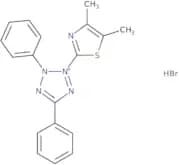
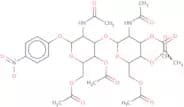
CAS:<p>Used in the MTT assay to asses the viability of cells. The yellow MTT is reduced by the living cells to a water-insoluble purple formazan. In order to make a quantitative measurement the formazan is often dissolved by addition of a solubilization solution to yield a colored solution that can be measured in a spectrophotometer. The rate of color formation reflects the dynamics and intensity of the microbial metabolism.</p>Fórmula:C18H17BrN5SPureza:Min. 95%Peso molecular:415.3 g/mol4-Nitrophenyl 2-acetamido-3-O-(2-acetamido-3,4,6-tri-O-acetyl-b-D-glucopyranosyl)-4,6-di-O-acetyl-2-deoxy-a-D-galactopyranoside
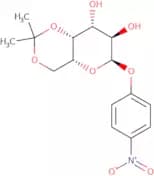
<p>4-Nitrophenyl 2-acetamido-3-O-(2-acetamido-3,4,6-tri-O-acetyl-b-D-glucopyranosyl)-4,6-di-O-acetyl-2deoxy--aDgalactopyranoside is a substrate for enzymes such as beta galactosidase and alpha amylase. It can be used for the detection of these enzymes in biological samples, including culture media and body fluids. 4NPAG has also been used as a chromogenic substrate to measure the activity of NADH oxidase in neutrophils. 4NPAG is fluorescent in aqueous solution and can be used to detect bioluminescence reactions.</p>Pureza:Min. 95%Peso molecular:755.68 g/mol4-Nitrophenyl 4,6-O-isopropylidene-a-D-galactopyranoside
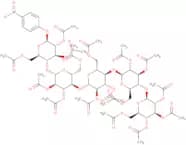
CAS:<p>4-Nitrophenyl 4,6-O-isopropylidene-a-D-galactopyranoside is a fluorogenic substrate that can be used to measure the activity of beta-galactosidase. This product is high purity, high quality and has a CAS number of 29781-31-5. It is an enzyme substrate with chromogenic and diagnostic properties that are used for conjugation to other molecules, as well as for culture media, chemiluminescence and food testing. 4NP4IPG is also used in bioluminescence assays to detect the presence of beta-galactosidase.</p>Pureza:Min. 95%Peso molecular:341.31 g/mol4-Nitrophenyl b-D-cellopentaoside hexadecaacetate
CAS:<p>4-Nitrophenyl b-D-cellopentaoside hexadecaacetate is a fluorogenic substrate that is used to study the activity of various enzymes. It reacts with hydrolytic enzymes in the presence of hydrogen peroxide to produce light, and it can be used for food testing, environmental testing, and diagnostics. 4-Nitrophenyl b-D-cellopentaoside hexadecaacetate is a conjugate of 4-nitrophenol and cellobiose pentaacetate that has a high purity and high quality. The CAS number for this compound is 129411-66-1.</p>Pureza:Min. 95%Peso molecular:1,622.4 g/mol4-Nitrophenyl 2-acetamido-3-O-[2-O-(2,3,4-tri-O-benzoyl-a-L-fucopyranosyl)-3,4,6-tri-O-acetyl-2-deoxy-D-galactopyranosyl]-b-D-glucop yranoside
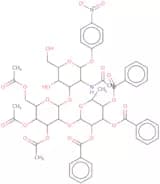
<p>4-Nitrophenyl 2-acetamido-3-O-[2-O-(2,3,4-tri-O-benzoyl-a-L-fucopyranosyl)-3,4,6-tri-O-acetyl-2 deoxy -D-galactopyranosyl]-b D glucopyranoside is a fluorescent substrate for the enzyme β galactosidase. It can be used to test for β galactosidase activity in food products, environmental samples and diagnostics. 4NPFAPG is a conjugate of 4 nitrophenol and 2 acetamido 3 O-[2 O-(2,3,4 tri O benzoyl a L fucopyranosyl) 3,4 6 tri O acetyl 2 deoxy D galactopyranosyl] b D glucopyranose. 4NPFAPG is water soluble and has</p>Pureza:Min. 95%Peso molecular:1,089.01 g/molN-Acetyl-L-glutamine p-nitroanilide
CAS:<p>N-Acetyl-L-glutamine p-nitroanilide is a fluorogenic substrate that can be used in the diagnosis of bacterial infections. It is a ligand that can bind to enzymes involved in the production of bioluminescence, such as luciferase, and can be used for the detection of bacteria. It is also used for food testing, environmental testing, and diagnostics. N-Acetyl-L-glutamine p-nitroanilide has high purity and high quality, which makes it suitable for conjugation with other molecules.</p>Fórmula:C13H15N3O6Pureza:Min. 95%Forma y color:PowderPeso molecular:309.27 g/mol4-Nitrophenyl 2-acetamido-2-deoxy-4-O-(a-L-fucopyranosyl)-b-D-glucopyranoside
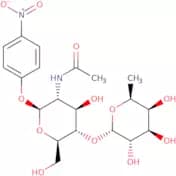
CAS:<p>4-Nitrophenyl 2-acetamido-2-deoxy-4-O-(a-L-fucopyranosyl)-b-D-glucopyranoside is a fluorescent substrate for beta-galactosidase that is used in diagnostics and research. The product has been shown to be an excellent substrate for beta-galactosidase and beta-glucuronidase, as well as other glycosidases. It can be used to detect the presence of these enzymes in any sample containing glycosides. This product is also used in food testing, environmental testing, and bioluminescence experiments. 4NPAFG is available in high purity with a conjugate group at the C4 position.</p>Pureza:Min. 95%Peso molecular:488.44 g/mol4-Methylumbelliferyl 2-acetamido-3,4,6-tri-O-acetyl-2-deoxy-a-D-glucopyranoside
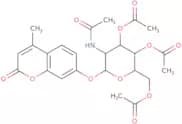
CAS:<p>4-Methylumbelliferyl 2-acetamido-3,4,6-tri-O-acetyl-2-deoxy-a-D-glucopyranoside is a chromogenic substrate for enzymes that catalyze the hydrolysis of glycosidic bonds. It can be used in diagnostic tests to identify antibodies against certain bacteria and fungi. The fluorogenic form of 4-methylumbelliferyl 2-acetamido-3,4,6-triO acetyl -2 deoxy a D glucopyranoside can be used as a chemiluminescent substrate for detecting bacterial activity. 4 methylumbelliferyl 2 acetamido 3,4,6 triO acetyl -2 deoxy a D glucopyranoside is also useful in bioluminescent assays to detect ATP production in bacteria and other microorganisms. CAS No: 1174287–76–3</p>Pureza:Min. 95%Peso molecular:505.48 g/mol4-Nitrophenyl 2,3,4-tri-O-acetyl-a-D-glucopyranoside
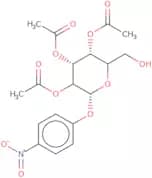
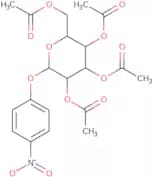
<p>4-Nitrophenyl 2,3,4-tri-O-acetyl-a-D-glucopyranoside is a high quality chemical used in the development of various diagnostic and research applications. It is also used in the production of enzymatic substrates for enzyme activity assays. 4NPTAG is a chromogenic substrate that produces chemiluminescence when it reacts with an oxidizing agent and has been shown to be very effective as a fluorogenic substrate for protein kinases. This compound has been shown to bind to ligands and can be used as a bioluminescent reporter for molecular biology applications. The CAS number for this product is 54973-14-0.</p>Pureza:Min. 95%Peso molecular:427.36 g/mol4-Nitrophenyl 2-acetamido-6-O-(2-acetamido-3,4,6-tri-O-acetyl-2-deoxy-b-D-glucopyranosyl)-3-O-(2,3,4,6-tetra-O-acetyl-b-D-galactopyr anosyl)-2-deoxy-a-D-galactopyranoside
<p>4-Nitrophenyl 2-acetamido-6-O-(2-acetamido-3,4,6-tri-O-acetyl-2-deoxy-b-D-glucopyranosyl)-3-O-(2,3,4,6-tetra -O acetyl -b D galactopyranosyl)-2 deoxy a D galactopyranoside is a high purity fluorogenic substrate for the enzyme β galactosidase. It can be used for the detection of β galactosidase in biological samples. 4NPAG can also be used as a ligand for various types of chromogenic substrates. This product is also commonly used in diagnostics and conjugates to detect β galactosidase activity or as a culture media supplement.</p>Pureza:Min. 95%Peso molecular:1,001.89 g/mol4-Nitrophenyl 2,3,4-tri-O-acetyl-6-O-trityl-a-D-glucopyranoside
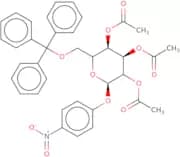
<p>4-Nitrophenyl 2,3,4-tri-O-acetyl-6-O-trityl-a-D-glucopyranoside is a substrate for chemiluminescent assays. It is a high quality chemical that can be used in environmental testing, staining, ligand binding and bioluminescence. 4NP2T6AODG is used as a chromogenic substrate or fluorogenic substrate to detect the presence of enzymes in diagnostics and food testing. This product has CAS No. 67794-14-0 and can be purchased at high purity.</p>Pureza:Min. 95%Peso molecular:669.67 g/mol4-Nitrophenyl 2-acetamido-2-deoxy-3,6-di-O-benzoyl-b-D-galactopyranoside
CAS:<p>4-Nitrophenyl 2-acetamido-2-deoxy-3,6-di-O-benzoyl-b-D-galactopyranoside is an advanced pNP-based enzyme substrate designed for the detection and measurement of glycosidase activity in biological samples. This synthetic compound offers high specificity and sensitivity for b-galactosidase enzymes, enabling accurate determination of enzymatic hydrolysis rates in a variety of research applications, including diagnostics, drug development, and discovery of novel enzymes. Its chromogenic properties ensure easy analysis of the results and make it suitable for high-throughput screening.</p>Pureza:Min. 95%Peso molecular:550.51 g/molAldol® 455 β-D-glucopyranoside - Biosynth Patent: EP 2427431 and US 8940909
<p>Aldol® 455 is a substrate for the enzyme beta-galactosidase. It is used in food testing, staining, and environmental testing. Aldol® 455 has been shown to be a good substrate for fluorogenic and chromogenic substrates. It can be conjugated with an antibody or other ligand for use in immunoassays. Aldol® 455 is of high purity and high quality, making it suitable for use in diagnostics and as an enzyme substrate. This product can also be used as a culture media additive.</p>Pureza:Min. 95%2-Chloro-4-nitrophenyl b-D-lactoside
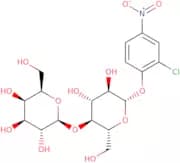
CAS:<p>2-Chloro-4-nitrophenyl b-D-galactopyranoside is a chromogenic enzyme substrate used to study the activity of beta-lactoside. It produces a yellow color when cleaved by the enzyme, making it a useful tool in enzyme assays and screening experiments.</p>Pureza:Min. 95%Forma y color:PowderPeso molecular:497.83 g/mol4-Nitrophenyl 2,3,4,6-tetra-O-acetyl-a-D-mannopyranoside
CAS:<p>4-Nitrophenyl 2,3,4,6-tetra-O-acetyl-a-D-mannopyranoside is a highly sensitive and efficient chromogenic substrate designed for the detection and quantification of α-D-mannosidases. These enzymes play a crucial role in the degradation and metabolism of glycoproteins and glycolipids, thus having high importance in biotechnology and biochemical research. When acted upon by α-D-mannosidase, this substrate releases a bright yellow product, 4-nitrophenol, which is easily measured spectrophotometrically at 405 nm. This enables quick and accurate analysis in various applications such as enzyme kinetics, inhibitor screening, and activity assays.</p>Pureza:Min. 95%Peso molecular:469.4 g/molS-(4-Nitrophenyl)mercapturic acid
CAS:<p>S-(4-Nitrophenyl)mercapturic acid (S-NPMA) is the major metabolite of 4-nitrophenol, which is a precursor to dyes and pharmaceuticals. S-NPMA has been detected in urine samples from humans, rats, and mice. The main metabolic pathway for S-NPMA is an oxidative conversion by cytochrome P450 enzymes. S-NPMA has been found to be a useful biomarker for the presence of polycyclic aromatic hydrocarbons in wastewater and human urine. The levels of this compound have also been shown to increase with age in humans.</p>Pureza:Min. 95%Peso molecular:284.29 g/mol4-Nitrophenyl 2,3-di-O-(b-D-glucopyranosyl)-b-D-glucopyranoside
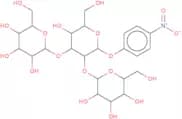
<p>4-Nitrophenyl 2,3-di-O-(b-D-glucopyranosyl)-b-D-glucopyranoside is a chromogenic substrate that can be used to detect the presence of β-glucuronidase in human and animal tissue. The compound is also a fluoroquinolone substrate for the detection of β-lactamase activity. 4NPBG is used in diagnostics as well as food testing, due to its ability to detect bacteria in both food and water samples. 4NPBG is a chemiluminescent substrate that emits light upon hydrolysis by β-glucuronidase or β-lactamase. The compound has been shown to be an excellent ligand for binding to protein A or protein G and can be used for immunoassays such as ELISA or Western blotting.</p>Pureza:Min. 95%Peso molecular:625.53 g/mol2-Bromo-4-nitrophenyl b-D-galactopyranoside
<p>2-Bromo-4-nitrophenyl b-D-galactopyranoside is a chemiluminescent substrate that is used for the detection of β-galactosidase activity in the biochemical reaction. It has been shown to be an excellent ligand for metal ions and can be used as a reagent in the determination of metal ions in biological systems. This product is manufactured with high purity and quality, which ensures its suitability for use in culture media, environmental testing, and diagnostics. 2-Bromo-4-nitrophenyl b-D-galactopyranoside has been tested as a fluorogenic substrate for β-galactosidase. It has also been used as a chromogenic substrate for β-galactosidase and an enzyme substrate for β-galactosidase. This product can be conjugated with other molecules such as biotin to enable rapid analysis of proteins or</p>Fórmula:C12H14BrNO8Pureza:Min. 95%Peso molecular:380.15 g/mol6-Bromo-2-naphthyl-α-D-mannopyranoside
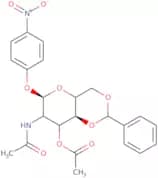
CAS:<p>6-Bromo-2-naphthyl-alpha-D-mannopyranoside is a strong inhibitor of alpha-mannosidase. It has been shown to inhibit the growth of Mycobacterium tuberculosis and Streptococcus pneumoniae, which are both known to cause bacterial infections in humans. 6BNA inhibits the enzyme alpha-mannosidase, which hydrolyzes terminal α-(1,4)-linked mannose residues from oligosaccharides and glycoproteins. This drug has a high affinity for the active site of alpha-mannosidase and an IC50 value of 0.2 mM, making it an effective inhibitor.</p>Fórmula:C16H17BrO6Pureza:Min. 98.0 Area-%Peso molecular:385.22 g/mol4-Nitrophenyl 2-acetamido-3-O-acetyl-4,6-O-benzylidene-2-deoxy-a-D-glucopyranoside
CAS:<p>4-Nitrophenyl 2-acetamido-3-O-acetyl-4,6-O-benzylidene-2-deoxy-aDglucopyranoside is a fluorogenic substrate that can be used for the detection of β-glucosidase activity. It is a water soluble substrate with an extinction coefficient of approximately 10,000 M−1 cm−1 at 420 nm. 4NPAABGDG is a chromogenic substrate that can be used to detect β-galactosidase activity. It has an extinction coefficient of approximately 1,700 M−1 cm−1 at 420 nm. The CAS number for 4NPAABGDG is 23262–56–8 and it is sold by Sigma Aldrich under catalog number L4959.</p>Pureza:Min. 95%Peso molecular:472.44 g/mol