Sustratos cromogénicos
Los sustratos cromogénicos son compuestos que producen un cambio de color visible cuando son metabolizados por enzimas específicas. Estos sustratos se utilizan ampliamente en ensayos diagnósticos, investigaciones bioquímicas y ensayos de inmunoabsorción enzimática (ELISA) para detectar y cuantificar la actividad enzimática. El cambio de color permite una identificación visual rápida y sencilla de las reacciones enzimáticas, lo que convierte a los sustratos cromogénicos en herramientas esenciales en el análisis de laboratorio. En CymitQuimica, ofrecemos una amplia selección de sustratos cromogénicos de alta calidad para apoyar sus aplicaciones de investigación y diagnóstico.
Se han encontrado 712 productos de "Sustratos cromogénicos"
Ordenar por
Pureza (%)
0
100
|
0
|
50
|
90
|
95
|
100
5-Bromo-4-chloro-3-indoxyl phosphate, p-toluidine salt - micronized
CAS:<p>5-Bromo-4-chloro-3-indoxyl phosphate, p-toluidine salt - micronized is a chemiluminescent substrate used in diagnostic assays. It is an enzyme substrate that is commonly used to detect peroxidase activity and has been shown to be effective in detecting various types of bacteria. This product is a high quality chemical with a purity of at least 98% and has been tested for environmental safety. 5-Bromo-4-chloro-3-indoxyl phosphate, p-toluidine salt - micronized can be used as a fluorogenic substrate for the detection of proteases and aminopeptidases.</p>Pureza:Min. 95%2-Nitrophenyl 2,3,4-tri-O-acetyl-b-D-glucuronide methyl ester
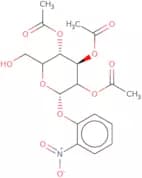
CAS:<p>2-Nitrophenyl-2,3,4-tri-O-acetyl-b-D-glucuronide methyl ester is a tri-O-acetylated glucuronide substrate commonly used in chromogenic assays to detect the activity of beta-glucuronidase. Upon hydrolysis by the enzyme, the substrate releases 2-nitrophenol, which can be spectrophotometrically. The substrate is widely used in diagnostic tests to assess bacterial and fungal infections, as well as in drug metabolism studies.</p>Pureza:Min. 95%Peso molecular:455.37 g/mol3-Indolyl-b-D-cellobioside
CAS:<p>3-Indolyl-b-D-cellobioside is a fluorogenic substrate for alkaline phosphatase. It can be used in food testing, environmental testing, and diagnostics. 3-Indolyl-b-D-cellobioside is a chromogenic substrate for beta-galactosidase. It can be used in staining and enzyme substrates. 3-Indolyl-b-D-cellobioside is also a ligand for alkaline phosphatase. It can be used in conjugates and chemiluminescence or bioluminescence reactions. 3-Indolyl -b -D -cellobioside is a high purity product with high quality standards that are suitable for use in culture media.br>br><br>3 - Indolyl - b - D - cellobioside <br>CAS No . 914912 - 14 - 4 <br>Food testing <br>St</p>Pureza:Min. 95%Peso molecular:457.43 g/mol4-Nitrophenyl b-D-cellopentaoside hexadecaacetate
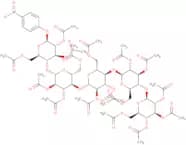
CAS:<p>4-Nitrophenyl b-D-cellopentaoside hexadecaacetate is a fluorogenic substrate that is used to study the activity of various enzymes. It reacts with hydrolytic enzymes in the presence of hydrogen peroxide to produce light, and it can be used for food testing, environmental testing, and diagnostics. 4-Nitrophenyl b-D-cellopentaoside hexadecaacetate is a conjugate of 4-nitrophenol and cellobiose pentaacetate that has a high purity and high quality. The CAS number for this compound is 129411-66-1.</p>Pureza:Min. 95%Peso molecular:1,622.4 g/mol4-Nitrophenyl 2-acetamido-3,4,6-tri-O-acetyl-2-deoxy-b-D-glucopyranoside
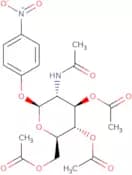
CAS:<p>4-Nitrophenyl 2-acetamido-3,4,6-tri-O-acetyl-2-deoxy-b-D-glucopyranoside is an extracellular nucleic acid molecule that is produced by the bacterium Corynebacterium glutamicum. This compound has been shown to inhibit cancer cells by blocking the transport of glucose through the cell membrane and may be a potential drug target for cancer treatment. 4NPTAPG has also been shown to have diagnostic properties and can identify corynebacterium glutamicum strains. It is a fluorescent molecule that can be used to detect the presence of this bacterium in culture media.</p>Pureza:Min. 95%Peso molecular:468.41 g/mol4-Nitrophenyl 2-acetamido-3-O-(3,4,6-tri-O-acetyl-2-deoxy-2-phthalimido-b-D-glucopyranosyl)-2-deoxy-4,6-O-4-methoxybenzylidene-a-D-g alactopyranoside
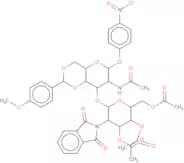
<p>4-Nitrophenyl 2-acetamido-3-O-(3,4,6-tri-O-acetyl-2-deoxy-2-phthalimido-b-D-glucopyranosyl)-2-deoxy--4,6--O--4--methoxybenzylidene--a--D--galactopyranoside is a chemiluminescent substrate for the enzyme beta galactosidase. It reacts with this enzyme to form 4 nitrophenol and acetamide. 4 Nitrophenyl 2 acetamido 3 O (3,4,6 tri O acetyl 2 deoxy 2 phthalimido b D glucopyranosyl) 2 deoxy 4 6 O 4 methoxybenzylidene a D galactopyranoside is used as a chromogenic substrate in diagnostics and as an environmental testing agent. It can be used as an imaging</p>Pureza:Min. 95%Peso molecular:877.8 g/mol5-Bromo-3-indolyl a-D-galactopyranoside
<p>5-Bromo-3-indolyl a-D-galactopyranoside is a fluorogenic substrate that can be used for the detection of beta-galactosidase activity. It is also used as an enzyme substrate in diagnostics and research, as well as a chromogenic substrate in staining. 5-Bromo-3-indolyl a-D-galactopyranoside has been shown to be an excellent conjugate for proteins, nucleic acids, and other biomolecules. This product can also be used in culture media for the cultivation of bacteria and yeast.</p>Fórmula:C14H16BrNO6Pureza:Min. 95%Peso molecular:374.18 g/mol4-Nitrophenyl 2-O-(a-D-mannopyranosyl)-a-D-mannopyranoside
CAS:<p>4-Nitrophenyl 2-O-(a-D-mannopyranosyl)-a-D-mannopyranoside is a chromogenic substrate for the enzyme, beta-glucosidase. It is used as a food additive to test for the presence of alpha and beta glucosidases in foods. This product is also commonly used as an enzyme substrate and conjugate in biochemical research and diagnostic applications.</p>Pureza:Min. 95%Forma y color:White To Off-White SolidPeso molecular:463.39 g/molJalapeno green-Gal
<p>Jalapeno green-Gal (Jalapeno green-beta-D-galactopyranoside) is a chromogenic indicator for beta-galactosidase activity. The colorless product is cleaved by lactose-utilizing bacteria in liquid media or on agar plates and yields a Jalapeno green colored precipitate. Jalapeno green-Gal can also be used as detecting agent for beta-galactosidase activity in reporter gene assays or for identification of positive transformants on agar plates when using the α-complementation approach.</p>Peso molecular:472.1 g/mol4-Nitrophenyl 3-O-(2,3,4,6-tetra-O-acetyl-a-D-mannopyranosyl)-2-O-benzoyl-a-D-mannopyranoside
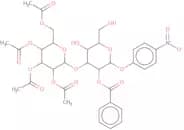
CAS:<p>4-Nitrophenyl 2,3,4,6-tetra-O-acetyl-b-D-glucopyranoside enzyme substrate is a versatile and reliable reagent for measuring glucosidase activity. It is an ideal substrate for use in assays to detect β-glucosidase activity in a variety of applications, including for in vitro and in vivo studies, and it has been widely used in the pharmaceutical and biotechnology industries. This chromogenic pNP enzyme substrate is designed for effective and precise analysis with good sensitivity and low background signals.</p>Pureza:Min. 95%Peso molecular:735.64 g/mol2-Nitrophenyl hexyl ether
CAS:<p>2-Nitrophenyl hexyl ether is a chromogenic substrate commonly used to assay the activity of esterases. Upon cleavage of the ester bond by esterases, the released 2-nitrophenyl group yields a yellow color detectable by spectrophotometry. This substrate has been used in a variety of applications, including environmental monitoring and studies of insecticide resistance. It is particularly useful for screening large numbers of samples because of its rapid reaction rate and high sensitivity. However, it should be noted that some non-specific hydrolysis may occur with this substrate, particularly at high concentrations or in the presence of strong nucleophiles.</p>Pureza:Min. 95%Peso molecular:223.27 g/mol2-Nitrophenyl 2-acetamido-3,4,6-tri-O-acetyl-2-deoxy-b-D-glucopyranoside
CAS:<p>2-Nitrophenyl 2-acetamido-3,4,6-tri-O-acetyl-2-deoxy-b-D-glucopyranoside is a chromogenic substrate used to detect and measure the activity of glycosidase enzymes. Glycosidases are enzymes that hydrolyze glycosidic bonds in carbohydrates, and are produced by many organisms. The substrate is cleaved by glycosidase to release a chromophore, which can be quantified via spectrophotometry analysis. 2-Nitrophenyl 2-acetamido-3,4,6-tri-O-acetyl-2-deoxy-b-D-glucopyranoside is widely used in various applications, including enzyme kinetics studies, inhibitor screening, and the detection of NAGase activity in biological samples, such as serum, urine, and cell lysates. It is also used for the identification and characterization of glycosidases in microorganisms and the study of glycosylation-related processes in cells and tissues.</p>Pureza:Min. 95%Peso molecular:468.41 g/mol5-Bromo-3-indolyl β-D-glucuronide cyclohexylammonium
CAS:<p>chromogenic substrate for beta-glucuronidase</p>Fórmula:C14H14BrNO7•C6H13NPureza:Min. 95%Forma y color:PowderPeso molecular:487.34 g/mol2-Chloro-4-nitrophenyl b-D-xylobioside
<p>2-Chloro-4-nitrophenyl b-D-xylobioside is a chemiluminescent substrate that is used as a diagnostic agent. It has been used in the identification of gram positive and gram negative bacteria, which are differentiated by the color of the reaction. This substrate has also been used to detect the presence of certain enzymes produced by bacteria. 2-Chloro-4-nitrophenyl b-D-xylobioside has shown to be an effective enzyme substrate for detecting bacterial growth in culture media and is often used as a fluorogenic substrate in food testing.</p>Pureza:Min. 95%4-Nitrophenyl 3-O-(2,3,4,6-tetra-O-acetyl-a-D-mannopyranosyl)-4,6-O-cyclohexylidene-b-D-mannopyranoside
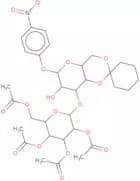
CAS:<p>4-Nitrophenyl 3-O-(2,3,4,6-tetra-O-acetyl-a-D-mannopyranosyl)-4,6-O-cyclohexylidene-b-D-mannopyranoside is a chromogenic pNP enzyme substrate, which features a cyclohexylidene-protected mannopyranosyl core. Upon enzymatic hydrolysis by glycosidases or other related enzymes, it releases a yellow-colored product, 4-nitrophenol, that can be easily detected spectrophotometrically. This substrate is useful for studying enzyme specificity, kinetics, and inhibition, as well as for the screening of enzyme inhibitors, the identification of glycosidase-producing organisms, and the development of new analytical methods.</p>Pureza:Min. 95%Peso molecular:711.66 g/mol2-Nitrophenyl 2,3,4-tri-O-acetyl-b-D-galactopyranoside
CAS:<p>2-Nitrophenyl 2,3,4-tri-O-acetyl-b-D-galactopyranoside is a fluorogenic substrate that can be used to detect β-galactosidase activity. This specific substrate is one of the most commonly used substrates for detecting β-galactosidase activity in diagnostic assays. It reacts with the enzyme to produce a blue color and has a fluorescence emission maximum at about 480 nm. The product is available in high purity and high quality and it is also an enzyme substrate.</p>Pureza:Min. 95%Peso molecular:427.36 g/mol4-Nitrophenyl 2-O-(2,3,4,6-tetra-O-acetyl-b-D-glucopyranosyl)-4,6-O-benzylidene-b-D-glucopyranoside
CAS:<p>4-Nitrophenyl 2-O-(2,3,4,6-tetra-O-acetyl-b-D-glucopyranosyl)-4,6-O-benzylidene-b-D-glucopyranoside is a compound that is used in gene expression profiling. It has been shown to be an effective inhibitor of glutamicum and corynebacterium glutamicum. 4NPBG can inhibit the production of acid molecules by blocking the activity of cytochrome P450 enzymes in the cells of these bacteria. The compound also inhibits cellular transport and membrane transport genes in these species. This inhibition prevents the synthesis of nucleic acid molecules such as RNA and DNA.</p>Pureza:Min. 95%Peso molecular:719.64 g/mol2-Nitrophenyl 2-acetamido-2-deoxy-b-D-galactopyranoside
CAS:<p>2-Nitrophenyl 2-acetamido-2-deoxy-b-D-galactopyranoside is a carboxymethyl derivative of the natural substrate of β-galactosidase, which is used as a substrate for the production of recombinant proteins in the corynebacterium glutamicum. The enzyme β-galactosidase hydrolyzes this substrate to produce an acid molecule and a sugar molecule. This product can be used in biotechnological processes for the production of recombinant proteins or other bioactive molecules. It can also be used in the isolation of nucleic acid from bacteria or fungi, or to study bacterial membrane transport systems. 2NPGAG can be expressed as a recombinant protein with expression vectors such as pET21a and pET24a. It has been shown that this product inhibits transport through membranes by binding to cellulose, which may be useful for studies on cellulose biosynthesis</p>Pureza:Min. 95%Peso molecular:342.3 g/mol4-Nitrophenyl b-D-glucuronide sodium salt
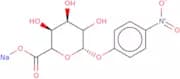
CAS:<p>4-Nitrophenyl b-D-glucuronide sodium salt is a high-quality chromogenic substrate specifically designed for the colorimetric detection and measurement of β-glucuronidase activity. Upon enzymatic cleavage, it releases the yellow 4-nitrophenol, enabling quantitative analysis via spectroscopy. This compound is conveniently provided as a sodium salt to ensure enhanced solubility, stability, and shelf life. It is an ideal choice for biochemical, research, and diagnostic applications requiring a reliable and efficient b-D-glucuronide substrate.</p>Pureza:Min. 95%Peso molecular:337.21 g/mol4-Nitrophenyl 2-O-(a-D-glucopyranosyl)-a-D-glucopyranoside
CAS:<p>4-Nitrophenyl 2-O-(α-D-glucopyranosyl)-α-D-glucopyranoside is a specialized chromogenic pNP substrate featuring dual glucose-linked moieties, designed for accurate detection and quantification of specific glycosidase enzymes. Upon cleavage by target enzymes, this substrate releases 4-Nitrophenol, which can be easily monitored spectrophotometrically as a yellow color change. This advanced substrate offers enhanced specificity and sensitivity in enzyme assays, facilitating cutting-edge research in biochemistry, enzymology, and other related fields.</p>Pureza:Min. 95%Peso molecular:463.39 g/mol