Sustratos cromogénicos
Los sustratos cromogénicos son compuestos que producen un cambio de color visible cuando son metabolizados por enzimas específicas. Estos sustratos se utilizan ampliamente en ensayos diagnósticos, investigaciones bioquímicas y ensayos de inmunoabsorción enzimática (ELISA) para detectar y cuantificar la actividad enzimática. El cambio de color permite una identificación visual rápida y sencilla de las reacciones enzimáticas, lo que convierte a los sustratos cromogénicos en herramientas esenciales en el análisis de laboratorio. En CymitQuimica, ofrecemos una amplia selección de sustratos cromogénicos de alta calidad para apoyar sus aplicaciones de investigación y diagnóstico.
Se han encontrado 712 productos de "Sustratos cromogénicos"
Ordenar por
Pureza (%)
0
100
|
0
|
50
|
90
|
95
|
100
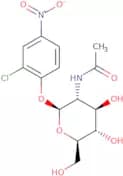
2-Chloro-4-nitrophenyl 2-acetamido-2-deoxy-β-D-glucopyranoside
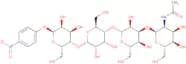
CAS:<p>2-Chloro-4-nitrophenyl 2-acetamido-2-deoxy-β-D-glucopyranoside is a chromogenic substrate used for beta-N-acetylglucosaminidase assays. Upon enzymatic hydrolysis, 2-chloro-4-nitrophenol is released, which has a yellowish color. It is used in diagnostic applications such as lysosomal storage disorder diagnosis (for example, Tay-Sachs disease) and glycosidase inhibition studies.</p>Fórmula:C14H17ClN2O8Pureza:Min. 98 Area-%Forma y color:White PowderPeso molecular:376.75 g/mol4-Nitrophenyl b-globo-N-tetraoside
CAS:<p>4-Nitrophenyl beta-galactoside (pNP-Gal) is a chromogenic substrate commonly used in enzymatic assays to detect and quantify the presence of beta-galactosidase. It is hydrolyzed by the enzyme to release 4-nitrophenol, which produces a yellow color that can be measured spectrophotometrically. Similarly, 4-Nitrophenyl beta-glucoside (pNP-Glc) can be used to assay beta-glucosidase activity. 4-Nitrophenyl beta-globotrioside (pNP-Glo) is a similar compound that has been designed as a substrate for glycosidases that cleave terminal beta-galactosyl-(1->3)-N-acetylgalactosamine residues. In these assays, the release of 4-nitrophenol can be measured to determine the activity of the enzyme under study. The use of chromogenic substrates like pNP-Glo allows for the rapid and reliable detection of glycosidase activity in a variety of biological samples.</p>Pureza:Min. 95%Forma y color:PowderPeso molecular:828.72 g/molNaphthol AS-OL acetate
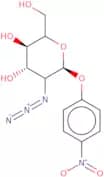
CAS:<p>Modified naphtol AS substrate used in histochemical and cytochemical staining</p>Pureza:Min. 95%Peso molecular:335.35 g/mol4-Nitrophenyl 2-azido-2-deoxy-b-D-galactopyranoside
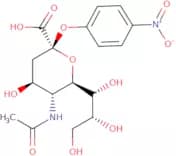
<p>4-Nitrophenyl 2-azido-2-deoxy-beta-D-galactopyranoside is a chromogenic substrate for beta-galactosidase. Upon hydrolysis, para-nitrophenol is released yielding a yellowish colour. 4-Nitrophenyl 2-azido-2-deoxy-beta-D-galactopyranoside is used in different applications such as the Bacterial enzyme assays (e.g., E. coli detection)</p>Pureza:Min. 95%Forma y color:White To Off-White SolidPeso molecular:326.26 g/mol2-O-(4-Nitrophenyl)-a-D-N-acetylneuraminic acid
CAS:<p>2-O-(4-Nitrophenyl)-a-D-N-acetylneuraminic acid, also known as p-nitrophenyl N-acetylneuraminic acid, is a chromogenic substrate specifically designed for the detection and quantification of neuraminidase (sialidase) activity. Upon cleavage by neuraminidase, it releases a yellow-colored product, 4-nitrophenol, which can be easily monitored spectrophotometrically at 405 nm. This substrate is widely used in various applications, including enzyme kinetics studies, inhibitor screening, and the determination of neuraminidase activity in biological samples such as viruses, bacteria, and cell lysates. It is particularly useful for studying the enzymatic properties of neuraminidases from different sources and for the development of novel antiviral and antibacterial agents targeting neuraminidase activity.</p>Fórmula:C17H22N2O11Pureza:Min. 90 Area-%Forma y color:White PowderPeso molecular:430.36 g/molMethyl 4-nitrophenyl hexylphosphonate
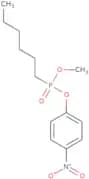
CAS:<p>Methyl 4-nitrophenyl hexylphosphonate is a phosphonate inhibitor of the enzyme serine esterase. It has been shown to be more potent than other irreversible inhibitors such as ethyl 4-nitrophenyl hexylphosphonate and methyl 4-nitrophenoxybutyl phosphate. This compound is an immobilized form of the methyl 4-nitrophenyl hexylphosphonate that is immobilized on an inert surface, such as silica gel, via a covalent bonding process. The immobilization of the molecule ensures that it will not leach from the surface and is stable over time. The molecular weight of this substance is 411.5 Daltons and its molecular formula is C8H15NO4P. This substance has a diameter of 0.8 nm and can be found in crystalline form with a melting point of 143 degrees Celsius at atmospheric pressure. Methyl 4-nitrophenyl</p>Fórmula:C13H20NO5PPureza:Min. 95%Peso molecular:301.27 g/mol2-Nitrobenzyl 2-deoxy-2-fluoro-L-fucopyranoside
<p>The photorelease of 2-deoxy-2-fluoro-L-fucose from 2-nitrobenzyl-2-deoxy-2-fluoro-L-fucopyranoside was performed under a 365 nm LED illumination. It has been shown in plant cells this liberated 2-deoxy-2-fluoro-L-fucose can be converted by the endogenous metabolic machinery into the corresponding nucleotide-sugar, which then efficiently inhibits Golgi-localized fucosyltransferases.</p>Fórmula:C13H16FNO6Pureza:Min. 95%Forma y color:PowderPeso molecular:301.27 g/mol4-Nitrophenyl-myo-inositol-1-yl phosphate
CAS:<p>4-Nitrophenyl-myo-inositol-1-yl phosphate is a highly specific chromogenic substrate used for the detection, quantification, and characterization of phosphoinositide phosphatases. When cleaved by the target enzyme, it generates a highly absorbing 4-nitrophenyl moiety, producing a yellow color that can be measured spectrophotometrically. This versatile substrate is valuable in examining phosphoinositide phosphatase activity, enzyme kinetics, substrate specificity, and inhibition studies in various cellular processes, including signal transduction, lipid metabolism, and membrane trafficking.</p>Pureza:Min. 95%Peso molecular:381.23 g/mol4-Nitrophenyl 2-acetamido-3,6-di-O-(2-acetamido-2-deoxy-b-D-glucopyranosyl)-2-deoxy-a-D-galactopyranoside
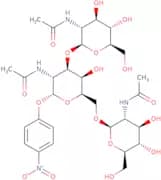
CAS:<p>4-Nitrophenyl 2-acetamido-3,6-di-O-(2-acetamido-2-deoxy-b-D-glucopyranosyl)-2-deoxy-a-D-galactopyranoside is a fluorogenic substrate that is used in enzyme assays to detect the presence of an enzyme. The substrate reacts with the enzyme to produce a fluorescent product. 4NPAAG can be used for diagnostics, culture media, food testing and environmental testing.</p>Fórmula:C30H44N4O18Pureza:Min. 95%Peso molecular:748.69 g/mol4-Nitrophenyl a-L-galactopyranoside
<p>Chromogenic substrate targeting alpha-D-galactosidase</p>Pureza:Min. 95%Peso molecular:301.25 g/mol4-Nitrophenyl a-D-glucopyranoside
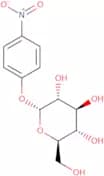
CAS:<p>Chromogenic substrate for alpha-glucosidase</p>Fórmula:C12H15NO8Pureza:Min. 98 Area-%Forma y color:White PowderPeso molecular:301.25 g/mol5-Iodo-3-indolyl b-D-galactopyranoside
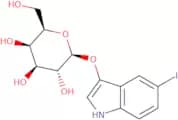
CAS:<p>5-Iodo-3-indolyl b-D-galactopyranoside is a chromogenic substrate used for beta-galactosidase. It is incorporated into media or detection kits for rapid and direct identification of microorganisms.</p>Fórmula:C14H16INO6Pureza:Min. 98 Area-%Forma y color:PowderPeso molecular:421.18 g/molRef: 3D-EI03217
Producto descatalogado5-Bromo-4-chloro-3-indoxyl-alpha-L-fucopyranoside
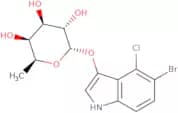
CAS:<p>5-Bromo-4-chloro-3-indoxyl-alpha-L-fucopyranoside is a chromogenic substrate for alpha-L-Fucosidase. It produces a green-blue color.</p>Fórmula:C14H15BrClNO5Pureza:Min. 98 Area-%Forma y color:PowderPeso molecular:392.63 g/mol5-Amino-3-indoxyl-β-D-galactopyranoside
<p>5-Amino-3-indoxyl-b-D-galactopyranoside is a chromogenic substrate for the enzyme galactosidase. 5-Amino-3-indoxyl-b-D-galactopyranoside is used in diagnostic tests to identify the presence of lactose intolerance. It can also be used to detect traces of blood in food, water, and other substances. This product has a high purity that makes it suitable for conjugation applications.</p>Fórmula:C14H18N2O6Pureza:Min. 95%Peso molecular:310.31 g/molAldol® 518 alpha-D-glucopyranoside, Biosynth Patent: EP 2427431 and US 8940909
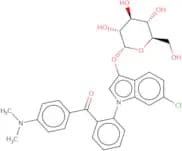
CAS:<p>Aldol® 518 alpha-D-glucopyranoside is a fluorogenic enzyme substrate used for detection of alpha-D-glucosidase activity. The colorless enzyme substrate is cleaved by alpha-D-glucosidase, generating red fluorescent signal and in some conditions, an orange colour in the visible spectrum can get formed, staining bacterial colonies in faint orange coloration. Aldol® 518 alpha-D-glucopyranoside can be used under aerobic and anaerobic conditions.</p>Fórmula:C29H29ClN2O7Pureza:Min. 95%Forma y color:PowderPeso molecular:553 g/molRef: 3D-EA175358
Producto descatalogadoBronze-Gal
<p>Bronze-Gal (Bronze-beta-D-galactopyranoside) is a chromogenic indicator for beta-galactosidase activity. The colorless product is cleaved by lactose-utilizing bacteria in liquid media or on agar plates and yields a bronze colored precipitate. Bronze-Gal can also be used as detecting agent for beta-galactosidase activity in reporter gene assays or for identification of positive transformants on agar plates when using the α-complementation approach. Read more in the Application Notes.</p>Pureza:Min. 95%Peso molecular:443.57Aldol® 515 nonanoate hydrochloride, Biosynth Patent: EP 2427431 and US 8940909
CAS:<p>Aldol® 515 nonanoate hydrochloride is a chromogenic and fluorogenic enzyme substrate for detection of lipase activity. The colorless product is cleaved by C9 esterases produced by bacteria in liquid or solid media, yielding a red color and red fluorescence when Aldol® 355 fluorescence enhancer or a suitable matrix is present. Aldol® 515 nonanoate can be used under aerobic and anaerobic conditions. Well detectable color/fluorescence of bacterial colonies or liquid cultures is obtained within 24-48 h. In the presence of a purified lipase, color and fluorescence develops within minutes to few hours.</p>Fórmula:C32H36ClN2O3Pureza:Min. 95%Forma y color:PowderPeso molecular:533.1 g/molRef: 3D-EA175382
Producto descatalogado5-Cyano-3-indolyl-β-D-galactopyranoside
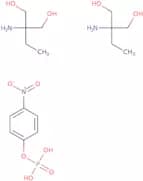
<p>5-Cyano-3-indolyl-b-D-galactopyranoside is a chemiluminescent substrate that can be used to measure the activity of esterases and other enzymes. It has been shown to be a potent inhibitor of human erythrocyte esterase. The compound is also a potent inducer of bioluminescence in bacteria, which can be used for diagnostic applications. 5-Cyano-3-indolyl-b-D-galactopyranoside is a fluorogenic substrate that can be used to measure the activity of phosphatases and other enzymes. This product has an enzyme substrate function, which can be used for enzyme assays. 5CIGP is useful for measuring high levels of enzyme activity in the presence of strong inhibitors such as phenylmethylsulfonyl fluoride (PMSF).</p>Fórmula:C15H16N2O6Pureza:Min. 95%Forma y color:PowderPeso molecular:320.3 g/mol4-Nitrophenyl phosphate mono(2-amino-2-ethyl-1,3-propanediol) salt monohydrate
CAS:<p>Chromogenic substrate for alkaline phosphatase</p>Fórmula:C26H32N3NaO6S2Pureza:Min. 95%Forma y color:PowderPeso molecular:457.41 g/mol4-Nitrophenyl-β-D-glucopyranoside
CAS:<p>4-Nitrophenyl-beta-D-glucopyranoside is a fluorescent probe that can be used in the study of the biochemical properties of enzymes. This compound binds to the enzyme's active site, which allows for transfer reactions to occur. 4-Nitrophenyl-beta-D-glucopyranoside is an artificial substrate that is biochemically inert and has a similar physical structure to natural substrates. It can be used as a model system to study enzymatic reactions and has been shown to have pharmacokinetic properties and a pH optimum. The detection sensitivity of this compound is high, making it ideal for use in biochemical studies.</p>Fórmula:C12H15NO8Pureza:Min. 99.0 Area-%Peso molecular:301.25 g/mol