Sustratos cromogénicos
Los sustratos cromogénicos son compuestos que producen un cambio de color visible cuando son metabolizados por enzimas específicas. Estos sustratos se utilizan ampliamente en ensayos diagnósticos, investigaciones bioquímicas y ensayos de inmunoabsorción enzimática (ELISA) para detectar y cuantificar la actividad enzimática. El cambio de color permite una identificación visual rápida y sencilla de las reacciones enzimáticas, lo que convierte a los sustratos cromogénicos en herramientas esenciales en el análisis de laboratorio. En CymitQuimica, ofrecemos una amplia selección de sustratos cromogénicos de alta calidad para apoyar sus aplicaciones de investigación y diagnóstico.
Se han encontrado 712 productos de "Sustratos cromogénicos"
Ordenar por
Pureza (%)
0
100
|
0
|
50
|
90
|
95
|
100
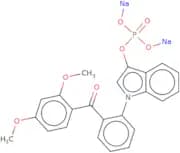
Aldol® 470 phosphate, disodium salt, Biosynth Patent: EP 2427431 and US 8940909
CAS:<p>Aldol® 470 phosphate, disodium salt is a fluorogenic substrate that is used in the detection of enzyme activity. It can be used to detect the presence of an enzyme by measuring the light emitted from the substrate after it has been converted to fluorescent product. Aldol® 470 phosphate, disodium salt is a chromogenic substrate that is used for detecting and measuring enzyme activity. The product of this reaction can be measured by absorbance or fluorescence spectroscopy, making it useful for many different types of diagnostic tests. This product can be conjugated with a variety of ligands for use in diagnostic assays and research. Aldol® 470 phosphate, disodium salt can also be used in culture media as a bioluminescent substrate for bacterial growth and metabolism studies. This product can also be used as an environmental testing reagent or as a staining agent in microscopy applications.</p>Fórmula:C23H18NNa2O7PPureza:Min. 95%Forma y color:PowderPeso molecular:497.34 g/molRef: 3D-EA175336
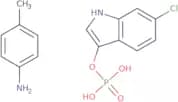
Producto descatalogado6-Chloro-3-indolyl phosphate p-toluidine salt
CAS:<p>A substrate for visualising alkaline phosphatase activity. Produces a red colored insoluble end product that is detected visually, when used together with Nitroblue tetrazolium. The substrate system is versatile and functions in a variety of applications, including Northern, Southern, and Western blotting, in situ hybridization, ELISAs and immunohistochemistry. DMF soluble.</p>Fórmula:C15H16ClN2O4PPureza:Min. 98%Forma y color:White Off-White PowderPeso molecular:354.73 g/molRef: 3D-EC09439
Producto descatalogado2-Chloro-4-nitrophenyl-α-L-fucopyranoside
CAS:<p>2-Chloro-4-nitrophenyl-alpha-L-fucopyranoside is a compound that is commonly used as an enzyme substrate for glycogen synthase kinase (GSK). It is activated by GSK-3β and has been shown to inhibit the activity of this enzyme. This compound has also been found to have inhibitory effects on other enzymes such as carbonic anhydrase and lactate dehydrogenase. Additionally, 2-Chloro-4-nitrophenyl-alpha-L-fucopyranoside exhibits antifungal activity against various fungi, including those resistant to other antifungal agents such as fluopyram and prothioconazole. Its mechanism of action involves interfering with ergosterol biosynthesis, an essential component of fungal cell membranes. Furthermore, this compound has potential applications in the development of new drugs targeting GSK-3β and β-catenin signaling pathways, which are implicated in various diseases including cancer and neuro</p>Fórmula:C12H14ClNO7Pureza:Min. 98 Area-%Peso molecular:319.7 g/molEspresso-Gal
<p>Espresso-Gal (Espresso-beta-D-galactopyranoside) is a chromogenic indicator for beta-galactosidase activity. The colorless product is cleaved by lactose-utilizing bacteria in liquid media or on agar plates and yields an espresso brown colored precipitate. Espresso-Gal can also be used as detecting agent for beta-galactosidase activity in reporter gene assays or for identification of positive transformants on agar plates when using the α-complementation approach. Read more in the Application Notes.</p>Pureza:Min. 95%Crimson-Gal
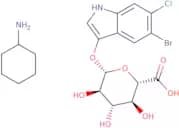
<p>Crimson-Gal (Crimson-beta-D-galactopyranoside) is a chromogenic indicator for beta-galactosidase activity. The colorless product is cleaved by lactose-utilizing bacteria in liquid media or on agar plates and yields a crimson colored precipitate. Crimson-Gal can also be used as detecting agent for beta-galactosidase activity in reporter gene assays or for identification of positive transformants on agar plates when using the α-complementation approach. Read more in the Application Notes.</p>Pureza:Min. 95%5-Bromo-6-chloro-3-indolyl b-D-glucuronide cyclohexylammonium salt
CAS:<p>5-Bromo-6-chloro-3-indolyl b-D-glucuronide cyclohexylammonium salt is a magenta enzyme substrate commonly used in biochemical assays. This compound is a derivative of indole, containing bromine and chlorine atoms at positions 5 and 6, respectively. The glucuronide moiety is attached to the indolyl ring, and the cyclohexylammonium cation serves as a counterion to balance the charge. This substrate is often utilized in the detection and quantification of β-glucuronidase activity, an enzyme involved in the metabolism of glucuronides. Upon cleavage by β-glucuronidase, the substrate produces a magenta-colored product, allowing for easy visualization and measurement of enzyme activity.</p>Fórmula:C14H13BrClNO7·C6H13NPureza:Min. 98 Area-%Forma y color:PowderPeso molecular:521.79 g/molRef: 3D-EB03300
Producto descatalogado4-Chloro-1-naphthol
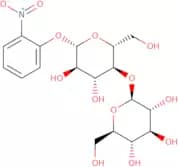
CAS:<p>4-Chloro-1-naphthol is a chemical compound that has been used in clinical pathology to identify human immunoglobulin. It is also used as a potential biomarker for the diagnosis of Alzheimer's disease. 4-Chloro-1-naphthol binds to the amyloid fibrils and has anti-angiogenic effects in the hippocampus, which may be due to its ability to inhibit the formation of new blood vessels. This chemical compound can be used as a substrate molecule for electrochemical impedance spectroscopy and is used in wastewater treatment.</p>Fórmula:C10H7ClOPureza:Min. 97.0 Area-%Peso molecular:178.62 g/mol2-Nitrophenyl b-D-cellobioside
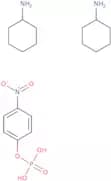
CAS:<p>Chromogenic substrate targeting cellulases</p>Fórmula:C18H25NO14Pureza:Min. 98 Area-%Forma y color:White PowderPeso molecular:463.39 g/mol4-Nitrophenyl phosphate bis(cyclohexylammonium)
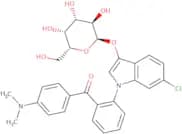
CAS:<p>4-Nitrophenyl phosphate bis(cyclohexylammonium) is an excellent chromogenic substrate designed for the detection and quantification of phosphatase enzyme activities. Aided by the presence of the cyclohexylammonium cation, it undergoes enzymatic hydrolysis, yielding the colored 4-nitrophenolate ion, which can be readily observed at 405 nm. The substrate has become an essential tool for biomedical research, playing a crucial role in unearthing cellular mechanisms, function, and potential drug targets.</p>Fórmula:C18H32N3O6PPureza:97.0 To 103.0%Forma y color:PowderPeso molecular:417.44 g/molAldol® 518 α-D-galactopyranoside, Biosynth Patent: EP 2427431 and US 8940909
CAS:<p>Aldol® 518 alpha-D-galactopyranoside is a chromogenic and fluorogenic enzyme substrate used for detection of alpha-galactosidase activity. The enzyme substrate is cleaved by alpha-galactosidase positive bacteria and yeasts in liquid or solid media, yielding red color and red fluorescence signal. Aldol® 518 alpha-D-galactopyranoside can also be used to detect alpha-galactosidase (encoded by the Mel1 gene) in yeast gene reporter assays or for identification of alpha-gal positive transformants on agar plates. Aldol® 518 alpha-D-galactopyranoside can be used under aerobic and anaerobic conditions.</p>Fórmula:C29H29ClN2O7Pureza:Min. 95%Forma y color:PowderPeso molecular:553.01 g/molRef: 3D-EA175377
Producto descatalogadoAldol® 467 N-acetyl-beta-D-glucosaminide, Biosynth Patent: EP 2427431 and US 8940909
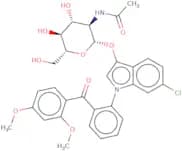
CAS:<p>Aldol® 467 N-acetyl-beta-D-glucosaminide is a chromogenic and fluorogenic enzyme substrate used for detection of beta-N-acetyl-glucosaminidase activity. The colorless enzyme substrate is cleaved in the presence of beta-N-acetyl-glucosaminidase yielding development of a yellow product. In addition, green fluorescence is generated when a suitable matrix or Aldol® 355 fluorescence enhancer is present. Aldol® 467 N-acetyl-beta-D-glucosaminide amide can be used in enzymatic assays or in live bacterial cultures. Aldol® 467 N-acetyl-beta-D-glucosaminide is suitable for use in liquid and solid media, under aerobic as well as anaerobic conditions.</p>Fórmula:C31H31ClN2O9Pureza:Min. 95%Forma y color:PowderPeso molecular:611.04 g/molRef: 3D-EA175316
Producto descatalogado5-Bromo-4-chloro-3-indoxyl-a-D-xylopyranoside
<p>5-Bromo-4-chloro-3-indoxyl-a-D-xylopyranoside is a fluorogenic substrate that can be used in food testing and environmental testing. This product is a conjugate of the xylosidase enzyme (EC 3.2.1.37) with 5-bromo-4-chloroindoxyl, which has been shown to have a high affinity for the enzyme's active site and enzymatic activity. The purity of this product is > 95% and the CAS number is 68618-41-5.</p>Pureza:Min. 95%Ref: 3D-EB172037
Producto descatalogado