Sustratos cromogénicos
Se han encontrado 712 productos de "Sustratos cromogénicos"
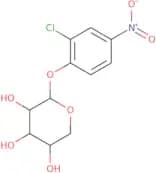
2-Chloro-4-nitrophenyl β-D-xylopyranoside
CAS:2-Chloro-4-nitrophenyl β-D-xylopyranoside is a fluorogenic substrate that can be used for the detection of β-glucuronidase activity in food testing, environmental testing, and diagnostics. It has been shown to be an effective substrate for detecting β-glucuronidase activity with a high degree of sensitivity and specificity. 2CNPX can also be used as a chromogenic substrate for the detection of β-glucuronidase activity in food testing and environmental testing. The conjugate form of this substrate is useful for immunochemical assays, such as enzyme linked immunosorbent assay (ELISA) or radioimmunoassay (RIA). This product is also used as a ligand in fluorescence resonance energy transfer (FRET) assays.
2CNPX can be used to detect β-glucuronidase activity by chemiluminescenceFórmula:C11H12ClNO7Pureza:Min. 95%Peso molecular:305.67 g/molRef: 3D-EC182588
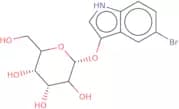
Producto descatalogado5-Bromo-3-indolyl a-D-mannopyranoside
5-Bromo-3-indolyl a-D-mannopyranoside is a chromogenic substrate that is used as an enzyme substrate for various spectrophotometric, fluorometric, or chemiluminescent assays. The 5-bromo group of the dye reacts with the active site of an enzyme to form a product that can be measured by spectrophotometry. This product can also be used as a fluorescent indicator in the presence of luciferase and ATP. 5-Bromo-3-indolyl a-D-mannopyranoside is also used to estimate bacterial counts during culture media preparation and it has been shown to inhibit the growth of Gram negative bacteria such as E. coli and Pseudomonas aeruginosa. This compound does not contain any heavy metals or toxic substances and it is highly soluble in water. It has been found to have no adverse effects on humans and other animals at concentrations up to 100
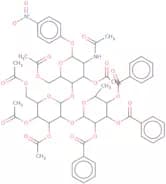
Fórmula:C14H16BrNO6Pureza:Min. 95%Peso molecular:374.18 g/mol4-Nitrophenyl 2-acetamido-3,6-di-O-acetyl-4-O-[2-O-(2,3,4-tri-O-benzoyl-a-L-fucopyranosyl)-3,4,6-tri-O-acetyl-b-D-galactopyranosyl]- 2-deoxy-b-D-glucopyranoside
This chemical is a ligand that can bind to the enzyme luciferase. In a bioluminescence reaction, this chemical reacts with oxygen and ATP to produce light. This product has been tested for purity and quality and is suitable for use in culture media, environmental testing, or diagnostics. It has also been shown to be an excellent fluorescent substrate for fluorogenic or chromogenic substrates in enzyme substrate assays.Pureza:Min. 95%Peso molecular:1,173.08 g/mol2-Nitrophenyl 2-acetamido-2-deoxy-b-D-galactopyranoside
CAS:2-Nitrophenyl 2-acetamido-2-deoxy-b-D-galactopyranoside is a carboxymethyl derivative of the natural substrate of β-galactosidase, which is used as a substrate for the production of recombinant proteins in the corynebacterium glutamicum. The enzyme β-galactosidase hydrolyzes this substrate to produce an acid molecule and a sugar molecule. This product can be used in biotechnological processes for the production of recombinant proteins or other bioactive molecules. It can also be used in the isolation of nucleic acid from bacteria or fungi, or to study bacterial membrane transport systems. 2NPGAG can be expressed as a recombinant protein with expression vectors such as pET21a and pET24a. It has been shown that this product inhibits transport through membranes by binding to cellulose, which may be useful for studies on cellulose biosynthesis
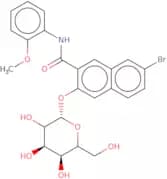
Pureza:Min. 95%Peso molecular:342.3 g/molNaphthol AS-BI b-D-glucopyranoside
CAS:Naphthol AS-BI b-D-glucopyranoside is a substrate for enzymes such as β-glucosidase and β-glycosidase. It has been used in diagnostic tests to detect the presence of amylase, lipase, α-amylase, or maltase in urine and feces. In biochemistry, naphthol AS-BI b-D-glucopyranoside is often used as a chromogenic or fluorogenic substrate for the detection of β-galactosidases and other glycosidases. This product has also been used in the detection of bacteria in culture media. Naphthol AS-BI b-D-glucopyranoside is a high quality reagent that can be used for chemiluminescence experiments, food testing, and environmental testing.
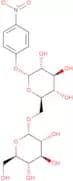
Pureza:Min. 95%Peso molecular:534.35 g/mol4-Nitrophenyl 6-O-(a-D-glucopyranosyl)-a-D-glucopyranoside
CAS:4-Nitrophenyl 6-O-(a-D-glucopyranosyl)-a-D-glucopyranoside is an advanced chromogenic pNP enzyme substrate that delivers unparalleled performance in enzymatic assays. This high-quality substrate is specifically designed for studying glycosidases and other enzymes involved in carbohydrate metabolism. Our 4-Nitrophenyl 6-O-(a-D-glucopyranosyl)-a-D-glucopyranoside is synthesized with the highest quality materials to provide incredible accuracy and reliability in your research applications.
Pureza:Min. 95%Peso molecular:463.39 g/molRef: 3D-EN04846
Producto descatalogado5-Bromo-3-indoxyl-β-D-galactopyranoside-6-sulfate sodium salt
CAS:5-Bromo-3-indoxyl-beta-D-galactopyranoside (5BIG) is a fluorogenic substrate that has been shown to be an effective enzyme substrate. It is used in the chemiluminescence, bioluminescence, and fluorescence detection of enzymes. 5BIG is also a chromogenic substrate for nucleic acid staining and can be used in food testing as well as diagnostics. 5BIG is highly pure and high quality with a CAS number of 1301706-59-1.
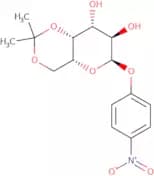
Fórmula:C14H15BrNNaO9SPureza:Min. 98 Area-%Peso molecular:476.24 g/mol4-Nitrophenyl 4,6-O-isopropylidene-a-D-galactopyranoside
CAS:4-Nitrophenyl 4,6-O-isopropylidene-a-D-galactopyranoside is a fluorogenic substrate that can be used to measure the activity of beta-galactosidase. This product is high purity, high quality and has a CAS number of 29781-31-5. It is an enzyme substrate with chromogenic and diagnostic properties that are used for conjugation to other molecules, as well as for culture media, chemiluminescence and food testing. 4NP4IPG is also used in bioluminescence assays to detect the presence of beta-galactosidase.
Pureza:Min. 95%Peso molecular:341.31 g/molS-(4-Nitrophenyl)mercapturic acid
CAS:S-(4-Nitrophenyl)mercapturic acid (S-NPMA) is the major metabolite of 4-nitrophenol, which is a precursor to dyes and pharmaceuticals. S-NPMA has been detected in urine samples from humans, rats, and mice. The main metabolic pathway for S-NPMA is an oxidative conversion by cytochrome P450 enzymes. S-NPMA has been found to be a useful biomarker for the presence of polycyclic aromatic hydrocarbons in wastewater and human urine. The levels of this compound have also been shown to increase with age in humans.
Pureza:Min. 95%Peso molecular:284.29 g/molRef: 3D-EN26334
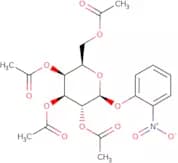
Producto descatalogado2-Nitrophenyl 2,3,4,6-tetra-O-acetyl-b-D-galactopyranoside
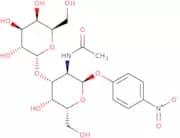
CAS:2-Nitrophenyl 2,3,4,6-tetra-O-acetyl-b-D-galactopyranoside is a fluorescent substrate for β-galactosidase. It is used in food testing, environmental testing and diagnostics. This substrate is also used to detect the presence of β-galactosidase activity in cells and tissues. 2NPTABG provides a fluorescence signal that can be detected with an ultraviolet light or a luminometer. The luminescence intensity decreases when it reacts with β-galactosidase enzyme. This product has a CAS number of 3053-17-6 and is available at high purity levels.Pureza:Min. 95%Peso molecular:469.4 g/mol4-Nitrophenyl 2-acetamido-2-deoxy-3-O-(a-D-galactopyranosyl)-a-D-galactopyranoside
CAS:4-Nitrophenyl 2-acetamido-2-deoxy-3-O-(a-D-galactopyranosyl)-a-D-galactopyranoside is a fluorescent substrate that can be used in chemiluminescent assays. It is a high purity, high quality chemical that has been tested for culture media, environmental testing and bioluminescence. This product is an excellent choice for use in diagnostics, chromogenic substrates, enzyme substrates and food testing.
Pureza:Min. 95%Peso molecular:504.44 g/molRef: 3D-EN16478
Producto descatalogadoMethyl 4-nitrophenyl hexyl phosphonate
CAS:Methyl 4-nitrophenyl hexyl phosphonate is a lipase suicide inhibitor that is a chromogenic substrate for lipases which upon enzymatic action, binds irreversibly to the lipase and inactivates it. The substrate can be used for the determination of active sites in lipases.
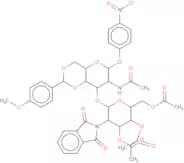
Pureza:Min. 95%Peso molecular:301.284-Nitrophenyl 2-acetamido-3-O-(3,4,6-tri-O-acetyl-2-deoxy-2-phthalimido-b-D-glucopyranosyl)-2-deoxy-4,6-O-4-methoxybenzylidene-a-D-g alactopyranoside
4-Nitrophenyl 2-acetamido-3-O-(3,4,6-tri-O-acetyl-2-deoxy-2-phthalimido-b-D-glucopyranosyl)-2-deoxy--4,6--O--4--methoxybenzylidene--a--D--galactopyranoside is a chemiluminescent substrate for the enzyme beta galactosidase. It reacts with this enzyme to form 4 nitrophenol and acetamide. 4 Nitrophenyl 2 acetamido 3 O (3,4,6 tri O acetyl 2 deoxy 2 phthalimido b D glucopyranosyl) 2 deoxy 4 6 O 4 methoxybenzylidene a D galactopyranoside is used as a chromogenic substrate in diagnostics and as an environmental testing agent. It can be used as an imaging
Pureza:Min. 95%Peso molecular:877.8 g/mol5-Bromo-4-chloro-3-indolyl b-D-galactopyranoside-6-sulphate
CAS:5-Bromo-4-chloro-3-indolyl b-D-galactopyranoside 6-sulphate (BCIGS) is a chemiluminescent substrate that reacts with an enzyme to produce light. It has been used for the detection of various substances, including 5'-nucleotidase, 5'-adenosine monophosphate phosphohydrolases, and alkaline phosphatase. BCIGS can be used as a chromogenic substrate in the fluorometric assay of glucose oxidase and galactose oxidase. BCIGS is also used as a ligand in immunological reactions such as immunodiffusion, immunoelectrophoresis, and radioimmunoassay.Fórmula:C14H15BrClNO9SPureza:Min. 95%Peso molecular:488.69 g/molRef: 3D-EB03191
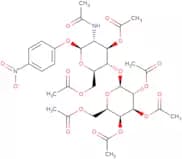
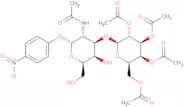
Producto descatalogado4-Nitrophenyl 2-acetamido-3,6-di-O-acetyl-4-O-(2,3,4,6-tetra-O-acetyl-b-D-galactopyranosyl)-2-deoxy-b-D-glucopyranoside
CAS:4-Nitrophenyl 2-acetamido-3,6-di-O-acetyl-4-O-(2,3,4,6-tetra-O-acetyl-b-D-galactopyranosyl)-2-deoxy-b-D-glucopyranoside is modified acetylated chromogenic substrate designed for the detection and quantification of enzyme activity. This highly specific substrate is cleaved by enzymes, releasing a yellow 4-nitrophenol product that can be easily measured spectrophotometrically. This allows for accurate and sensitive analysis of enzyme kinetics, inhibition studies, and substrate specificity determination.
Pureza:Min. 95%Peso molecular:756.66 g/molRef: 3D-EN06441
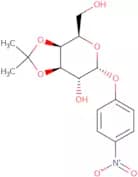
Producto descatalogado4-Nitrophenyl 3,4-O-isopropylidene-a-D-galactopyranoside
CAS:4-Nitrophenyl 3,4-O-isopropylidene-a-D-galactopyranoside is a chemiluminescent substrate for detecting beta-galactosidase activity in bacteria. This product is a high purity, high quality compound that can be used as a culture media and environmental testing agent. It has been shown to be effective in diagnostics, chromogenic substrate, and enzyme substrate reactions. 4NPPG has been shown to be a fluorogenic substrate for beta-galactosidase assay and can be used as food testing agent with conjugate.
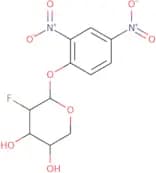
Pureza:Min. 95%Peso molecular:341.31 g/mol2,4-Dinitrophenyl 2-deoxy-2-fluoro-b-D-xylopyranoside
CAS:2,4-Dinitrophenyl 2-deoxy-2-fluoro-b-D-xylopyranoside (DNFX) is a transglycosylation reagent that can be used to inactivate enzymes that catalyze the synthesis of xylosides. DNFX undergoes a covalent reaction with these enzymes and inhibits them by binding to the active site. DNFX catalyses the reaction between xylose and nucleophiles such as hydroxide ions, thiols, or amines. DNFX also has a catalytic effect on electrospray ionization and can be used for the detection of nucleophile activity.Pureza:Min. 95%Forma y color:White PowderPeso molecular:318.21 g/mol4-Nitrophenyl 2-acetamido-3-O-(2,3,4,6-tetra-O-acetyl-b-D-galactopyranosyl)-2-deoxy-a-D-galactopyranoside
CAS:4-Nitrophenyl 2-acetamido-3-O-(2,3,4,6-tetra-O-acetyl-b-D-galactopyranosyl)-2-deoxy-a-D-galactopyranoside is a chromogenic substrate designed for the detection and quantification of enzyme activity. This tetra-acetylated compound is specifically designed to be cleaved by enzymes, releasing a yellow 4-nitrophenol product that can be easily measured spectrophotometrically, allowing for accurate and sensitive analysis of enzyme kinetics and inhibition studies.
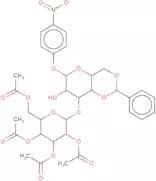
Pureza:Min. 95%Peso molecular:672.59 g/mol4-Nitrophenyl 4,6-O-benzylidene-3-O-(2,3,4,6-tetra-O-acetyl-b-D-glucopyranosyl)-b-D-glucopyranoside
4-Nitrophenyl 4,6-O-benzylidene-3-O-(2,3,4,6-tetra-O-acetyl-b-D-glucopyranosyl)-b-D-glucopyranoside is a high purity fluorescent reagent that can be used as a substrate for many enzymes. It is also used in environmental testing and to detect the presence of nitrophenols in food. This product has CAS number 545414.
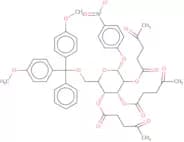
Pureza:Min. 95%Peso molecular:719.64 g/mol4-Nitrophenyl 6-O-DMT-2,3,4-tri-O-levulinoyl-a-D-mannopyranoside
4-Nitrophenyl 6-O-DMT-2,3,4-tri-O-levulinoyl-a-D-mannopyranoside is a fluorogenic substrate that can be used for the detection of DMT (dihydroxyacetone) in food products. It has been shown to be an excellent alternative to the more commonly used 4,5′,6,7,8,-Tetrabromoindoxyl 3′,5′,6′,-tetraacetic acid (TBA). This product is also used as a chromogenic substrate for the determination of phenols in environmental testing and as a ligand conjugate for immunohistochemistry staining. The purity of this product is guaranteed and it has been tested extensively.
Pureza:Min. 95%Peso molecular:897.92 g/mol