07-EFSLIAPP - electrode-filling-solution-low-ionic-strength-applications
4-[(tert-Butoxycarbonylamino)methyl]pyridine-2-carboxylic Acid [Reagent for application of the exciton chirality method]
CAS:Fórmula:C12H16N2O4Pureza:>96.0%(T)(HPLC)Forma y color:White to Light yellow powder to crystalPeso molecular:252.27Pentamethylene Bis[4-(10,15,20-triphenylporphyrin-5-yl)benzoate]dizinc(II) [Reagent for application of the exciton chirality method]
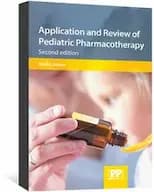
CAS:Fórmula:C95H64N8O4Zn2Pureza:>97.0%(HPLC)Forma y color:Dark purple powder to crystalPeso molecular:1,512.37Application and Review of Pediatric Pharmacotherapy
Glover, Mark L
Second edition
Scheduled closure of pharmpress.com
Mark L Glover - Associate Professor and Director, College of Pharmacy, Nova Southeastern University, USA
ISBN 978 0 85369 941 5
Published Jan 2011
Paperback 234 x 156 mm (496pp)
DESCRIPTION:
Increase your understanding of pharmacotherapy prescribed to pediatric patients with these realistic case studies.
Application and Review of Pediatric Pharmacotherapy is designed as a self-assessment tool, comprising over 1,000 multiple choice questions. It enhances your knowledge of pediatric pharmacotherapy by allowing application of textbook information to case-based scenarios.
The pharmacotherapy issues that are most likely to be encountered during your exposure to pediatric medicine are covered in four sections:
- neonatal intensive care
- pediatric intensive care
- pediatric in-patient
- pediatric out-patient
Pharmacy, nursing and medical students and residents often receive limited exposure to pediatric pharmacology during their education. As a result, providing medical care for a pediatric patient can be intimidating. This book provides a pharmacological resource to help prepare your for pediatric clinical experiences. Application and Review of Pediatric Pharmacotherapy is also available as an eBook.
CONTENTS:
Module 1: Neonatal Intensive Care
Module 2: Pediatric Intensive Care
Module 3: Pediatric In-Patient
Module 4: Pediatric Out-Patient
REVIEWS:
Mar-2011, Doody's Notes
"The book uses case studies to illustrate different pediatric ailments and their treatments in a variety of care settings. It is comprehensive in its representation of various settings and the pharmacotherapy for different maladies. It is unique in its format of providing questions and answers with explanation...This is a good pharmacotherapy review book for students who may be studying for board exams or wanting a supplemental study guide with comprehensive applied case studies."
Judith Klevan, BA Biology, BS Pharmacy, Doody's Notes, March 2011
Forma y color:234 x 156 mmPentamethylene Bis[4-(10,15,20-triphenylporphyrin-5-yl)benzoate]dizinc(II) [Reagent for application of the exciton chirality method]
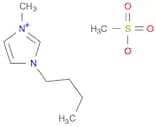
CAS:Fórmula:C95H64N8O4Zn2Pureza:97%Peso molecular:1512.33591-Butyl-3-methylimidazolium methanesulfonate
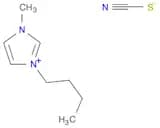
CAS:Fórmula:C9H18N2O3SPureza:95%Forma y color:SolidPeso molecular:234.31581-Butyl-3-methylimidazolium thiocyanate
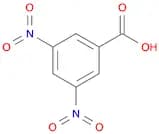
CAS:Fórmula:C9H15N3SPureza:97%Forma y color:LiquidPeso molecular:197.3005Benzoic acid, 3,5-dinitro-
CAS:Fórmula:C7H4N2O6Pureza:99%Forma y color:SolidPeso molecular:212.1165Ref: IN-DA003QOW
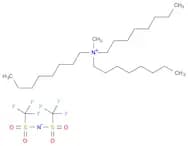
1g115,00€5g344,00€10g572,00€25gA consultar10mg20,00€50mg44,00€100mg47,00€250mg68,00€METHYL-TRIOCTYLAMMONIUM BIS(TRIFLUOROMET
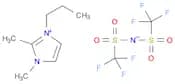
CAS:Fórmula:C27H54F6N2O4S2Pureza:95%Forma y color:LiquidPeso molecular:648.84911 2-DIME-3-PROPYLIMIDAZOLIUM BIS(TRIFLUO
CAS:Fórmula:C10H15F6N3O4S2Pureza:98%Forma y color:LiquidPeso molecular:419.3642Nitroso Betahistine D3
CAS:Nitroso Betahistine D3, is categorised as Impurities of Betahistine and chemically known as N-(methyl-d3)-N-(2-(pyridin-2-yl)ethyl)nitrous amide , Nitroso Betahistine D3 and is provided with comprehensive characterization data in accordance with regulatory guidelines. It is suitable for use in analytical method development, method validation (AMV), Quality Control (QC) applications for Abbreviated New Drug Applications (ANDA) and commercial production of Betahistine.
Fórmula:C8H8D3N3OPureza:Not less than 90 %Peso molecular:168.21Ref: 3W-CS-O-46019
50mgA consultarEuropean Pharmacopoeia 10th Edition (10.3-10.4-10.5) - Book - French - Supplement 10.4
La Pharmacopée Européenne (Ph. Eur.) est un ouvrage de référence unique en matière de contrôle qualité des médicaments. Les normes officielles qui y sont publiées fournissent une base scientifique au contrôle qualité durant toute la vie des médicaments.
Ces normes sont juridiquement contraignantes — ce qui est expressément stipulé dans la Convention relative à l’élaboration d’une Pharmacopée européenne et dans les législations pharmaceutiques nationales et de l’UE. Les normes qualité de la Ph. Eur. deviennent d’application obligatoire à la même date dans tous les États Parties à la convention.
La 10e Édition en bref
• Juridiquement contraignante dans 39 pays d’Europe et appliquée dans plus de 120 pays du monde entier
• Contient des nouveaux textes et des textes révisés
• Divulgue des informations essentielles pour les marchés européens avant toutes les autres pharmacopées
• La 10e Edition (Supplément 10.5 inclus) comprend 2447 monographies (y compris les formes pharmaceutiques), 378 textes généraux (y compris les monographies générales et méthodes d’analyse) et environ 2800 descriptions de réactifs.
Calendrier de parution
La 10e Édition de la Ph. Eur. a été publiée en juillet 2019 et sera complétée par huit suppléments périodiques (10.1 à 10.8) au cours des trois années suivantes.
Supplément 10.3 publiée en juillet 2020,
Supplément 10.4 publiée en octobre 2020,
Supplément 10.5 publiée en janvier 2021.
Version papier
La 10e Édition est composée de trois volumes initiaux (10.0), complétés par huit suppléments non cumulatifs (10.1 à 10.8). Par souci de commodité des utilisateurs, un accès direct aux informations complémentaires (base de données Knowledge) est inclus pour chaque monographie et chaque chapitre général (code Datamatrix). Disponible en français ou en anglais, la version papier contient une clé d’activation (code EPID) qui donne accès aux archives en ligne.Ref: 41-PUB200336-10.4
1uA consultarEuropean Pharmacopoeia 10th Edition (10.3-10.4-10.5) - Book - French - Supplement 10.5
La Pharmacopée Européenne (Ph. Eur.) est un ouvrage de référence unique en matière de contrôle qualité des médicaments. Les normes officielles qui y sont publiées fournissent une base scientifique au contrôle qualité durant toute la vie des médicaments.
Ces normes sont juridiquement contraignantes — ce qui est expressément stipulé dans la Convention relative à l’élaboration d’une Pharmacopée européenne et dans les législations pharmaceutiques nationales et de l’UE. Les normes qualité de la Ph. Eur. deviennent d’application obligatoire à la même date dans tous les États Parties à la convention.
La 10e Édition en bref
• Juridiquement contraignante dans 39 pays d’Europe et appliquée dans plus de 120 pays du monde entier
• Contient des nouveaux textes et des textes révisés
• Divulgue des informations essentielles pour les marchés européens avant toutes les autres pharmacopées
• La 10e Edition (Supplément 10.5 inclus) comprend 2447 monographies (y compris les formes pharmaceutiques), 378 textes généraux (y compris les monographies générales et méthodes d’analyse) et environ 2800 descriptions de réactifs.
Calendrier de parution
La 10e Édition de la Ph. Eur. a été publiée en juillet 2019 et sera complétée par huit suppléments périodiques (10.1 à 10.8) au cours des trois années suivantes.
Supplément 10.3 publiée en juillet 2020,
Supplément 10.4 publiée en octobre 2020,
Supplément 10.5 publiée en janvier 2021.
Version papier
La 10e Édition est composée de trois volumes initiaux (10.0), complétés par huit suppléments non cumulatifs (10.1 à 10.8). Par souci de commodité des utilisateurs, un accès direct aux informations complémentaires (base de données Knowledge) est inclus pour chaque monographie et chaque chapitre général (code Datamatrix). Disponible en français ou en anglais, la version papier contient une clé d’activation (code EPID) qui donne accès aux archives en ligne.Ref: 41-PUB200336-10.5
1uA consultarEuropean Pharmacopoeia 11th Edition (11.6-11.7-11.8) - Online Version - Bilingual
European Pharmacopoeia 2025 subscription:
The European Pharmacopoeia (Ph. Eur.) is a single reference work for the quality control of medicines. The official standards it contains provide a scientific basis for quality control during the entire life cycle of a product.
These standards are legally binding – as laid down in the Council of Europe Convention on the Elaboration of a European Pharmacopoeia and in EU and national pharmaceutical legislation. Ph. Eur. quality standards become mandatory on the same date in all States Parties to the convention.
The 11th Edition at a glance
• Legally binding in 39 European countries and applied in more than 120 countries worldwide.
• Provides new and revised texts.
• Delivers crucial information for European markets earlier than any other Pharmacopoeia.
• The 10th Edition (including Supplement 10.5) contains 2447 monographs (including dosage forms), 378 general texts (including general monographs and methods of analysis) and about 2800 descriptions of reagents.
Initial release and updates
The 11th Edition of the Ph. Eur. was released in July 2024 and will be updated with eight periodic supplements over the following three years (11.1 to 11.8).
Main volume 11.6 published in July 2024,
Supplement 11.7 published in October 2024,
Supplement 11.8 published in January 2025.
Electronic version:
• Completely cumulative versions, bilingual (English and French), with new features and direct access to complementary information (Knowledge Database);
• Access to the European Pharmacopoeia Online website from all recent common operating systems (tablet and smartphone friendly);
• An application fully compatible with recent Windows and Linux operating systems;
• Two installation options for each electronic licence: either individual or shared access (one option to be chosen):
• Individual use: install the application on one computer and on one USB stick, for online or offline use and easy access while on the move or in environments where using the book or the website is not possible or practical;
• Shared use: install the application on one computer or one USB stick, for online or offline use, for example for non-nominative access in university libraries or laboratories.Ref: 41-PUB200454
1u570,00€Magnesium oxide, 99.95% (metals basis)
CAS:Magnesium oxide is used as a refractive material, which is physically and chemically stable at higher temperature. Magnesium oxide is a raw material for producing portland cement. It is also used in agricultural, chemical construction, environment al and other industrial applications. It is alsoFórmula:MgOPureza:99.95%Peso molecular:40.30Chlorine Water TS USP
Chlorine Water, Saturated Solution, Approx. 0.4 Percent Chlorine is a Spectrum solution concentrate that allows the preparation of fresh, reliable standard volumetric solutions quickly and accurately. Simply dilute the desired USP test solution concentrate to the specified volume (carefully following instructions provided with the package) and the resulting solution will have an exact Normality within 0.1%. Spectrum USP test solution concentrates are relied upon for fast, accurate results in life sciences and pharmaceutical quality control applications.
10X Phosphate Buffered Saline (PBS) for molecular biology
Phosphate Buffered Saline (PBS) is an essential buffer solution widely utilized in biological research and clinical settings. It plays a critical role in preventing cell rupture or shrinkage caused by osmosis, and its non-toxic formulation is safe for cellular applications. The 10X PBS solution provides a stable pH environment, which is vital for optimal enzyme activity and various biological processes. This stability makes PBS particularly suitable for preparing reagents, conducting protein dialysis, and performing immunohistochemistry, thus ensuring consistent and reliable experimental results. In addition to its applications in cell biology, PBS is also employed in diverse fields, including the development of custom ELISA buffers to optimize antibody-antigen interactions.Forma y color:Clear, Colourless, LiquidBisphenol A-2,2',6,6'-d4
CAS:Producto controladoApplications Bisphenol A-2,2',6,6'-d4 (CAS# 102438-62-0) is a useful isotopically labeled research compound.
Fórmula:C15D4H12O2Forma y color:NeatPeso molecular:232.311
![4-[(tert-Butoxycarbonylamino)methyl]pyridine-2-carboxylic Acid [Reagent for application of the exc…](/_next/image/?url=https%3A%2Fstatic.cymitquimica.com%2Fproducts%2F3B%2Fthumb-webp%2FB2124.webp&w=3840&q=75)

![Pentamethylene Bis[4-(10,15,20-triphenylporphyrin-5-yl)benzoate]dizinc(II) [Reagent for applicatio…](/_next/image/?url=https%3A%2Fstatic.cymitquimica.com%2Fproducts%2F3B%2Fthumb-webp%2FP1364.webp&w=3840&q=75)