3B-P0384 - polymethyl-vinyl-ether-30-in-water | 9003-09-2
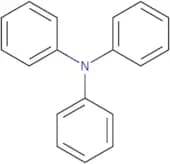
Triphenylamine
CAS:Triphenylamine is a chemical compound that has the formula C12H10N2. It is a white solid with low volatility, and is insoluble in water but soluble in organic solvents. Triphenylamine can be found in many products including plastics, paints, medicines and rubber products. The light-emitting properties of triphenylamine are due to the presence of three phenyl groups with high electron-donating power. Triphenylamine undergoes cationic polymerization, which involves the conversion of an amine into a quaternary ammonium salt. Triphenylamine has been used as a building block for the synthesis of polymers such as polyethylene terephthalate (PET), polymethyl methacrylate (PMMA) and polystyrene sulfonate (PSS). Triphenylamine can also be used to immobilize enzymes on surfaces by forming covalent bonds through hydroxyl groups. The reaction solution containingFórmula:C18H15NPureza:Min. 95%Forma y color:White PowderPeso molecular:245.32 g/mol8-Methyl-1-tetralone
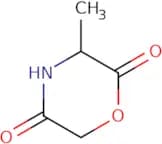
CAS:8-Methyl-1-tetralone is a reactive compound that can be used in research. It has been shown to have geometries, polymethyl and energy transfer properties. The benzoyl group is also important for this molecule's reactivity. 8-Methyl-1-tetralone diffuses slowly because of its size and mass. This product is kinetically stable, but it may undergo product research artefacts with prolonged exposure to air or light.Fórmula:C11H12OPureza:Min. 95%Peso molecular:160.21 g/mol3-Methylmorpholine-2,5-dione
CAS:3-Methylmorpholine-2,5-dione is an organic compound with the chemical formula CH3N(CH2)6CH3. It has a molecular weight of 118.14 g/mol and a transition temperature of -78.4 °C. 3-Methylmorpholine-2,5-dione is a colorless oily liquid that is soluble in water and ethanol. It can be used to synthesize polymers such as polymethyl methacrylate (PMMA), polyvinyl chloride, polypropylene, ethylene oxide, and ethylene glycol. 3-Methylmorpholine-2,5-dione can also be used as a polymerization initiator for ring opening polymerizations with stannous octoate or triisobutylaluminum.Fórmula:C5H7NO3Pureza:Min. 95%Peso molecular:129.11 g/mol2,2-Bis(hydroxymethyl)propionic acid, 98+%
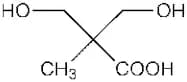
CAS:2,2-Bis(hydroxymethyl)propionic acid is used in the synthesis and characterization studies of polyurethane dispersion modified with polymethylsiloxane (Si-PUD) and its nanocomposites incorporated with clays1.2,2-Bis(hydroxymethyl)propionic acid based dendrimers have potent applications as delivery sFórmula:C5H10O4Pureza:98+%Forma y color:White, Powder or crystalline powder or crystalsPeso molecular:134.13Polymethylene polyphenyl polyisocyanate
CAS:Fórmula:C27H31N3O3Pureza:98%Forma y color:LiquidPeso molecular:445.5533Polymethylene polyphenyl polyisocyanate
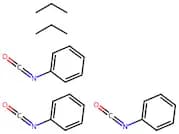
CAS:Polymethylene polyphenyl polyisocyanatePureza:98%Peso molecular:445.55g/molPolymethylhydrosiloxanes, trimethlysiloxy terminated 24-30cSt
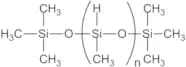
CAS:HMS-992 - Polymethylhydrosiloxanes, trimethlysiloxy terminated 24-30cSt
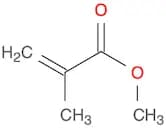
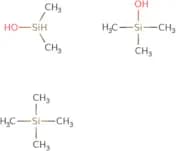
Fórmula:(CH4Si)nC6H18O2Si2Pureza:= 99% (GC)Forma y color:Liquid, ClearPeso molecular:1800-2100Methyl Methacrylate
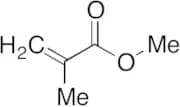
CAS:Applications Methyl Methacrylate is used in biological studies for interfacial tensile strength between polymethylmethacrylate-based bioactive bone cements and bone.
Not a dangerous good if item is equal to or less than 1g/ml and there is less than 100g/ml in the package
References Kamimura, M., et al.: J. Biomed. Mater. Res., 61, 564 (2002)Fórmula:C5H8O2Forma y color:ColourlessPeso molecular:100.12Bischloromethyloxetane
CAS:Producto controladoBischloromethyloxetane is a reactive, functional group that has been used as a polymerization initiator. It has been shown to be highly effective in polymerizing polymethylmethacrylate (PMMA) and polystyrene (PS) at room temperature. Bischloromethyloxetane is also an acid catalyst and can be used to make polymers with different functional groups by adding different types of monomers. This compound is often used in coatings for implantable devices, such as pacemakers, because it does not cause any adverse effects on these devices. In addition, this compound can be used for radiation sterilization and particle coating applications.Pureza:Min. 95%Poly(methylhydrosiloxane)
CAS:Polymethylhydrosiloxane is a polymer that is used in coatings and adhesives. It has been shown to be an efficient aid for removing copper chloride from water and can be applied to the treatment of calcium carbonate sludge. Poly(methylhydrosiloxane) also has high affinity for fatty esters, which is important for its use as a mass analyzer in environmental pollution studies. This polymer has been shown to have excellent kinetic and optical properties, making it a good candidate for electrochemical studies.Forma y color:Colorless Clear LiquidPOLYMETHYLHYDROSILOXANE, TRIMETHYLSILYL TERMINATED, 15-25 cSt
CAS:Siloxane-Based Silane Reducing Agent
Organosilanes are hydrocarbon-like and possess the ability to serve as both ionic and free-radical reducing agents. These reagents and their reaction by-products are safer and more easily handled and disposed than many other reducing agents. The metallic nature of silicon and its low electronegativity relative to hydrogen lead to polarization of the Si-H bond yielding a hydridic hydrogen and a milder reducing agent compared to aluminum-, boron-, and other metal-based hydrides. A summary of some key silane reductions are presented in Table 1 of the Silicon-Based Reducing Agents brochure.
Pendant Functional Fluid; polyMethylHydrosiloxanes, TMS Terminated
MethylHydrosiloxane homopolymers are used as water-proofing agents, reducing agents and as components in some foamed silicone systems.
Poly(methylhydrosiloxane); Methyl hydrogen siloxane; Polysiloxanes, methyl hydrogen; Siloxanes and silicones, methyl hydrogen
Viscosity: 15-25 cStMolecular Weight: 1,400-1,800 g/molMol% Hydride: 100Reduces lactones to lactolsReduces aldehydes, ketones, esters, lactones, triglycerides and epoxides to alcohols with zinc hydride catalysisWith titanium tetraisopropoxide catalysis carries out reductive amination of ketones and aldehydes and the reduction of acids or esters to 1° alcoholsWith TBAF catalysis selectively reduces aldehydes over ketonesUsed to generate tri-n-butyltin hydride ‘in-situ’ and in a one-pot hydrostannylation/Stille coupling sequenceReduces esters to alcoholsExtensive review of silicon based reducing agents: Larson, G.; Fry, J. L. "Ionic and Organometallic-Catalyzed Organosilane Reductions", Wipf, P., Ed.; Wiley, 2007Forma y color:LiquidPeso molecular:1400-1800POLYMETHYLHYDROSILOXANE, TRIMETHYLSILYL TERMINATED, 20-35 cSt
CAS:Siloxane-Based Silane Reducing Agent
Organosilanes are hydrocarbon-like and possess the ability to serve as both ionic and free-radical reducing agents. These reagents and their reaction by-products are safer and more easily handled and disposed than many other reducing agents. The metallic nature of silicon and its low electronegativity relative to hydrogen lead to polarization of the Si-H bond yielding a hydridic hydrogen and a milder reducing agent compared to aluminum-, boron-, and other metal-based hydrides. A summary of some key silane reductions are presented in Table 1 of the Silicon-Based Reducing Agents brochure.
Pendant Functional Fluid; polyMethylHydrosiloxanes, TMS Terminated
MethylHydrosiloxane homopolymers are used as water-proofing agents, reducing agents and as components in some foamed silicone systems.
Poly(methylhydrosiloxane); Methyl hydrogen siloxane; Polysiloxanes, methyl hydrogen; Siloxanes and silicones, methyl hydrogen
Viscosity: 20-35 cStMolecular Weight: 1,800-2,100 g/molMol% Hydride: 100Reduces lactones to lactolsReduces aldehydes, ketones, esters, lactones, triglycerides and epoxides to alcohols with zinc hydride catalysisWith titanium tetraisopropoxide catalysis carries out reductive amination of ketones and aldehydes and the reduction of acids or esters to 1° alcoholsWith TBAF catalysis selectively reduces aldehydes over ketonesUsed to generate tri-n-butyltin hydride ‘in-situ’ and in a one-pot hydrostannylation/Stille coupling sequenceReduces esters to alcoholsExtensive review of silicon based reducing agents: Larson, G.; Fry, J. L. "Ionic and Organometallic-Catalyzed Organosilane Reductions", Wipf, P., Ed.; Wiley, 2007Forma y color:LiquidPeso molecular:1800-2100POLYMETHYLHYDROSILOXANE, TRIMETHYLSILYL TERMINATED, 30-45 cSt
CAS:Siloxane-Based Silane Reducing Agent
Organosilanes are hydrocarbon-like and possess the ability to serve as both ionic and free-radical reducing agents. These reagents and their reaction by-products are safer and more easily handled and disposed than many other reducing agents. The metallic nature of silicon and its low electronegativity relative to hydrogen lead to polarization of the Si-H bond yielding a hydridic hydrogen and a milder reducing agent compared to aluminum-, boron-, and other metal-based hydrides. A summary of some key silane reductions are presented in Table 1 of the Silicon-Based Reducing Agents brochure.
Pendant Functional Fluid; polyMethylHydrosiloxanes, TMS Terminated
MethylHydrosiloxane homopolymers are used as water-proofing agents, reducing agents and as components in some foamed silicone systems.
Poly(methylhydrosiloxane); Methyl hydrogen siloxane; Polysiloxanes, methyl hydrogen; Siloxanes and silicones, methyl hydrogen
Viscosity: 30-45 cStMolecular Weight: 2,100-2,400 g/molMol% Hydride: 100Reduces lactones to lactolsReduces aldehydes, ketones, esters, lactones, triglycerides and epoxides to alcohols with zinc hydride catalysisWith titanium tetraisopropoxide catalysis carries out reductive amination of ketones and aldehydes and the reduction of acids or esters to 1° alcoholsWith TBAF catalysis selectively reduces aldehydes over ketonesUsed to generate tri-n-butyltin hydride ‘in-situ’ and in a one-pot hydrostannylation/Stille coupling sequenceReduces esters to alcoholsExtensive review of silicon based reducing agents: Larson, G.; Fry, J. L. "Ionic and Organometallic-Catalyzed Organosilane Reductions", Wipf, P., Ed.; Wiley, 2007Forma y color:LiquidPeso molecular:2100-2400