3D-FAA63168 - 3-24-dihydroxyphenylpropionic-acid
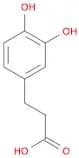
3-(3,4-Dihydroxyphenyl)propanoic acid
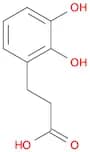
CAS:Fórmula:C9H10O4Pureza:98%Forma y color:SolidPeso molecular:182.17332,3-Dihydroxy-benzenepropanoic acid
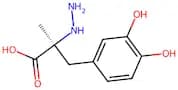
CAS:Fórmula:C9H10O4Pureza:95%Forma y color:SolidPeso molecular:182.17333,3,3-trideuterio-2-[dideuterio-(3,4-dihydroxyphenyl)methyl]-2-hydrazinylpropanoic acid
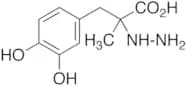
CAS:Fórmula:C10H14N2O4Pureza:99%Forma y color:SolidPeso molecular:226.2292(2RS)-3-(3,4-Dihydroxyphenyl)-2-hydrazino-2-methylpropanoic Acid (rac-Carbidopa)
CAS:Forma y color:NeatTolfenpyrad
CAS:Producto controladoStability Hygroscopic
Applications An inhibitor of aromatic amino acid decarboxylase.
References Sletzinger, M., et al.: J. Med. Chem., 6, 101 (1963)Fórmula:C10H14N2O4Forma y color:Light YellowPeso molecular:226.23(S)-(-)-Carbidopa
CAS:Producto controladoStability Unstable in Solution
Applications (S)-(-)-Carbidopa is a peripheral decarboxylase inhibitor that is commonly used in combination with L-DOPA (D533751) for treatment of Parkinsonism. S(-)-Carbidopa ( has also been shown to prolong the elimination half-life of L-DOPA from blood plasma and skeletal muscle.
References Henry, G.M. et al.: Psychosom. Med., 38, 95 (1976); Leguire, L.E. et al.: Invest. Ophthalmol. Vis. Sci. 34, 3090 (1993); Deleu, D. et al.: Naun. Schmied. Arch. Pharmacol. 348: 576 (1993);Fórmula:C10H14N2O4Forma y color:NeatPeso molecular:226.23Des-hydrazino Carbidopa
CAS:Applications A metabolite of Carbidopa (C175915).
References Vickers, S., et al.: Drug Metab. Dispos., 2, 6 (1974), Vickers, S., et al.: J. Med. Chem., 18, 134 (1975),Fórmula:C10H12O4Forma y color:NeatPeso molecular:196.23-(3,4-Dihydroxyphenyl)-2-methylpropanoic acid
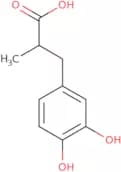
CAS:3-(3,4-Dihydroxyphenyl)-2-methylpropanoic acid
Pureza:98%2-Methyl-3-(3,4-dihydroxyphenyl)propanoic acid
CAS:2-Methyl-3-(3,4-dihydroxyphenyl)propanoic acid (DOPA) is a prodrug that is converted to the active form 2-methyl-5,6-dihydroxyindole-3,4-dione (DIDO) by hydrazine. DIDO inhibits melanoma cells by binding to tyrosinase and inhibiting its activity. DOPA also has cytotoxic properties, which may be due to the production of oxidative metabolites such as hydrogen peroxide and free radicals. DIDO can also be metabolized into catechol and cyclized into quinone methides. DOPA can inhibit oxidation reactions in the cell line CCRF-CEM by preventing the oxidation of NADH to NAD+.Fórmula:C10H12O4Pureza:Min. 95%Forma y color:PowderPeso molecular:196.2 g/molCarbidopa Monohydrate
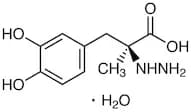
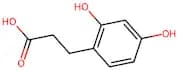
CAS:Fórmula:C10H14N2O4·H2OPureza:>98.0%(T)(HPLC)Forma y color:White to Light yellow powder to crystalinePeso molecular:244.253-(2,4-Dihydroxyphenyl)propanoic acid
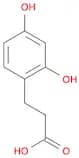
CAS:Fórmula:C9H10O4Pureza:98%Forma y color:SolidPeso molecular:182.1733rac-Carbidopa-13C-d3
CAS:Fórmula:C913CH11D3N2O4Forma y color:White To Off-White SolidPeso molecular:230.243-(2,4-Dihydroxyphenyl)propanoic acid
CAS:3-(2,4-Dihydroxyphenyl)propanoic acidPureza:≥98%Peso molecular:182.17g/mol(S)-3-(3,4-Dihydroxyphenyl)-2-Hydrazinyl-2-Methylpropanoic Acid
CAS:(S)-3-(3,4-Dihydroxyphenyl)-2-Hydrazinyl-2-Methylpropanoic AcidPureza:97%Peso molecular:226.23g/mol3-(2,4-Dihydroxyphenyl)Propionic Acid
CAS:3-(2,4-Dihydroxyphenyl)Propionic AcidPureza:97%Peso molecular:182.17g/mol3-(2,4-Dihydroxyphenyl)propionic acid
CAS:Fórmula:C9H10O4Pureza:95%~99%Forma y color:PowderPeso molecular:182.175

![3,3,3-trideuterio-2-[dideuterio-(3,4-dihydroxyphenyl)methyl]-2-hydrazinylpropanoic acid](/_next/image/?url=https%3A%2Fstatic.cymitquimica.com%2Fproducts%2FIN%2Fthumb-webp%2FDA00I5DW.webp&w=3840&q=75)