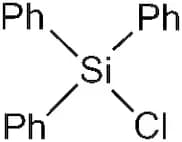
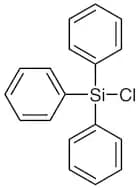
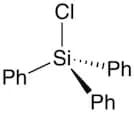
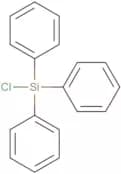
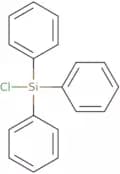
AC-15125 - chlorotriphenylsilane-95 | 76-86-8
Lo sentimos, no se ha encontrado ningún producto con referencia AC-15125, pero quizás quiera comprobar los siguientes productos similares:
Chlorotriphenylsilane, 96%
CAS:<p>Chlorotriphenylsilane is used as a silylating agent. It is also used as a pharmaceutical intermediate. This Thermo Scientific Chemicals brand product was originally part of the Alfa Aesar product portfolio. Some documentation and label information may refer to the legacy brand. The original Alfa Aes</p>Fórmula:C18H15ClSiPureza:96%Forma y color:Crystals or powder or crystalline powder or lumps or chunks or fused solid, Colorless to whitePeso molecular:294.85Triphenylchlorosilane
CAS:Fórmula:C18H15ClSiPureza:>95.0%(GC)Forma y color:White to Almost white powder to crystalPeso molecular:294.85Triphenylchlorosilane, 97%
CAS:<p>Triphenylchlorosilane, 97%</p>Fórmula:(C6H5)3SiClPureza:97%Forma y color:white xtl.Peso molecular:294.9Triphenylchlorosilane
CAS:<p>Triphenylchlorosilane is a reactive compound that has been used as a model system for studying the reaction of congestive heart failure. It has been shown to inhibit energy metabolism and cell factor, which are important factors in the progression of congestive heart failure. Triphenylchlorosilane also reacts with p-hydroxybenzoic acid to form an unstable intermediate, which undergoes intramolecular hydrogen transfer to give the final product. The reaction mechanism is proposed to be a coordination geometry involving three chlorine atoms. This compound is not reactive with sodium salts or structural analysis, but it does bind signal peptide in vivo models and can be used as a probe for protein-protein interactions.</p>Fórmula:C18H15ClSiPureza:Min. 95%Forma y color:PowderPeso molecular:294.85 g/mol