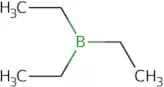
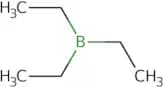
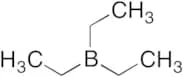
AC-17698 - triethylborane-1m-solution-in-thf-acrosealtm | 109-99-9
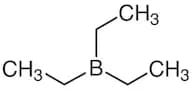
Triethylborane (ca. 11% in Tetrahydrofuran, ca. 1mol/L)
CAS:Fórmula:C6H15BForma y color:Colorless clear liquidPeso molecular:98.00Triethylborane 1.0 M solution in hexanes
CAS:Triethylborane 1.0 M solution in hexanesPureza:≥95%Forma y color:Colourless LiquidPeso molecular:97.99g/molTriethylborane, 1M soln. in THF
CAS:This Thermo Scientific Chemicals brand product was originally part of the Alfa Aesar product portfolio. Some documentation and label information may refer to the legacy brand. The original Alfa Aesar product / item code or SKU reference has not changed as a part of the brand transition to Thermo Sci
Fórmula:C6H15BForma y color:Clear colorless to yellow to orange, LiquidPeso molecular:98.00CALLERY™ Triethylborane-1,3-diaminopropane, min. 97%
CAS:Fórmula:(C2H5)3BNH2(CH2)3NH2Pureza:min. 97%Forma y color:colorless to amberPeso molecular:172.12CALLERY™ Triethylborane, min 99.8%
CAS:Fórmula:B(C2H5)3Pureza:min 99.8%Forma y color:clear to slightly amber liq.Peso molecular:98.00CALLERY™ Triethylborane, 14% in tetrahydrofuran
CAS:Fórmula:(C2H5)3BForma y color:clear to slightly amberPeso molecular:98.00CALLERY™ Triethylborane-diethylenetriamine, min. 97%
CAS:Fórmula:(C2H5)3BH2N(CH2)2NH(CH2)2NH2Pureza:min. 97%Forma y color:colorless to amberPeso molecular:201.17Triethylborane-1,3-diaminopropane
CAS:Triethylborane-1,3-diaminopropane is a polyolefin radiation initiator. It can be used in the production of polypropylene and polyethylene by polymerizing olefins, such as 2-methylanthraquinone, at low energy. This method has been shown to give photocurable polyolefin plastics with benzophenones and coumarin as substrates. The bonding properties of triethylborane-1,3-diaminopropane are due to its ability to form covalent bonds with the unsaturated groups on the substrate molecules.Fórmula:C9H25BN2Pureza:Min. 95%Forma y color:Clear LiquidPeso molecular:172.12 g/molDiphenylsilane, 97%
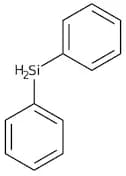
CAS:Thiocarbonyl derivatives of secondary alcohols are readily reduced by diphenylsilane in a radical chain process at room temperature using triethylborane-air as an initiator. An improved radical chain procedure for the deoxygenation of secondary and primary alcohols using diphenylsilane as hydrogen a
Fórmula:C12H12SiPureza:97%Forma y color:Clear colorless, LiquidPeso molecular:184.312-Iodopropanamide
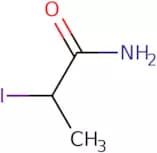
CAS:2-Iodopropanamide is a polymeric compound that is obtained from the reaction of 2-iodobenzene with triethylborane in the presence of polystyrene. The product has a high yield and can be used to make laminates that are semipermeable, osmotic, and environmentally friendly. The polymeric composition is also cyclisable.
Fórmula:C3H6INOPureza:Min. 95%Peso molecular:198.99 g/mol1-(Triethyl-λ4-Boranyl)Propane-1,3-Diamine
CAS:1-(Triethyl-λ4-Boranyl)Propane-1,3-DiaminePureza:98%Peso molecular:171.11g/molTriethylborane
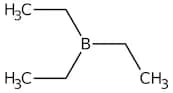
Triethylborane is a chemical compound that is used as a reagent in organic chemistry. It is also used to study the repair mechanism of polymer films and activation energies for radical transfer reactions. Triethylborane has been shown to react with nitrogen atoms, forming boron and triethylborane. This reaction occurs at low energy and the reactive site is the carbonyl group. Triethylborane can also react with zirconium oxide, forming a boron nitride product.Fórmula:C6H15BPureza:Min. 95%Peso molecular:97.99 g/molTriethylborane - 1M in THF
Triethylborane (TEB) is a compound that is used as an oxidant in organic synthesis. It is also used for the synthesis of other compounds, such as epoxides, asymmetric syntheses, and hydroxylation reactions. TEB has been shown to be highly resistant to repair mechanisms. The nitrogen atoms are present in a form of triethylamine borane or triethylamine borane-1M in THF. This compound can be used to study both infectious diseases and biological processes. TEB reacts with malonic acid to produce boric acid and epoxides. The reaction mechanism involves an acid complex that forms between the carboxylic acid and the hydroxyl group on the TEB molecule.Fórmula:C6H15BPureza:Min. 95%Peso molecular:97.99 g/molTriethylborane (1.0 M in THF)
CAS:Producto controladoApplications Triethylborane reacted with 8-hydroxyquinoline to synthesize three 8--hydroxyquinolato (q) boron compounds B(C2H5)2q (1), BPh2q (2), and B(2-naph)2q (3).
References Wu, Q., et al.: Chem. Mater., 12, 79 (2000).Fórmula:C6H15BForma y color:Single SolutionPeso molecular:97.99Cis-3-Benzyloxymethylcyclobutanol
Cis-3-Benzyloxymethylcyclobutanol is a crystalline compound with a molecular formula of C6H10O. It can be synthesized by reacting the heteroaromatic telluride benzyl ether with triethylborane in the presence of dichloroketene. The reaction may also be photochemically induced. The synthesis of this compound is limited by its high reactivity, as it decomposes to give an unidentified product. Cis-3-Benzyloxymethylcyclobutanol has shown to have x-ray crystallographic data and crystallographic properties. It is a carbocyclic compound with two rings that are joined together through a single bond. One ring is composed of five carbon atoms and one oxygen atom, while the other ring contains six carbon atoms and no heteroatoms. Cis-3-Benzyloxymethylcyclobutanol has been used as an analog for benzene because it possesses a similarFórmula:C12H16O2Pureza:Min. 95%Peso molecular:192.25 g/molRef: 3D-FB53704
Producto descatalogadoCyclohex-1-en-1-ylboronic acid
Cyclohex-1-en-1-ylboronic acid is a synthetic compound that is used in the synthesis of other chemical substances. It can be prepared by using cross-coupling reactions with boron compounds, such as triethylborane, in a solvent, such as tetrahydrofuran (THF). Cyclohex-1-en-1-ylboronic acid can be used to make amides and isomers. The reaction time for this reaction depends on the type of solvent used. Cyclohex-1-en-1-ylboronic acid has shown no toxicity in binding experiments with the CB2 receptor. In addition, this synthetic compound has been found to have anti cancer properties that are stereoselective against resistant mutants of cancer cells.Fórmula:C6H11BO2Pureza:Min. 95%Peso molecular:125.96 g/molRef: 3D-FC139903
Producto descatalogado3-Fluorobenzal Chloride
3-Fluorobenzal chloride is a halide and trialkylborane. It reacts with magnesium and alcohols to form alkylated products. 3-Fluorobenzal chloride also reacts with triethylborane to form an alkylated product.Fórmula:C7H5Cl2FPureza:Min. 95%Peso molecular:179.02 g/molPotassium tri-sec-butylborohydride - 1M solution in THF
Potassium tri-sec-butylborohydride is a cyclic peroxide that is used to synthesize organoboranes. It is prepared by the reaction of potassium hydride with triethylborane in THF. The product can be purified by preparative chromatography. The potassium tri-sec-butylborohydride is also used as an analytical reagent for the determination of hydrogen peroxide and octane, as well as a preparative method for monoxide and trialkylborane. This compound is also produced as a byproduct in the synthesis of potassium tetrakis(pentafluoroethyl)borate.Fórmula:C12H28BKPureza:Min. 95%Forma y color:Clear LiquidPeso molecular:222.26 g/mol2,5-Bis(hexyl)-1,4-dibromobenzene
2,5-Bis(hexyl)-1,4-dibromobenzene is a monomer that has been synthesised in the laboratory. It mimics the biological function of apigenin, an important natural product found in plants. The synthesis of 2,5-bis(hexyl)-1,4-dibromobenzene proceeds via nucleophilic attack on the bromide ion by the triethylborane anion. This compound inhibits cell proliferation and induces apoptosis in human lung cancer cells. The functional groups present in 2,5-bis(hexyl)-1,4-dibromobenzene are aryl groups and alkyl chains with one or two hexyl groups.Fórmula:C18H28Br2Pureza:Min. 95%Peso molecular:404.24 g/molRef: 3D-SEA63521
Producto descatalogado