Entre las marcas de nuestros más de 25 colaboradores destaca TargetMol
We have reached an agreement with TargetMol: CymitQuimica clients will benefit for a 20% discount on all TargetMol products until the end of the year.On our website you can find the products offered by this partner, which has become one of the world's most recognised compound libraries and small molecule inhibitors supplier. TargetMol offers approximately 120 compound libraries and a wide range of chemical products and kits for life sciences.
Termina el 31 dic( quedan 8 días )
VH4127 TFA
VH4127 TFA is a cyclic peptide with a KD of 18 nM for human low-density lipoprotein receptor (hLDLR). It can specifically bind to epidermal growth factor (EGF) LDLR homologous domains in both rodents and humans.Forma y color:Odour SolidUrocortin II, human acetate
Urocortin II, human acetate, is a selective endogenous peptide agonist of type 2 corticotropin-releasing factor (CRF2) receptors, used to study the role of CRF2 receptors in feeding behavior.Forma y color:Odour Solid[Gly8]-GLP-1(7-37) acetate
[Gly8]-GLP-1(7-37) acetate is a derivative of GLP-1, where glycine at position 8 is replaced with alanine. [Gly8]-GLP-1(7-37) acetate is also a peptide fragment of the GLP-1 receptor (GLP-1R) agonist, Dulaglutide.Forma y color:Odour SolidPeptide R54
Peptide R54 (Pep R54; CXCR4 antagonist peptide 19) is an antagonistic polypeptide targeting CXCR4, known for its significant anticancer properties. It inhibits CXCR4-dependent cell migration, epithelial-mesenchymal transition, and the development of lung metastasis, offering better serum stability and higher CXCR4 affinity (IC50=20 nM) compared to the lead compound. Peptide R54 works synergistically with anti-PD-1 therapy to exhibit antitumor effects in vivo, enhancing granzyme activity and reducing Foxp3 cell infiltration. It is useful for research in colon cancer, ovarian cancer, and melanoma.Forma y color:Odour SolidErbB2 peptide
CAS:ErbB2 peptide is a ligand peptide that targets the E3 ubiquitin ligase associated with PI3K, utilized in synthesizing peptide PROTACs.Fórmula:C99H148N28O37S3Forma y color:SolidPeso molecular:2418.59Filimelnotide
CAS:Filimelnotide is an agonist of the melanocortin receptor.Fórmula:C47H69N15O9S2Forma y color:SolidPeso molecular:1052.28Biotin-DEVD-CHO TFA
Biotin-DEVD-CHO (TFA) is the biotin-conjugated form of the caspase-3 and caspase-7 inhibitor Ac-DEVD-CHO. It can be utilized for affinity purification of active caspase-3, -6, -7, and -8 and is also applicable for in vitro detection of active caspase-3.Forma y color:Odour SolidBiotin-Gastrin Releasing Peptide, human TFA
Biotin-Gastrin Releasing Peptide, human TFA, is a biotinylated form of the gastrin-releasing peptide (GRP). GRP is a neuropeptide known for its growth-stimulating and tumorigenic properties.Forma y color:Odour SolidTRAP-14 amide
CAS:TRAP-14 amide is a protease-activated receptor (PAR) activating peptide and acts as a PAR agonist, with an EC50 of 24 μM. It induces significant platelet aggregation via ADP and MMP-2 dependent pathways and is insensitive to Aspirin. Additionally, TRAP-14 amide effectively increases the surface expression of glycoprotein (GP) Ib and GPIIb/IIIa, as well as the release of ADP.Fórmula:C81H119N21O22Forma y color:SolidPeso molecular:1738.94Knob A peptide GPRPFPAC
CAS:Knob A peptide GPRPFPAC is a fibrin knob peptide. The PEGylated form of Knob A peptide GPRPFPAC exhibits enhanced anticoagulant activity.Fórmula:C38H57N11O9SForma y color:SolidPeso molecular:843.99Cys-PKHB1
CAS:Cys-PKHB1 (Cys-txCD47) is a polypeptide consisting of a cysteine (Cys) residue coupled with PKHB1, which is a CD47 agonist peptide that acts as a thrombospondin-1 peptide mimetic with anti-tumor properties. In breast cancer cells, PKHB1 induces mitochondrial changes, ROS production, intracellular Ca+ accumulation, and calcium-dependent cell death. Additionally, PKHB1 activates the immune system by inducing immunogenic cell death in breast cancer cells.Fórmula:C71H110N18O13S2Forma y color:SolidPeso molecular:1487.88Lenbelintide
CAS:Lenbelintide is a dual amylin/calcitonin receptor agonist, useful in studies related to obesity.Forma y color:SolidZ-Val-Val-Nle-diazomethylketone
CAS:Z-Val-Val-Nle-diazomethylketone is an inhibitor of cathepsin S (CATS). It significantly suppresses the upregulation of IFNg-induced MHCII molecules, specifically HLA-DR and Ii-p33/35, while increasing the protein level of Ii-p10. This compound can be utilized for research into skin disorders such as psoriasis, atopic dermatitis, and actinic keratosis.Fórmula:C25H37N5O5Forma y color:SolidPeso molecular:487.59Corza6 TFA
Corza6 TFA is a potent and selective peptide inhibitor of the human voltage-gated proton channel (hHv1). It binds to the external voltage-sensor domain (VSD) loop of hHv1 with a dissociation constant (Kd) of approximately 1 nM under the native hyperpolarized resting membrane potential (RMP) of mammalian cells. Additionally, Corza6 TFA induces sperm capacitation and enables continuous reactive oxygen species (ROS) production in white blood cells (WBC).Forma y color:Odour SolidEps8 peptide 327
CAS:Eps8 peptide 327 is an HLA-A*2402-restricted peptide antigen derived from the Eps8 protein. It exhibits potent antitumor activity and significant cytotoxicity. Eps8 peptide 327 effectively inhibits cancer cell proliferation, induces apoptosis, and disrupts the EGFR signaling pathway by inhibiting the expression of downstream signals such as IL-2, TNF-α, and IFN-γ, as well as impeding the Eps8/EGFR interaction. It significantly suppresses tumor growth in HT-29 xenograft models.Fórmula:C56H77N11O15SForma y color:SolidPeso molecular:1176.34Tat-ASIC1a (1-20) (mouse, rat)
Tat-ASIC1a (1-20) (mouse, rat) is a competitive ASIC1a transmembrane peptide with significant neuroprotective effects. It alleviates acidotoxic neuronal damage by targeting the ASIC1a-RIPK1 pathway and an auto-inhibition mechanism. This compound effectively safeguards the brain in ischemic stroke mouse models against damage from ischemia and is applicable in research on neurodegenerative diseases, such as Huntington's disease and Parkinson’s disease.Forma y color:Odour SolidGIP/GLP-1 dual receptor agonist-1 sodium
GIP/GLP-1 dual receptor agonist-1 (Compound 4) (sodium) functions as a GIP/GLP-1 receptor agonist. This compound is applicable for research into metabolic disorders and liver diseases, including non-alcoholic steatohepatitis (NASH) and non-alcoholic fatty liver disease (NAFLD).Forma y color:Odour SolidBerobenatide
CAS:Berobenatide is a glucagon-like peptide-1 (GLP-1) receptor agonist.Forma y color:SolidZovaglutide
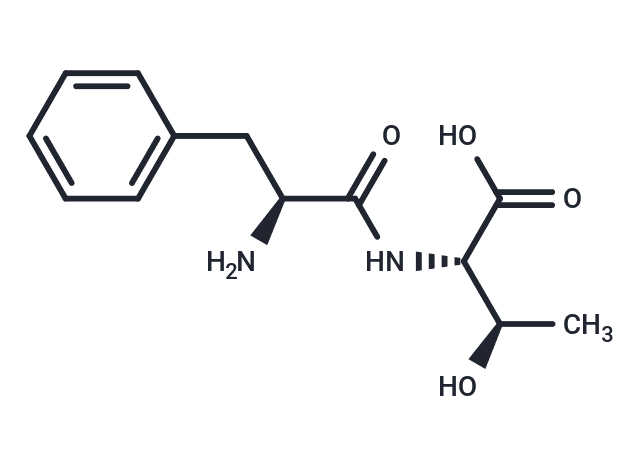
CAS:Zovaglutide is a GLP-1 receptor agonist that is utilized in diabetes research.Forma y color:SolidL-Phenylalanyl-L-threonine
CAS:L-Phenylalanyl-L-threonine is a dipeptide composed of phenylalanine and threonine, which can be utilized in the synthesis of the cyclic hexapeptide [Banyascyclamide A].Fórmula:C13H18N2O4Forma y color:SolidPeso molecular:266.29Acmopatide
CAS:Acmopatide (Compound E-153) is a dual agonist of GIP and GLP-1 receptors and can be utilized in diabetes research.Forma y color:SolidJKC 302
CAS:JKC 302 is an ET-A receptor antagonist that partially inhibits the contraction of tracheal rings in asthmatic rats induced by ET-1.Fórmula:C30H42N6O6Forma y color:SolidPeso molecular:582.69P9R
CAS:P9R is an antiviral peptide with broad-spectrum activity against coronaviruses (SARS-CoV-2, MERS-CoV, and SARS-CoV), influenza A H1N1 virus (A(H1N1)pdm09), influenza A H7N9 virus (A(H7N9) virus), and rhinovirus. It binds directly to viruses and inhibits virus-host endosomal acidification. P9R significantly protects mice from infection by influenza A H1N1 virus (A(H1N1)pdm09) without leading to resistant viruses. P9R is applicable in studying pH-dependent respiratory viruses.Fórmula:C144H232N52O35S5Forma y color:SolidPeso molecular:3412.03Targeting the bacterial sliding clamp peptide 46 TFA
Targeting thebacterialsliding clamp peptide 46 TFA is a short peptide that specifically targets the bacterial sliding clamp (SC) and inhibits SC-dependent DNA synthesis.Forma y color:Odour SolidTE-8105
TE-8105 is a GLP-1 receptor agonist that demonstrates prolonged and enhanced efficacy in models of diabetes, obesity, and non-alcoholic steatohepatitis (NASH).Forma y color:Odour SolidCanine KP-10
Canine KP-10 is a potent kisspeptin that induces a significant gonadotropin and estradiol response in female dogs during estrus.Forma y color:Odour SolidSecretin, canine TFA
Secretin, canine TFA, is an endocrine hormone that stimulates the secretion of pancreatic fluid rich in bicarbonate. Additionally, Secretin, canine TFA, can regulate the primary cell functions and paracellular permeability of gastric monolayer cells through an Src kinase-dependent pathway.Forma y color:Odour SolidZenagamtide sodium
Zenagamtide is an agonist for both glucagon-like peptide-1 (GLP-1) and amylin receptors.Forma y color:Odour SolidWT1 126-134 peptide
CAS:WT1 126-134 peptide is a WT1 polypeptide (Wilms' tumor 1 peptide) (RMFPNAPYL) that activates cytotoxic CD8 T cells to target and destroy WT1+ tumor cells. It can form stable complexes with either H-2Db (murine) or HLA-A0201 (human) molecules. The WT1 126-134 peptide/HLA-A0201 complex exhibits high affinity for humanized monoclonal antibodies (IgG1), with a dissociation constant (Kd) of 0.2 nM. This peptide can be utilized as a T cell vaccine or an antibody target.Fórmula:C52H77N13O12SForma y color:SolidPeso molecular:1108.31G-Pen-GRGDSPCA TFA
G-Pen-GRGDSPCA TFA is an αvβ3 inhibitory RGD peptide. It inhibits neointimal hyperplasia and luminal narrowing following vascular injury and regulates the migration and proliferation of smooth muscle cells. This compound can be utilized in studies related to mechanisms of vascular injury repair.Forma y color:Odour SolidL803
CAS:L803 is a selective somatostatin receptor type 4 (SST4) agonist that can inhibit L-type calcium channel currents (ICa). It holds potential for research into degenerative diseases of retinal ganglion cells (RGC), such as glaucoma.Fórmula:C50H80N13O19PForma y color:SolidPeso molecular:1198.22Pelteobagrin
CAS:Pelteobagrin is a broad-spectrum antimicrobial peptide targeting Gram-positive bacteria, Gram-negative bacteria, and fungi (MIC=2-16 μg/mL). It exerts its bactericidal effects by non-competitively disrupting the integrity of cell walls and cytoplasmic membranes. Pelteobagrin holds promise for use in infectious disease research.Fórmula:C108H182N26O25Forma y color:SolidPeso molecular:2244.76GEP44
GEP44 is a peptide-biased triple agonist targeting the glucagon-like peptide-1 receptor (GLP-1R), neuropeptide Y1 receptor (Y1-R), and neuropeptide Y2 receptor (Y2-R). It induces GLP-1R-dependent insulin secretion in rat and human islets by offsetting the actions of Y1-R and GLP-1R agonism, controlled by Y1-R antagonists. Additionally, GEP44 enhances glucose uptake in muscle tissue through Y1-R mediation independent of insulin and significantly reduces food intake and body weight in diet-induced obese rat models. GEP44 is utilized in studies related to obesity and type 2 diabetes.Forma y color:Odour Solidc(R3W4V)
c(R3W4V) is an antimicrobial peptide with a stable transmembrane structure. It exhibits inhibitory concentrations (IC50) of 0.27 μM for E. coli, 0.46 μM for S. aureus, and 0.05 μM for B. subtilis.Forma y color:Odour SolidNN1213
NN1213 (Peptide 21) is a long-acting human amylin peptide analogue that functions as a selective amylin receptor agonist. It has an EC50 of 0.177 nM for hAMY3R and 0.262 nM for rAMY3R. In both rat and dog models, NN1213 significantly reduces appetite and is utilized in anti-obesity research.Forma y color:Odour SolidC-telopeptide TFA
C-telopeptide TFA is a cross-linked peptide of type I collagen, released during bone resorption, and is associated with bone mineral density (BMD).Forma y color:Odour SolidRK-10
CAS:RK-10 is a peptide that binds to PD-L1. After being conjugated with Cy5 or Biotin, RK-10 can be used to identify PD-L1-expressing tumors through flow cytometry or immunohistochemistry. It is applicable for research in detecting cancers such as non-small cell lung cancer (NSCLC), breast cancer, squamous cell carcinoma, and melanoma.Fórmula:C105H176N28O36SForma y color:SolidPeso molecular:2438.75OVA(250-264)
CAS:OVA(250-264) (OVAvac) (OVAp) is an antigenic peptide derived from chicken egg ovalbumin, presented by class I MHC molecule H-2Kb. This peptide, when combined with αMSLN (anti-MSLN antibody), significantly stimulates the production and infiltration of antigen-specific CD8+ T cells, thereby enhancing antitumor effects in an in situ pancreatic cancer mouse model. It is applicable in developing tumor neoantigen vaccines for pancreatic cancer immunotherapy research.Fórmula:C77H126N18O26Forma y color:SolidPeso molecular:1719.93A17 peptide
CAS:A17 peptide is an Hsp70-targeting peptide. It binds to the ATP-binding domain of Hsp70, specifically inhibiting its chaperone activity. This enhances cellular sensitivity to chemotherapeutic drugs, such as those inducing apoptosis via Cisplatin. A17 peptide is applicable in cancer chemotherapy research, including studies on multiple myeloma.Fórmula:C76H105N19O20SForma y color:SolidPeso molecular:1636.83PLGLAG
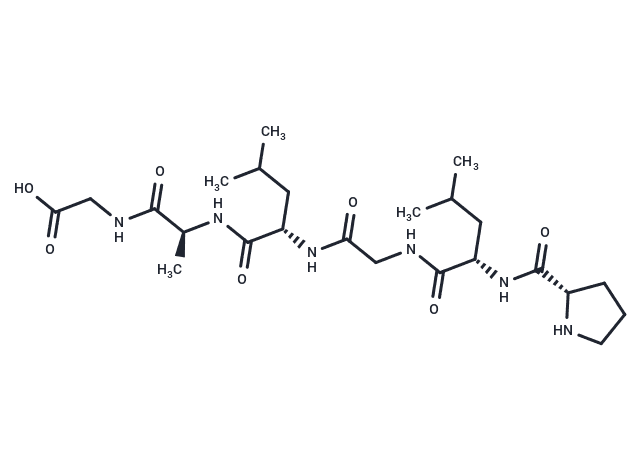
CAS:PLGLAG is a peptide chain that acts as a linker in activatable cell-penetrating peptides (ACPPs). ACPPs containing the PLGLAG linker are primarily sensitive to MMP-2 and MMP-9 in vivo. PLGLAG is applicable in cancer research.Fórmula:C24H42N6O7Forma y color:SolidPeso molecular:526.63FITC-LC-TAT (47-57) acetate
FITC-LC-TAT (47-57) acetate is an FITC-labeled TAT peptide known as a cell-penetrating peptide (CPP). It enhances the yield and solubility of heterologous proteins.Forma y color:Odour SolidNotch 1
CAS:Notch1 (Notchhomolog 1, translocation-associated) encodes a protein that is a member of the NOTCH family. This type I transmembrane protein family is characterized by common structural features, including an extracellular domain made up of multiple epidermal growth factor-like (EGF) repeats and an intracellular domain composed of various types of domains.Fórmula:C62H97N15O22S3Forma y color:SolidPeso molecular:1500.72(2S,3AS,7aS)-Octahydroindole-2-carboxylic acid
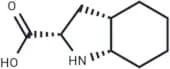
CAS:(2S,3AS,7aS)-Octahydroindole-2-carboxylic acid is a useful organic compound that has been used in life science related research.Fórmula:C9H15NO2Pureza:≥98%Forma y color:Whitish Or Yellowish Crystalline PowderPeso molecular:169.2243-[4-(PhenylMethoxy)phenyl]-2-Propenoic acid
CAS:<p>3-[4-(PhenylMethoxy)phenyl]-2-Propenoic acid is primarily used as a reagent and intermediate in organic synthesis.</p>Fórmula:C16H14O3Pureza:99.83%Forma y color:SolidPeso molecular:254.28Elastase-IN-3
CAS:<p>Compound 15015-57-3, with CAS No. 15015-57-3, is a fragment molecule that serves as an important scaffold for molecular linking, expansion, and modification. Compound 15015-57-3 provides a structural basis and research tool for the design and screening of novel drug candidates, and is commonly used in drug discovery, drug synthesis, and related research.</p>Fórmula:C12H10O2S2Pureza:98.58%Forma y color:SolidPeso molecular:250.332-Methylquinazolin-4-ol
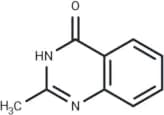
CAS:<p>Compound 1769-24-0 is a natural product for research related to life sciences. The catalog number is TPL0186 and the CAS number is 1769-24-0.</p>Fórmula:C9H8N2OPureza:99.98%Forma y color:SolidPeso molecular:160.171-Methylisatin
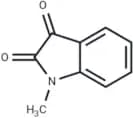
CAS:Compound 2058-74-4, with CAS No. 2058-74-4, is a fragment molecule that serves as an important scaffold for molecular linking, expansion, and modification. Compound 2058-74-4 provides a structural basis and research tool for the design and screening of novel drug candidates, and is commonly used in drug discovery, drug synthesis, and related research.Fórmula:C9H7NO2Pureza:99.71%Forma y color:Orange To Brownish Crystalline PowderPeso molecular:161.164-(Benzo[d]oxazol-2-yl)aniline
CAS:4-(Benzo[d]oxazol-2-yl)aniline is a potent antitumor agent that has inhibitory activity against mammary carcinoma cell lines [1].Fórmula:C13H10N2OPureza:99.78%Forma y color:SolidPeso molecular:210.23N2-Acetylguanine
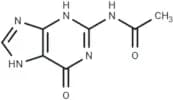
CAS:Compound 19962-37-9, with CAS No. 19962-37-9, is a fragment molecule that serves as an important scaffold for molecular linking, expansion, and modification. Compound 19962-37-9 provides a structural basis and research tool for the design and screening of novel drug candidates, and is commonly used in drug discovery, drug synthesis, and related research.Fórmula:C7H7N5O2Pureza:99.90%Forma y color:White SolidPeso molecular:193.166









![3-[4-(PhenylMethoxy)phenyl]-2-Propenoic acid](/_next/image/?url=https%3A%2Fstatic.cymitquimica.com%2Fproducts%2FTM%2Fthumb-webp%2FTPL0053.webp&w=3840&q=75)
![4-(Benzo[d]oxazol-2-yl)aniline](/_next/image/?url=https%3A%2Fstatic.cymitquimica.com%2Fproducts%2FTM%2Fthumb-webp%2FTPL0265.webp&w=3840&q=75)