CAS 100040-31-1
:polypeptide inhibiteur gastrique humain
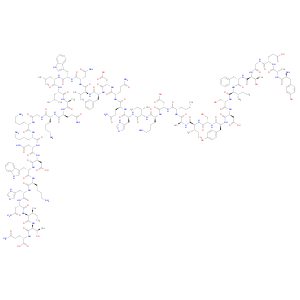
- H-Tyr-Ala-Glu-Gly-Thr-Phe-Ile-Ser-Asp-Tyr-Ser-Ile-Ala-Met-Asp-Lys-Ile-His-Gln-Gln-Asp-Phe-Val-Asn-Trp-Leu-Leu-Ala-Gln-Lys-Gly-Lys-Lys-Asn-Asp-Trp-Lys-His-Asn-Ile-Thr-Gln-OH
- Gip (Human)
Gastric Inhibitory Polypeptide (human)
CAS :Gastric inhibitory polypeptide (GIP), an incretin, represents an essential regulator of insulin secretion and glucose homeostasis.Formule :C226H338N60O66SDegré de pureté :97.4%Couleur et forme :Whitish PowderMasse moléculaire :4983.6gastric inhibitory polypeptide (human)-Asn-Ile-Thr-Gln-OH
CAS :Formule :C226H338N60O66SDegré de pureté :95%Couleur et forme :SolidMasse moléculaire :4983.5293GIP, human
CAS :Insulinotropic hormone from K-cells, binds GIP receptors, boosts insulin, affects lipids, and has antiapoptotic properties.
Formule :C226H338N60O66SDegré de pureté :98%Couleur et forme :SolidMasse moléculaire :4983.6GIP (Human)
CAS :GIP is a peptide that is produced by the cells of the small intestine. GIP has been shown to be an inhibitor of insulin secretion and, in turn, may help regulate glucose levels. It also regulates growth hormone release in response to food intake. GIP acts as a ligand for the receptor known as the “gastric inhibitory polypeptide receptor” which is found on pancreatic beta cells and duodenal L-cells. This protein has been shown to activate ion channels and regulate their activity. The GIP receptor is also expressed on certain types of cancer cells, including breast cancer and colorectal cancer. Antibodies have been generated against this protein for use in research tools such as Western blotting or immunohistochemistry.Formule :C226H338N60O66SDegré de pureté :Min. 95%Masse moléculaire :4,983.5 g/molGIP (Human)
CAS :GIP (Gastric Inhibitory Polypeptide) is a peptide hormone that belongs to the family of incretin hormones. GIP has been shown to have an insulinotropic effect, which is mediated by its activation of glucose-dependent insulin release from pancreatic β-cells. It also has effects on lipid metabolism and plays a role in the regulation of food intake. GIP is produced by K cells in the ileum and colon and released into the bloodstream following food intake. The binding of GIP to its receptors leads to inhibition of gastric acid secretion, stimulation of gallbladder contraction, increased blood flow to the stomach, relaxation of pyloric sphincter muscles, and inhibition of gastric motility. This product is highly pure (> 98%) with no detectable endotoxin or other microbial contamination.
Formule :C226H338N60O66SDegré de pureté :Min. 95%Masse moléculaire :4,983.5 g/mol