CAS 1000995-48-1
:Trier par
Degré de pureté (%)
0
100
|
0
|
50
|
90
|
95
|
100
4 produits concernés.
16H-1,24,17a,15-[1]Propanyliden[3]ylidyne-14H,17aH-cyclopropa[r]cyclopropa[1,2]furo[3',2':6,7]acenaphtho[4,5-u][1,5,10,15]tetraoxacyclodocosin-4,9,12,16,19(2H,7H)-pentone, 1,10,11,20a,21,21a,21b,22,22a,22b,23,23a,24,24a,25,25a-hexadecahydro-1,20a,21,22b-tetrahydroxy-5,18,21a,24-tetramethyl-, (1S,5E,17aR,20aS,21R,21aS,21bR,22aS,22bS,23aS,24S,24aR,25aS,26R)-
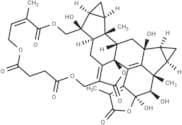
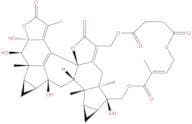
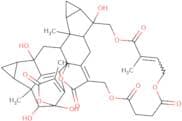
CAS :Formule :C39H42O14Masse moléculaire :734.7424Chloramultilide C
CAS :Chloramultilide C is a natural product of Chloranthus, Chloranthaceae.Formule :C39H42O14Degré de pureté :98%Couleur et forme :SolidMasse moléculaire :734.751Chloramultilide C
CAS :Chloramultilide C is a macrolide polyketide, which is a secondary metabolite produced by certain marine bacteria. Specifically, it is derived from the genus Streptomyces, isolated from oceanic environments known for their rich biodiversity and unique chemical ecosystems. The mode of action of chloramultilide C involves inhibiting bacterial protein synthesis, thus exerting its antimicrobial effects by targeting and binding to the bacterial ribosome, which disrupts the translation process. This compound has shown significant activity against a broad spectrum of bacterial pathogens, particularly Gram-positive bacteria.Formule :C39H42O14Degré de pureté :Min. 95%Masse moléculaire :734.7 g/mol