CAS 104339-66-4
:Histatine 5
Description :
Histatine 5 est un peptide qui fait partie de la famille des histatines, qui sont des protéines riches en histidine principalement trouvées dans la salive humaine. Il est connu pour ses propriétés antimicrobiennes, en particulier contre diverses bactéries et champignons, ce qui le rend significatif pour la santé bucco-dentaire et les applications thérapeutiques potentielles. Le peptide est composé de 24 acides aminés et se caractérise par sa forte teneur en histidine, qui contribue à sa capacité à se lier aux ions métalliques et à exhiber une activité antimicrobienne. Histatine 5 joue également un rôle dans la cicatrisation des plaies et a montré qu'il favorise la prolifération et la migration cellulaire, qui sont des processus essentiels dans la réparation des tissus. Son mécanisme d'action implique la perturbation des membranes microbiennes et l'interférence avec les processus cellulaires dans les pathogènes. De plus, Histatine 5 a été étudié pour son potentiel dans les systèmes de délivrance de médicaments et comme modèle pour concevoir de nouveaux agents antimicrobiens. Dans l'ensemble, ses propriétés uniques en font un sujet d'intérêt tant en microbiologie qu'en recherche biochimique.
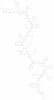
Formule :C133H195N51O33
InChI :InChI=1/C133H195N51O33/c1-71(164-120(206)96(46-76-54-146-65-158-76)181-128(214)103(62-185)183-110(196)84(138)52-108(193)194)109(195)167-86(18-5-9-35-134)113(199)172-91(24-15-41-154-133(143)144)118(204)178-99(49-79-57-149-68-161-79)125(211)176-95(45-75-53-145-64-157-75)112(198)156-60-105(189)165-93(43-73-25-29-82(187)30-26-73)121(207)173-87(19-6-10-36-135)114(200)171-90(23-14-40-153-132(141)142)115(201)169-88(20-7-11-37-136)116(202)175-94(42-72-16-3-2-4-17-72)122(208)179-97(47-77-55-147-66-159-77)124(210)174-92(33-34-107(191)192)119(205)170-89(21-8-12-38-137)117(203)177-100(50-80-58-150-69-162-80)126(212)180-101(51-81-59-151-70-163-81)127(213)184-104(63-186)129(215)182-98(48-78-56-148-67-160-78)123(209)168-85(22-13-39-152-131(139)140)111(197)155-61-106(190)166-102(130(216)217)44-74-27-31-83(188)32-28-74/h2-4,16-17,25-32,53-59,64-71,84-104,185-188H,5-15,18-24,33-52,60-63,134-138H2,1H3,(H,145,157)(H,146,158)(H,147,159)(H,148,160)(H,149,161)(H,150,162)(H,151,163)(H,155,197)(H,156,198)(H,164,206)(H,165,189)(H,166,190)(H,167,195)(H,168,209)(H,169,201)(H,170,205)(H,171,200)(H,172,199)(H,173,207)(H,174,210)(H,175,202)(H,176,211)(H,177,203)(H,178,204)(H,179,208)(H,180,212)(H,181,214)(H,182,215)(H,183,196)(H,184,213)(H,191,192)(H,193,194)(H,216,217)(H4,139,140,152)(H4,141,142,153)(H4,143,144,154)/t71-,84-,85-,86-,87-,88-,89-,90-,91-,92-,93-,94-,95-,96-,97-,98-,99-,100-,101-,102-,103-,104-/m0/s1
SMILES :C[C@@H](C(=N[C@@H](CCCCN)C(=N[C@@H](CCCNC(=N)N)C(=N[C@@H](Cc1cnc[nH]1)C(=N[C@@H](Cc1cnc[nH]1)C(=NCC(=N[C@@H](Cc1ccc(cc1)O)C(=N[C@@H](CCCCN)C(=N[C@@H](CCCNC(=N)N)C(=N[C@@H](CCCCN)C(=N[C@@H](Cc1ccccc1)C(=N[C@@H](Cc1cnc[nH]1)C(=N[C@@H](CCC(=O)O)C(=N[C@@H](CCCCN)C(=N[C@@H](Cc1cnc[nH]1)C(=N[C@@H](Cc1cnc[nH]1)C(=N[C@@H](CO)C(=N[C@@H](Cc1cnc[nH]1)C(=N[C@@H](CCCNC(=N)N)C(=NCC(=N[C@@H](Cc1ccc(cc1)O)C(=O)O)O)O)O)O)O)O)O)O)O)O)O)O)O)O)O)O)O)O)O)O)N=C([C@H](Cc1cnc[nH]1)N=C([C@H](CO)N=C([C@H](CC(=O)O)N)O)O)O
Synonymes :- Histatin-5
Trier par
Degré de pureté (%)
0
100
|
0
|
50
|
90
|
95
|
100
3 produits concernés.
Histatin 5
CAS :Peptide Histatin 5 is a Research Peptide with significant interest within the field academic and medical research. This peptide is available for purchase at Cymit Quimica in multiple sizes and with a specification of your choice.Formule :C133H195N51O33Masse moléculaire :3,036.36 g/molHistatin 5
CAS :Custom research peptide; min purity 95%.
Formule :C133H195N51O33Degré de pureté :Min. 95%Masse moléculaire :3,036.36 g/molHistatin 5, human
CAS :As a member of the Histatin family, Histatin 5 is a 24 amino acid, antimicrobial peptide rich in histidine. The Histatin family’s large histidine presence allow Histatins to associate with metal ions through the histidine side chains.Histatin 5 is found naturally in human saliva, and is a proteolytic fragment of Histatin 3. It exhibits antifungal properties and is thus useful in inhibiting the growth of yeast and C. albicans. Histatin 5 contains a functional domain located at amino acids 11 to 24 and this is where the antimicrobial activity of Histatin 5 takes place. It also has a random secondary structure with α-helices which are believed to allow it to enter the cytoplasm of the pathogenic cell. Once it has gained entry into the cells of pathogens, it is known to induce an ATP influx and the production of reactive oxygen species.However it is important to note that while Histatin 5 displays potent antifungal activity, this is reduced when in saliva due to the exposure to interfering metals, proteins and salts.Formule :C133H195N51O33Degré de pureté :Min. 95%Masse moléculaire :3,036.3 g/mol