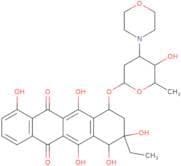
CAS 105026-50-4
:morpholinoanthracycline MX2
- (7R,8R,10S)-8-Ethyl-7,8,9,10-tetrahydro-1,6,7,8,11-pentahydroxy-10-[[2,3,6-trideoxy-3-(4-morpholinyl)-α-<span class="text-smallcaps">L</span>-lyxo-hexopyranosyl]oxy]-5,12-naphthacenedione
- (7S-9R,10R)-3'-Deamino-3'-(4-morpholinyl)-13-deoxy-10-hydroxycarminomycin
- 3-Ethyl-3,4,5,10,12-Pentahydroxy-6,11-Dioxo-1,2,3,4,6,11-Hexahydrotetracen-1-Yl 2,3,6-Trideoxy-3-Morpholin-4-Ylhexopyranoside
- 5,12-Naphthacenedione, 7,8,9,10-tetrahydro-8-ethyl-10-((3-(4-morpholinyl)-2,3,6-trideoxy-alpha-L-lyxo-hexopyranosyl)oxy)-1,6,7,8,11-pentahydroxy-
- 5,12-Naphthacenedione, 8-ethyl-7,8,9,10-tetrahydro-1,6,7,8,11-pentahydroxy-10-((2,3,6-trideoxy-3-(4-morpholinyl)-alpha-L-lyxo-hexopyranosyl)oxy)-
- 5,12-Naphthacenedione, 8-ethyl-7,8,9,10-tetrahydro-1,6,7,8,11-pentahydroxy-10-[[2,3,6-trideoxy-3-(4-morpholinyl)-α-<span class="text-smallcaps">L</span>-lyxo-hexopyranosyl]oxy]-, (7R,8R,10S)-
- Antibiotic MX 2
- MX 2 (anthracycline)
- Morpholinyl oxaunomycin
- Mx 2
- [7S,9R,10R]-3′-Deamino-3′-(4-morpholinyl)-13-deoxo-10-hydroxycarminomycin
- 5,12-Naphthacenedione, 8-ethyl-7,8,9,10-tetrahydro-1,6,7,8,11-pentahydroxy-10-[[2,3,6-trideoxy-3-(4-morpholinyl)-α-L-lyxo-hexopyranosyl]oxy]-, (7R,8R,10S)-
- Morpholinoanthracycline MX2
- Voir plus de synonymes
Anthracycline
CAS :Anthracycline is a class of chemotherapy drugs, which are anthraquinone antibiotics derived from the bacterial genus Streptomyces. They exert their therapeutic effects primarily through intercalation into DNA, disrupting the function of enzymes such as topoisomerase II, thus preventing the transcription and replication processes in rapidly dividing cancer cells. Furthermore, they generate free radicals, leading to oxidative stress and subsequent cell damage. These mechanisms collectively result in apoptosis of malignant cells. Anthracyclines are utilized extensively in oncology for the treatment of various malignancies, including leukemias, lymphomas, breast cancer, and sarcomas. The efficacy of anthracyclines in inhibiting tumor growth must be balanced against their cardiotoxic potential, which is a significant consideration in their clinical use. This dual nature makes them both pivotal and challenging in chemotherapy regimens, necessitating careful management and monitoring throughout treatment.
Formule :C30H35NO11Degré de pureté :Min. 95%Masse moléculaire :585.60 g/mol