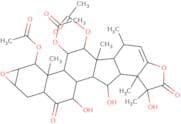
CAS 108885-69-4
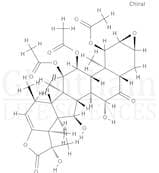
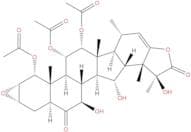
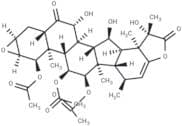
:Acide 16,24-cycloergost-22-en-26-oïque, 1,11,12-tris(acétyloxy)-2,3-époxy-7,15,23,25-tétrahydroxy-6-oxo-, γ-lactone, (1α,2α,3α,5α,7β,11α,12α,15α,16β,24β,25S)-
- 15-O-Deacetyltaccalonolide A
- 16,24-Cycloergost-22-en-26-oic acid, 1,11,12-tris(acetyloxy)-2,3-epoxy-7,15,23,25-tetrahydroxy-6-oxo-, γ-lactone, (1α,2α,3α,5α,7β,11α,12α,15α,16β,24β,25S)-
- 2H-Oxireno[6',7']naphtho[1',2':7,8]fluoreno[2,1-b]furan,16,24-cycloergost-22-en-26-oic acid deriv.
- Taccalonolide B
- (1alpha,2alpha,3alpha,5alpha,7beta,11alpha,12alpha,15alpha,16beta,24beta,25S)-1,11,12-Tris(acetyloxy)-2,3-epoxy-7,15,23,25-tetrahydroxy-6-oxo-16,24-cycloergost-22-en-26-oic acid gamma-lactone
- ETaccalonolide B
taccalonolide B
CAS :Formule :C34H44O13Degré de pureté :95%~99%Couleur et forme :PowderMasse moléculaire :660.713Taccalonolide B
CAS :Taccalonolide B is effective in vitro against cell lines that overexpress P-glycoprotein (Pgp) and multidrug-resistance protein (MRP7).Formule :C34H44O13Degré de pureté :99.85%Couleur et forme :SolidMasse moléculaire :660.71Taccalonolide B
CAS :Taccalonolide B is a bitter substance that belongs to the genus Taccalonopsis. The major cytotoxic activity of this substance has been shown in a number of cellular and animal studies, where it was found to induce apoptosis in cancer cells. Taccalonolide B also showed anticancer activity against drug-resistant cells. This substance has potential for use as a cancer therapy because it induces cell death in a variety of cancers, including lung, breast and prostate cancers. Taccalonolide B is an anticancer agent that inhibits the proliferation of cancer cells by interfering with the function of DNA topoisomerase II. It binds to DNA topoisomerase II and prevents its normal function, which may lead to cell death through inhibition of DNA replication and transcription.
Formule :C34H44O13Degré de pureté :Min. 95%Masse moléculaire :660.7 g/mol