CAS 109-09-1
:2-Chloropyridine
Description :
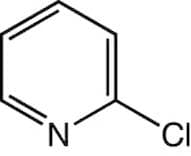
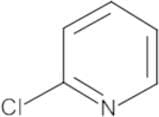
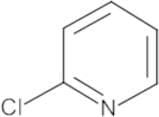
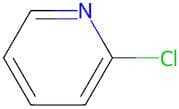
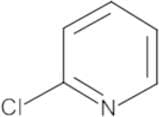
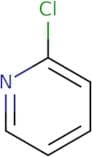
2-Chloropyridine est un composé hétérocyclique aromatique caractérisé par un cycle pyridine avec un substituant chlore en position carbone deux. Sa formule moléculaire est C5H4ClN, et il a un poids moléculaire d'environ 129,54 g/mol. Ce composé est un liquide incolore à jaune pâle avec une odeur distinctive et est soluble dans des solvants organiques tels que l'éthanol et l'éther, mais a une solubilité limitée dans l'eau. 2-Chloropyridine est principalement utilisé comme intermédiaire dans la synthèse de divers médicaments, agrochimiques et autres composés organiques. Il présente des propriétés typiques des composés aromatiques chlorés, y compris une réactivité potentielle dans les réactions de substitution nucléophile en raison de la présence de l'atome de chlore. De plus, il peut participer à des réactions de substitution aromatique électrophile, ce qui en fait un élément de construction polyvalent dans la synthèse organique. Des précautions de sécurité doivent être prises lors de la manipulation de ce composé, car il peut être nocif s'il est inhalé ou ingéré, et peut provoquer des irritations cutanées et oculaires.
Formule :C5H4ClN
InChI :InChI=1S/C5H4ClN/c6-5-3-1-2-4-7-5/h1-4H
Code InChI :InChIKey=OKDGRDCXVWSXDC-UHFFFAOYSA-N
SMILES :ClC1=CC=CC=N1
Synonymes :- 2-Chlorpyridin
- 2-Cloropiridina
- Ai3-19231
- Ccris 1724
- Nsc 4649
- Pyridine, 2-chloro-
- alpha-Chloropyridine
- o-Chloropyridine
- α-Chloropyridine
- 2-Chloropyridine
Trier par
Degré de pureté (%)
0
100
|
0
|
50
|
90
|
95
|
100
11 produits concernés.
2-Chloropyridine, 99%
CAS :2- Chloropyridine is used as an intermediate chemical in the production of various pyrithione, for use in cosmetics, personal care products and pharmaceutical products. This Thermo Scientific Chemicals brand product was originally part of the Alfa Aesar product portfolio. Some documentation and labeFormule :C5H4ClNDegré de pureté :99%Couleur et forme :Liquid, Clear colorless to pale yellowMasse moléculaire :113.54Trazodone Impurity 10
CAS :Formule :C5H4ClNCouleur et forme :Colorless LiquidMasse moléculaire :113.542-Chloropyridine
CAS :Formule :C5H4ClNDegré de pureté :99.0%Couleur et forme :OilMasse moléculaire :113.542-Chloropyridine
CAS :Produit contrôléFormule :C5H4ClNCouleur et forme :NeatMasse moléculaire :113.542-Chloropyridine
CAS :Formule :C5H4ClNDegré de pureté :>98.0%(GC)Couleur et forme :Colorless to Light yellow clear liquidMasse moléculaire :113.542-Chloropyridine
CAS :Produit contrôléFormule :C5H4ClNCouleur et forme :NeatMasse moléculaire :113.542-Chloropyridine
CAS :2-ChloropyridineFormule :C5H4ClNDegré de pureté :98%Couleur et forme : clear. colourless liquidMasse moléculaire :113.54g/mol2-Chloropyridine
CAS :Produit contrôléApplications 2-Chloropyridine (2-CPY) has been identified as a trace organic chemical in process streams, wastewater and even drinking water. Furthermore, it appears to be formed as a secondary pollutant during the decomposition of specific insecticides. 2-CPY was found to be genotoxic agent.
Not a dangerous good if item is equal to or less than 1g/ml and there is less than 100g/ml in the package
References Demsia, G., et al.: Mutat. Res., 634, 32 (2007), Stapleton, D., et al.: Water Res., 43, 3964 (2009),Formule :C5H4ClNCouleur et forme :NeatMasse moléculaire :113.542-Chloropyridine
CAS :Produit contrôlé2-Chloropyridine is a molecule that reacts with hydrochloric acid to produce hydrogen chloride and 2-chloropyridine. The reaction mechanism involves a photoelectron and hydrogen bonding interactions. The chlorine atom in the original molecule will be replaced by a hydrogen atom, while the other chlorine atom becomes part of the product, hydrogen chloride. This reaction occurs in solution at room temperature.Formule :C5H4ClNDegré de pureté :Min. 95%Couleur et forme :PowderMasse moléculaire :113.54 g/mol