CAS 109921-55-3
:N-isopropyl-5-méthoxytryptamine
- 1H-indole-3-ethanamine, 5-methoxy-1-(1-methylethyl)-
- 2-(1-Isopropyl-5-methoxy-1H-indol-3-yl)ethanamine
- 2-[5-Methoxy-1-(propan-2-yl)-1H-indol-3-yl]ethanamin
- 2-[5-Methoxy-1-(propan-2-yl)-1H-indol-3-yl]ethanamine
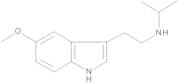
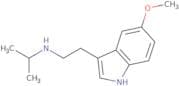
5-Methoxy-N-isopropyl Tryptamine
CAS :Produit contrôléApplications A metabolite of 5-Methoxy-N,N-diisopropyltryptamine (5-MeO-DIPT) (M262470) in human, a psychotomimetic tryptamine derivative.
References Shulgin, A., et al.: Commun. Psychopharmacol., 4, 363 (1980), Meatherall, R., et al.: J. Anal. Toxicol., 27, 313 (2003), Kamata, T., et al.: Drug Metab. Dispos., 34, 281 (2006),Formule :C14H20N2OCouleur et forme :NeatMasse moléculaire :232.325-Methoxy-N-isopropyl tryptamine
CAS :Produit contrôlé5-Methoxy-N-isopropyl tryptamine (5-MeO-iPT) is a synthetic hallucinogenic drug of the tryptamine class. It is structurally related to other synthetic cannabinoids such as 5-MeO-DMT and 5-MeO-MiPT, but with an isopropyl group in its chemical structure. It is not active orally, but can be administered by inhalation or intravenously. 5-MeO-iPt has been detected in urine samples of individuals who have used it recreationally and also in deionized water, suggesting that it may be excreted unchanged in the urine. The detection of this compound in human urine has been shown to be complicated by the matrix effect, which refers to the difference between the concentration of a compound in solution and its concentration when bound to proteins or lipids. The hydroxyl group on the molecule makes it susceptible to oxidation by reactive oxygen species,
Formule :C14H20N2ODegré de pureté :Min. 95%Masse moléculaire :232.32 g/mol