CAS 112-30-1
:1-Décanol
Description :
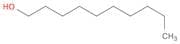
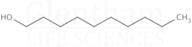
1-Décanol, avec le numéro CAS 112-30-1, est un alcool gras à chaîne droite composé d'une chaîne alkyle de dix carbones avec un groupe fonctionnel hydroxyle (-OH) à une extrémité. C'est un liquide incolore et visqueux à température ambiante, présentant une odeur douce et agréable rappelant les substances grasses. 1-Décanol est peu soluble dans l'eau mais est plus soluble dans des solvants organiques tels que l'éthanol et l'éther. Sa formule moléculaire est C10H22O, et il a un point d'ébullition relativement élevé par rapport aux alcools à chaîne plus courte, reflétant sa taille moléculaire plus grande et son caractère hydrophobe. Ce composé est principalement utilisé dans la production de tensioactifs, d'émulsifiants et comme lubrifiant. De plus, il sert de précurseur dans la synthèse de divers esters et est utilisé dans la formulation de produits de soin personnel et de parfums. En raison de sa nature hydrophobe, 1-Décanol peut également agir comme un catalyseur de transfert de phase dans certaines réactions chimiques. Les considérations de sécurité incluent son potentiel à provoquer des irritations cutanées et la nécessité d'une manipulation appropriée pour éviter l'inhalation ou l'ingestion.
Formule :C10H22O
InChI :InChI=1S/C10H22O/c1-2-3-4-5-6-7-8-9-10-11/h11H,2-10H2,1H3
Code InChI :InChIKey=MWKFXSUHUHTGQN-UHFFFAOYSA-N
SMILES :C(CCCCC)CCCCO
Synonymes :- 1-Decanol
- 1-Hydroxydecane
- Alcohol C-10
- Alcohol C-10 (1-Decanol)
- Alfol 10
- Antak
- Capric alcohol
- Caprinic alcohol
- Capryl alcohol
- Conol 1098
- Conol 10N
- Decan-1-ol
- Decane-1-Ol
- Decanol
- Decylalcohol
- Epal 10
- Kalcohl 10
- Kalcohl 1098
- Kalcohl 10H
- Kalcol 1098
- Lorol C 10
- Lorol C 10-98
- N-Decanol
- Nacol 10
- Nacol 10-99
- Nafol 10
- Nafol 10D
- Nonyl acarbinol
- Nonylcarbinol
- Nsc 406313
- Royaltac
- Sipol L 10
- T 148
- n-Decyl Alcohol
- Voir plus de synonymes
Trier par
Degré de pureté (%)
0
100
|
0
|
50
|
90
|
95
|
100
14 produits concernés.
1-Decanol
CAS :Formule :C10H22ODegré de pureté :>98.0%(GC)Couleur et forme :Colorless to Almost colorless clear liquidMasse moléculaire :158.291-Decanol, 98+%
CAS :1-Decanol is used in the production of plasticizers, lubricants, surfactants and solvents. It is also used to study the thermal properties of polymer-monolithic stationary phases. Further, it is used to enhance homomeric glycine receptor function. In addition to this, it is used in daily flavor, fooFormule :C10H22ODegré de pureté :98+%Couleur et forme :Clear colorless, LiquidMasse moléculaire :158.29Capric Alcohol
CAS :Saturated monohydric acyclic alcohols and their halogenated, sulfonated, nitrated or nitrosated derivatives, nesoiFormule :C10H22OCouleur et forme :Colorless Pale Yellow Slightly ViscousMasse moléculaire :158.16707Decyl alcohol
CAS :Formule :C10H22ODegré de pureté :96%Couleur et forme :LiquidMasse moléculaire :158.2811n-Decyl Alcohol (1-Decanol)
CAS :Formule :C10H22OCouleur et forme :Colorless LiquidMasse moléculaire :158.291-Decanol
CAS :1-Decanol inhibits various bacteria and fungi, including Candida albicans, Penicillium, Aspergillus niger, Bacillus subtilis, Propionibacterium, and others.Formule :C10H22ODegré de pureté :98%Couleur et forme :SolidMasse moléculaire :158.281-Decanol
CAS :Formule :C10H22ODegré de pureté :≥ 98.0%Couleur et forme :Clear, colourless liquidMasse moléculaire :158.291-Decanol
CAS :Produit contrôléApplications 1-Decanol is a long chain alcohol that has been seen to enhance homomeric glycine receptor function. In addition, the 5HT2α receptors were inhibited by the presence of 1-decanol. This action has many psychological repercussions on an individual.
Not a dangerous good if item is equal to or less than 1g/ml and there is less than 100g/ml in the package
References Mascia, M. et al.: Brit. J. Pharm., 119, 1311 (1996); Minami, K. et al.: J. Pharm. Exp. Ther., 281, 1136 (1997);Formule :C10H22OCouleur et forme :ColourlessMasse moléculaire :158.28Decanol
CAS :Formule :C10H22ODegré de pureté :96%Couleur et forme :Liquid, ClearMasse moléculaire :158.2851-Decanol
CAS :1-Decanol is a fatty acid that is soluble in water and has a hydroxyl group. It is used as a raw material for the production of surfactants and other products. 1-Decanol has significant interactions with hydrogen bond, hydrochloric acid, cationic surfactants, biological products, water vapor, and surfaces. The surface methodology for 1-decanol includes surface tension measurements, contact angle measurements, and surface morphology characterization. The hydroxyl group on 1-decanol can react with oxygen or other molecules to form peroxides or other reactive intermediates. Kinetic data for 1-decanol include the rate of reaction with chlorine at various concentrations of hydrogen chloride in an inert atmosphere. Stability data for 1-decanol include thermal expansion coefficients at different temperatures from −10°C to 100°C. Caproic acid is an impurity found in 1-decanol that can form during its production or by degradation during storage.Formule :C10H22ODegré de pureté :Min. 95%Masse moléculaire :158.29 g/molDecyl Alcohol pure, 99%
CAS :Formule :C10H22ODegré de pureté :min. 99%Couleur et forme :Clear, Colourless, LiquidMasse moléculaire :158.29