CAS 117278-74-7
:Tangshenoside I
Description :
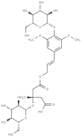
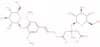
Tangshenoside I est un composé naturel principalement dérivé de l'espèce végétale *Tangshen* (souvent associée au genre *Codonopsis*). Il appartient à la classe des saponines, qui sont des glycosides avec un aglycone stéroïdien ou triterpénoïde. Ce composé se caractérise par sa structure complexe, qui comprend généralement une partie sucrée attachée à un squelette stéroïdien. Tangshenoside I est connu pour ses propriétés pharmacologiques potentielles, y compris des effets anti-inflammatoires, antioxydants et immunomodulateurs. Il a été étudié pour son rôle dans la médecine traditionnelle et ses applications thérapeutiques potentielles. Le composé présente une solubilité dans des solvants polaires, ce qui est courant pour les saponines, et sa bioactivité est souvent attribuée à sa capacité à interagir avec les membranes cellulaires et à moduler diverses voies biologiques. À mesure que la recherche progresse, Tangshenoside I pourrait révéler de nouvelles informations sur ses mécanismes d'action et ses utilisations potentielles en santé et en médecine.
Formule :C29H42O18
InChI :InChI=1S/C29H42O18/c1-29(9-18(32)33,47-28-25(40)23(38)21(36)17(12-31)45-28)10-19(34)43-6-4-5-13-7-14(41-2)26(15(8-13)42-3)46-27-24(39)22(37)20(35)16(11-30)44-27/h4-5,7-8,16-17,20-25,27-28,30-31,35-40H,6,9-12H2,1-3H3,(H,32,33)/b5-4+/t16-,17-,20-,21-,22+,23+,24-,25-,27+,28+,29+/m1/s1
Code InChI :InChIKey=ABKPQICIFGNRAA-FPFGLZQYSA-N
SMILES :O(C1=C(OC)C=C(/C=C/COC(C[C@@](O[C@@H]2O[C@H](CO)[C@@H](O)[C@H](O)[C@H]2O)(CC(O)=O)C)=O)C=C1OC)[C@@H]3O[C@H](CO)[C@@H](O)[C@H](O)[C@H]3O
Synonymes :- 3-(beta-D-glucopyranosyloxy)-5-({(2E)-3-[4-(beta-D-glucopyranosyloxy)-3,5-dimethoxyphenyl]prop-2-en-1-yl}oxy)-3-methyl-5-oxopentanoic acid
- 4-[(1E)-3-[(3S)-4-Carboxy-3-(β-<span class="text-smallcaps">D</smallcap>-glucopyranosyloxy)-3-methyl-1-oxobutoxy]-1-propen-1-yl]-2,6-dimethoxyphenyl β-<smallcap>D</span>-glucopyranoside
- beta-D-Glucopyranoside, 4-(3-(4-carboxy-3-(beta-D-glucopyranosyloxy)-3-methyl-1-oxobutoxy)-1-propenyl)-2,6-dimethoxyphenyl, (S-(E))-
- β-<span class="text-smallcaps">D</smallcap>-Glucopyranoside, 4-[(1E)-3-[(3S)-4-carboxy-3-(β-<smallcap>D</span>-glucopyranosyloxy)-3-methyl-1-oxobutoxy]-1-propen-1-yl]-2,6-dimethoxyphenyl
- β-<span class="text-smallcaps">D</smallcap>-Glucopyranoside, 4-[(1E)-3-[(3S)-4-carboxy-3-(β-<smallcap>D</span>-glucopyranosyloxy)-3-methyl-1-oxobutoxy]-1-propenyl]-2,6-dimethoxyphenyl
- β-<span class="text-smallcaps">D</smallcap>-Glucopyranoside, 4-[3-[4-carboxy-3-(β-<smallcap>D</span>-glucopyranosyloxy)-3-methyl-1-oxobutoxy]-1-propenyl]-2,6-dimethoxyphenyl, [S-(E)]-
- β-D-Glucopyranoside, 4-[(1E)-3-[(3S)-4-carboxy-3-(β-D-glucopyranosyloxy)-3-methyl-1-oxobutoxy]-1-propen-1-yl]-2,6-dimethoxyphenyl
- β-D-Glucopyranoside, 4-[(1E)-3-[(3S)-4-carboxy-3-(β-D-glucopyranosyloxy)-3-methyl-1-oxobutoxy]-1-propenyl]-2,6-dimethoxyphenyl
- 4-[(1E)-3-[(3S)-4-Carboxy-3-(β-D-glucopyranosyloxy)-3-methyl-1-oxobutoxy]-1-propen-1-yl]-2,6-dimethoxyphenyl β-D-glucopyranoside
- Tangshenoside I
- β-D-Glucopyranoside, 4-[3-[4-carboxy-3-(β-D-glucopyranosyloxy)-3-methyl-1-oxobutoxy]-1-propenyl]-2,6-dimethoxyphenyl, [S-(E)]-
Trier par
Degré de pureté (%)
0
100
|
0
|
50
|
90
|
95
|
100
4 produits concernés.
4-[(1E)-3-[(3S)-4-Carboxy-3-(β-D-glucopyranosyloxy)-3-methyl-1-oxobutoxy]-1-propen-1-yl]-2,6-dimethoxyphenyl β-D-glucopyranoside
CAS :Formule :C29H42O18Degré de pureté :98%Masse moléculaire :678.6330Tangshenoside I
CAS :Tangshenoside I is a natural product isolated from Codonopsis pilosula, may be hematopoietic and immune and has a weak α-glucosidase inhibitory activity.Formule :C29H42O18Degré de pureté :98%Couleur et forme :SolidMasse moléculaire :678.63Tangshenoside I
CAS :Tangshenoside I is a peptide that can activate a receptor, which then initiates a signaling pathway. It is an inhibitor of ion channels and has been shown to inhibit the binding of ligands to receptors. Tangshenoside I also binds to antibodies, inhibiting the interaction between protein partners. This peptide has been used for research in cell biology and pharmacology.
Formule :C29H42O18Degré de pureté :Min. 95%Masse moléculaire :678.6 g/mol
![4-[(1E)-3-[(3S)-4-Carboxy-3-(β-D-glucopyranosyloxy)-3-methyl-1-oxobutoxy]-1-propen-1-yl]-2,6-dimet…](/_next/image/?url=https%3A%2Fstatic.cymitquimica.com%2Fproducts%2FIN%2Fthumb%2FDA009V1M.jpg&w=3840&q=75)