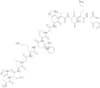
CAS 122018-58-0
:PLP (139-151)
Description :
PLP, ou phosphate de pyridoxal, est la forme active de la vitamine B6 et joue un rôle crucial en tant que coenzyme dans diverses réactions biochimiques, en particulier dans le métabolisme des acides aminés. Il se caractérise par sa capacité à participer à des réactions de transamination, de décarboxylation et de racémisation, facilitant la conversion des acides aminés et la synthèse des neurotransmetteurs. La substance est une poudre cristalline jaune soluble dans l'eau et présente un profil de stabilité dépendant du pH, étant plus stable dans des conditions neutres à légèrement alcalines. Le PLP est essentiel au bon fonctionnement des enzymes impliquées dans le métabolisme des glucides, des lipides et des acides aminés, ce qui le rend vital pour de nombreux processus physiologiques. Une carence en PLP peut entraîner divers problèmes de santé, notamment de l'anémie et des troubles neurologiques. Son numéro CAS, 122018-58-0, l'identifie de manière unique dans les bases de données chimiques, aidant dans les contextes de recherche et de réglementation. Dans l'ensemble, le PLP est un composé biochimique significatif avec des rôles divers dans la santé humaine et le métabolisme.
Formule :C72H104N20O17
Synonymes :- Proteolipid Protein
- Myelin Proteolipid Protein Fragment (139-151)
- (Ser140)-Myelin Proteolipid Protein (139-151), Depalmitoylated, Human, Bovine, Dog, Mouse, Rat
- [Ser140]-Myelin Proteolipid Protein (139-151) (Human, Bovine, Dog, Mouse, Rat)
- H2N-Hslgkwlghpdkf-Oh
Trier par
Degré de pureté (%)
0
100
|
0
|
50
|
90
|
95
|
100
7 produits trouvés.
(Ser¹⁴⁰)-Myelin Proteolipid Protein (139-151) (depalmitoylated) (human, bovine, dog, mouse, rat)
CAS :This fragment of myelin proteolipid protein is an encephalitogenic determinant, able to bind to diverse sets of T cell receptors.Formule :C72H104N20O17Degré de pureté :97.0%Couleur et forme :WhiteMasse moléculaire :1521.74[SER140]-PLP(139-151)
CAS :[SER140]-PLP(139-151) is a polypeptide fragment of the lipid protein of myelin.Formule :C72H104N20O17Degré de pureté :98%Couleur et forme :SolidMasse moléculaire :1521.72PLP (139-151)
CAS :PLP (139-151) is derived from Proteolipid Protein (PLP), an epitope of immunodominant encephalitogenic PLP and is involved in promoting encephalomyelitis.Formule :C72H104N20O17Degré de pureté :Min. 95%Couleur et forme :PowderMasse moléculaire :1,520.8 g/molMyelin PLP (139-151)
CAS :Myelin PLP (139-151) is a basic protein that belongs to the family of oligodendrocyte-myelin glycoproteins. It has been shown to activate toll-like receptor, which is a pattern recognition receptor that recognizes invading pathogens and triggers an immune response. Myelin PLP (139-151) may play a role in the development of autoimmune diseases, as it has been found to be a target for autoantibodies. It has also been shown to have antioxidative properties, which may help prevent free radical damage in the brain and other tissues. The monoclonal antibody against this protein can be used for immunohistological analysis.Formule :C72H104N20O17Degré de pureté :Min. 95%Masse moléculaire :1,521.72 g/molPLP (139-151)
CAS :PLP (139-151) peptide is a fragment of myelin proteolipid protein (PLP or lipophilin), from amino acid residue 139 to 151 (HCLGKWLGHPDKF – CAS 131334-43-5 ). Myelin proteolipid protein is the major myelin protein from the central nervous system. PLP (139-151) peptide is commonly used to induce experimental autoimmune encephalomyelitis (EAE) in SJL/J mice. The PLP (139-151) peptide C140S is mutant of the wild-type version where the cystein is replaced by a serine to make the peptide more stable without impacting its antigenic activity.Formule :C72H104N20O17Masse moléculaire :1,521.7 g/molMyelin PLP (139-151) acetate
CAS :Myelin PLP (139-151) acetate salt is a cyclic peptide that is derived from the sequence of human myelin basic protein and contains the sequence PLP (139-151). This peptide has shown to have antioxidative properties. It has been shown to have an inhibitory effect on the production of proinflammatory cytokines in experimental autoimmune encephalomyelitis (EAE), which is a model for multiple sclerosis. The peptide has also been shown to block signal pathways, such as toll-like receptor 4, and decrease Ca2+ overload. Clinical relevance remains unclear.
Formule :C72H104N20O17•(C2H4O2)xDegré de pureté :Min. 95%Masse moléculaire :1,521.76 g/mol



![[SER140]-PLP(139-151)](/_next/image/?url=https%3A%2Fstatic.cymitquimica.com%2Fproducts%2FTM%2Fthumb%2FTP1312.jpg&w=3840&q=75)