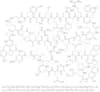
CAS 12279-41-3
:Séractide
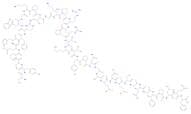
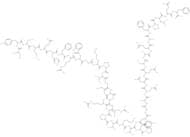
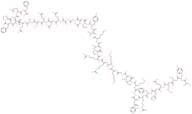
- L-Seryl-L-tyrosyl-L-seryl-L-methionyl-L-alpha-glutamyl-L-histidyl-L-phenylalanyl-L-arginyl-L-tryptophylglycyl-L-lysyl-L-prolyl-L-valylglycyl-L-lysyl-L-lysyl-L-arginyl-L-arginyl-L-prolyl-L-valyl-L-lysyl-L-valyl-L-tyrosyl-L-prolyl-L-asparaginylglycyl-L-alanyl-L-alpha-glutamyl-L-alpha-aspartyl-L-alpha-glutamyl-L-seryl-L-alanyl-L-alpha-glutamyl-L-alanyl-L-phenylalanyl-L-prolyl-L-leucyl-L-alpha-glutamyl-L-phenylalanine
- Acth(1-39)
- CORTICOTROPIN (HUMAN)
- ACTH (1-39), HUMAN
- Seractide USP/EP/BP
- H-SER-TYR-SER-MET-GLU-HIS-PHE-ARG-TRP-GLY-LYS-PRO-VAL-GLY-LYS-LYS-ARG-ARG-PRO-VAL-LYS-VAL-TYR-PRO-ASN-GLY-ALA-GLU-ASP-GLU-SER-ALA-GLU-ALA-PHE-PRO-LEU-GLU-PHE-OH
- ADRENOCORTICOTROPIC HORMONE (1-39) (HUMAN)
- Seractide
- CORTICOTROPIN A
- REF DUPL: Ser-Tyr-Ser-Met-Glu-His-Phe-Arg-Trp-Gly-Lys-Pro-Val-Gly-Lys-Lys-Arg-Arg-Pro-Val-Lys-Val-Tyr-Pro-Asn-Gly-Ala-Glu-Asp-Glu-Ser-Ala-Glu-Ala-Phe-Pro-Leu-Glu-Phe
- ACTH (1-39) (huMan)
- Adrenocorticotropic hormone fragment 1-39, ≥97% (HPLC)
- SER-TYR-SER-MET-GLU-HIS-PHE-ARG-TRP-GLY-LYS-PRO-VAL-GLY-LYS-LYS-ARG-ARG-PRO-VAL-LYS-VAL-TYR-PRO-ASN-GLY-ALA-GLU-ASP-GLU-SER-ALA-GLU-ALA-PHE-PRO-LEU-GLU-PHE
- ACTH (1-39) (human) trifluoroacetate salt H-Ser-Tyr-Ser-Met-Glu-His-Phe-Arg-Trp-Gly-Lys-Pro-Val-Gly-Lys-Lys-Arg-Arg-Pro-Val-Lys-Val-Tyr-Pro-Asn-Gly-Ala-Glu-Asp-Glu-Ser-Ala-Glu-Ala-Phe-Pro-Leu-Glu-Phe-OH trifluoroacetate salt
- Adrenocorticotropic Hormone (ACTH) (1-39)
- H-Ser-Tyr-Ser-Met-Glu-His-Phe-Arg-Trp-Gly-Lys-Lys-Arg-Arg-Pro-Val-Lys-Val-Tyr-Pro-Asn-Gly-Ala-Glu-Asp-Glu-Ser-Ala-Glu-Ala-Phe-Pro-Leu-Glu-Phe-OH
- Seractide ACTH
- Adrenocorticotropic Hormone (ACTH) (1-39), human
- Seractide acetate
- PCorticotropin (Human) CAS 12279-41-3
- ACTH
- M.W. 4541.07 C207H308N56O58S
- CORTICOTROPHIN
- Corticotropin
- adrenocorticotropic hormone fragment 1-39
- SYSMEHFRWGKPVGKKRRPVKVYPNGAEDESAEAFPLEF
- SER-TYR-SER-MET-GLU-HIS-PHE-ARG-TRP-GLY-LYS-PRO-VAL-GLY-LYS-LYS-ARG-ARG-PRO-VAL-LYS-VAL-TYR-PRO-ASN-GLY-ALA-GLU-ASP-GLU-SER-ALA-GLU-ALA-PHE-PRO-LEU-GLU-PHE HUMAN
- ADRENOCORTICOTROPIC HORMONE HUMAN
- Voir plus de synonymes
ACTH (1-39) (human)
CAS :The major regulator of adrenal cortex function. ACTH stimulates the synthesis of steroidal hormones.Formule :C207H308N56O58SDegré de pureté :99.2%Couleur et forme :WhiteMasse moléculaire :4541.13a1-39-Corticotropin (human)
CAS :Formule :C207H308N56O58SDegré de pureté :98%Couleur et forme :SolidMasse moléculaire :4541.0658ACTH (1-39) human
CAS :Adrenocorticotropic Hormone (ACTH) (1-39), human (ACTH (1-39), human) is an agonist of melanocortin receptor.Formule :C207H308N56O58SDegré de pureté :99.6%Couleur et forme :White Lyophilised SolidMasse moléculaire :4541.14Ref: TM-T8231
1mg57,00€2mg82,00€5mg120,00€10mg192,00€25mg409,00€50mg590,00€100mg827,00€200mg1.108,00€ACTH(1-39) trifluoroacetate
CAS :ACTH(1-39) trifluoroacetate is a synthetic form of ACTH that is used for the diagnosis of autoimmune diseases and bowel disease. It is also used to assess the function of the adrenal gland in cases of suspected Cushing's syndrome. The blood sampling procedure involves withdrawing a small amount of blood from the patient and adding ACTH(1-39) trifluoroacetate to it, which causes an increase in cortisol concentration. ACTH(1-39) trifluoroacetate binds to corticotropin receptors on cells in the body, causing them to release basic proteins that are responsible for inflammation. This drug may be a potential biomarker for metabolic disorders such as obesity. It has been shown to have anti-inflammatory properties and can be used as a nonsteroidal anti-inflammatory drug (NSAID).
Formule :C207H308N56O58SDegré de pureté :Min. 98 Area-%Couleur et forme :PowderMasse moléculaire :4,541.07 g/mol