CAS 124447-81-0
:Trier par
Degré de pureté (%)
0
100
|
0
|
50
|
90
|
95
|
100
5 produits concernés.
Amylin (mouse, rat)
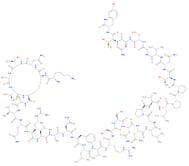
CAS :Rat amylin (rIAPP) lacks the fibril-forming capacity of human amylin (hIAPP). As a consequence, toxic effects have been reported for the human but not for the rat peptide amide.Formule :C167H272N52O53S2Degré de pureté :96.1%Couleur et forme :WhiteMasse moléculaire :3920.45Amylin receptor
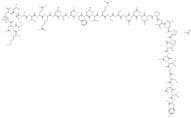
CAS :Formule :C167H272N52O53S2Degré de pureté :95%Couleur et forme :SolidMasse moléculaire :3920.3932Amylin, amide, rat
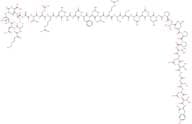
CAS :Amylin: peptide, 50% similar to CGRP, found with somatostatin in stomach cells, reduces acid secretion in mice.Formule :C167H272N52O53S2Degré de pureté :99.92%Couleur et forme :SolidMasse moléculaire :3920.44Amylin (Rat)
CAS :Produit contrôléAmylin is a peptide that belongs to the group of activators. It has been shown to be an inhibitor of ion channels, and has also been demonstrated to activate cell signaling pathways. Amylin can be used as a research tool for studying protein interactions, receptor ligands, and pharmacology. Amylin can be used in antibody production or as a high-purity reagent for life science or cell biology applications.
Formule :C167H272N52O53S2Degré de pureté :Min. 95%Masse moléculaire :3,920.4 g/molAmylin (mouse, rat) trifluoroacetate
CAS :Amylin (mouse, rat) trifluoroacetate is a synthetic peptide, which is a derivative of the islet amyloid polypeptide (IAPP) found in rodent species. It is sourced from the pancreatic beta cells of mice and rats, where it is co-secreted with insulin. The mode of action involves regulation of glucose metabolism through its effects on gastric emptying, glucagon secretion, and satiety. These actions are crucial in managing postprandial blood glucose levels and provide insights into the pathophysiology of diabetes.Amylin (mouse, rat) trifluoroacetate is primarily used in research applications to study the mechanisms of amylin aggregation and its implications in type 2 diabetes. It also serves as a model for understanding the differences in amyloid fibril formation between human and rodent amylin, making it invaluable for the development of therapeutic strategies aimed at mitigating amyloid-related cellular toxicity. Researchers utilize this peptide to explore the potential compensatory roles of amylin analogs in diabetic models, advancing our understanding of diabetes progression and treatment options.Formule :C167H272N52O53S2•(C2HF3O2)xDegré de pureté :Min. 95%Masse moléculaire :3,920.4 g/mol