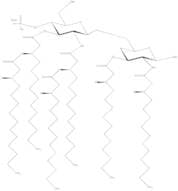
CAS 1246298-63-4
:Trier par
Degré de pureté (%)
0
100
|
0
|
50
|
90
|
95
|
100
5 produits concernés.
MPLA (synthetic) Sterile Solution
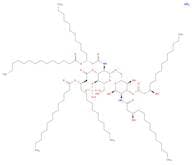
CAS :Formule :C96H187N4O22PDegré de pureté :99%Masse moléculaire :1780.4993Monophosphoryl lipid A
CAS :MPLA, a toll-like receptor 4 agonist from nonpathogenic Salmonella, aids vaccine research.Formule :C96H184N3O22PCouleur et forme :SolidMasse moléculaire :1763.501Lipid A monophosphoryl
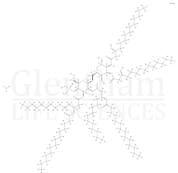
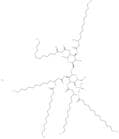
CAS :Lipid A monophosphoryl (MPL) is an adjuvant that stimulates the immune response to vaccines so that optimal protection can be achieved. MPL immunostimulant, a monophosphoryllipid A preparation derived from the lipopolysaccharide (LPS) of Salmonella minnesota R595. MPL is being considered as an adjuvant for a number of human vaccines, and experience to date has shown that it is safe, well tolerated, and able to provide a heightened immune response to coadministered antigens.Formule :C96H181N2O22PDegré de pureté :Min. 95%Couleur et forme :PowderMasse moléculaire :1,746.44 g/molLipid A (E. Coli) triethylammonium salt
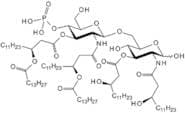
CAS :The Lipid A moiety of lipopolysaccharide forms the outer monolayer of the outer membrane in most Gram-negative bacteria. Escherichia coli lipid A is synthesized on the cytoplasmic side of the inner membrane by a conserved pathway of nine constitutive enzymes. Following attachment of the core oligosaccharide, nascent core-lipid A is flipped to the outer surface of the inner membrane by the ABC transporter MsbA, where the O-antigen polymer is attached. These complex glycoforms protect bacteria from antibiotics and complement-mediated lysis. The core and O-antigen domains are required for virulence and consequently are present in most clinical and environmental isolates (Raetz, 2007).Formule :C94H178N2O25P2Degré de pureté :Min. 95%Masse moléculaire :1,798.37 g/mol