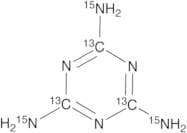
CAS 1246816-14-7
:Melamine-13C3,15N3
CAS :Produit contrôléApplications Isotope labelled Melamine (M208703), which forms synthetic resins with formaldehyde. It remains largely non-metabolized in male Wistar rats with 90% of the administered dose excreted in the urine (1,2) and thus acts as a non-protein nitrogen food additive found in milk (3). Drinking water contaminant candidate list 3 (CCL 3) compound as per United States Environmental Protection Agency (EPA), environmental, and food contaminants.
References 1. Mast, R. et al.: Food Chem Toxicol. 1983 Dec;21(6):807-10.2. Smith, J. et al.: Toxicol Appl Pharmacol. 1994 Apr;125(2):296-308.3. Anirudhan, T. et al.: Food Chem. 2017 Jul 15;227:85-92.Formule :C3H6N315N3Couleur et forme :NeatMasse moléculaire :132.08Melamine-13C3,15N3
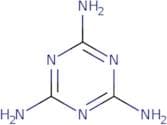
CAS :Melamine is a compound that has been shown to cause cancer in laboratory animals. It has been found in significant quantities in the wheat gluten and rice protein concentrate imported from China that was used to make pet food for cats and dogs. Melamine is a white, crystalline, odorless solid with a high melting point. The specific heat capacity of melamine is 1.2 times greater than water at room temperature (25°C). Melamine is also an amide with a nitrogen atom attached to three carbon atoms. Melamine reacts with metal hydroxides, such as aluminum hydroxide, by forming metal melamines, which are soluble in water.
Melamine-13C3,15N3 is an analytical method for measuring the concentration of melamine in solution by first converting it into cyanuric acid and then measuring the amount of cyanuric acid formed during thermal expansion. This method can be used to measure concentrations less than 10 mg/L of melamine in solution.Formule :C3H6N6Degré de pureté :Min. 95%Masse moléculaire :126.12 g/mol