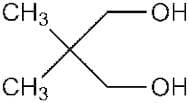
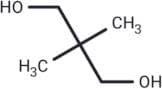
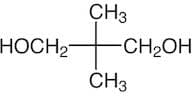
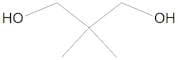
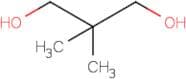
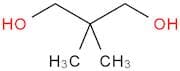
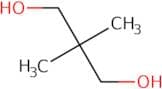
CAS 126-30-7
:2,2-Diméthyl-1,3-propanediol
- 1,3-Dihydroxy-2,2-dimethylpropane
- 1,3-Propanediol, 2,2-dimethyl-
- 2,2-Bis(hydroxymethyl)propane
- 2,2-Dimethyl-1,3-Propandiol
- 2,2-Dimethyl-1,3-dihydroxypropane
- 2,2-Dimethyl-1,3-propylene glycol
- 2,2-Dimethylolpropane
- 2,2-Dimethylpropan-1,3-diol
- 2,2-Dimethylpropane-1,3-Diol
- 2,2-Dimethylpropanediol monoacrylate monomethacrylate
- 2,2-Dimethyltrimethylene glycol
- 2,2-Dimetilpropano-1,3-Diol
- 2-Ethylpropane-1,3-Diol
- 3-Hydroxy-2,2-dimethylpropanol
- Dimethylolpropane
- Hydroxypivalyl alcohol
- Neopentanediol
- Neopentyl glycol
- Neopentyl glycol 2,2-Dimethyl-1,3-propanediol
- Neopentylene glycol
- Neopentylglycol
- Nexcoat 600
- Nsc 55836
- Nsc 6366
- Propane-1,3-Diol, 2,2-Dimethyl-
- R 2490
- 2,2-Dimethyl-1,3-propanediol
- 2,2-dimethyl-3-propanediol
- NEOL(R)
- 2,2-dimethyltrimethyleneglycol
- hydroxypivalylalcohol
- DIMETHYLTRIMETHYLENE GLYCOL
- NPG Glycol
- 3-Propanediol,2,2-dimethyl-1
- Neol
- Voir plus de synonymes
2,2-Dimethyl-1,3-propanediol, 99%
CAS :Used for protection of carbonyl groups as 4,4-dimethyl-1,3-dioxanes, often preferred to the more usual 1,3-dioxolanes due to easier separation and greater stability, for protection of carbonyl group of 4-bromo-2-propanone using p-toluenesulfonic acid in the presence of triethyl orthoformate. It is uFormule :C5H12O2Degré de pureté :99%Couleur et forme :White, Powder or flakes or pelletsMasse moléculaire :104.152,2-Dimethylpropane-1,3-diol
CAS :2,2-Dimethylpropane-1,3-diol, also known as neopentyl glycol (NPG), is commonly used in the production of polyester resins, polyurethanes, and lubricantsFormule :C5H12O2Degré de pureté :99.14%Couleur et forme :SolidMasse moléculaire :104.152,2-Dimethyl-1,3-propanediol
CAS :Formule :C5H12O2Degré de pureté :>98.0%(GC)Couleur et forme :White to Almost white powder to crystalMasse moléculaire :104.152,2-Dimethyl-1,3-propanediol
CAS :2,2-Dimethyl-1,3-propanediolFormule :C5H12O2Degré de pureté :99%Couleur et forme : white solidMasse moléculaire :104.15g/molNeopentyl Glycol pure, 98%
CAS :Formule :C5H12O2Degré de pureté :min. 98%Couleur et forme :White, Crystalline compound, Clear, ColourlessMasse moléculaire :104.152,2-Dimethylpropane-1,3-diol
CAS :Formule :C5H12O2Degré de pureté :95%Couleur et forme :Solid, Crystalline Powder or PowderMasse moléculaire :104.149NPG Glycol
CAS :Applications NPG Glycol is used in the synthesis of tetraphenylporphyrins. Also used in the synthesis of Bryostatin 2, a protein kinase modulator.
References Lindsey, J. et al.: J. Org. Chem., 52, 827 (1987); Evans, D. et al.: J. Am. Chem. Soc., 121, 7540 (1999);Formule :C5H12O2Couleur et forme :NeatMasse moléculaire :104.1482,2-Dimethyl-1,3-propanediol
CAS :2,2-Dimethyl-1,3-propanediol is a glycol ether that is used in industrial and municipal wastewater treatment. It has been shown to be an effective coagulant. It reacts with the metal ions in the wastewater to form insoluble metal salts, which are then removed from the water by settling or filtration. 2,2-Dimethyl-1,3-propanediol has a phase transition temperature of -43 degrees Celsius and is reactive at higher temperatures. The optimum concentration for this chemical is between 5 and 10%. Wild-type strains of Escherichia coli were found to grow more slowly in media containing 2,2-dimethyl-1,3-propanediol than in media without this chemical. Thermodynamic data have been published for glycol esters including 2,2-dimethyl-1,3-propanediol.
Formule :C5H12O2Degré de pureté :Min. 95%Masse moléculaire :104.15 g/mol2,2-Dimethyl-1,3-propanediol
CAS :Formule :C5H12O2Degré de pureté :95%Couleur et forme :SolidMasse moléculaire :104.1476Ref: IN-DA000QO1
Produit arrêté