CAS 13121-70-5
:Cyhexatine
- Acarex
- Acarstin
- Acarstin L
- Dowco 213
- Hokko Cyhexatin
- Hydroxytricyclohexylstannane
- M 3180
- NSC 179742
- Pennstyl
- Plictran
- Pliktran
- Plyctran
- Redran 25PB
- Sipcatin
- Stannane, tricyclohexylhydroxy-
- Tin, tricyclohexylhydroxy-
- Tricyclohexylhydroxystannane
- Tricyclohexylhydroxytin
- Tricyclohexylstannanol
- Tricyclohexylstannanyl Hydrate
- Tricyclohexylstannyl hydroxide
- Voir plus de synonymes
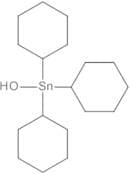
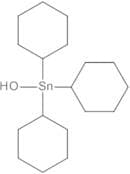
Cyhexatin
CAS :Produit contrôléApplications Cyhexatin is a derivative of tricyclohexyltin and an effective acaricide used in the control of spider mites.
Not a dangerous good if item is equal to or less than 1g/ml and there is less than 100g/ml in the package
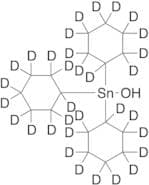
References Jeppson, L.R. et al.: J. Econ. Entomol., 61, 1502 (1968); Rudd, J.A. et al.: Exp. Appl. Acarol., 21, 615 (1997);Formule :C18H34OSnCouleur et forme :NeatMasse moléculaire :385.17Cyhexatin-d33
CAS :Produit contrôléApplications Labelled analogue of Cyhexatin, a derivative of tricyclohexyltin and an effective acaricide used in the control of spider mites.
Not a dangerous good if item is equal to or less than 1g/ml and there is less than 100g/ml in the package
References Jeppson, L.R. et al.: J. Econ. Entomol., 61, 1502 (1968); Rudd, J.A. et al.: Exp. Appl. Acarol., 21, 615 (1997);Formule :C18HD33OSnCouleur et forme :NeatMasse moléculaire :418.38Cyhexatin
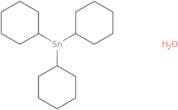
CAS :Cyhexatin is a potent and selective inhibitor of the mitochondrial cytochrome bc1 complex, which is crucial for energy production in all aerobic organisms. Cyhexatin inhibits electron transfer by binding to the copper site of cytochrome bc1, blocking ubiquinol oxidation. This drug has been shown to inhibit bacterial growth in vitro and in vivo with hemolytic activity against human erythrocytes, making it a promising candidate for antibiotic development. Cyhexatin was found to be more potent than dibutyltin oxide (DBTO), an inhibitor of the mitochondrial cytochrome bc1 complex that is currently being evaluated as an antibiotic.
Formule :C18H34OSnDegré de pureté :Min. 95%Masse moléculaire :385.17 g/mol