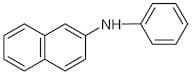
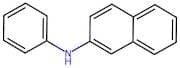
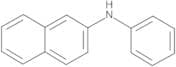
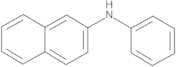
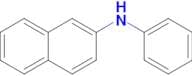
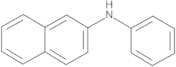
CAS 135-88-6
:N-phényl-2-naphtylamine
- 2-(N-Phenylamino)naphthalene
- 2-(Phenylamino)naphthalene
- 2-Anilinonaphthalene
- 2-Naphthylamine, N-phenyl-
- 2-Naphthylphenylamine
- AK 1 (stabilizer)
- Aceto PBN
- AgeRite Powder
- Ak 1
- Antioxidant 116
- Antioxidant D
- Antioxidant PBN
- N,2-Naphtylaniline
- N-(2-Naphthyl)-N-phenylamine
- N-(2-Naphthyl)aniline
- N-2-naftilanilina
- N-2-naphthylaniline
- N-Naphthylanilin
- N-PHENYL-β-NAPHTHYLAMINE
- N-Phenyl-2-Naphthylamin
- N-Phenyl-2-naphthalenamine
- N-Phenyl-2-naphthylamine
- N-Phenyl-N-(2-naphthyl)amine
- N-Phenylnaphthalene-2-amine
- N-β-Naphthyl-N-phenylamine
- Naftam 2
- Naphthyl-2-Amine, N-Phenyl-
- Neosone D
- Neozon D
- Neozone
- Neozone D
- Nilox PBNA
- Noclizer D
- Nocrac D
- Nonox D
- Nonox DN
- Nsc 37151
- PNA
- Pbna
- Phenyl-2-naphthylamine
- Phenyl-β-naphthylamine
- Stabilizator AR
- Stabilizer AR
- Vulkanox PBN
- β-Naphthylphenylamine
- Phenylnaphthylamine
- N-Phenyl-2-naphttylamine
- N-tert-butyl-N-[(Z)-phenylmethylidene]amine oxide
- 2-Naphthalenamine, N-phenyl-
- N-phenylnaphthalen-2-amine
- N-phenylnaphthalen-1-amine
- Voir plus de synonymes
N-Phenyl-2-naphthylamine
CAS :Formule :C16H13NDegré de pureté :>97.0%(GC)(N)Couleur et forme :White to Gray to Brown powder to crystalMasse moléculaire :219.29N-Phenyl-2-naphthylamine
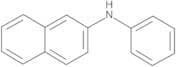
CAS :N-Phenyl-2-naphthylamineDegré de pureté :≥95%Masse moléculaire :219.286g/molN-Phenyl-2-naphthylamine
CAS :Produit contrôléFormule :C16H13NCouleur et forme :NeatMasse moléculaire :219.28N-Phenylnaphthalen-2-amine
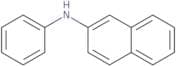
CAS :Degré de pureté :95.0%Couleur et forme :SolidMasse moléculaire :219.28700256347656N-Phenyl-2-naphthylamine
CAS :Produit contrôléApplications N-(Phenyl)-2-naphthylamine is a reagent in the preparation of unsymmetrical triaryldiamines as thermally stable hole transport layers for various organic LEDs.
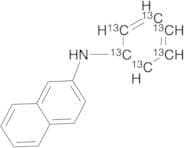
References Koene, B. et al.: Chem. Mat., 10, 2235 (1998)Formule :C16H13NCouleur et forme :Beige To GreyMasse moléculaire :219.28N-(13C6-Phenyl)-2-naphthylamine
CAS :Produit contrôléApplications N-(Phenyl)-2-naphthylamine is a reagent in the preparation of unsymmetrical triaryldiamines as thermally stable hole transport layers for various organic LEDs.
Not a dangerous good if item is equal to or less than 1g/ml and there is less than 100g/ml in the package
References Koene, B. et al.: Chem. Mat., 10, 2235 (1998);Formule :C1013C6H13NCouleur et forme :NeatMasse moléculaire :225.24N-Phenyl-2-naphthylamine
CAS :Produit contrôléN-Phenyl-2-naphthylamine (NPN) is a phenylnitrosamine that has been shown to be an oxidation catalyst. It is used in vivo to measure the photosynthetic activity of human skin and can also be used as an analytical reagent for determining the concentration of inorganic acids such as hydrochloric acid. In vitro, NPN has been found to be toxic to skin cells and can cause DNA damage. NPN has also been shown to stimulate metabolic rate in rats and inhibit bladder carcinogenesis when administered intraperitoneally. The optimum concentration for this compound is 0.1 mM.
Formule :C16H13NDegré de pureté :Min. 95 Area-%Couleur et forme :PowderMasse moléculaire :219.28 g/mol