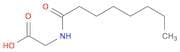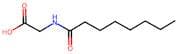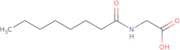
CAS 14246-53-8
:Capryloylglycine
- 2-Octanamidoacetic acid
- Capryloyl glycine
- Capryloylglycine
- Caprylylglycine
- Glycine, N-(1-oxooctyl)-
- Glycine, N-octanoyl-
- Lipacide C 8G
- N-Octanoyl-glycine
- N-octanoylglycine
- N-octylglycine
- Octanoylglycine
- N-(1-Oxooctyl)glycine
- N-(1-Oxooctyl)glycine
- Voir plus de synonymes
2-Octanamidoacetic acid
CAS :Formule :C10H19NO3Degré de pureté :97%Couleur et forme :SolidMasse moléculaire :201.2628Capryloyl Glycine
CAS :Formule :C10H19NO3Couleur et forme :White To Off-White SolidMasse moléculaire :201.272-Octanamidoacetic Acid
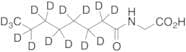
CAS :2-Octanamidoacetic AcidDegré de pureté :97%Masse moléculaire :201.26g/molN-Octanoyl-d15-glycine
CAS :Formule :CD3(CD2)6CONHCH2COOHDegré de pureté :98 atom % DCouleur et forme :White SolidMasse moléculaire :216.23064N-Octanoyl-d15-glycine
CAS :Produit contrôléApplications N-Octanoyl-d15-glycine is labelled N-Octanoylglycine (O239735) which is a derivative of Glycine (G615990) and is an amphiphilic lipoamino acid commonly used in cosmetics for its antibacterial properties. N-Octanoylglycine is the active ingredient in products designed to treat seborrheic dermatitis on the scalp and acne prone skin.
References Georgalas, A.: Cosmet. Toiletries, 127, 96 (2012); Nakamura, S.: Frag. J., 39, 36 (2011)Formule :C10D15H4NO3Couleur et forme :NeatMasse moléculaire :216.36N-Octanoylglycine
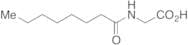
CAS :Applications N-Octanoylglycine is a derivative of Glycine (G615990) and is an amphiphilic lipoamino acid commonly used in cosmetics for its antibacterial properties. N-Octanoylglycine is the active ingredient in products designed to treat seborrheic dermatitis on the scalp and acne prone skin.
References Georgalas, A.: Cosmet. Toiletries, 127, 96 (2012); Nakamura, S.: Frag. J., 39, 36 (2011);Formule :C10H19NO3Couleur et forme :NeatMasse moléculaire :201.26Capryloyl glycine
CAS :Capryloyl glycine is a non-protein amino acid that has been identified as a potential biomarker for photosynthetic activity. Capryloyl glycine is a potent inhibitor of the growth of bacteria, fungi and yeasts. It was found to inhibit the growth of bacteria by blocking their ability to synthesize fatty acids in liver cells. Capryloyl glycine also inhibits the production of glycerides in skin cells, which may have therapeutic applications for certain skin disorders.Formule :C10H19NO3Degré de pureté :Min. 95%Couleur et forme :PowderMasse moléculaire :201.26 g/mol